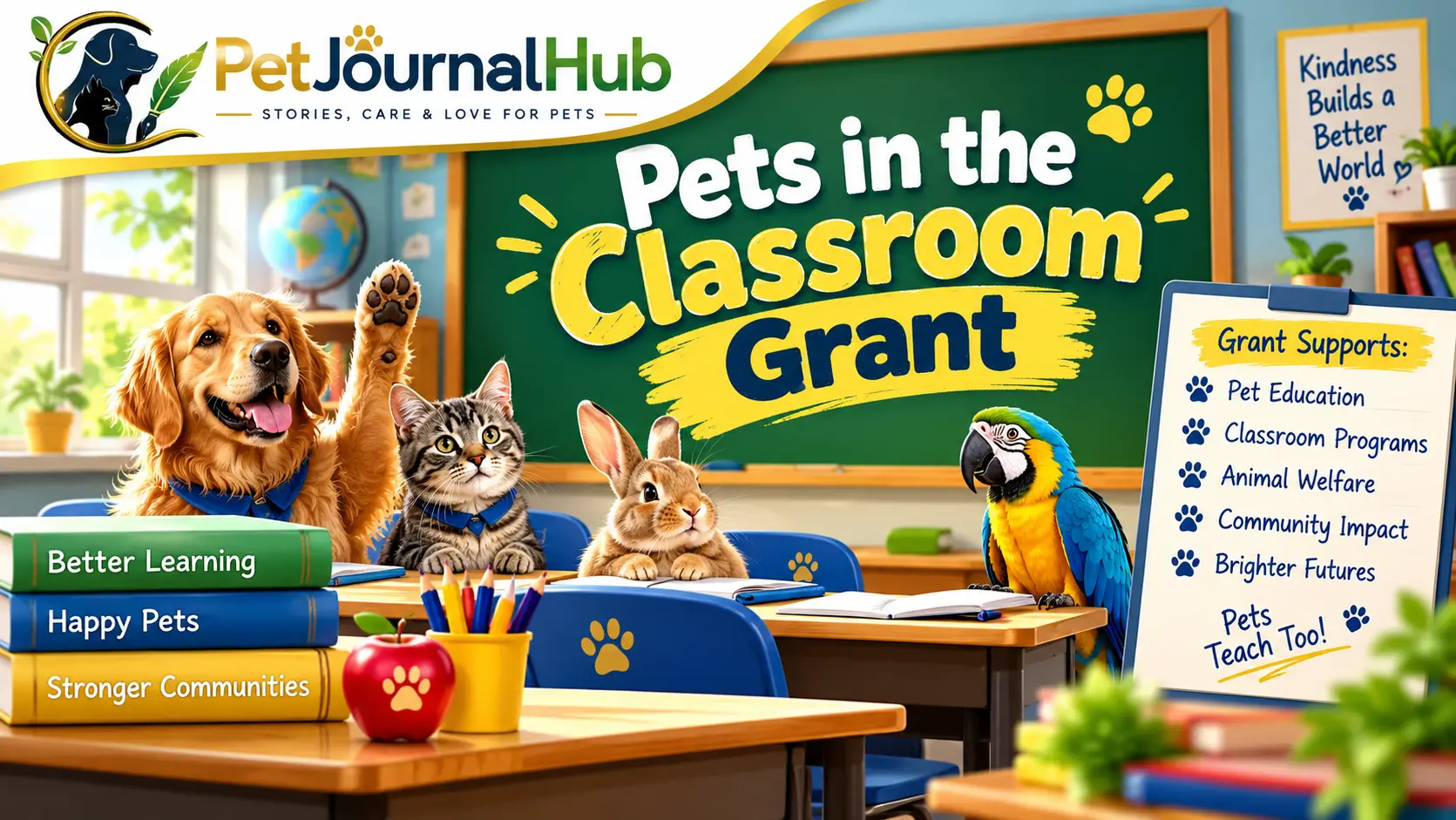
A pets in the classroom grant helps eligible educators pay for a classroom pet and the supplies needed to care for it. The Pets in the Classroom program offers participating teachers store coupons, reimbursement grants, and yearly support grants. Teachers should check eligibility, choose a suitable animal, and review current rules before applying or making purchases.
Key Takeaways
- The Pet Care Trust administers the Pets in the Classroom grant program.
- Eligible educators in qualifying US and Canadian schools can apply.
- Grant options include retailer coupons, reimbursement grants, and yearly sustaining support.
- Initial rebate grants may cover up to $75 for certain small animals or $125 for eligible aquarium and reptile categories.
- The sustaining grant offers up to $50 per school year to eligible returning teachers.
- Teachers must plan for animal welfare, classroom safety, weekend care, and school approval.
Introduction
A classroom pet can turn everyday lessons into hands-on learning experiences. Students may observe animal behavior, practice careful observation, discuss living things, and learn why animals need food, clean habitats, and gentle handling. However, a classroom animal also creates real responsibilities for teachers and schools.
The cost of a suitable habitat, food, bedding, filters, heating equipment, and veterinary care can make teachers hesitate. A grant may reduce some of these expenses and make a responsible classroom pet more affordable.
The pets in the classroom grant program gives eligible educators a way to seek help with purchasing or maintaining certain classroom animals. Its options depend on the type of grant, the animal selected, and the program’s current rules. Some options provide retailer coupons, while others reimburse eligible purchases after teachers submit receipts.
Before applying, teachers should consider more than the initial purchase price. They need permission from school leadership, a reliable care plan, and a safe place for the animal during weekends and school holidays. They should also check student allergies, fear of animals, hygiene needs, and local rules.
This guide explains how the program works, who may qualify, what the available grants cover, and how to choose a suitable classroom pet. It also explains the application process, possible expenses, common mistakes, and alternatives for teachers who cannot obtain funding.
What Is a Pets in the Classroom Grant?
The Pets in the Classroom program is an educational grant initiative administered by The Pet Care Trust, a nonprofit private foundation. It helps eligible educators introduce and maintain qualifying companion animals in classroom settings.
The program aims to support students’ educational and personal development through responsible interaction with animals. It also encourages teachers to learn about animal care before bringing a pet into school.
Teachers can explore several funding routes. Retailer coupon grants provide specified benefits at participating stores. Rebate grants let eligible teachers purchase approved items and request reimbursement. Sustaining grants help qualifying returning teachers maintain an existing classroom pet or, under program rules, obtain another animal and necessary supplies.
These grants do not cover every animal or every expense. The program excludes certain animals and activities, including cats and dogs as classroom residents, livestock, insects, and some classroom life-cycle projects. Always check the current eligibility list before choosing an animal.
Official program information: https://petsintheclassroom.org/
Quick Facts Box
| Fact | Details |
| Program administrator | The Pet Care Trust |
| Main purpose | Support eligible classroom pets and their care |
| Eligible educators | Qualifying educators serving students in eligible school settings |
| Initial funding options | Retailer coupons or eligible rebate grants |
| Small animal rebate | Up to $75 for listed eligible categories |
| Aquarium and reptile rebate | Up to $125 for listed eligible categories |
| Sustaining grant | Up to $50 per eligible school year |
| Application method | Online application through the official program |
| Main responsibility | Provide proper care for the animal throughout its life |
| Important restriction | Grant rules determine eligible animals, purchases, and applicants |
Grant amounts and eligibility details can change. Confirm the current terms on the official application pages before spending money.
Where Does the Pets in the Classroom Grant Come From?
The program comes from The Pet Care Trust, which supports education about companion animals and responsible pet ownership. The trust works with pet retailers and product suppliers to offer eligible educators different forms of assistance.
This partnership matters because teachers may need both an animal and the equipment required to keep it healthy. Depending on the grant, assistance may cover eligible habitat supplies, food, bedding, toys, filters, lighting, or other necessary items.
The program does not simply provide an unrestricted cash payment. Each grant type has its own conditions, purchase rules, and documentation requirements. Teachers should read the terms before selecting a grant.
History and Evolution of the Program
The program has developed around a practical educational goal: helping teachers introduce animals into classrooms while supporting responsible care. Its current options include initial grants and sustaining grants for continuing care.
For the 2026–27 school year, the official website describes an updated application system for returning teachers. Existing applicants may need to reset their passwords rather than use old saved login links.
Teachers should avoid relying on old blog posts or previous application instructions. Grant categories, retailer participation, deadlines, and login procedures can change between school years. The official website remains the best place to confirm current details.
Key Characteristics and Care Needs
A successful classroom pet needs an appropriate habitat, a suitable daily routine, and a teacher who can provide care beyond school hours. The animal’s needs should guide the decision, not just its price or popularity.
Choose an animal that fits the classroom. Fish, certain small mammals, birds, and some reptiles may suit particular educational settings. However, no species works well in every classroom. Noise, temperature, space, handling needs, and student allergies can affect the choice.
Prepare the habitat first. Research the correct enclosure size, temperature, lighting, ventilation, bedding, water quality, and enrichment needs for the selected species. Set up and test equipment before bringing the animal to school.
Plan for weekends and holidays. Animals need care when students leave. Arrange a responsible adult caregiver, safe transport when appropriate, and a clear plan for longer school breaks.
Protect students and animals. Teach students to approach calmly, wash their hands after contact, and follow the teacher’s handling rules. Some animals should be observed rather than handled. Never allow students to disturb an animal while it sleeps, eats, or hides.
Budget for long-term care. A grant may reduce initial expenses, but food, replacement supplies, cleaning, equipment repairs, and veterinary care can continue for years.
Quick Comparison Snapshot
| Grant option | Best For | Key Difference |
| PetSmart store coupon grant | Teachers choosing an eligible option at PetSmart | Provides specific store coupons rather than general cash |
| Other participating retailer coupon grants | Teachers who can shop at an eligible partner | Benefits and eligible products depend on the retailer |
| Rebate grant | Teachers who need an eligible animal or prefer a qualifying independent pet store | Teacher buys eligible items and submits receipts |
| Sustaining grant | Eligible returning teachers maintaining classroom pet care | Offers up to $50 for qualifying expenses each school year |
These options are not interchangeable. Check the official program’s current grant descriptions, participating retailers, and animal categories before applying.
Pets in the Classroom Grant for Teachers
Pets in the Classroom Grant for Teachers
Teachers in qualifying schools can apply for assistance with a classroom pet, provided they meet the program’s current requirements. The program serves eligible educators in the United States and Canada, including qualifying public and private school staff.
The official eligibility page lists teachers and other school-based professionals, such as librarians, guidance counselors, and school nurses. However, not every educational setting qualifies. Homeschools and in-home daycare settings do not qualify under the published rules.
Before applying, complete these checks:
- Confirm that your school and role meet the current eligibility requirements.
- Get permission from your principal or school administrator.
- Check student allergies, fears, and any school animal policies.
- Select an eligible animal and research its care requirements.
- Review grant options and confirm which purchases each option covers.
Visit the official eligibility page at https://petsintheclassroom.org/do-you-qualify/ before starting an application. Requirements can change, so use the current rules rather than relying on another teacher’s past experience.
PetSmart Classroom Pet Grant
The PetSmart grant is a store coupon option within the Pets in the Classroom program. Eligible teachers receive personalized coupons for specified classroom-pet items at a participating PetSmart location.
This option may suit teachers who want to purchase an eligible animal or its supplies from PetSmart. However, the grant does not work like an unrestricted cash award. The coupons have specific conditions, and eligible items depend on the program’s terms and availability.
Teachers should check whether a nearby store participates and whether it carries the chosen animal and required equipment. The program also requires PetSmart grant recipients to establish a Treats membership before redeeming their coupons.
Review the current options on the official grant application page. Do not buy supplies assuming a coupon will cover them until you understand the grant’s rules.
Pets in the Classroom PetSmart
Pets in the Classroom is the broader grant program, while PetSmart is one of its retail partners. Understanding this distinction helps teachers compare funding choices instead of assuming every grant follows the same process.
The PetSmart option uses store-specific coupons. Other choices may provide coupons through another participating retailer or reimburse qualifying purchases through a rebate grant.
For example, a teacher who wants a particular animal may find that a rebate grant offers more flexibility. A teacher who prefers a participating retailer may find a store coupon easier to use.
The best option depends on the animal, local store availability, and the items the classroom needs. Review the program’s current pet options and grant terms before submitting an application.
Top 10 Classroom Pets
There is no single best classroom pet for every age group or school. Teachers should choose an animal based on its welfare needs, available space, classroom conditions, and the school’s ability to provide long-term care.
Here are 10 classroom-pet possibilities to research. Their suitability depends on species-specific needs, school rules, and grant eligibility.
- Betta fish: May suit observation-based lessons when the teacher provides a properly sized, maintained aquarium.
- Other suitable aquarium fish: Can support lessons about habitats and water quality, but need appropriate tank conditions.
- Guinea pigs: Offer opportunities to study mammal behavior, but require adequate space, companionship considerations, and daily care.
- Hamsters: Can help students learn about nocturnal behavior. Their sleep schedule may make daytime handling unsuitable.
- Gerbils: Allow observation of burrowing and social behavior, with appropriate housing and enrichment.
- Rats: Can be engaging animals to observe, but need suitable social housing, enrichment, and careful handling.
- Rabbits: Require substantial space, gentle handling, and specialized care. They may not suit busy classrooms.
- Hermit crabs: Need carefully controlled habitat conditions and species-appropriate care.
- Leopard geckos: Require suitable heating, shelter, diet, and reptile-specific husbandry.
- Other suitable small reptiles: May support observation-based learning when the teacher can meet their specialized needs.
This list is a starting point, not a grant-approved shopping list. Confirm each species against the program’s current eligible-pet list. Cats, dogs, livestock, and certain other animals do not qualify as classroom residents under the program’s published rules.
Pets in the Classroom Grant Petco
Petco is another retail partner associated with the program. Depending on the current grant options, an eligible teacher may select a Petco store coupon grant for approved classroom-pet items.
The main benefit of a store coupon grant is that it connects the teacher’s award to a participating retailer. However, the teacher must follow the coupon conditions rather than assume the award covers any animal or product.
Before choosing this route, check three things: whether the store is accessible, whether the desired pet is eligible, and whether the store stocks the necessary habitat and care supplies.
Teachers who prefer a local independent pet store can also investigate the rebate option. That route involves paying for eligible purchases and submitting the required receipts for reimbursement.
For the latest options, start at the official Pets in the Classroom application portal.
Pets in the Classroom Login
Teachers use the official program portal to manage applications. New applicants need to create an account, verify their email address, set a password, and provide proof of employment, such as a school badge or pay stub.
Returning teachers should follow the updated login instructions for the 2026–27 school year. The program has changed its grant system, so an old saved login link may no longer work. Existing users should follow the official instructions to reset their passwords.
A simple application checklist can prevent avoidable delays:
- Use an email address you can access outside school.
- Enter your complete school information accurately.
- Prepare the required employment document.
- Read the grant terms before choosing an option.
- Check your inbox and spam folder for updates.
- Keep copies of application records and purchase receipts.
Start at https://petsintheclassroom.org/apply-for-your-grant/ rather than entering your information through an unverified website. If you have trouble accessing your account, follow the program’s published recovery instructions.
Classroom Pets Stuffed Animals
Stuffed animals offer an alternative when a live classroom pet is unsuitable. They can help teachers introduce animal vocabulary, storytelling, creative writing, and pretend-care activities without taking responsibility for a living animal.
Teachers can use plush animals to encourage students to describe body parts, compare habitats, practice gentle behavior, or create fictional animal-care routines. They can also work well in classrooms where allergies, school rules, or limited resources prevent live-animal ownership.
However, stuffed animals do not replace the experience of observing a living creature. They cannot demonstrate real feeding behavior, growth, movement, or habitat needs.
If a live pet is not appropriate, a stuffed animal may still support engaging lessons. Teachers can combine it with books, videos, observation worksheets, and age-appropriate science activities.
Pets in the Classroom Video Contest
A classroom-pet video contest can give students a creative way to share what they learn about animal care. Teachers might create a short educational video about habitat design, responsible feeding, observation skills, or the importance of treating animals gently.
However, the existence of a grant program does not automatically mean a current video contest is accepting entries. Teachers should check the official website for current contest announcements, eligibility, deadlines, and submission requirements before planning an entry.
If a contest is available, protect student privacy. Follow school rules for filming, obtain the required parent or guardian permissions, and avoid showing identifying information without authorization.
Keep the animal’s welfare first. Never stage frightening situations, force handling, interrupt feeding, or disturb an animal’s rest to capture a video. A calm observation or a student-created educational presentation can communicate learning without stressing the pet.
Daily Care Routine: How to Get Started
A classroom pet needs a consistent routine that continues when the classroom closes. Build the care plan before bringing the animal to school.
Step 1: Obtain approval. Discuss the plan with school leadership. Review school policies, allergies, student safety, and responsibility for costs.
Step 2: Research the species. Use reliable care guidance to learn about the animal’s housing, diet, temperature, enrichment, cleaning, and health needs. Consult a veterinarian with relevant experience when necessary.
Step 3: Prepare the habitat. Assemble the enclosure and equipment before acquiring the animal. Test any required heating, filtration, or lighting systems.
Step 4: Assign adult responsibility. Students can participate in supervised activities, but a responsible adult must oversee care. Children should not carry the full responsibility for an animal’s health.
Step 5: Create a written schedule. Record feeding, cleaning, water checks, equipment checks, and any other species-specific tasks. Adapt the schedule to the animal’s needs rather than following a generic routine.
Step 6: Plan for school closures. Decide who will care for the pet during weekends, holidays, emergencies, and summer breaks. Never assume the animal can safely remain unattended.
Step 7: Teach safe interaction. Set clear rules for handwashing, gentle behavior, supervised contact, and when students should observe without touching.
Cost Breakdown
The total cost of a classroom pet includes more than the animal itself. Teachers should budget for initial setup, ongoing supplies, equipment replacement, and possible veterinary care.
| Expense | What to Plan For |
| Animal | Purchase or adoption cost, where applicable |
| Habitat | Enclosure, tank, secure lid, or other housing |
| Equipment | Filters, lights, heating, thermometers, or other species-specific items |
| Food and water supplies | Appropriate diet and safe water arrangements |
| Bedding and enrichment | Suitable substrate, hiding places, toys, or other enrichment |
| Cleaning | Safe cleaning supplies and routine maintenance |
| Veterinary care | Health checks, illness, injury, and emergency needs |
| Holiday care | A suitable caregiver and any associated transport or care costs |
The official program currently lists rebate grants of up to $75 for certain small animals and up to $125 for eligible aquarium, fish, amphibian, or reptile categories. A separate betta fish rebate is listed at up to $75. Eligible returning teachers may apply for a sustaining grant of up to $50 per school year.
These are maximum grant amounts, not promises that every expense will be covered. The teacher may need to pay the difference. Reimbursement applicants must also follow the receipt rules and approved purchase conditions.
For a current breakdown of eligible expenses, read the program’s official FAQs.
Common Mistakes Teachers Make
Teachers can avoid many problems by planning before they apply or acquire an animal.
Choosing a pet because it looks easy. Small size does not mean low care needs. Research the species and its full life span before making a decision.
Assuming every animal qualifies. Grant rules exclude certain animals and activities. Verify eligibility before purchasing anything.
Buying supplies too early. Rebate grants require eligible purchases and supporting documents. Confirm the grant terms first and keep itemized receipts.
Ignoring weekends and holidays. Animals need ongoing care outside school hours. Arrange a dependable adult caregiver before bringing the pet into the classroom.
Forgetting allergies and fears. Check with school leadership and follow school procedures before selecting an animal.
Letting students handle animals without supervision. Children may unintentionally frighten or injure a pet. Set clear rules and supervise all interactions.
Relying on outdated application links. Use the current official portal and follow the latest instructions.
Treating the grant as a complete care budget. Funding can help with approved expenses, but the teacher and school still need a plan for uncovered costs.
Pros and Cons
| Pros | Cons |
| Can reduce the cost of eligible classroom-pet expenses | Funding has specific limits and conditions |
| Offers different grant routes | Not every animal or purchase qualifies |
| Can support hands-on learning | Requires daily and long-term care |
| Provides a reason to teach responsibility and animal welfare | Allergies, fear, or school rules may prevent a live pet |
| May offer annual support to eligible returning teachers | Teachers must meet application and documentation requirements |
| Offers educational resources alongside funding | Grant approval does not remove the need for a care plan |
The program can help a prepared teacher, but it does not make every classroom suitable for an animal. A pet should come into the classroom only when its welfare and the school’s needs can both be protected.
Similar Options and Alternatives
Teachers who cannot use a particular grant can consider other ways to provide animal-related learning. The following alternatives do not necessarily provide funding; they offer different ways to meet educational goals.
| Option | Best For |
| School-funded classroom pet | Schools that can budget for ongoing care |
| Parent-approved educational visit | Occasional supervised contact with an animal |
| Local animal shelter education program | Learning about adoption and responsible ownership |
| Wildlife or aquarium education program | Observing animals without keeping one in class |
| Digital animal observation activities | Classrooms with allergies or strict animal policies |
| Stuffed animals and science kits | Younger students and pretend-care lessons |
| Teacher-approved observation journals | Building science and writing skills through animal videos or demonstrations |
A live classroom pet is only one way to teach students about animals. Choose the approach that meets learning goals without creating an unsafe or unsuitable environment.
When to Consult a Vet or Professional
Teachers should consult a qualified veterinarian when they need species-specific advice about health, nutrition, housing, behavior, or signs of illness. A veterinarian can help determine whether the animal’s environment and care routine meet its needs.
Seek prompt veterinary guidance if the pet shows unusual behavior, stops eating, has breathing difficulties, develops an injury, or shows other concerning changes. The appropriate response depends on the species and symptoms, so avoid guessing at a diagnosis or treatment.
School leadership should help address allergies, student safety, hygiene, and animal-related policies. A qualified animal-care professional can also help teachers assess whether a species suits the classroom.
Good planning is especially important for reptiles, amphibians, fish, and small mammals because their environmental needs differ. If a classroom cannot meet an animal’s needs, choose another educational approach rather than forcing the arrangement to work.
Fun Facts About Classroom Pets
- Fish can support lessons about aquatic habitats and water quality.
- Small mammals can help students observe movement, social behavior, and rest patterns.
- Reptiles often require specific temperature and habitat conditions.
- Feeding needs vary widely between species.
- Some animals are most active at night, which affects classroom observation.
- Animal-care journals can combine science observations with reading and writing.
- Habitat maintenance provides practical opportunities to discuss cleanliness and responsibility.
These activities work best when teachers match lessons to the animal’s natural behavior and avoid disturbing it for demonstrations.
Frequently Asked Questions
What pets can you have in a classroom?
Suitable classroom pets depend on school rules, student needs, available space, and the teacher’s ability to provide proper care. Fish, certain small mammals, and some reptiles may work in appropriate settings. However, a species that suits one classroom may be unsuitable for another. Check allergies, handling risks, housing needs, and holiday-care arrangements before choosing an animal. If you plan to use a Pets in the Classroom grant, verify that the species appears on the current eligible-pet list. Never choose an animal solely because it is inexpensive or popular.
What pets can you get for free?
Teachers may find animals through reputable rescue groups, shelters, or community adoption programs, but availability and adoption fees vary. A free animal is not necessarily an inexpensive pet because it may still need suitable housing, food, equipment, and veterinary care. The Pets in the Classroom program does not currently fund adoption fees, according to its published FAQ, although eligible rebate or sustaining grants may help cover qualifying supplies. Check the rules before making purchases, and never accept an animal without understanding its needs and long-term care costs.
What are some ideas for classroom pets?
Start by matching the animal to the learning goals and the classroom environment. An aquarium may support lessons about aquatic habitats, while a suitable small mammal may allow students to observe movement and behavior. A reptile may provide an opportunity to study temperature needs and adaptation, provided the teacher can maintain the correct habitat. Teachers can also choose non-live alternatives, such as stuffed animals, science kits, or virtual observation activities. Before choosing a live animal, consider noise, student allergies, handling rules, cleaning needs, and care during school holidays.
What are some cheap classroom pets?
The least expensive option depends on the species, setup requirements, and ongoing care. A low purchase price does not guarantee low lifetime costs. Fish may require an appropriately sized aquarium, filtration, water testing, and maintenance. Small mammals need suitable housing, bedding, food, enrichment, and veterinary care. Before selecting a pet, compare the full setup cost with the recurring monthly expenses. A grant may reduce eligible costs, but it may not cover everything. If the school cannot support proper care, use educational videos, stuffed animals, or science activities instead.
Who can apply for a Pets in the Classroom grant?
The program’s published eligibility guidance includes qualifying educators serving students in eligible public and private school settings in the United States and Canada. It also lists certain school-based professionals, such as librarians and guidance counselors. Homeschools and in-home daycare settings do not qualify under the published rules. Because requirements may change, review the official eligibility page before applying.
How much money does the grant provide?
The official program lists several options. Eligible rebate grants can provide up to $75 for certain small animals and up to $125 for eligible aquarium and reptile categories. A separate betta fish rebate offers up to $75, and the sustaining grant provides up to $50 per eligible school year. Retailer coupon grants work differently. Confirm the current award terms, eligible expenses, and documentation requirements before spending money.
Can teachers apply for the grant every year?
The published rules state that the initial store coupon or rebate grant is a one-time award per teacher. After receiving an initial grant, eligible teachers may apply for the sustaining grant each school year. The sustaining option can help with ongoing supplies or, under program rules, another classroom pet. Eligibility still depends on meeting the current requirements and deadlines. Check the official application portal before submitting a new application.
Final Thoughts
A classroom pet can make learning more hands-on and give students a practical way to explore animal behavior and responsibility. But a successful experience begins with careful planning, not with the animal’s purchase.
The Pets in the Classroom program offers eligible educators several ways to seek support. Teachers can compare retailer coupon grants, rebate options, and sustaining grants based on their circumstances. They should also confirm the current rules, choose an eligible animal, and keep the required application records and receipts.
Most importantly, the grant should support a care plan that already makes sense. The teacher needs suitable housing, a reliable daily routine, a budget for ongoing expenses,

Sophia Bennett is an animal care contributor at PetJournalHub. She writes educational articles about companion animals, pet wellness, training, and daily care. She believes that trustworthy information helps every pet owner build a healthier and happier life for their pets.