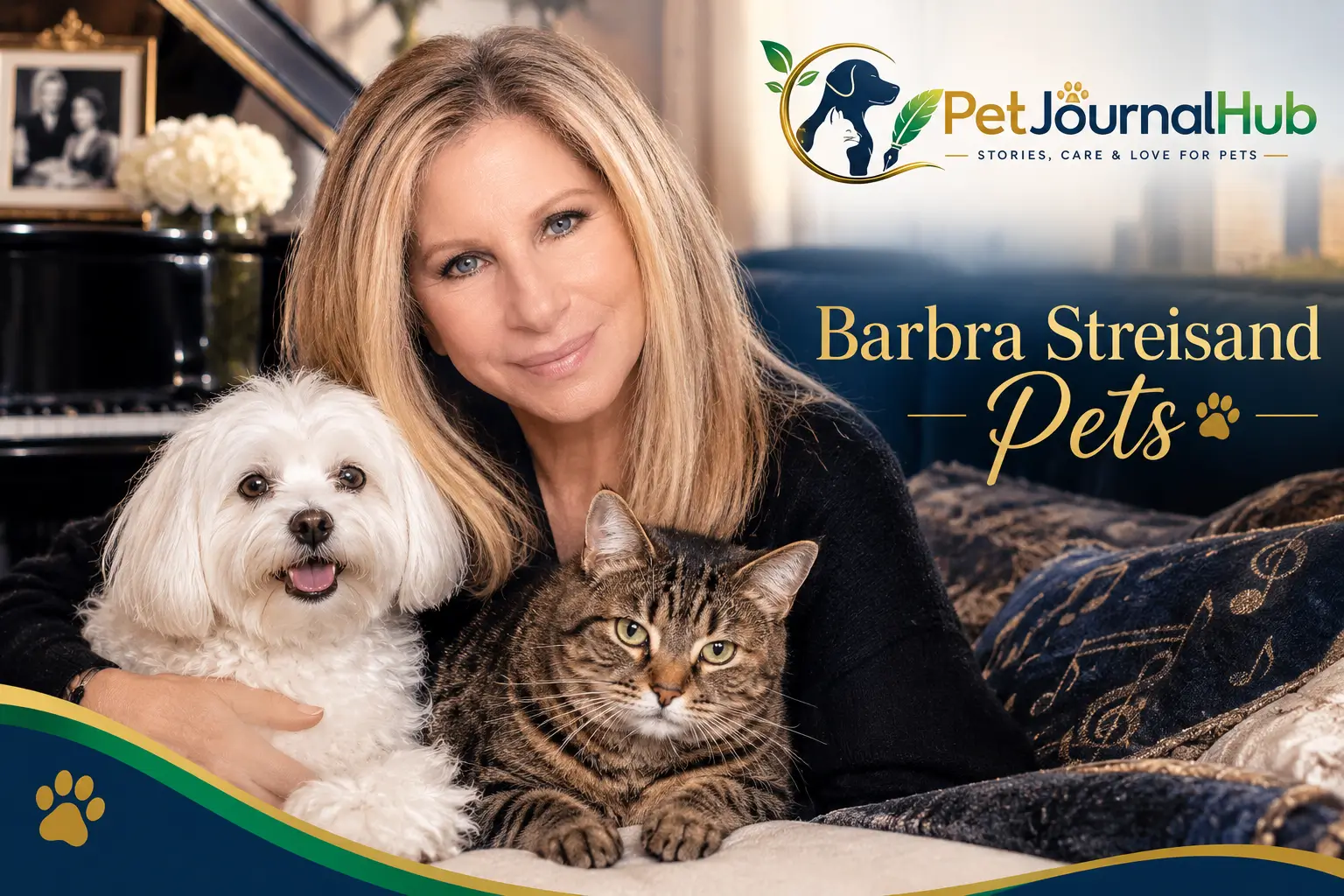
Barbra Streisand became a major topic in pet cloning discussions after revealing that she had cloned her beloved dog, Samantha. Two resulting dogs, Miss Scarlett and Miss Violet, shared Samantha’s nuclear DNA, while Miss Fanny joined the family through a different route. Their story highlights the science of cloning, the bond between people and pets, and the importance of responsible dog care.
Key Takeaways
- Barbra Streisand made headlines in 2018 after sharing the story of cloning her late dog, Samantha.
- Samantha was a Coton de Tulear, a small companion breed originally from Madagascar.
- Miss Scarlett and Miss Violet came from Samantha’s genetic material. Miss Fanny was a relative, not a clone.
- Cloning copies genetic information, but it cannot guarantee the same personality, memories, or life experiences.
- Commercial dog cloning costs tens of thousands of dollars. ViaGen Pets currently lists a price of $50,000, although prices can change.
ViaGen Pets
+1 - Every dog needs individual care, including routine veterinary visits, suitable food, grooming, exercise, and affection.
Introduction
Celebrity pets often capture public attention, but some stories also raise important questions about animal welfare and modern science. The story of Barbra Streisand and her dogs is one example. It combines a deeply personal experience of losing a companion with a technology that allows scientists to create a genetic copy of an animal.
Streisand, the award-winning singer and actor, shared her experience in 2018 after the death of Samantha, her beloved Coton de Tulear. She explained that she had preserved cells from Samantha before her death. Scientists later used that genetic material to produce puppies named Miss Scarlett and Miss Violet. Streisand also welcomed another dog, Miss Fanny, who belonged to Samantha’s extended canine family.
CBS News
+1
The story attracted attention because cloning pets remains expensive, scientifically complex, and ethically debated. It also raised a question many dog lovers ask: Can a cloned dog truly replace a pet that has died?
The answer depends on what someone means by replacement. A clone can share much of its donor’s genetic identity, but it develops its own experiences, habits, relationships, and personality.
This guide explores the dogs, their breed, cloning costs, the science behind the process, and practical lessons for dog owners. It also separates confirmed information from claims that lack reliable support.
What Is the Story Behind Barbra Streisand’s Pets?
The story centers on Samantha, a much-loved dog whose death led Streisand to explore pet cloning. In 2018, she publicly explained why she chose this unusual option and introduced the resulting dogs to the public.
Samantha lived with Streisand for 14 years and died in 2017. Before her death, a veterinarian collected cells from inside her cheek and from her stomach area. Those samples supplied genetic material for the cloning process.
CBS News
+1
The process produced Miss Scarlett and Miss Violet. Streisand also had a third dog, Miss Fanny, who came from a distant relative of Samantha rather than from cloning.
Her story does not mean that every pet owner should consider cloning. Instead, it offers a useful starting point for understanding how people respond to pet loss and what current reproductive science can achieve.
For most families, adoption, responsible breeding, and providing a safe home remain practical ways to welcome another dog.
Quick Facts Box
| Fact | Details |
| Celebrity | Barbra Streisand |
| Original dog | Samantha, also called Sammie |
| Breed | Coton de Tulear |
| Samantha’s reported age at death | 14 years |
| Year Samantha died | 2017 |
| Cloned dogs | Miss Scarlett and Miss Violet |
| Third dog in the 2018 reports | Miss Fanny |
| Cloning method | Somatic cell nuclear transfer |
| Public revelation | 2018 |
| Commercial cloning price | ViaGen lists $50,000 for a dog |
The family details come from contemporary reporting and Streisand’s own clarification. The current commercial price comes from ViaGen Pets, so readers should check its official website before making financial plans.
CBS News
+2
Where Does This Celebrity Pet Story Come From?
The story began with Streisand’s relationship with Samantha, not with a plan to promote cloning. After losing a dog she had loved for years, Streisand wanted to preserve a connection to her companion.
She later explained that she learned about cloning through a friend who had cloned a dog. That experience helped shape her decision. Her account appeared in news coverage in February and March 2018.
WRAL News
+1
The public discussion soon moved beyond one celebrity. People debated whether cloning could ease grief, whether a genetic copy would feel like the original pet, and whether the process treated animals fairly.
These questions still matter. The technology can reproduce genetic material, but it cannot recreate a shared history. A cloned puppy must still learn about its home, build relationships, and develop through normal experiences.
History and Evolution of Pet Cloning
Scientists developed animal cloning techniques long before Streisand shared her story. However, cloning a dog presented special technical challenges because canine reproduction differs from that of some other mammals.
In 2005, researchers at Seoul National University in South Korea produced Snuppy, widely recognized as the first dog successfully cloned from an adult dog’s cells. Researchers later verified Snuppy’s genetic identity through DNA analysis.
Nature
+1
Commercial pet cloning later made the technology available to some owners who could afford it. Streisand’s 2018 announcement brought renewed attention to this service and its emotional, financial, and ethical questions.
Today, pet cloning remains a specialized service rather than a routine part of pet ownership. Owners should carefully examine the provider’s process, animal-welfare policies, legal requirements, and total fees before considering it.
Key Characteristics and Care Needs of These Dogs
Samantha and the dogs associated with her story belonged to the Coton de Tulear breed. These small companion dogs have a distinctive cotton-like coat and a lively, affectionate nature. Their size can suit many homes, but their grooming needs require regular attention.
American Kennel Club
+1
Cotons generally enjoy human company. They benefit from daily activity, gentle training, social contact, and opportunities to explore their surroundings. Their long coats can tangle or mat without careful brushing.
Cloning does not remove these responsibilities. A cloned dog needs the same basic care as another dog of comparable age and health. Owners should also remember that genetics alone cannot determine every behavior or health outcome.
Quick Comparison Snapshot
This table compares the three dogs discussed in the original public story.
| Option | Best For | Key Difference |
| Samantha | Understanding the original bond | The original dog whose cells supplied the genetic material |
| Miss Scarlett | Understanding cloning | One of the puppies created from Samantha’s genetic material |
| Miss Violet | Understanding cloning | Another puppy created from Samantha’s genetic material |
| Miss Fanny | Understanding family relationships | A relative of Samantha, not a clone |
These distinctions matter because reports sometimes simplify the story by suggesting that Streisand ordered two separate cloning procedures. Streisand clarified that one procedure resulted in a litter, with three puppies surviving; two of those puppies were the clones commonly discussed in news reports.
Barbra Streisand
+1
Barbra Streisand cloned dogs cost
Dog cloning costs far more than adopting a dog or buying a puppy from a responsible breeder. ViaGen Pets currently lists dog cloning at $50,000, payable in two equal installments. The company notes that applicable sales tax may add to the final bill.
ViaGen Pets
+1
That price represents the provider’s listed fee, not necessarily every expense an owner might face. Transportation, veterinary visits, sample collection, and other arrangements may affect the total. Anyone considering the service should request a written quote and clarify which services the fee includes.
Cloning also differs from ordinary breeding. A breeder helps produce a puppy through reproduction, while cloning uses genetic material from an existing animal to create a genetic copy.
For many households, the cost would place cloning well beyond their pet budget. Responsible adoption or conventional breeding can offer another route to companionship without the same financial commitment.
What affects the total cost?
Before paying for any cloning service, ask the provider about:
- The complete procedure fee and payment schedule.
- Sample collection and genetic preservation charges.
- Veterinary assessments and follow-up care.
- Transport arrangements for samples or puppies.
- What happens if the process does not produce a surviving puppy.
- Any contract terms, refund limits, or additional fees.
Do not rely on old celebrity headlines for current prices. Providers can change their fees, and each contract may cover different services.
Barbra Streisand dog breed
The breed associated with Samantha and her cloned puppies is the Coton de Tulear. This small companion dog originated in Madagascar and takes its name from its soft, cotton-like coat and the city of Tulear. The American Kennel Club recognizes the breed in its Non-Sporting Group.
American Kennel Club
+1
Cotons typically weigh around 8–15 pounds, depending on sex and the individual dog. They often enjoy companionship, play, and learning through positive training. Their long coat creates a grooming commitment that prospective owners should consider carefully.
The breed can suit families, singles, and older adults who have enough time for daily interaction. However, no breed suits every household. A dog’s temperament, early experiences, health, and training all affect how well it fits a particular home.
Is a Coton de Tulear easy to care for?
These dogs can adapt well to indoor life, but their coats need regular care. Daily brushing may help prevent painful mats, especially when an owner keeps the coat long. Regular nail trims, ear checks, dental care, and veterinary visits also belong in the routine.
A Coton still needs walks, play, and mental stimulation. Small size does not mean a dog can thrive without exercise or company. If you work long hours away from home, plan for companionship and bathroom breaks.
Barbra Streisand dog Sadie
The keyword “Barbra Streisand dog Sadie” may reflect confusion between different celebrity-pet names. The well-documented dog at the center of Streisand’s cloning story was Samantha, also called Sammie. Reliable contemporary reports identify Miss Scarlett, Miss Violet, and Miss Fanny as the other dogs in the 2018 story.
CBS News
+1
I could not verify a reliable source that identifies a dog named Sadie as one of the dogs in that story. It would be misleading to present Sadie as Samantha’s clone or as a confirmed member of Streisand’s household.
For readers researching celebrity pets, this is a useful reminder: similar names can appear in unrelated stories, social posts, and search results. Check the original interview or a reputable report before treating a name as fact.
If you are considering a dog named Sadie yourself, the name has no bearing on breed, health, or temperament. Focus on the individual dog’s background, behavior, and care needs.
Barbra Streisand Coton de Tulear
The Coton de Tulear gained extra public attention through Samantha’s story, but it is a distinct breed with a history that predates modern cloning. Its roots lie in Madagascar, where the breed developed as a companion for people. The American Kennel Club describes Cotons as bright, cheerful dogs that enjoy being close to their people.
American Kennel Club
+1
Their soft, often white coat is one of their best-known features. That appearance can be appealing, but owners should consider the time and cost needed to keep it clean and free of tangles.
Grooming and exercise needs
A practical care routine includes gentle brushing, regular bathing when needed, nail trimming, and checks of the ears, eyes, teeth, and skin. If the coat mats easily, a professional groomer can help you choose a manageable length.
Daily walks and play give Cotons physical activity. Short training sessions also provide mental exercise and strengthen the bond between dog and owner.
Are they suitable for first-time owners?
A Coton may suit a first-time owner who welcomes a companion dog and can commit to grooming and training. However, prospective owners should meet the dog, speak with a reputable breeder or rescue group, and discuss health screening.
No breed is guaranteed to be hypoallergenic. People with dog allergies should spend time around the breed before making a commitment.
Barbra Streisand dog Samantha
Samantha was the original dog behind the cloning story. Streisand described a strong bond with her companion and explained that losing her after 14 years was deeply upsetting. Before Samantha died in 2017, her veterinarian collected cells that later supplied the cloning process.
WRAL News
+1
The decision attracted attention because it showed how far some people may go to maintain a connection with a beloved pet. It also brought an important distinction into public view: preserving DNA does not preserve a pet’s memories or experiences.
Samantha’s story offers a lesson that applies to every dog owner. A pet’s value comes from the relationship built over time, not simply from its physical traits or genetic identity.
What can owners learn from Samantha’s story?
People often look for ways to manage grief after losing an animal companion. Some create photo albums, preserve a collar, donate to an animal charity, or support a rescue group in their pet’s memory.
There is no single correct way to remember a pet. Owners should choose an approach that respects their feelings and fits their circumstances. They should also give themselves time before deciding whether to welcome another animal.
A new dog can become a deeply loved companion without needing to resemble the one who died.
Barbra Streisand dog Samantha: What made the cloning possible?
The key was collecting biological material while Samantha was alive. A cloning provider needs suitable cells or preserved genetic material, so owners cannot assume that a sample collected after a pet’s death will always work. Timing, sample quality, and the provider’s procedures matter.
Streisand’s account described collecting cells from Samantha’s cheek and stomach area before her death. Scientists used that material in the cloning process.
WRAL News
+1
Pet owners interested in genetic preservation should speak directly with a qualified provider and their veterinarian. They should ask about sample collection, storage, future fees, and whether the service makes any promises about successful cloning.
Genetic preservation alone does not create a puppy. It stores material that might support a later procedure, subject to the provider’s requirements and the quality of the sample.
How Does Dog Cloning Work?
Dog cloning commonly uses a method called somatic cell nuclear transfer, or SCNT. In simple terms, scientists place genetic material from a donor body cell into an egg cell whose own nucleus they have removed. They then attempt to stimulate the reconstructed egg to develop into an embryo.
Nature
+1
The process involves several biological steps and veterinary procedures. A surrogate dog carries the pregnancy if an embryo develops successfully. The result is not a time-reversed version of the donor; it is a new animal with a shared genetic starting point.
Does cloning guarantee an identical dog?
No. A clone shares the donor’s nuclear genetic identity, but that does not guarantee identical appearance, behavior, or health. Environmental influences, development, socialization, and individual experiences help shape a dog’s life.
Even dogs born together can develop different habits and preferences. Streisand herself noted that her cloned dogs had different personalities.
CBS News
+1
Cloning cannot bring back the original animal’s memories or recreate the years spent with its owner. It creates another dog that needs its own care and deserves to be treated as an individual.
Barbra Streisand net worth
Barbra Streisand’s wealth sometimes appears in searches about her dogs because commercial cloning requires a large financial commitment. However, her exact net worth is not necessary to understand her decision, and public estimates can vary by source, date, and method.
A celebrity’s financial resources also do not tell pet owners whether cloning represents a good choice for them. The more useful questions concern the procedure’s cost, animal welfare, the limits of genetic copying, and the owner’s expectations.
For ordinary dog owners, a realistic budget should cover food, grooming, training, preventive veterinary care, and unexpected medical bills. These expenses matter throughout a dog’s life, regardless of whether the dog comes from a breeder, a shelter, or a cloning service.
Barbra Streisand husband
Streisand’s husband is actor James Brolin. They married in 1998, according to widely published biographical accounts. Their relationship sometimes appears in celebrity searches alongside her family life, but it does not change the scientific facts about her dogs.
For pet owners, the relevant lesson is that caring for an animal works best when the household agrees on responsibilities. Family members should discuss feeding, exercise, grooming, veterinary costs, and plans for travel before bringing a dog home.
A shared plan can prevent confusion and help the dog settle into a stable routine. Every household member should also understand how to handle the dog safely and recognize signs of stress or illness.
Barbra Streisand effect
The Barbra Streisand effect describes a situation in which an attempt to suppress or hide information draws even more attention to it. The term comes from a 2003 incident involving Streisand’s effort to restrict publication of a photograph of her home. The resulting publicity made the image more widely known.
This concept differs from her pet-cloning story. Streisand openly discussed cloning Samantha; the story did not become famous because she tried to hide it. Still, the example shows how a celebrity’s personal decisions can spark a much larger public conversation.
For pet owners, the useful takeaway is to assess claims carefully rather than follow a viral headline. Look for the original statement, a reliable scientific explanation, and an independent animal-welfare perspective before deciding what a story means.
Daily Care Routine for a Coton de Tulear
A Coton de Tulear needs a predictable routine that supports health, comfort, and good behavior. The exact schedule depends on age, health, coat length, and activity level, so adapt it to your dog’s needs.
- Morning: Offer fresh water, a suitable meal, and a bathroom break. Take your dog for a walk that matches its fitness and age.
- During the day: Provide safe toys, short training sessions, and companionship. Arrange a suitable caregiver or bathroom break if you will be away for long periods.
- Grooming: Brush the coat gently and check for tangles, skin irritation, or debris. Daily brushing helps prevent mats in long coats.
- Evening: Offer exercise or play, feed according to your veterinarian’s guidance and the food label, and allow time to relax with the family.
- Regularly: Check the nails, ears, teeth, and coat. Keep up with veterinary visits and any recommended parasite prevention.
Avoid making a young puppy follow an adult dog’s exercise routine. Puppies, older dogs, and animals with health concerns may need different activity levels.
Supplies to prepare
Before bringing a Coton home, arrange the basics:
- Complete dog food suited to the dog’s life stage.
- Food and water bowls.
- A comfortable bed and a secure carrier.
- A suitable collar or harness and leash.
- A brush and comb for the coat.
- Safe toys and reward treats.
- Waste bags and cleaning supplies.
- Contact details for a licensed veterinarian.
Buy supplies based on the dog’s actual needs rather than assuming every product marketed for small breeds is appropriate.
Cost Breakdown: Owning a Coton Versus Cloning a Dog
Cloning represents a different financial commitment from ordinary dog ownership. The procedure itself may cost tens of thousands of dollars, while routine ownership creates recurring expenses over the animal’s lifetime.
| Expense | What to consider |
| Dog cloning | ViaGen currently lists $50,000 for dog cloning; confirm the latest fee and contract terms. |
| Adoption or breeder fee | Varies by organization, location, age, and source. |
| Food | Depends on food type, portion needs, and the dog’s size. |
| Grooming | Long coats may require home supplies or professional grooming. |
| Veterinary care | Routine visits, preventive care, dental needs, and unexpected illness all affect costs. |
| Training and supplies | Costs depend on the dog’s needs and the services you choose. |
| Pet insurance | Premiums, exclusions, deductibles, and coverage vary by provider and policy. |
The table gives cost categories rather than fixed lifetime totals because local prices and individual needs vary. Get current quotes before committing to a breeder, groomer, insurance policy, or cloning provider.
Do not spend your entire pet budget on acquiring a dog. Keep money available for everyday care and unexpected veterinary needs.
Common Mistakes Pet Owners Make
A famous pet story can inspire people, but it can also create unrealistic expectations. These are some mistakes worth avoiding.
Assuming a clone will behave exactly like the original
Genetic similarity does not guarantee the same personality. A new puppy still needs training, socialization, and time to develop its own habits.
Choosing a breed based only on appearance
A Coton’s soft coat may attract attention, but grooming takes time. Consider exercise needs, temperament, health, and the demands of daily care before choosing a dog.
Underestimating long-term expenses
Food, grooming, veterinary care, and emergency treatment continue after the initial purchase or adoption fee. Build a budget that allows for these recurring costs.
Trusting every online claim
Search results can mix up pet names, cloning prices, and details about celebrity households. Check original statements and reputable sources before repeating a claim.
Treating cloning as a way to avoid grief
A new dog cannot restore the original relationship. If you are grieving, take time to decide whether you feel ready to care for another animal.
Skipping routine veterinary care
A dog’s genetic background does not replace physical examinations or preventive care. Follow your veterinarian’s recommendations for health checks, vaccinations, dental care, and parasite prevention.
Pros and Cons of Pet Cloning
Pet cloning offers a way to reproduce an animal’s nuclear genetic identity, but it has important limits. Anyone considering it should weigh the emotional reasons against the financial cost and animal-welfare concerns.
| Pros | Cons |
| Can preserve the donor’s nuclear genetic identity in a new animal | Does not recreate the original pet’s memories or personality |
| May appeal to owners who value genetic continuity | Costs tens of thousands of dollars |
| Creates another opportunity for a human-animal bond | Requires a complex reproductive process |
| May be an option for some owners with preserved cells | Outcomes and individual traits cannot be guaranteed |
| Advances knowledge of reproductive science | Raises ethical questions about animal welfare and the use of surrogate animals |
The existence of a service does not automatically make it the right choice. Ask providers about their procedures, animal care standards, success definitions, and transparency around unsuccessful attempts.
The American Veterinary Medical Association emphasizes animal welfare across housing, nutrition, health care, and humane handling. Those principles should guide any decision involving animal reproduction.
American Veterinary Medical Association
+1
Similar Breeds and Alternatives
People drawn to the story may also be interested in small companion dogs. The best alternative depends on grooming preferences, activity levels, household needs, and the time available for training.
| Option | Best For |
| Havanese | Owners seeking a small, sociable companion and willing to maintain a long coat |
| Bichon Frise | Families interested in a cheerful small dog with regular grooming needs |
| Maltese | People looking for a small companion dog and prepared for careful coat maintenance |
| Toy Poodle | Owners who want an intelligent, trainable small dog and can provide grooming and mental exercise |
| Adult rescue dog | People who prefer to assess an individual dog’s established behavior before adoption |
| Coton de Tulear | Owners who appreciate a playful companion and can manage its coat and daily exercise |
These are starting points, not guarantees of temperament or health. Meet the individual dog, ask about its background, and discuss breed-related health concerns with a veterinarian or responsible breeder. Rescue organizations can also help match a dog’s needs with your household.
Adoption may be especially appealing if you want to offer a home to a dog that already needs one. An adult dog’s energy level and behavior may be easier to assess than those of a very young puppy, though each animal remains an individual.
When to Consult a Vet or Professional
A veterinarian should guide your dog’s preventive care, health checks, nutrition questions, and any concerns about unusual behavior. Contact a veterinary clinic if your dog shows signs of illness or a sudden change from its normal routine.
Seek urgent veterinary help for breathing difficulty, collapse, severe bleeding, suspected poisoning, or other signs of a potentially life-threatening problem. Do not wait for an online answer when a dog may need emergency treatment.
For a Coton de Tulear, ask your veterinarian about dental care, weight management, parasite prevention, coat and skin concerns, and an appropriate exercise routine. Your dog’s age, medical history, and lifestyle will affect the recommendations.
If you are considering cloning or genetic preservation, consult a licensed veterinarian and a qualified provider before collecting or storing samples. Ask about the procedure, animal-welfare safeguards, legal requirements, total costs, and the limits of any guarantees.
A reputable professional should answer questions clearly without promising an exact copy of a pet’s personality or a risk-free outcome.
Fun Facts About the Dogs and Their Story
- Samantha was a Coton de Tulear. Her breed originated in Madagascar and is known for its cotton-like coat.
American Kennel Club
+1 - Samantha lived for 14 years. Contemporary reporting described her age when she died in 2017.
CBS News
+1 - Miss Scarlett and Miss Violet came from Samantha’s genetic material. Streisand publicly discussed their origins in 2018.
CBS News
+1 - Miss Fanny had a different connection to Samantha. Reports described her as a distant relative, rather than a clone.
The Guardian
+1 - Dog cloning predates the celebrity story. Snuppy, an Afghan hound, became the first successfully cloned dog in 2005.
Seoul National University
+1 - Clones can have different personalities. Genes matter, but development, environment, and experiences also influence behavior.
National Geographic
+1 - A clone is a new individual. It needs its own socialization, training, veterinary care, and relationship with its family.
Frequently Asked Questions
1. What dogs does Barbra Streisand have?
In a 2018 interview, Streisand discussed three Coton de Tulear dogs: Miss Scarlett, Miss Violet, and Miss Fanny. Miss Scarlett and Miss Violet came from Samantha’s genetic material, while Miss Fanny was a distant relative of Samantha. These names describe the dogs featured in that historical report, not a verified list of Streisand’s pets today. Current ownership details may change, so recent direct statements from Streisand or her representatives provide the best confirmation.
CBS News
+1
2. How long do cloned dogs live?
Scientists cannot promise an individual cloned dog’s lifespan. A clone may live a normal lifespan, but its future health depends on many factors, including genetics, development, environment, preventive care, and chance. The cloning provider ViaGen says cloned pets can have normal-length lives, but that statement comes from the company offering the service. It should not be treated as a guarantee for every animal. Owners should ask independent veterinary professionals about the available evidence and provide the same regular health care any dog needs.
Viagen Pets
+1
3. Who was the first dog to be cloned?
Snuppy, an Afghan hound born in South Korea in April 2005, is widely recognized as the first successfully cloned dog. Researchers at Seoul National University developed him using somatic cell nuclear transfer, a technique that transfers genetic material from a body cell into an egg cell. Independent DNA analysis later supported the claim that Snuppy was a genuine clone. His birth marked a major step in animal cloning research, although dog cloning remained technically difficult and raised questions about the efficiency and welfare of the process.
Nature
+1
4. What famous people have cloned their pets?
Barbra Streisand is one of the best-known celebrities to discuss cloning a companion animal publicly. In 2018, she explained that Miss Scarlett and Miss Violet came from cells collected from her late dog Samantha. Other public figures have also discussed pet cloning, but reports can vary in reliability and may confuse cloning with genetic preservation or ordinary breeding. It is best to verify each claim through a direct interview or a reputable news outlet. Celebrity examples do not establish whether cloning suits a particular owner or meets their animal-welfare standards.
CBS News
+1
5. Are cloned dogs exactly the same as the original pet?
No. A cloned dog shares the donor’s nuclear genetic identity, but it does not inherit the donor’s memories or learned behavior. Personality develops through a combination of genetics, environment, socialization, and experience. Even dogs with very similar genetic backgrounds may respond differently to people, training, and new situations. Owners should approach a clone as an individual animal, not as a guaranteed replacement for a deceased companion. It deserves its own identity, routine, training, and veterinary care.
National Geographic
+1
6. Is pet cloning safe and ethical?
Pet cloning raises scientific, financial, and animal-welfare questions. The process involves reproductive procedures and surrogate animals, so prospective owners should understand how the provider manages animal health and unsuccessful attempts. A service’s availability does not settle the ethical debate. Ask for transparent information about veterinary oversight, animal care, contracts, and the limits of the procedure. Consult an independent veterinarian who can help you evaluate the evidence without a financial interest in selling cloning services. The animal’s welfare should remain central to any decision.
American Veterinary Medical Association
+1
Final Thoughts
The story of Barbra Streisand’s dogs shows how deeply people can love their animal companions. Samantha’s death led Streisand to explore cloning, and Miss Scarlett and Miss Violet became part of a public conversation about genetics, grief, and the future of pet care.
Yet the most important lesson is not that cloning can reproduce a pet’s DNA. It is that every dog has an individual life. Genes may influence appearance and behavior, but they cannot recreate shared memories, familiar routines, or the unique bond between a person and an animal.
If you love the Coton de Tulear breed, take time to understand its grooming, exercise, and companionship needs. If you are thinking about cloning, investigate the science, costs, and animal-welfare concerns before making a decision. And if you have recently lost a pet, remember that you do not need to recreate the past to build another meaningful relationship.
Whether you adopt a rescue dog, work with a responsible breeder, or simply enjoy learning about celebrity pets, responsible care matters most. Give every animal patience, kindness, proper veterinary attention, and a safe place to call home.

Daniel Brooks is a pet research writer at PetJournalHub. He specializes in pet behavior, product research, and responsible pet ownership. He focuses on delivering accurate, reader-friendly guides that help pet owners provide the best care for their animals.