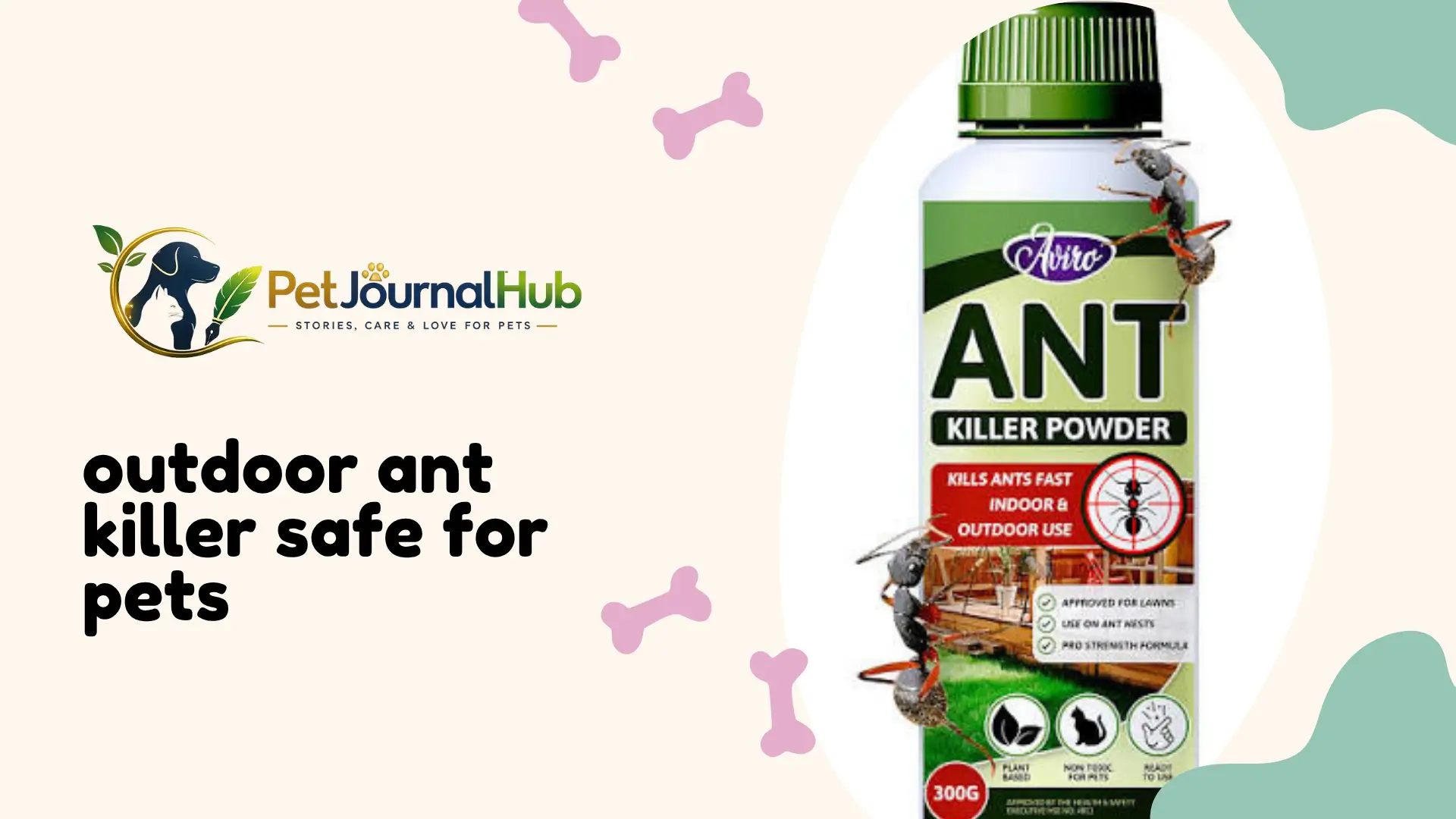
An outdoor ant killer safe for pets is a product or method that gets rid of ant colonies without exposing dogs, cats, or other pets to harmful chemicals. Safer options include enclosed bait stations, food-grade diatomaceous earth, and borax-based baits placed out of paw’s reach, always used exactly as the label directs.
Key Takeaways
- Outdoor ant killers safe for pets usually rely on enclosed bait stations, boiling water, or low-toxicity ingredients like diatomaceous earth.
- Products labeled “pet safe” are still not meant to be eaten, licked, or played with — safe means lower risk, not zero risk.
- Homemade options can work for small ant trails but rarely wipe out an entire colony.
- Cats tend to be more sensitive to pesticide ingredients than dogs, so double-check labels if you have cats.
- Always call your vet or the ASPCA Animal Poison Control Center if you suspect your pet ate an ant product.
- Cost for pet-safe options ranges from free (boiling water) to $30–$50 for a season’s worth of bait stations.
Introduction
Ants show up fast once the weather warms up, and most pet owners want them gone the same afternoon. The problem is that a lot of ant killers on store shelves list warnings for children and pets right on the back label. That’s scary when you have a dog who eats grass or a cat who explores every corner of the yard.
Finding an outdoor ant killer safe for pets means looking past the marketing on the front of the box and understanding what’s actually inside. Some products use enclosed stations so pets can’t reach the bait. Others rely on ingredients that are low-risk in small amounts but still shouldn’t be eaten on purpose.
This guide walks through what “pet safe” really means, which products and DIY methods tend to work, and when a chemical-heavy product might be worth the tradeoff. By the end, you’ll know how to pick something that clears your yard without a trip to the emergency vet.
What Is an Outdoor Ant Killer Safe for Pets?
An outdoor ant killer safe for pets is any product or method designed to reduce ant activity while limiting the chance of pet exposure to toxic ingredients. This usually means enclosed delivery systems, lower-toxicity active ingredients, or placement strategies that keep pets away from the treated area.
Most “pet safe” products fall into three groups. The first is bait stations, which house the poison inside a small plastic case so ants can enter but paws and noses can’t. The second is natural or low-toxicity powders, like food-grade diatomaceous earth. The third is DIY remedies, like boiling water or vinegar sprays, that use no synthetic pesticide at all.
None of these are risk-free. A curious dog can still chew through a bait station casing. A cat can still walk through diatomaceous earth and lick its paws later. “Safe” in this context means the risk is significantly lower than an exposed liquid spray or granular pesticide scattered across open grass — not that the product is harmless if eaten directly.
Quick Facts Box
| Fact | Details |
| Most common active ingredients in pet-safer baits | Borax (sodium tetraborate), boric acid |
| Common natural alternative | Food-grade diatomaceous earth |
| Riskiest ingredient category for pets | Synthetic pyrethroids and pyrethrins (found in many Raid-style sprays) |
| Most pet-sensitive species | Cats, especially to pyrethrin-based products |
| Typical cost range | Free (DIY) to $30–$50 per season |
| Where to place bait stations | Along fences, near ant trails, away from pet play areas |
| Who to call if a pet eats ant bait | Your veterinarian or the ASPCA Animal Poison Control Center |
Key Characteristics of Pet-Safer Ant Control
Pet-safer ant control products share a few traits: enclosed or contained delivery, lower-toxicity ingredients, and clear label instructions about pet exposure. Understanding these traits helps you compare products faster in the store aisle.
Enclosed bait stations are the biggest factor. Ants carry bait back to the colony, which kills the queen and the workers over several days. Because the bait sits inside a hard plastic housing, pets can’t lick or chew the poison directly unless they damage the casing.
Ingredient choice matters just as much. Borax and boric acid are common in “pet friendly” labeled products because they’re less acutely toxic than many synthetic pesticides in small amounts. Diatomaceous earth works completely differently — it’s a fine powder that damages an ant’s exoskeleton, not a chemical poison at all.
Label instructions round out the picture. A genuinely pet-safer product tells you exactly where to place it, how long to keep pets away from the treated area, and what to do if accidental exposure happens.
Quick Comparison Snapshot
| Option | Best For | Key Difference |
| Enclosed bait stations (e.g., Terro-style) | Yards with dogs who dig or chew | Poison stays sealed inside a casing |
| Food-grade diatomaceous earth | Cat owners wanting a non-chemical option | Physical action, not a chemical poison |
| Boiling water / DIY methods | Small, visible ant mounds | No pesticide exposure risk at all |
| Synthetic pyrethroid sprays | Severe infestations, used with pets removed | Fast-acting but higher pet toxicity risk |
Pet Safe Ant Killer Homemade
A homemade pet-safe ant killer usually means boiling water, diluted vinegar, or a borax-and-sugar bait placed inside a hidden container. These methods avoid store-bought pesticides but work best on smaller ant problems rather than large colonies.
Boiling water poured directly into an ant mound kills ants on contact and can damage the tunnel structure underneath. It’s free, has zero chemical risk to pets, and works best early in the morning before ants relocate.
A vinegar-and-water spray (roughly equal parts) disrupts ant scent trails, which stops new ants from following the same path into your yard. It won’t kill an entire colony, but it’s a low-risk first response you can use anywhere pets roam.
Borax mixed with sugar water can be placed inside a small container with tiny entry holes, then set somewhere pets can’t reach — think behind a planter or under a deck lip. This DIY version mimics a commercial bait station, though it takes more trial and error to get the ant-to-bait ratio right.
Outdoor Ant Killer Safe for Pets Homemade
Homemade outdoor formulas work best when combined with physical barriers, not chemical strength. Diatomaceous earth dusted along foundation lines, fence bases, and known ant trails is one of the most pet-conscious DIY approaches available.
Food-grade diatomaceous earth is different from the pool-grade version, which is not safe to use around pets or people. Only food-grade DE belongs anywhere your pet might walk. Even then, avoid dusting it directly in high-traffic pet areas since inhaling large amounts of any fine powder can irritate the lungs.
Cinnamon, cayenne pepper, and coffee grounds are other outdoor DIY deterrents some pet owners try. These aren’t proven to eliminate colonies, but they can discourage ants from crossing a specific line, like a doorway or patio edge, without introducing any toxic ingredient.
Best Outdoor Ant Killer Safe for Pets
The best outdoor ant killer safe for pets combines an enclosed delivery method with a lower-toxicity active ingredient, placed strategically away from pet zones. For most yards, that means bait stations positioned along the perimeter rather than in open lawn areas.
Look for products that specifically list child- and pet-resistant packaging, not just “natural” on the front label — natural doesn’t automatically mean safe in larger quantities. Borax-based stake or dome stations tend to strike a reasonable balance between effectiveness and lower risk.
This can vary depending on your yard layout, how many pets you have, and how determined the ant colony is, so it’s smart to read the full label and, if you’re unsure, ask your vet or a local pest control professional before choosing a product for a yard with pets.
Child and Pet Friendly Ant Killer
A child and pet friendly ant killer typically uses a tamper-resistant housing plus an ingredient with a wide safety margin, but “friendly” still means reduced risk, not risk-free. Families with both kids and pets need products that survive curious hands and paws equally well.
These products often carry certifications or claims on the label mentioning child-resistant caps or stations. Even so, keep any ant product — homemade or store-bought — out of reach of toddlers and pets during setup and while it’s active, and store leftover product in its original, sealed packaging.
Supervision matters as much as product choice here. A well-designed station can still be pulled apart by a determined dog or a toddler with strong hands, so placement out of normal traffic areas is just as important as what’s printed on the box.
Best Indoor Ant Killer Safe for Pets
Indoor ant control calls for even tighter safety margins than outdoor use, since pets spend more unsupervised time indoors. Gel baits in enclosed applicators and small bait stations tucked behind appliances tend to be the safer indoor picks.
Avoid spraying pesticide directly on floors, baseboards, or countertops pets can access. Gel bait syringes let you place tiny amounts inside cracks, behind outlets, or under sinks — spots ants travel through but pets generally can’t reach.
If you have a cat that jumps onto counters or a dog that noses along baseboards, stick to fully enclosed stations indoors rather than any product applied as an open spray or powder trail.
Pet Safe Ant Killer Home Depot
(Note: this is a shopping-location query, so this section stays brief and practical rather than duplicating the product comparisons above.)
Home improvement stores like Home Depot carry several nationally available bait station and borax-based ant products in their pest control aisle, often with “pet friendly” or “pet safe” callouts on the packaging. Availability and exact product lines can vary by store and season, so it’s worth checking the label in person and confirming active ingredients match what you’re looking for, rather than assuming every “pet safe” tag means the same formulation.
Is Raid Ant Killer Safe for Pets?
Most Raid outdoor sprays use synthetic pyrethroids, which can be harmful to pets — especially cats — if they walk through wet product or lick treated surfaces. Raid isn’t typically marketed as a pet-safe brand the way bait-station products are.
This can vary by specific Raid product line, since the company makes several formulations with different active ingredients. If you already own a Raid product, check the label for pyrethrin or permethrin, keep pets and kids off treated areas until the product fully dries, and follow the reentry time listed on the packaging.
If you have cats in particular, it’s worth choosing an alternative to open pyrethroid sprays altogether, since cats process these compounds differently than dogs and tend to be more sensitive to them.
Is Terro Ant Killer Safe for Pets?
Terro’s liquid bait products use borax as the active ingredient, housed inside small enclosed stations, which the brand markets as safer around pets than open sprays. The enclosed design is the main safety feature — it’s not that borax itself is harmless if eaten in quantity.
Pets that manage to break open or chew through a Terro station could still ingest enough borax to cause stomach upset. This can vary depending on the pet’s size and how much they consume, so it’s best to confirm placement guidance on the product label and keep an eye on stations after placing them, especially in a yard with a persistent chewer.
If your pet does get into a Terro station or any borax-based product, contact your veterinarian or animal poison control rather than waiting to see what happens.
Choosing the Best Outdoor Ant Killer Safe for Pets
The best outdoor ant killer safe for pets depends on your yard, the ant species, and your pet’s behavior. When comparing an ant killer safe for pets outdoor, look for enclosed bait stations, clear pesticide labels, and placement instructions that reduce accidental exposure. A homemade outdoor ant killer safe for pets, such as boiling water applied directly to an ant nest, may help with small infestations, but hot water can burn pets and damage plants.
If you are wondering, is Terro outdoor ant killer safe for pets?, check the exact product label before use. Terro outdoor products vary, and bait containing borax can still harm pets if ingested. Whether you need the best ant killer for outdoors safe for pets or an outdoor ant killer that is safe for pets, prioritize controlled placement over marketing claims. Never assume that a Terro ant killer outdoor safe for pets or another pet-labeled product is completely harmless.
Daily Care Routine / How to Get Started
Getting ant control right around pets is less about one perfect product and more about a routine. Start by identifying where ants are entering your yard or home before choosing any treatment.
- Follow the ant trail back to the entry point — a foundation crack, a fence gap, or a mound.
- Choose an enclosed bait station or DIY method based on that location, not just what’s on sale.
- Place bait away from pet beds, food bowls, and high-traffic patio areas.
- Check stations every few days for damage, especially if you have a dog that chews.
- Reapply or replace bait as directed on the label — most stations need refreshing every few weeks.
- Keep pets off any freshly treated area until it’s fully dry or set, per label instructions.
Consistency matters more than intensity. A light, repeated approach with enclosed stations usually beats one aggressive spray application, both for effectiveness and for pet safety.
Cost Breakdown
Pet-safer ant control ranges from free to moderately priced, depending on the method.
- DIY methods (boiling water, vinegar spray): Free to under $5
- Diatomaceous earth (food-grade, bulk bag): $10–$20, lasts multiple seasons
- Bait stations (multi-pack): $8–$15 per pack, often need replacing monthly during ant season
- Professional pest control visit: $100–$300 depending on your region and infestation size
Most pet owners spend somewhere between $20 and $50 across a full ant season using a mix of DIY prevention and store-bought bait stations, though your total will vary with yard size and how bad the infestation is.
Common Mistakes Pet Owners Make
A few habits show up again and again in yards with recurring ant problems and pet safety scares.
- Placing bait stations in open lawn areas instead of along fences or foundations where pets roam less.
- Assuming “natural” means harmless in any quantity, even for ingredients like diatomaceous earth or essential oils.
- Skipping the label’s reentry time after spraying, letting pets back into a treated area too soon.
- Forgetting to check stations regularly, so a chewed-open station goes unnoticed for days.
- Mixing DIY and store-bought products without checking whether the combination creates a stronger concentration than intended.
Pros and Cons
| Pros | Cons |
| Lower risk than open pesticide sprays | Still not completely risk-free if a pet chews through packaging |
| Works with most yard layouts and pet types | Bait stations can take days to fully clear a colony |
| DIY options cost little to nothing | DIY methods rarely eliminate large infestations alone |
| Enclosed designs reduce accidental licking | Requires regular checking and upkeep |
Similar Options and Alternatives
| Option | Best For |
| Professional pest control service | Large or recurring infestations beyond DIY control |
| Diatomaceous earth barriers | Cat households wanting a non-chemical perimeter |
| Ultrasonic pest deterrent devices | Pet owners wanting a no-chemical, no-bait approach (results vary and aren’t guaranteed) |
| Sealing entry points (caulk, weatherstripping) | Preventing ants from getting inside in the first place |
| Outdoor plant-based repellents (mint, lavender plantings) | Light deterrence around patios, not full elimination |
When to Consult a Vet or Professional
Call your veterinarian right away if your pet eats, licks, or shows signs of exposure to any ant product — vomiting, drooling, lethargy, or stumbling are all reasons to act fast rather than wait and watch. Keep the product packaging on hand so you can read off the active ingredients when you call.
If ants keep coming back despite bait stations and DIY prevention, that’s usually a sign the colony is larger than a home approach can handle. A licensed pest control professional can identify the nest location and use targeted treatment that keeps your pets further from any active ingredient.
This article is meant as general information, not a substitute for veterinary or professional pest control advice specific to your home and pets.
Fun Facts
- A single ant colony can contain thousands of worker ants, all reporting back to one queen.
- Ants leave invisible scent trails other ants follow, which is why vinegar (which disrupts scent) can slow them down temporarily.
- Diatomaceous earth is made from the fossilized remains of tiny aquatic organisms called diatoms.
- Borax has been used as a household cleaning and pest-control ingredient for well over a century.
- Not all ant species respond to the same bait — sweet baits work on some species, protein-based baits work better on others.
- Cats generally show higher sensitivity to certain pesticide classes, like pyrethrins, than dogs do.
Frequently Asked Questions
What is the best outdoor ant killer that is safe for pets? There isn’t one single “best” product, since it depends on your yard and pets. Enclosed bait stations using borax tend to offer a solid balance of effectiveness and lower pet risk for most households. Food-grade diatomaceous earth is a strong pick if you want a fully non-chemical option, especially with cats. Whichever you choose, placement away from pet play areas matters as much as the product itself, and checking the label for pet-specific warnings is always worth the extra minute.
How do I get rid of ants outside without harming pets? Focus on prevention first: seal cracks, remove standing water, and clean up food debris pets might also be drawn to. For active trails, boiling water or a vinegar spray disrupts them with zero chemical risk. For persistent colonies, place enclosed bait stations along fences or foundations rather than open lawn. Combining a few low-risk methods usually works better than relying on one product alone, and it keeps exposure risk to pets low throughout the process.
Is there an ant killer that is safe for pets? No ant killer is 100% risk-free if a pet manages to eat it directly, but several products are designed to lower that risk significantly. Enclosed bait stations, pet-labeled borax formulas, and food-grade diatomaceous earth all reduce direct exposure compared to open sprays or granules. The safest approach combines a lower-risk product with smart placement, away from where your pet naturally walks, digs, or plays, and following label directions closely.
What kills ants outside permanently? Nothing guarantees a truly permanent fix, since new colonies can move in even after you clear an existing one. The most lasting results usually come from targeting the queen through bait stations ants carry back to the nest, combined with sealing entry points so new colonies have less reason to settle nearby. Ongoing prevention — regular yard cleanup, sealed food sources, and periodic bait refreshing — does far more for long-term control than any single one-time treatment.
Final Thoughts
Choosing an outdoor ant killer safe for pets comes down to understanding what “safe” really means on a label. Enclosed bait stations, food-grade diatomaceous earth, and simple DIY methods like boiling water all lower risk compared to open pesticide sprays, but none of them are entirely risk-free if a pet gets into them directly.
The best results come from combining a lower-risk product with smart placement and a little routine upkeep — checking stations, following label directions, and keeping treated areas off-limits to pets until they’re fully set. If ants keep coming back or your pet ever gets into a product, don’t guess. Call your vet, and lean on a pest control professional for infestations that outgrow a DIY approach. Your yard can stay ant-free without turning it into a place your pets need to avoid.

Emily Carter is a pet care writer at PetJournalHub. She enjoys creating clear, practical, and well-researched articles about pet health, nutrition, grooming, and everyday care. Her goal is to help pet owners make informed decisions through reliable, easy-to-understand content.