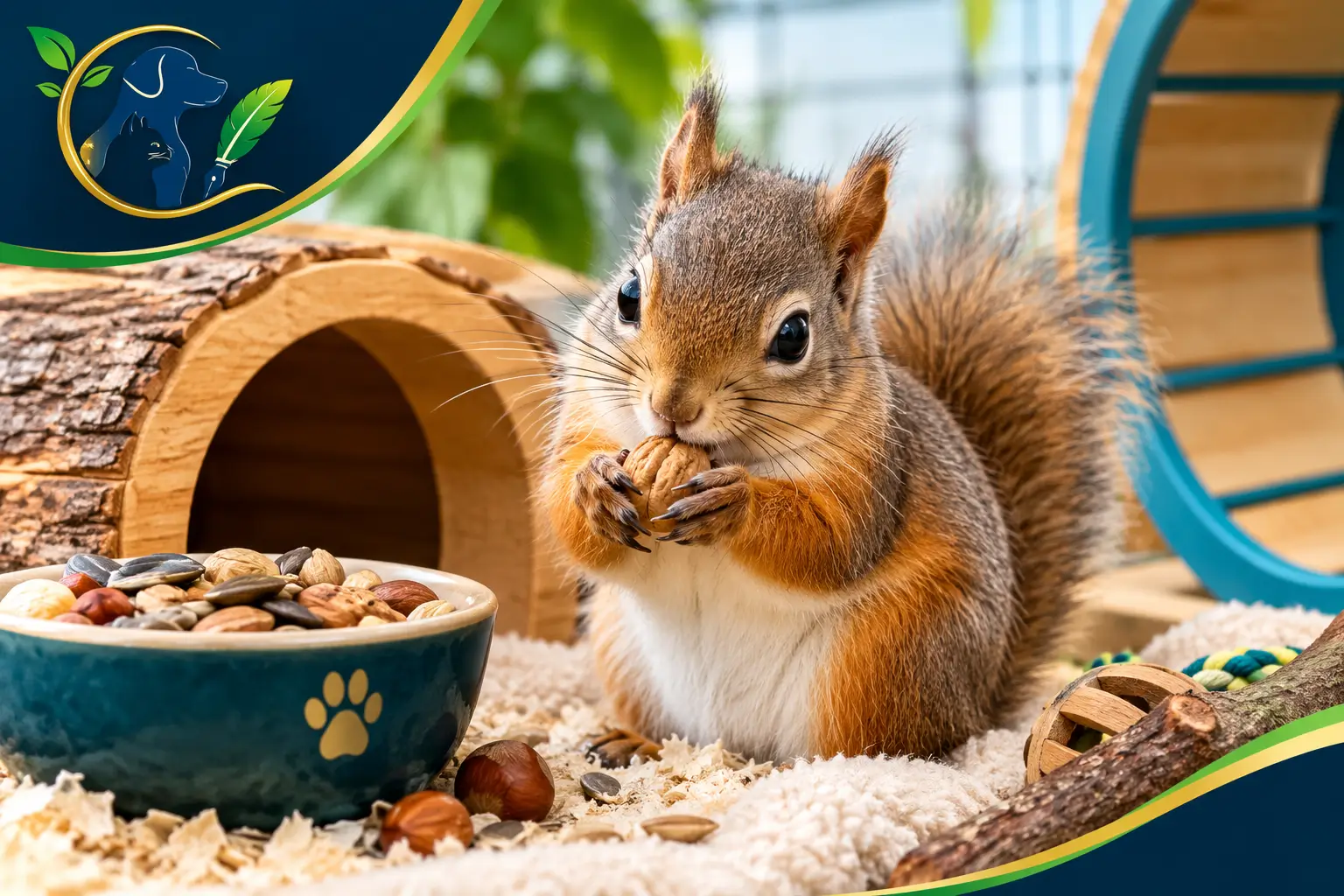
Squirrels are wild animals, not domesticated pets. Although some people raise them in captivity, squirrels have complex dietary, housing, and behavioral needs. Ownership may also violate local wildlife laws. Before considering a squirrel, understand its natural instincts, the risks of keeping one at home, and the legal requirements. For most people, observing squirrels outdoors is a safer and kinder choice.
Key Takeaways
- Squirrels retain their natural wild instincts, even when raised around people.
- Ownership laws vary by country, state, and species. Always check local wildlife regulations.
- Squirrels need specialized diets, climbing space, enrichment, and appropriate veterinary care.
- Their sharp teeth and claws can cause injuries, especially when they feel frightened or trapped.
- Finding a baby squirrel does not automatically mean it needs human care.
- Domesticated pets, such as guinea pigs or rats, may suit people who want a small companion animal.
Introduction
Squirrels are fascinating animals. They race along tree branches, bury food, solve problems, and explore their surroundings with impressive energy. Their fluffy tails and curious behavior make many people wonder whether they could enjoy the same qualities in a pet.
The idea becomes even more tempting when someone discovers a young squirrel or watches videos of squirrels interacting with people. A squirrel that accepts food from a human may appear friendly. However, comfort around people does not mean an animal has the temperament or needs of a domesticated companion.
Before bringing any unusual animal into your home, consider its long-term welfare. Squirrels need opportunities to climb, chew, forage, hide, and express natural behaviors. They may also become more difficult to manage as they mature. Their nutritional and medical needs can challenge even well-meaning caregivers.
This guide explains the realities of squirrel ownership, including legal restrictions, behavior, potential costs, and suitable alternatives. It also explains what to do if you discover an injured or apparently orphaned squirrel.
The goal is simple: help you make a responsible choice that protects both people and wildlife.
What Does Keeping a Squirrel as a Pet Mean?
Keeping a squirrel as a pet means caring for a wild rodent in a human-controlled environment rather than allowing it to live freely in its natural habitat. Some people keep captive squirrels legally under specific rules, while wildlife rehabilitators care for certain animals temporarily before release or another authorized outcome.
These situations are not the same. A licensed rehabilitation program aims to protect wildlife and support recovery. Private pet ownership focuses on keeping an animal as a companion, which may not meet its behavioral or welfare needs.
Squirrels belong to the family Sciuridae. This group includes tree squirrels, ground squirrels, and flying squirrels. Their size, habits, habitat needs, and seasonal behavior differ across species.
Most squirrels spend much of their time moving, searching for food, climbing, digging, or hiding. A typical household environment may not provide enough space or suitable opportunities for these activities.
A squirrel can also become accustomed to a familiar caregiver without becoming domesticated. Domestication involves changes across generations, not simply an individual animal learning to tolerate humans.
For these reasons, potential owners should assess legality and welfare before thinking about appearance, friendliness, or convenience.
Quick Facts About Squirrels
| Fact | Details |
| Animal group | Rodents |
| Scientific family | Sciuridae |
| Common types | Tree, ground, and flying squirrels |
| Domesticated? | No; squirrels remain wild animals |
| Typical behavior | Active, curious, alert, and inclined to climb or forage |
| Diet | Varies by species; may include seeds, nuts, fruits, fungi, and other foods |
| Housing needs | Secure, spacious, species-appropriate surroundings |
| Handling risks | Bites, scratches, stress, and escape |
| Veterinary care | A veterinarian experienced with wildlife or exotic mammals |
| Ownership rules | Depend on the species and local laws |
These facts describe squirrels broadly. A specific species may have different dietary, environmental, and seasonal needs.
Where Do Pet Squirrels Come From?
Squirrels naturally live in many regions around the world. Depending on the species, they inhabit forests, grasslands, woodlands, parks, and other environments with suitable food and shelter.
People sometimes acquire squirrels after finding babies outdoors. Others encounter captive animals through wildlife facilities or informal sellers. Neither situation automatically makes private ownership appropriate.
A squirrel on the ground may be exploring rather than abandoned. Its mother may still be nearby, and unnecessary intervention can separate a healthy young animal from its family.
If you find a squirrel that appears injured or orphaned, contact a qualified wildlife rehabilitator or appropriate local animal service. The Tufts Wildlife Clinic explains how to assess common situations involving baby squirrels and seek professional guidance.
Never capture a healthy wild squirrel simply because you want a companion. Respecting wildlife begins with leaving healthy animals in their natural environment.
Squirrels as Pets: History and Evolution
People have interacted with squirrels for centuries through wildlife observation, animal care, and occasional captive keeping. However, this does not mean squirrels have undergone the same domestication process as dogs or guinea pigs.
Modern interest often grows from close-up photographs, online videos, and stories about people raising young squirrels. These examples may show individual animals behaving calmly, but they cannot establish that squirrels generally make suitable household pets.
Captive care also differs from rehabilitation. Wildlife professionals may temporarily raise an orphaned squirrel because it cannot survive without assistance. Their goal typically involves restoring the animal’s health and preparing it for an appropriate outcome, often release when possible.
Private owners may have different goals, and their home environments may not support a squirrel’s natural behavior. A young squirrel that appears manageable can become more active, independent, and difficult to handle as it grows.
Understanding this difference helps prevent a common mistake: assuming that because a squirrel can live near people, it naturally belongs in a home.
Key Characteristics and Care Needs
Squirrels have physical and behavioral traits that make them challenging companions. Their bodies support rapid movement, climbing, jumping, and chewing. These abilities help them survive outdoors but can create problems inside a house.
Temperament and behavior
Squirrels are alert animals. They may investigate familiar people, accept food, or become comfortable in a predictable environment. However, their behavior can change when they feel threatened, overstimulated, or restrained.
A squirrel may bite or scratch during handling, even if it previously approached the same person calmly. It may also become territorial or defensive as it matures.
Space and enrichment
Squirrels need more than a small cage. Their environment must support climbing, movement, hiding, chewing, and other natural behaviors. Secure housing must also prevent escapes and protect the animal from household hazards.
Ordinary furniture, electrical cords, curtains, and wooden surfaces may attract chewing or climbing. Letting a squirrel roam freely without appropriate safeguards can put both the animal and household members at risk.
Nutrition
A squirrel’s diet depends on its species, age, health, and developmental stage. Although people often associate squirrels with nuts, a diet made up mostly of nuts does not provide a complete nutritional plan.
Growing squirrels have especially demanding nutritional needs. Incorrect feeding can lead to serious health problems, so caregivers should never rely on internet anecdotes or a generic seed mix as a complete diet.
Veterinary care
Routine veterinary care matters, but not every veterinarian has the training or facilities to treat wildlife. Before any legal captive care arrangement, confirm that an appropriately qualified professional can assess the animal and provide ongoing care.
Quick Comparison Snapshot
These options differ in temperament, care needs, and suitability for beginners. A squirrel should not be treated as interchangeable with a domesticated small pet.
| Option | Best For | Key Difference |
| Wild squirrel | Outdoor wildlife observation | Belongs in its natural habitat |
| Guinea pig | People seeking a small companion | Domesticated, with established companion-animal care guidance |
| Domestic rat | Owners interested in an intelligent small mammal | Domesticated and often comfortable with gentle, regular interaction |
| Hamster | People seeking a small pet with independent habits | Domesticated, usually needs a carefully planned enclosure and suitable handling |
Every animal needs proper housing, nutrition, veterinary care, and daily attention. Research the individual species before choosing a pet.
Can squirrels be pets for sale?
Squirrels may appear in online listings or through private sellers, but a listing does not prove that the sale is legal or ethical. Wildlife ownership and commercial trade rules depend on the species and the location.
Before considering any listing, check the applicable wildlife laws and determine whether the seller has lawful authority to transfer the animal. Ask about its species, origin, health history, and required documentation. Avoid sellers who cannot answer these questions or who encourage you to bypass regulations.
Buying a squirrel also creates a welfare concern. Captive breeding, transport, and unsuitable housing can cause harm when people prioritize demand over the animal’s needs.
For most prospective owners, purchasing a squirrel is not a sensible route to companionship. If you want a small pet, choose a domesticated species with well-established care guidance and accessible veterinary support.
Can you have a baby squirrel as a pet?
A baby squirrel should not automatically become a pet simply because someone finds it outdoors. Young squirrels may need their mother’s care, and human intervention can prevent a healthy baby from returning to its family.
If you discover a baby squirrel, first observe the situation from a safe distance. Keep children and pets away, and avoid unnecessary handling. If the baby appears injured, cold, weak, or genuinely orphaned, contact a wildlife rehabilitator for instructions.
Do not feed the baby cow’s milk, ordinary infant formula, or random mixtures from the internet. Incorrect feeding can cause serious harm. A young squirrel’s nutritional requirements change as it develops, and professional assessment helps determine the right next step.
Even when a person raises a baby squirrel successfully, the animal does not become domesticated. As it grows, it develops the strength, activity, and instincts of a wild animal.
The kindest response is to protect the squirrel’s welfare, not to assume that raising it at home is the best outcome.
Pet squirrel for sale: What should buyers know?
Anyone searching for a pet squirrel for sale should stop and verify the legal and welfare questions before making contact with a seller. Wild animals can face significant risks when people breed, transport, or keep them without suitable knowledge and facilities.
A responsible decision starts with three checks:
- Legal permission: Confirm whether the particular species can be privately owned or traded where you live.
- Animal welfare: Establish whether the animal came from a lawful, appropriate source and whether its housing and care needs can be met.
- Veterinary access: Identify a qualified veterinarian who can provide suitable examinations and ongoing treatment.
Do not assume that a captive-born squirrel is domesticated or that a seller’s assurances replace official permits. A legal exemption for rehabilitation or education may not allow private ownership.
For most households, a domesticated small mammal is a more practical choice. If a seller cannot establish the animal’s lawful origin or gives vague answers about its care, walk away rather than risk supporting harmful trade.
Can squirrels bite?
Yes. Squirrels can bite, and they may scratch with their sharp claws. A squirrel that seems calm may still bite when frightened, cornered, restrained, or startled.
Their teeth help them open and chew hard foods, while their claws support climbing. These natural features can cause injuries during handling. Young animals can also become harder to manage as they grow and develop stronger defensive behaviors.
Never try to grab a wild squirrel to test whether it is friendly. Do not let children handle one, and keep household pets away from squirrels that enter your yard.
If a squirrel bites or scratches you, wash the wound promptly with soap and running water. Seek medical advice for any bite that breaks the skin, especially if the wound is deep, becomes swollen, or shows signs of infection. A healthcare professional can assess the need for further treatment and review local guidance about animal exposures.
Do not try to catch or kill the squirrel yourself to identify a health risk. Contact local health or wildlife authorities for advice when needed.
How to keep a squirrel as a pet
There is no simple, universal method for keeping a squirrel as a household pet. Its care depends on species, age, health, legal status, and whether the animal requires rehabilitation or can lawfully remain in captivity.
For most people, the responsible choice is not to acquire one. If you already care for a squirrel under a lawful arrangement, consult an experienced wildlife or exotic-animal veterinarian and the relevant wildlife authority before making changes to its care.
Important considerations include:
- Secure housing: The enclosure must prevent escape and provide enough room for species-appropriate movement, climbing, hiding, and enrichment.
- Suitable nutrition: A qualified professional should help determine the diet. Do not rely on nuts alone or use improvised formulas for babies.
- Environmental enrichment: Opportunities to forage, climb, chew, and explore support natural behavior.
- Safe handling: Avoid unnecessary restraint. A frightened squirrel can injure itself or its caregiver.
- Veterinary oversight: Arrange professional examinations and ask about appropriate preventive care.
- Long-term planning: Consider daily care, housing maintenance, travel arrangements, emergency treatment, and what happens if your circumstances change.
A squirrel that requires temporary rescue also needs a different plan from an animal in a legally authorized captive program. If you find an injured squirrel, contact a rehabilitator before attempting to feed, medicate, or relocate it.
Squirrels as pets: What does their daily routine involve?
Squirrels need a routine that respects their natural activity and behavioral needs. However, a standard household schedule cannot guarantee that a squirrel will thrive in captivity.
A lawful captive-care arrangement should include professional guidance on feeding, enclosure checks, cleaning, enrichment, and observation. Caregivers must watch for changes in appetite, movement, alertness, and normal behavior.
A daily checklist might include:
- Checking that the enclosure remains secure and free from hazards.
- Providing the approved diet and fresh water as directed by the veterinarian.
- Removing waste and checking food and water containers.
- Maintaining suitable climbing and hiding opportunities.
- Observing the animal without forcing contact.
- Reporting unusual behavior or possible illness to a qualified professional.
Never treat a squirrel’s willingness to approach people as proof of good health or contentment. Wild animals may hide signs of illness, and excessive handling can add stress.
If you cannot provide species-appropriate housing, specialized veterinary care, and long-term attention, choose a domesticated pet instead.
Squirrels as pets history: Why do people want them?
Interest in captive squirrels often begins with their appearance or behavior. Their fluffy tails, quick movements, and problem-solving skills make them appealing to watch.
Social media can also create unrealistic expectations. A short clip might show a squirrel accepting food, sitting near a person, or exploring a room. It rarely shows the full daily routine, housing arrangements, veterinary expenses, or difficult behaviors that may occur later.
Another reason is the desire to help a baby animal. Finding a small squirrel alone can make people feel that they must take it home immediately. Yet a mother may still be caring for it, and unnecessary removal can reduce its chances of survival.
Education helps separate compassion from ownership. You can support squirrels by protecting trees, keeping pets away from wildlife, avoiding harmful feeding practices, and contacting trained rescuers when intervention is necessary.
Watching a squirrel outdoors can offer the enjoyment people seek without forcing a wild animal into an unsuitable environment.
Pet squirrel alternative: Which small animals are better choices?
If you love squirrels because they are active, curious, or small, several domesticated animals may offer a better fit. The right choice still depends on your budget, space, available veterinary care, and willingness to meet the animal’s needs.
| Option | Best For |
| Domestic rats | People who want an intelligent small mammal and can provide regular social interaction |
| Guinea pigs | Owners prepared to provide suitable housing, a fiber-rich diet, and compatible companionship |
| Hamsters | People who prefer observing a small pet and can respect its individual handling preferences |
| Gerbils | Owners interested in active burrowing animals and species-appropriate social housing |
| Domestic mice | People who can provide secure housing, enrichment, and careful handling |
| Rabbits | Households with adequate space, time, and access to rabbit-experienced veterinary care |
These alternatives are not maintenance-free. Guinea pigs need an appropriate source of vitamin C, rabbits need a suitable high-fiber diet, and small rodents have specific housing and social requirements.
Research the species before adopting. Consider how much interaction it needs, whether it should live with companions, its expected care costs, and whether a qualified veterinarian is available nearby.
The best pet is not necessarily the most unusual one. It is the animal whose needs you can meet consistently throughout its life.
Cost Breakdown: How Much Does Squirrel Care Cost?
The cost of caring for a squirrel varies with its species, housing needs, health, and local veterinary services. There is no single reliable price that applies to every squirrel or every location.
The purchase price alone, if lawful acquisition is even possible, tells you little about the total commitment. A secure enclosure, appropriate enrichment, suitable food, cleaning supplies, and veterinary care can all add to the expense.
| Expense | What to Consider |
| Initial setup | Secure, species-appropriate housing and climbing structures |
| Food | A professionally recommended diet suited to the squirrel’s age and species |
| Enrichment | Safe materials for chewing, exploring, hiding, and foraging |
| Veterinary care | Examinations, diagnostic tests, and treatment when needed |
| Housing maintenance | Cleaning supplies, repairs, and replacement materials |
| Emergency care | Unexpected illness or injuries requiring prompt professional attention |
| Legal requirements | Any applicable permits, inspections, or other official requirements |
Before making a commitment, ask a qualified veterinarian for an estimate of routine and emergency expenses. Also confirm whether local professionals can legally and appropriately treat the species.
Do not acquire a squirrel if you cannot afford its ongoing needs. Choosing a suitable domesticated animal with accessible veterinary care may make responsible ownership easier.
Common Mistakes People Make When Considering Squirrels
Good intentions do not always lead to good outcomes. Some common mistakes arise because people judge squirrels by their appearance or by brief interactions rather than their long-term needs.
Assuming every baby squirrel is abandoned
A baby on the ground may still have a mother nearby. Removing it too quickly can separate the animal from its family.
Feeding only nuts
Squirrels do eat nuts, but nuts alone do not meet every nutritional need. A poorly planned diet can contribute to serious health problems, particularly during growth.
Treating friendliness as domestication
A squirrel may become comfortable around a familiar person. It can still react defensively, especially when frightened or restrained.
Ignoring local laws
Wildlife rules can differ by species and jurisdiction. Never assume that keeping a squirrel is legal because someone else does it.
Underestimating housing needs
A small cage or ordinary pet carrier cannot automatically meet a squirrel’s environmental needs. Secure housing must also allow appropriate movement and enrichment.
Relying on social media for medical advice
A video cannot assess an animal’s age, health, nutritional status, or legal circumstances. Seek professional guidance instead of copying feeding or treatment methods from an online post.
Waiting too long to seek help
Changes in movement, appetite, breathing, or alertness may indicate a problem. Contact a qualified wildlife professional or veterinarian when you notice concerning signs.
Pros and Cons of Keeping a Squirrel
Some people find squirrels fascinating, but their appeal does not remove the practical and ethical challenges of captivity.
| Potential Appeal | Important Limitation |
| Intelligent and curious behavior | Needs opportunities to explore and solve problems |
| Active climbing and movement | Requires secure, species-appropriate space |
| Interesting natural behaviors | May not enjoy being held or petted |
| Can become familiar with a caregiver | Familiarity does not equal domestication |
| Unusual compared with common pets | Specialized care and legal restrictions can complicate ownership |
| Opportunity to learn about wildlife | Responsible observation outdoors avoids many captivity concerns |
For most households, the disadvantages outweigh the appeal. Watching squirrels in their natural habitat offers many of the same opportunities to enjoy their behavior without taking responsibility for an unsuitable pet.
When to Consult a Vet or Wildlife Professional
Contact a qualified wildlife rehabilitator when you find a squirrel that appears orphaned, injured, weak, or unable to move normally. Do not assume that a squirrel needs rescue simply because it is alone.
A professional can help determine whether the animal needs intervention and explain how to protect it while you wait. If a baby squirrel appears uninjured, its mother may still be able to retrieve it, so seek guidance before moving it.
Seek prompt veterinary advice if a squirrel already under your lawful care shows signs such as:
- A sudden change in appetite or drinking.
- Unusual weakness or difficulty climbing.
- Bleeding, swelling, or an obvious injury.
- Abnormal breathing or severe lethargy.
- Repeated falls, tremors, or difficulty moving.
- A major change in normal behavior.
These signs do not identify a specific disease. A veterinarian must assess the animal and determine the appropriate next steps.
If a squirrel bites or scratches someone, seek medical advice when the skin breaks. If your dog or cat catches a squirrel, contact a wildlife professional even when you cannot see an obvious wound.
Never attempt to treat a serious injury with human medication or an improvised feeding formula.
Fun Facts About Squirrels
Squirrels have several natural traits that explain why they are so interesting to observe.
- They belong to the rodent family. Squirrels are members of Sciuridae, a family that includes many different species.
- Many squirrels climb trees. Tree squirrels use their claws and agile bodies to move through branches.
- Their teeth keep growing. Like other rodents, squirrels have continuously growing incisors that need to wear down through normal use.
- Some squirrels store food. Depending on the species, squirrels may hide seeds or nuts for later use.
- Not all squirrels live in trees. Ground squirrels use burrows and spend much of their time on or below the ground.
- Flying squirrels glide rather than fly under their own power. A membrane between their limbs helps them glide between elevated points.
- Their diets vary. Food choices depend on the species, habitat, season, and availability of resources.
These adaptations help squirrels survive in the wild. They also explain why a typical home may not offer the right conditions for their physical and behavioral needs.
Frequently Asked Questions
Do squirrels make good pets?
For most people, squirrels do not make good pets. They remain wild animals and have needs that differ from those of domesticated companion animals. Their natural behaviors include climbing, chewing, exploring, and searching for food. Captivity can make these activities difficult to support, especially in an ordinary home.
Squirrels may also bite or scratch when frightened, and their care can require specialized veterinary knowledge. Legal restrictions add another concern. If you want a small companion animal, consider a domesticated species whose needs, housing, and health care you can manage. For squirrel lovers, outdoor observation offers a responsible way to enjoy these animals.
Can squirrels be attached to humans?
A squirrel can become familiar with a person, recognize a routine, or approach someone who regularly provides food. However, these behaviors do not necessarily mean it forms the same kind of bond associated with a domesticated dog or cat.
Individual squirrels differ in temperament, and familiarity does not guarantee that an animal will enjoy handling. A squirrel may approach a person one day and react defensively the next, particularly if it feels threatened.
Avoid using food to encourage wild squirrels to depend on people. Respect their space and observe their natural behavior from a distance. If you care for a squirrel under an authorized arrangement, ask a qualified professional about appropriate interaction and enrichment.
Is it safe to have a pet squirrel?
Keeping a squirrel at home can create risks for both the animal and its caregiver. Squirrels can bite and scratch, escape from unsuitable enclosures, chew household materials, and become stressed in environments that do not meet their needs.
There are also health and legal considerations. Any bite that breaks the skin deserves prompt medical advice, and local rules may restrict ownership or require specific authorization.
Safety depends on the species, the environment, and the circumstances, so no general statement can guarantee that keeping a squirrel is safe. For most people, a domesticated pet is a more practical choice. If you find an injured squirrel, contact a wildlife professional rather than attempting to keep it yourself.
Do squirrels like to be petted?
Squirrels generally do not have the same domesticated handling expectations as companion animals bred for life with people. Some captive squirrels may tolerate familiar contact, but that does not mean they enjoy being stroked, picked up, or restrained.
Touching can frighten an animal that depends on quick movement and escape to protect itself. A startled squirrel may bite or scratch, even if it previously seemed calm.
Never chase a wild squirrel to pet it. Instead, watch its behavior from a respectful distance. If an animal lives in a lawful professional-care setting, follow the guidance of its veterinarian or experienced caregiver. Respecting an animal’s boundaries is more important than making it accept human contact.
Can you legally own a squirrel?
The answer depends on your location, the species, and the purpose of keeping the animal. Some jurisdictions prohibit private ownership of certain native wildlife, while others may allow limited ownership under specific conditions.
Do not rely on an online seller’s claims or another person’s experience. Contact your local wildlife authority and ask about possession, transport, purchase, and permit requirements before acquiring any squirrel. Rules for wildlife rehabilitation may differ from those for private pet ownership.
If you live outside the United States, check the laws that apply in your own country and region. Legal permission alone also does not guarantee that a household can meet the animal’s welfare needs.
What should I do if I find a baby squirrel?
First, keep children and pets away and observe the animal from a safe distance. A baby squirrel may not be abandoned, and its mother may still be able to retrieve it.
If the baby has visible injuries, seems weak, or faces immediate danger, contact a wildlife rehabilitator or local animal service promptly. Avoid unnecessary handling and do not offer food, milk, or water unless a qualified professional instructs you to do so.
Explain where you found the squirrel and describe its condition. Follow the professional’s advice about whether it should remain where it is or needs temporary protection. The aim is to give the animal the best chance of appropriate care and, when possible, a return to the wild.
Do squirrels need a special diet?
Yes. A squirrel’s dietary needs depend on its species, age, development, and health. Although nuts and seeds are familiar foods, they do not automatically provide a complete diet.
Young squirrels have particularly sensitive nutritional requirements, and incorrect feeding methods can cause serious problems. Even adult squirrels need a diet appropriate for their species rather than a random mixture of foods intended for other pets.
Anyone caring for a squirrel under a lawful arrangement should consult a veterinarian experienced with the species. Never use a general online feeding chart as a substitute for professional guidance, especially when caring for a baby or an animal that appears ill.
Final Thoughts
Squirrels are remarkable wildlife, but their natural behavior makes them challenging companions. They need suitable space, specialized nutrition, opportunities to climb and forage, and access to appropriate veterinary care. Even a squirrel that seems comfortable around people may react defensively or struggle in a household environment.
Before considering ownership, check the law and think carefully about the animal’s long-term welfare. A young squirrel found outdoors may still have a mother, while an injured animal may need professional rehabilitation rather than a permanent home.
For most animal lovers, the best choice is to appreciate squirrels without trying to turn them into pets. Planting suitable trees, protecting wildlife habitat, keeping domestic animals away from wild squirrels, and contacting trained rescuers when necessary are meaningful ways to help.
If you want a small companion, consider a domesticated animal whose needs match your home, time, and budget. Research its care before adopting, and make sure you can provide a safe environment throughout its life.
Responsible pet ownership starts with choosing an animal whose needs you can genuinely meet. Sometimes, the kindest way to love wildlife is to let it remain wild.

Daniel Brooks is a pet research writer at PetJournalHub. He specializes in pet behavior, product research, and responsible pet ownership. He focuses on delivering accurate, reader-friendly guides that help pet owners provide the best care for their animals.