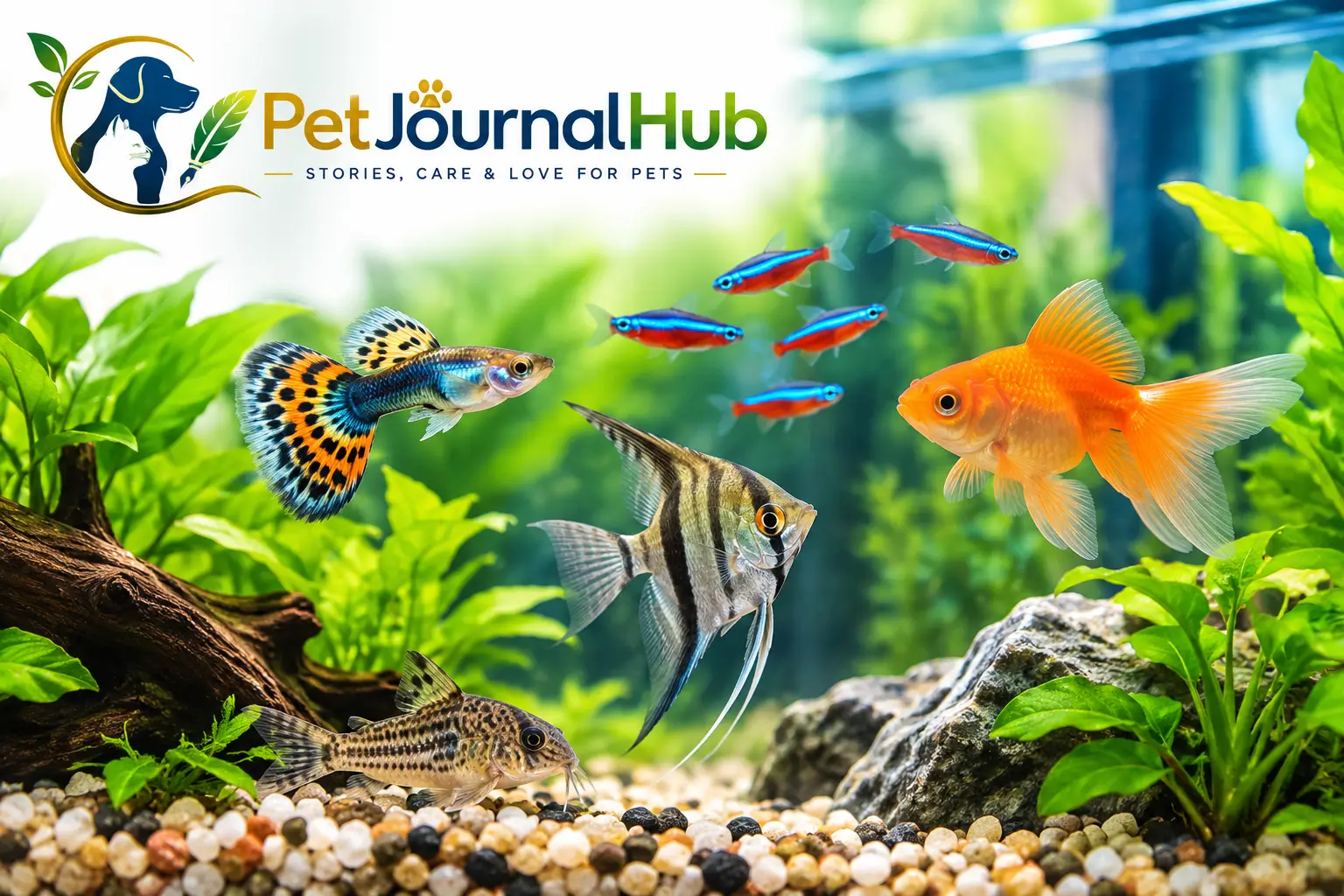
Freshwater fish make fascinating pets for people who enjoy watching aquatic life at home. Popular choices include guppies, bettas, platies, tetras, and corydoras catfish. Each species has different space, temperature, diet, and social needs. A healthy aquarium requires proper filtration, safe water, suitable tank mates, and regular maintenance.
Key Takeaways
- Guppies, platies, and some tetras suit many beginner aquarists when their needs are met.
- Choose fish based on adult size, behavior, water temperature, and compatibility.
- A filter, water conditioner, test kit, and properly cycled aquarium are essential supplies.
- Purchase prices vary by species, size, seller, and location.
- Never add fish to an uncycled aquarium or overcrowd a tank.
- Fish generally do not enjoy being touched. Observe them without putting unnecessary stress on them.
Introduction
An aquarium can bring color, movement, and a peaceful atmosphere into your home. Watching fish swim among aquatic plants and decorations can also make an enjoyable hobby for families, students, and people living in apartments.
However, keeping fish involves more than buying a bowl, adding water, and choosing colorful animals. Fish depend on their environment for almost everything. They cannot leave dirty water, find a better temperature, or escape unsuitable tank mates without help from their owner.
Many first-time owners search for freshwater fish pets because freshwater aquariums often offer a more approachable starting point than marine setups. Even so, beginners need to learn about filtration, the nitrogen cycle, water testing, feeding, and species compatibility before purchasing fish.
Your budget matters, too. The purchase price represents only one part of the expense. You also need a suitable aquarium, equipment, food, water treatments, and money for unexpected health problems.
This guide explains how to choose suitable fish, prepare an aquarium, estimate costs, and find reputable sellers. It also covers buying options in Pakistan, common mistakes, and signs that a fish may need professional care.
What Are Freshwater Fish Pets?
Freshwater fish pets are fish that live in water with very low salt levels and thrive in a properly maintained aquarium or freshwater pond. Owners keep them for their appearance, interesting behavior, and the enjoyment of caring for aquatic animals.
Common aquarium choices include guppies, bettas, neon tetras, platies, mollies, and corydoras catfish. Goldfish also belong to this group, although they need substantial space and strong filtration as they grow.
Different species need different conditions. Tropical fish usually require heated water, while some temperate species can live without a heater when the room and water temperatures remain suitable.
Before choosing a species, consider three questions:
- How much aquarium space can you provide?
- Can you maintain the required water temperature and quality?
- Does the fish need companions, special food, or a particular habitat?
The answers will help you choose fish that fit your home and your experience.
Quick Facts Box
| Fact | Details |
| Habitat | Freshwater aquarium or suitable pond |
| Popular choices | Guppies, bettas, platies, tetras, goldfish |
| Main equipment | Aquarium, filter, water conditioner, test kit |
| Heating | Depends on the species |
| Diet | Species-appropriate prepared food and other suitable foods |
| Maintenance | Regular testing, water changes, and equipment checks |
| Main health concern | Poor water quality can cause serious problems |
| Best starting point | A properly prepared aquarium with a small, compatible stock |
Where Do Freshwater Aquarium Fish Come From?
Freshwater aquarium fish originate from rivers, streams, lakes, ponds, and other inland waters around the world. Their natural habitats differ in temperature, water flow, vegetation, mineral content, and shelter.
For example, guppies originate from parts of northern South America and the Caribbean region. Many popular tetra species come from South American river systems, while bettas originate from Southeast Asia.
Today’s aquarium trade includes captive-bred fish and, depending on the species, wild-caught individuals. Their origins can affect availability, behavior, and care requirements.
Ask your seller about the source of a fish when that information matters. Captive-bred fish may suit some home aquariums well, but good health still depends on responsible breeding, transport, and care.
History and Evolution of Home Aquariums
People have kept fish in managed environments for centuries. Modern home aquariums became more practical as glass manufacturing, filtration, lighting, and temperature-control equipment improved.
Today, hobbyists can choose from simple community aquariums to planted tanks with carefully controlled water conditions. Online communities and aquarium shops also make it easier to learn about species-specific care.
Better equipment does not eliminate the need for responsible ownership. Fish still need suitable habitats, stable water conditions, appropriate diets, and protection from stress.
Key Characteristics and Care Needs
Fish differ in size, swimming habits, social behavior, and environmental needs. A peaceful species may still struggle with a more active tank mate, while two fish that look similar may require different water conditions.
Aquarium size
Choose the aquarium around the fish’s adult size and behavior. Do not select a tiny tank simply because a fish looks small at the shop.
Larger water volumes often provide more stability when temperature or water quality changes. They also offer more room for swimming and, when needed, separate territories.
Water quality
A filter supports beneficial bacteria that help process fish waste. Test the water for ammonia, nitrite, nitrate, and other relevant parameters. Match pH and mineral conditions to the needs of your chosen species.
Temperature
Tropical species generally need a suitable heater and thermometer. Coldwater and temperate fish have different needs, so never assume that every freshwater fish thrives at room temperature.
Social behavior
Some fish do best in groups, while others need individual housing or carefully managed tank mates. Bettas, for example, require particular care when owners consider adding other fish.
Diet
Use a suitable food formulated for the species. Some fish feed near the surface, others in the middle of the aquarium, and some forage near the bottom.
Quick Comparison Snapshot
| Option | Best For | Key Difference |
| Guppies | Colorful community aquariums | Active livebearers that reproduce readily |
| Betta fish | A carefully planned individual setup | Needs suitable conditions and careful tank-mate selection |
| Platies | Peaceful community aquariums | Hardy livebearers that can produce many young |
| Neon tetras | Compatible group aquariums | Small schooling fish that benefit from a suitable group |
These recommendations are starting points, not guarantees. Confirm the adult size, water needs, and compatibility of each species before buying.
Freshwater Fish Pets List
A useful species list helps you compare appearance, behavior, and care requirements before choosing an aquarium.
Guppies: Small, colorful livebearers that suit many community tanks. Keep males and females together only if you can manage frequent breeding.
Betta fish: Known for their flowing fins and bright colors. Provide an appropriately sized, heated, filtered aquarium when the species and conditions require it. Avoid bowls that cannot support stable conditions.
Platies: Active livebearers that often suit peaceful community aquariums. Plan for reproduction if you keep both sexes.
Mollies: Popular livebearers with particular preferences for water hardness and mineral content. Check whether your local water suits the chosen variety.
Neon tetras: Small schooling fish that need compatible companions and stable water conditions. Their tiny size does not make them suitable for every community tank.
Zebra danios: Active swimmers that need adequate horizontal swimming space and compatible group housing.
Corydoras catfish: Bottom-dwelling fish that forage along the substrate. Many species benefit from a group of their own kind and a suitable, soft substrate.
Goldfish: Popular but frequently misunderstood. They grow larger than many beginners expect and need generous space and effective filtration.
Freshwater Fish Pets Price
The price of an aquarium fish depends on its species, variety, size, age, source, and local availability. Rare color varieties may cost more than common varieties, while larger fish can have different prices and care needs.
Remember that the cheapest fish is not always the most affordable pet over time. A species that needs a larger tank, specialized food, or advanced water management can increase your long-term costs.
Budget for the aquarium and its equipment before paying for the fish. Include food, water conditioner, testing supplies, electricity, replacement equipment, and possible veterinary expenses.
Compare sellers using the same species and similar sizes. Ask whether the fish has been eating normally and whether the seller can explain its water and feeding requirements.
Freshwater Fish Pets Price in Pakistan
In Pakistan, freshwater fish prices vary by city, aquarium shop, species, size, color variety, and season. Shops in Karachi, Lahore, Islamabad, Rawalpindi, and other cities may offer different selections and prices.
Common guppies and platies may cost less than uncommon varieties or larger ornamental fish. Imported stock and specialty breeds can also carry higher prices. These are general pricing factors, not verified current quotations.
Before visiting a shop, contact the seller and ask for the price of the exact species. Also request the aquarium size and equipment recommendations for that fish.
When comparing a complete setup, ask for separate prices for:
- The aquarium and secure stand.
- A suitable filter and, where needed, heater.
- Water conditioner and test kits.
- Food and basic maintenance tools.
- The fish themselves.
Do not spend your entire budget on decorative equipment. Safe water, sufficient space, and reliable filtration matter more than expensive ornaments.
Freshwater Fish Pets in Pakistan
Aquarium ownership in Pakistan requires attention to local water conditions, indoor temperatures, and the reliability of equipment. Tap water varies by location, so test it rather than assuming that every water source suits every fish.
During hot weather, aquarium water may become too warm for certain species. During cooler periods, tropical fish may need a reliable heater. Monitor the actual water temperature instead of relying on the weather forecast.
Power interruptions can also affect filtration, aeration, and temperature control. Consider how you will protect your aquarium during an outage, especially if you keep sensitive fish or a heavily stocked tank.
Look for a seller who explains fish care clearly and allows you to inspect the stock. Avoid rushing into a purchase simply because a species appears attractive or costs little.
Freshwater Fish Pets for Sale
When shopping for fish, look for a reputable aquarium shop or responsible breeder. A good seller should identify the species, explain its adult size, discuss suitable tank mates, and answer questions about feeding and water conditions.
Observe the fish before making a purchase. Healthy-looking fish generally swim normally and show intact fins, smooth scales, and no obvious wounds. Avoid tanks with dead fish, severely cloudy water, or multiple animals showing signs of illness.
Ask these questions:
- What exact species or variety is this fish?
- What temperature and water conditions does it need?
- Does it need companions of its own species?
- What food does it currently eat?
- Has it shown any recent health problems?
- What is the seller’s policy if a newly purchased fish becomes ill?
A responsible purchase begins with suitable housing at home. Prepare the aquarium before bringing fish back, and quarantine new arrivals when you have the equipment and knowledge to do so safely.
Freshwater Fish Pets Near Me
To find local fish sellers, search for aquarium shops, ornamental fish stores, and reputable fish breeders in your city or neighborhood. Check recent customer reviews, but do not rely on ratings alone.
Call before visiting. Ask whether the shop has the species you want, what it costs, and whether its staff can explain the fish’s care needs.
Inspect the aquariums in person when possible. Look for healthy swimming behavior, clean conditions, and staff who answer questions without pressuring you to buy.
A nearby seller offers convenience, but distance should not outweigh fish health or responsible sourcing. Choose the best-informed seller who can help you provide suitable care.
Freshwater Aquarium Fish List With Pictures
Use the following list as a visual planning guide. Search each species name to compare its appearance, adult size, and natural behavior before purchasing.
| Fish | What to Look For | Care Consideration |
| Guppy | Bright colors and patterned tails | Reproduction and compatible tank mates |
| Betta | Flowing fins and varied colors | Suitable individual housing and careful introductions |
| Platy | Compact body and many color varieties | Livebearer reproduction |
| Neon tetra | Small body with a vivid blue-and-red stripe | Group housing and stable conditions |
| Zebra danio | Horizontal stripes and an active swimming style | Adequate swimming space |
| Corydoras catfish | Whisker-like barbels and bottom-feeding behavior | Suitable substrate and companions |
| Goldfish | Rounded or streamlined bodies, depending on variety | Large adult size and strong filtration |
A picture cannot tell you whether a fish is healthy or compatible with your aquarium. Use photographs to identify possible choices, then verify the species and care requirements with a knowledgeable source.
Freshwater Fish Pets Online
Online listings can help you compare species, prices, and aquarium supplies. However, live fish require careful handling and suitable transport conditions.
Before ordering, confirm the seller’s location, shipping method, arrival arrangements, health policy, and what happens if a fish arrives in poor condition. Ask how the seller protects fish from temperature extremes and delays.
Avoid buying from sellers who cannot identify their fish or explain how they transport live animals. Never assume that ordinary parcel delivery is suitable for live fish.
Whenever possible, inspect fish locally and arrange responsible transport. If you order online, prepare a fully cycled aquarium before the fish arrives. Never leave a fish waiting in its shipping bag while you assemble the tank.
Daily Care Routine: How to Get Started
A consistent routine helps you spot problems early and maintain a healthy aquarium.
Step 1: Choose the right aquarium
Select a tank that suits the adult size, swimming behavior, and social needs of your chosen fish. Place it on a level, sturdy surface away from direct sunlight and household hazards.
Step 2: Install essential equipment
Set up a suitable filter, thermometer, heater if needed, lighting, and appropriate substrate. Add decorations and plants that provide shelter without sharp edges or unsafe gaps.
Step 3: Cycle the aquarium
Before adding fish, establish the biological filter. Beneficial bacteria convert toxic ammonia into nitrite and then less-toxic nitrate. Test the water to confirm that the aquarium can process waste appropriately.
Do not rely on clear water as proof of safety. An aquarium can look clean while containing harmful levels of ammonia or nitrite.
Step 4: Add fish carefully
Choose healthy fish and acclimate them according to reliable species-specific guidance. Avoid adding too many animals at once. Quarantine new fish when possible to reduce the risk of introducing disease.
Step 5: Feed appropriately
Offer the correct food in suitable amounts. Remove uneaten food because it contributes to waste. Avoid feeding extra food simply because the fish appear eager to eat.
Step 6: Check the aquarium daily
Observe swimming behavior, breathing, appetite, water temperature, and equipment operation. Look for sudden changes in color, damaged fins, unusual spots, or signs of distress.
Step 7: Maintain water quality
Test water regularly and perform partial water changes as needed. Treat replacement tap water with a suitable conditioner, match its temperature to the aquarium, and follow the product directions.
Clean filter components according to the manufacturer’s instructions. Avoid replacing all filter media at once without understanding how that could affect beneficial bacteria.
Cost Breakdown: What Does Fish Ownership Really Cost?
The total cost includes more than the animal. Your setup, electricity use, food, water treatments, and replacement parts all affect the budget.
| Expense | What Affects the Cost |
| Aquarium | Size, material, and included equipment |
| Filter | Tank volume, design, and replacement media |
| Heater | Whether the species needs heated water |
| Water conditioner | Water volume and product concentration |
| Test kits | Which water parameters you need to measure |
| Food | Species, food type, and feeding needs |
| Decorations and plants | Material, quantity, and design |
| Fish | Species, size, variety, and seller |
| Ongoing care | Electricity, water changes, and equipment upkeep |
| Veterinary care | Availability of fish-experienced professionals and the problem involved |
For buyers in Pakistan, obtain current quotations from local shops instead of relying on generic online price estimates. Compare the full setup cost and ongoing expenses before deciding which fish to keep.
Common Mistakes Pet Owners Make
Many aquarium problems begin with decisions that seem harmless at first.
Buying a fish before preparing the tank: An uncycled aquarium can expose fish to dangerous waste levels. Set up and test the aquarium first.
Choosing a bowl for convenience: Small containers make stable water quality and suitable swimming space difficult to maintain. Choose a proper aquarium instead.
Overfeeding: Uneaten food breaks down and increases waste. Feed suitable portions and remove leftovers.
Mixing incompatible species: Different fish may need different temperatures, water conditions, or social arrangements. Research each species before combining them.
Skipping water tests: Clear water does not prove that ammonia and nitrite are safe. Use appropriate testing supplies.
Cleaning too aggressively: Replacing all filter media or scrubbing away beneficial bacteria can disrupt the biological filter. Maintain equipment carefully.
Adding fish too quickly: A sudden increase in waste can overwhelm the filter. Stock gradually and monitor water quality.
Ignoring unusual behavior: Reduced appetite, rapid breathing, abnormal swimming, or damaged fins may signal environmental or health problems. Investigate promptly.
Pros and Cons of Keeping Freshwater Fish
| Pros | Cons |
| Offers a fascinating view of aquatic behavior | Requires regular cleaning and water testing |
| Many species suit different experience levels | Species need different equipment and conditions |
| Aquariums can fit many home settings | Equipment and electricity add ongoing costs |
| Feeding and observation can become a routine | Fish may become ill without obvious early signs |
| Offers opportunities to learn about aquatic ecosystems | Travel and power interruptions require planning |
Freshwater aquariums can be rewarding when owners understand their responsibilities. They are not maintenance-free decorations.
Similar Options and Alternatives
If your first choice does not fit your space, budget, or experience, consider another aquarium style or species.
| Option | Best For |
| A planted freshwater aquarium | Owners who enjoy aquatic plants and natural-looking layouts |
| A species-only aquarium | Fish with special housing or compatibility needs |
| A shrimp aquarium | Hobbyists interested in small aquatic invertebrates and suitable planted setups |
| A snail aquarium | Owners who want to learn about aquatic invertebrate care |
| A freshwater community aquarium | Experienced planners who can match compatible species |
| A properly designed outdoor pond | Suitable coldwater fish where climate, space, and pond conditions allow |
Shrimp and snails have their own environmental needs, so do not treat them as effortless substitutes. Likewise, a community aquarium requires careful species selection and adequate space for every resident.
When to Consult a Vet or Professional
Seek advice from a veterinarian experienced in fish health when a fish shows persistent or severe signs of illness. These may include loss of appetite, rapid breathing, unusual swimming, sores, damaged fins, or sudden changes in appearance.
First check the water temperature and test the aquarium water. Environmental problems can cause signs that resemble disease, so accurate water information helps a professional assess the situation.
Do not add medication, salt, or chemical treatments without confirming that they suit the species and problem. Incorrect treatments can harm fish or disrupt the biological filter.
If several fish become ill or die suddenly, treat the situation as urgent. Check the water and equipment, avoid adding new fish, and contact a qualified professional for guidance.
Fun Facts About Freshwater Aquarium Fish
- Guppies give birth to live young rather than laying eggs.
- Bettas belong to a group of fish known for their ability to breathe atmospheric air using a specialized labyrinth organ.
- Neon tetras are schooling fish, so their social needs matter when planning an aquarium.
- Corydoras catfish use barbels around their mouths to explore and locate food.
- Goldfish belong to the carp family and can grow much larger than people expect from shop displays.
- Beneficial bacteria in an aquarium filter help process waste produced by fish and uneaten food.
- Different freshwater habitats have different temperatures, water chemistry, and levels of water flow.
Frequently Asked Questions
What is the best freshwater pet fish?
The best fish depends on your aquarium, water conditions, budget, and experience. Guppies and platies can suit many beginners who prepare an appropriate community tank. A betta can also be a good choice when its housing and water needs receive proper attention.
Before deciding, consider adult size, feeding requirements, social behavior, and lifespan. Check that the aquarium has completed its biological cycle. A suitable environment matters more than choosing a fish because it appears colorful or inexpensive.
What is the friendliest freshwater fish?
Fish do not show friendliness in the same way that dogs and cats do. Some aquarium fish learn to recognize feeding routines and may swim toward the glass when their owner approaches. Certain species also display interesting social behaviors with compatible companions.
Guppies, platies, and some other peaceful community species can be enjoyable to observe. However, individual behavior varies, and even generally peaceful fish may chase or bully tank mates under unsuitable conditions. Choose compatible species and provide enough room, shelter, and appropriate group sizes.
Which fish likes to be petted?
Most pet fish do not benefit from being petted. Touching can damage their protective mucus layer, stress them, and expose them to injury or infection. Even a fish that approaches your hand may simply associate it with food rather than seek physical affection.
Build trust through calm observation and consistent feeding instead. Keep your hands out of the water unless maintenance requires it, and rinse away soap or chemical residue before aquarium work. Never remove a fish from the water just to hold or stroke it.
What is the cheapest pet fish?
Common guppies and other widely available small aquarium fish may have low purchase prices, depending on the seller and location. However, no species is truly inexpensive if its habitat and care needs exceed your budget.
Calculate the cost of the tank, filter, water conditioner, test kits, food, and ongoing maintenance before purchasing a fish. In Pakistan, compare current local prices because availability and costs vary between cities and shops. A healthy fish in a properly prepared aquarium offers a better starting point than the cheapest fish in an unsuitable setup.
How many freshwater fish can live in one aquarium?
There is no single stocking number that works for every aquarium. The safe number depends on adult fish size, swimming behavior, social needs, filtration, water quality, and the space available.
Research each species before purchasing it, and avoid relying on a simple fish-per-gallon rule. A tank may have enough water volume but still lack suitable swimming space or territory. Monitor ammonia, nitrite, and nitrate, and seek knowledgeable advice when planning a mixed-species aquarium.
How often should you clean a freshwater aquarium?
Most aquariums need regular partial water changes, waste removal, and equipment checks. The ideal schedule depends on stocking levels, feeding, filtration, plants, and measured water quality.
Check fish behavior and equipment daily. Test water regularly and use the results to guide maintenance. Avoid changing all the water or replacing all filter media without a specific reason, because abrupt changes can stress fish and disrupt beneficial bacteria. Follow species-specific guidance and the filter manufacturer’s maintenance instructions.
Can freshwater fish live without a filter?
Some fish can survive in specialized setups without conventional powered filtration, but that does not make an unfiltered bowl a good default home. Small containers often provide little room for stable water quality and can require intensive monitoring and maintenance.
A properly sized biological filter makes waste management easier and more reliable for most beginner aquariums. If you are considering a setup without one, obtain species-specific expert guidance first and make sure you can maintain safe water conditions consistently.
Final Thoughts
A well-planned aquarium can bring color and interest into your home while giving you a chance to learn about aquatic life. The key is to choose fish whose needs match the space, equipment, and time you can provide.
Start by selecting a suitable aquarium, researching a few compatible species, and establishing the biological filter. Learn how to test the water, control the temperature, feed the fish properly, and spot early signs of trouble.
Do not rush into a purchase because a fish looks beautiful or costs very little. Healthy fish need more than food and clean-looking water. They need stable conditions, enough space, suitable companions when required, and protection from avoidable stress.
If you live in Pakistan, compare local sellers and current prices before purchasing. Ask questions, inspect the fish carefully, and prepare your aquarium in advance.
With thoughtful planning and consistent care, your aquarium can become a rewarding long-term hobby. Choose responsibly, observe your fish closely, and let their welfare guide every decision.

Emily Carter is a pet care writer at PetJournalHub. She enjoys creating clear, practical, and well-researched articles about pet health, nutrition, grooming, and everyday care. Her goal is to help pet owners make informed decisions through reliable, easy-to-understand content.