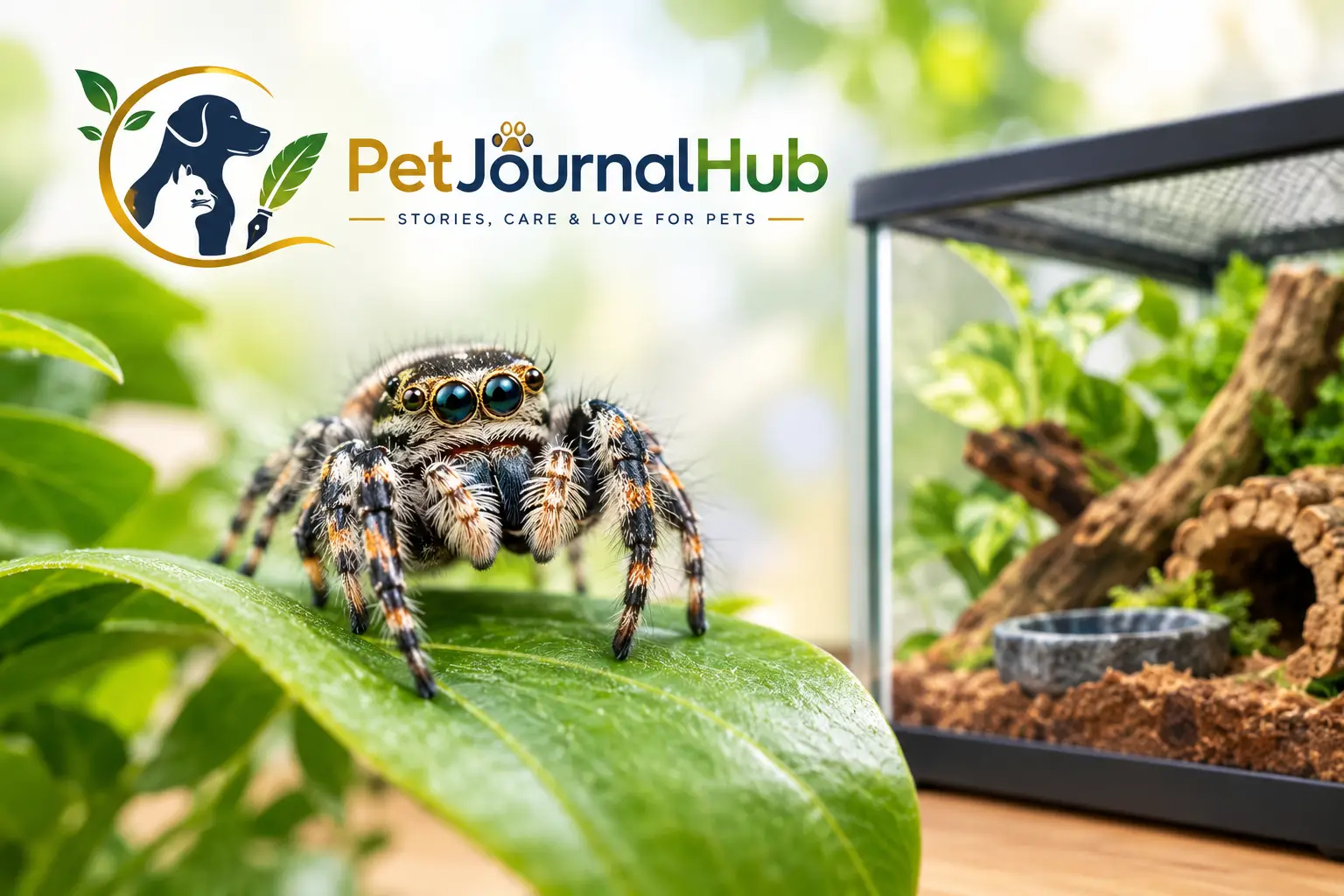
Jumping spiders can make interesting pets for people who enjoy watching small animals and learning about their behavior. They need a secure, well-ventilated enclosure, suitable live insects, and careful moisture management. Although many species are relatively easy to maintain, they are fragile and do not enjoy handling in the same way as cats or dogs.
Key Takeaways
- Jumping spiders are small, active hunters with excellent vision and fascinating behavior.
- Beginners can consider them if they research the exact species and prepare its enclosure first.
- Their diet consists of suitable live prey, such as appropriately sized flies and other feeder insects.
- Their small bodies make falls, rough handling, and unsuitable enclosure conditions important safety concerns.
- They need individual housing because other spiders can injure or eat them.
- Their purchase price is only part of the cost; feeders, habitat supplies, and access to an appropriate exotic-animal professional also matter.
Introduction
A jumping spider can fit comfortably into a small habitat, yet it offers plenty to observe. You might see one track a moving insect, turn toward your hand, or make a careful leap between branches. Its large forward-facing eyes also give it a distinctive appearance that many people find appealing.
People considering an unusual pet often want something that does not require a large cage, daily walks, or complicated social routines. Jumping spiders may fit that lifestyle, but their small size can create a false impression that they need almost no care.
They still need suitable food, clean surroundings, safe climbing surfaces, and the right balance of ventilation and moisture. Owners must also recognize normal behavior, including periods when a spider hides and refuses food before molting.
The answer to whether these spiders suit your home depends on what you expect from a pet. If you enjoy observing wildlife and can accept limited handling, one may be a rewarding choice. If you want a cuddly companion that responds reliably to touch, another animal may fit your expectations better.
This guide covers species, habitat setup, feeding, safety, cost, and beginner-friendly care practices. It also explains what to check before buying a spider and when to seek professional advice.
What Are Jumping Spiders?
Jumping spiders belong to the family Salticidae, a large group of spiders known for their strong vision and active hunting style. The U.S. National Park Service describes their use of visual cues and precise jumps when catching prey. Unlike web-building spiders that wait for insects to become trapped, jumping spiders usually search for prey directly.
National Park Service
+1
Many have compact bodies, noticeable front-facing eyes, and patterned or colorful markings. Their movements can appear deliberate because they often pause, turn, and visually inspect nearby objects.
Common examples in the pet trade include:
- Regal jumping spider (Phidippus regius): A popular captive-kept species with noticeable size and color differences between individuals.
- Bold jumping spider (Phidippus audax): A species found in parts of North America, recognized by its dark body and contrasting markings.
- Other Phidippus species: Some are available from specialist breeders, although their care requirements may differ.
Do not assume that every jumping spider needs exactly the same temperature, humidity, enclosure, or feeding schedule. Identify the species before purchasing one, then follow guidance suited to that animal.
Quick Facts Box
| Fact | Details |
| Animal group | Arachnid |
| Scientific family | Salticidae |
| Diet | Live, appropriately sized prey |
| Typical activity | Mainly daytime for many familiar pet species |
| Eyes | Eight |
| Movement | Walking, climbing, and jumping |
| Housing | Secure enclosure with good ventilation |
| Social needs | Usually housed individually |
| Handling | Best kept limited and gentle |
| Lifespan | Varies by species, sex, and life stage |
| Care level | Manageable for prepared beginners, with important details to learn |
Petco’s care guide lists several Phidippus species and gives a broad adult size range of about 0.24–0.86 inches, illustrating why species identification matters. Lifespan and habitat needs also vary.
Petco
Where Do Jumping Spiders Come From?
Jumping spiders live in many parts of the world. Depending on the species, people may find them on vegetation, tree trunks, walls, rocks, fences, and other surfaces where small insects occur. Some species also enter buildings.
Their natural habitat helps explain their behavior in captivity. Many hunt by sight, climb frequently, and use silk to create retreats rather than relying on a large capture web. They may build a silk hammock in a sheltered corner of their enclosure.
A pet habitat should offer places to climb and hide. A bare container may keep a spider contained, but it provides fewer opportunities for natural movement and retreat-building.
If you encounter a wild jumping spider, do not assume that its local climate matches the needs of a species sold by a breeder. Different species have different environmental requirements.
History and Evolution
Jumping spiders have evolved specialized eyes that support detailed visual behavior. Researchers have studied how they distinguish prey and rivals under different lighting conditions, showing that their vision plays a major role in how they interact with their surroundings.
PubMed
+1
People have also become interested in jumping spiders through macro photography, nature education, and exotic-pet keeping. Their distinctive faces and active hunting make them interesting subjects for close observation.
However, online popularity does not establish that a particular species is easy to care for. Before choosing one, look for species-specific husbandry information rather than relying only on attractive photographs or short videos.
Key Characteristics and Care Needs
Jumping spiders need a secure habitat, suitable prey, access to moisture, and protection from injury. Their care may involve less space than many traditional pets, but small mistakes can have serious consequences.
Vision and behavior: Many jumping spiders follow movement with their large front eyes. Their ability to track prey makes them engaging to observe.
Climbing and jumping: They can move quickly and escape through small openings. A secure lid and carefully fitted ventilation are essential.
Silk retreats: Many build small silk shelters where they rest or prepare to molt. Avoid disturbing these retreats without a clear reason.
Feeding: They hunt live prey. Choose feeders appropriate for the spider’s size and remove uneaten insects when necessary.
Moisture: They need access to water, but excessive dampness and poor airflow can cause problems. The right approach depends on the species and enclosure.
Molting: Growing spiders shed their outer covering. During this process, they may stop eating and remain hidden. Avoid unnecessary disturbance.
Lifespan: These are relatively short-lived pets compared with many mammals. Their lifespan depends on species, sex, developmental stage, and other conditions.
A good owner observes patterns over time instead of judging health from a single feeding or activity session.
Quick Comparison Snapshot
These options represent different pet-keeping experiences, not interchangeable animals. Confirm the requirements of the exact species before making a choice.
| Option | Best For | Key Difference |
| Regal jumping spider | People interested in a commonly kept jumping spider | Species-specific care and individual temperament still matter |
| Bold jumping spider | Keepers interested in a North American species | Availability and legal collection rules vary by location |
| Other captive-bred jumping spiders | Experienced researchers and curious beginners willing to learn | Requirements can differ substantially between species |
| Wildlife observation without ownership | People who enjoy spiders but do not want ongoing care duties | No captive habitat or feeder supply is required |
Are Jumping Spiders Good Pets for Beginners?
Yes, a correctly identified jumping spider can suit a beginner who researches its care, prepares its enclosure, and accepts that it is mainly an observation pet. Petco’s care guide classifies jumping spider care as beginner-level, but that does not mean every species or individual presents the same challenges.
Petco
Start with a captive-bred spider from a seller who can identify its species and explain its age, feeding history, and care needs. A captive-bred animal also gives you a clearer starting point than an unidentified spider collected outdoors.
Before bringing one home, make sure you can:
- Provide a secure, appropriately sized enclosure.
- Obtain suitable live feeder insects regularly.
- Maintain the required temperature and moisture conditions.
- Recognize signs of molting and avoid disturbing the spider.
- Arrange professional advice if an injury or unusual health problem occurs.
Beginners should also prepare for uncertainty. A spider may hide for several days, refuse food before molting, or avoid interaction. These behaviors do not automatically mean that something is wrong.
The key is to learn normal behavior for your particular species. Keep simple records of feeding, molts, and noticeable changes. Those notes can help you spot patterns and identify problems earlier.
Do Jumping Spiders Bite?
Yes, jumping spiders can bite, although they generally prefer to move away when threatened. A bite is not something you should expect during routine observation, but it remains possible when someone restrains, squeezes, or frightens the spider.
Petco describes jumping spiders as generally docile and notes that bites are rare. That does not mean every bite will feel the same or that an individual spider cannot defend itself.
Petco
The safest approach is to avoid provoking the animal. Do not pinch it between your fingers, trap it against a surface, or encourage children to touch it.
If a bite occurs, wash the area gently with soap and water. Seek medical advice if you develop severe pain, spreading swelling, breathing problems, or other concerning symptoms. Get emergency help for breathing difficulty or signs of a severe allergic reaction.
Do not try to identify a spider’s medical risk from a social-media photograph alone. If symptoms develop, prioritize medical care rather than spending time trying to identify the species.
Are Jumping Spiders Good Pets for Kids?
Jumping spiders can introduce older, responsible children to observation, animal behavior, and basic scientific record-keeping. However, they are not ideal pets for children who expect to cuddle, carry, or frequently handle an animal.
An adult should supervise care and remain responsible for the enclosure, feeding, and safety. Children can observe the spider through the enclosure, record feeding behavior, and draw pictures of its movements without touching it.
A jumping spider’s small body makes rough handling and accidental falls particularly concerning. Opening the enclosure without supervision can also lead to an escape, making the spider difficult to find or protect.
Consider your child’s temperament and expectations before choosing one. A child who enjoys patient observation may find the experience rewarding. A child who wants a playful animal to hold may be happier with a different pet.
Also consider household allergies or strong fears of spiders. Everyone who shares the living space should understand where the enclosure will stay and how to avoid accidental contact.
Jumping Spider Pet for Sale: What Should You Check?
If you plan to purchase a jumping spider, look for a reputable specialist who provides clear identification and practical care information. Avoid choosing an animal based only on color, photographs, or a low advertised price.
Before paying, ask the seller:
- What is the spider’s scientific name?
- Was it captive-bred or collected from the wild?
- What is its approximate age or developmental stage?
- When did it last eat, and what prey does it accept?
- Has it recently molted, and is it showing normal movement?
- What temperature, humidity, and enclosure conditions does it need?
- What shipping method protects the animal during transit?
Review the seller’s live-animal shipping policies before ordering. Weather, transport delays, and unsuitable packaging can affect a small invertebrate.
Check your local rules before buying or collecting any spider. Some species or collection practices may face restrictions, and rules can differ between countries, states, and regions.
A responsible seller should welcome reasonable questions. Be cautious if someone cannot identify the animal, gives vague care advice, or promises that every jumping spider is harmless and easy to handle.
Are Jumping Spiders Poisonous?
The word poisonous is often used incorrectly when people talk about spiders. Poison usually harms an animal when swallowed or absorbed, while venom is delivered through a bite or another specialized structure.
Jumping spiders are venomous predators. They use venom to help subdue prey, but that does not mean a typical jumping spider poses the same medical risk as a medically significant species. General spider-safety guidance from poison-control specialists explains that most spider bites are not serious, while also warning that symptoms and risks vary.
NC Poison Control
+1
For a pet owner, the practical message is simple: do not treat the spider as completely harmless, and do not panic merely because it belongs to a venomous animal group.
Keep the enclosure secure and avoid direct handling. If you are bitten, pay attention to symptoms and contact a healthcare professional or local poison-control service when needed.
Children should never be encouraged to test whether a spider will bite. Observation through a closed enclosure offers plenty of educational value without creating unnecessary risk.
What Do Jumping Spiders Eat?
Jumping spiders are carnivores that hunt small invertebrates. Depending on their size and species, suitable prey may include fruit flies, small flies, and appropriately sized feeder insects. The U.S. National Park Service identifies small invertebrates such as ants and fruit flies among the prey of jumping spiders.
National Park Service
The correct feeder depends on the spider’s developmental stage and body size. Very small spiderlings may need tiny prey, while larger individuals can often take larger insects. Ask an experienced breeder or invertebrate-care professional to help you select suitable prey for your species.
Useful feeding guidelines include:
- Offer healthy, appropriately sized feeder insects.
- Avoid collecting insects from areas that may have pesticides.
- Remove uneaten prey when it could disturb or injure the spider.
- Observe whether the spider actually captures and eats the food.
- Keep a record of feeding and molting behavior.
Do not assume that every spider needs food on the same schedule. Appetite can change with age, recent meals, temperature, and the approach of a molt.
Never force-feed a spider or disturb its silk retreat just because it has not eaten for a short period. If prolonged refusal to eat occurs alongside weakness, repeated falls, or other unusual signs, seek species-specific professional guidance.
Are Jumping Spiders Good Pets? What Online Communities Say
Online discussions can help prospective owners discover common practical questions about feeding, molting, enclosure design, and spider behavior. However, individual posts on Reddit or other forums are personal experiences, not controlled evidence that a care method works for every species.
When researching community advice, look for detailed explanations rather than simple claims that a spider is easy or difficult to keep. A useful post identifies the species, describes the enclosure, explains the feeding routine, and acknowledges uncertainty.
Be especially careful with advice about handling, humidity, and unusual feeding behavior. A method that works for one keeper may not suit your spider or your local climate.
You can use online communities to generate questions, then cross-check the answers against established care guides and species-specific information. Petco’s care sheet and the National Park Service’s species overview provide useful starting points for general behavior and care research.
Petco
+1
The most helpful community advice will encourage careful observation and animal welfare, rather than promising that every spider will behave like a friendly miniature companion.
Daily Care Routine: How to Get Started
A simple routine helps you monitor your spider without disturbing it unnecessarily. The goal is to maintain a stable habitat and notice meaningful changes, not to handle the animal every day.
Step 1: Check the enclosure. Look for damage, gaps, poor ventilation, excess moisture, and signs of mold. Confirm that the lid closes securely.
Step 2: Observe the spider. Check whether it can climb and move normally. Note unusual weakness, visible injury, or repeated falls.
Step 3: Check food and moisture. Follow the requirements of the identified species. Provide access to water through an appropriate method, such as careful misting when suitable. Avoid soaking the enclosure.
Step 4: Feed when appropriate. Offer correctly sized prey according to the spider’s age, condition, and species-specific care guidance. Remove uneaten insects when needed.
Step 5: Respect the retreat. If the spider seals itself inside a silk hammock and stops eating, it may be preparing to molt. Avoid unnecessary disturbance.
Step 6: Keep records. Note feeding, molting, unusual behavior, and any changes to the habitat.
Clean the enclosure carefully when necessary, without damaging the spider’s silk retreat or exposing the animal to cleaning chemicals. Never spray household insecticides near the habitat.
Choosing the Right Enclosure
Select a secure enclosure that provides suitable climbing height, ventilation, and room for natural behavior. Petco recommends a habitat sized to accommodate the spider’s movement and provides different guidance for juveniles and adults.
Petco
Include safe climbing surfaces and sheltered areas. Avoid sharp decorations, unstable objects, and gaps that could let the spider escape.
Do not copy an enclosure design without checking whether it suits your species and developmental stage. A small spider may escape through openings that seem insignificant to a human.
Temperature, Humidity, and Lighting
There is no single temperature or humidity setting that suits every jumping spider. Climate, species, enclosure design, and ventilation all affect the conditions your pet needs.
Use a reliable care guide for the identified species. Avoid placing the enclosure in direct sunlight, where temperatures can rise quickly, or near heaters and air-conditioning vents that create sudden changes.
Many familiar pet jumping spiders are active during daylight, so a normal day-and-night cycle can support observation. Avoid intense heat or prolonged bright lighting that may stress the animal.
Understanding Molting
Molting allows a growing spider to shed its outer covering. Before a molt, it may eat less, retreat into silk, and remain inactive.
Do not pull a spider from its hammock or offer prey repeatedly during this period. A recently molted spider may also need time before its body covering hardens sufficiently.
If the spider becomes trapped during a molt, suffers an injury, or cannot move normally afterward, seek advice from a professional familiar with invertebrates.
Cost Breakdown: How Much Does a Pet Jumping Spider Cost?
The total cost depends on your location, species, seller, enclosure, feeder supply, and access to veterinary care. A spider’s purchase price may look small, but responsible ownership includes everything needed to keep it safely.
For context, recent U.S. cost guides report different price ranges because sellers offer animals of different ages, species, and color varieties. One 2026 guide estimates common captive-bred regal jumping spiders at around 20–60, while other sellers and specialist guides show different ranges. These are market examples, not guaranteed prices.
ThePricer
+1
| Expense | What to budget for |
| Spider | Depends on species, age, seller, and availability |
| Enclosure | Secure habitat with suitable ventilation |
| Décor and substrate | Safe climbing surfaces and shelter |
| Feeding supplies | Appropriate live insects and storage containers |
| Moisture and monitoring tools | Suitable mister and any needed monitoring equipment |
| Replacement supplies | Repairs, cleaning materials, and feeder restocking |
| Professional care | Any consultation or treatment that becomes necessary |
Before buying, calculate the full startup cost and the likely recurring expense of feeder insects. Keep some money available for replacement equipment or unexpected problems.
If you live in Pakistan or another market outside the United States, do not assume American prices apply locally. Shipping, availability, import rules, and access to specialist supplies can change the total significantly.
Common Mistakes Pet Owners Make
Even an apparently simple pet can suffer when owners overlook its specific needs. These common mistakes are worth avoiding.
1. Choosing a spider without identifying its species. Different species can need different environmental conditions. Identify the spider before selecting its care routine.
2. Using an unsuitable container. Poor ventilation, insecure lids, and unsafe climbing surfaces can cause problems. Choose an enclosure designed for the spider’s size and behavior.
3. Over-misting the habitat. More moisture is not always better. Excess dampness and poor airflow can contribute to mold and other habitat problems.
4. Offering prey that is too large. A feeder should suit the spider’s size and ability to hunt. Ask for species-specific feeding advice rather than guessing.
5. Handling the spider too often. A jumping spider may flee, fall, or become stressed when disturbed. Observation is usually safer than frequent handling.
6. Disturbing a molting spider. Pulling away silk or repeatedly offering food can interfere with an important stage of development.
7. Keeping multiple spiders together. Jumping spiders generally need separate enclosures because encounters can lead to injury or cannibalism.
8. Using pesticides near the enclosure. Insecticides and cleaning chemicals can expose a tiny animal to harmful substances. Keep the habitat away from treated surfaces and chemical sprays.
9. Assuming inactivity always means illness. A spider may hide or stop eating before molting. However, unusual weakness or repeated falls deserve attention rather than automatic reassurance.
Pros and Cons of Keeping a Jumping Spider
| Pros | Cons |
| Needs relatively little space | Requires a secure, carefully designed enclosure |
| Offers fascinating hunting behavior | Needs live feeder insects |
| Can suit a beginner who researches its needs | Small body makes handling and falls risky |
| Does not need walks or human companionship | Not a cuddly or reliably interactive pet |
| Can encourage learning about animal behavior | Molting and appetite changes require careful observation |
| Often has modest routine supply needs | Specialist veterinary care may be difficult to find |
| Many species have distinctive colors and patterns | Lifespan is limited and varies by species |
The right choice depends on your expectations. A jumping spider can be rewarding if you enjoy observation and careful habitat maintenance. It is less suitable if you want a pet that seeks affection or enjoys regular physical contact.
Similar Pets and Alternatives to Consider
If you like the idea of a small animal but are uncertain about spider care, compare the responsibilities of several alternatives before choosing.
| Option | Best For |
| Praying mantis | People interested in observing a small visual hunter, with species-specific care |
| Stick insect | Keepers who enjoy observing slow-moving insects and can provide the correct plant food |
| Isopods | People interested in watching a small invertebrate colony in a suitable habitat |
| Ant colony | Enthusiasts interested in social insect behavior and more specialized enclosure design |
| Pet snail | People interested in observing a slow-moving invertebrate, where keeping that species is legal |
| Hamster | People seeking a mammal, provided they can meet its space, enrichment, and handling needs |
These animals are not interchangeable in their needs. Some require different food, moisture levels, habitat structures, or legal checks. Research each species before purchasing it.
If your main interest is watching a jumping spider hunt, choosing a different animal may not provide the same experience. If your main goal is a small observation pet, however, you have several options worth exploring.
When to Consult a Vet or Professional
Find out whether a local exotic-animal veterinarian or invertebrate specialist can advise you before an emergency occurs. Not every veterinary practice treats spiders, so ask about experience with arachnids and possible referral options.
Seek professional advice if you notice:
- Repeated falls or a sudden inability to climb.
- Visible injury or bleeding.
- Severe weakness or unusual, uncoordinated movement.
- A body that appears unusually shrunken.
- A suspected pesticide or chemical exposure.
- Difficulty completing a molt or persistent abnormal movement afterward.
- Prolonged refusal to eat accompanied by other concerning changes.
A single missed meal does not necessarily signal a health problem. Molting, recent feeding, and species differences can affect appetite. Look at the overall pattern and seek advice when the change seems unusual for your spider.
When contacting a professional, share the species if known, recent feeding dates, molt history, enclosure photographs, and details about temperature and moisture. These details can help the professional understand the conditions involved.
Avoid home remedies or attempts to manipulate a spider’s body during an injury or molt. Its small size makes careful, species-aware guidance especially important.
Fun Facts About Jumping Spiders
11
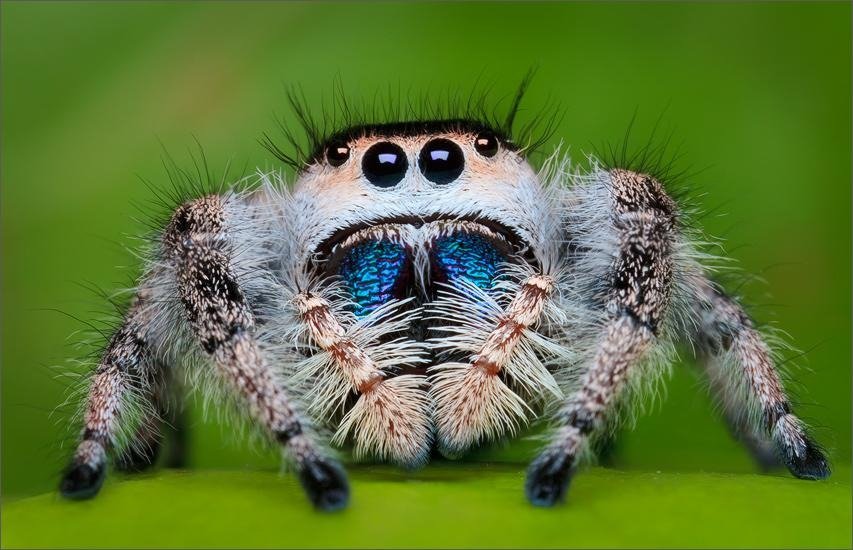
1. They have eight eyes. Their distinctive eye arrangement helps set jumping spiders apart from many other spiders.
National Park Service
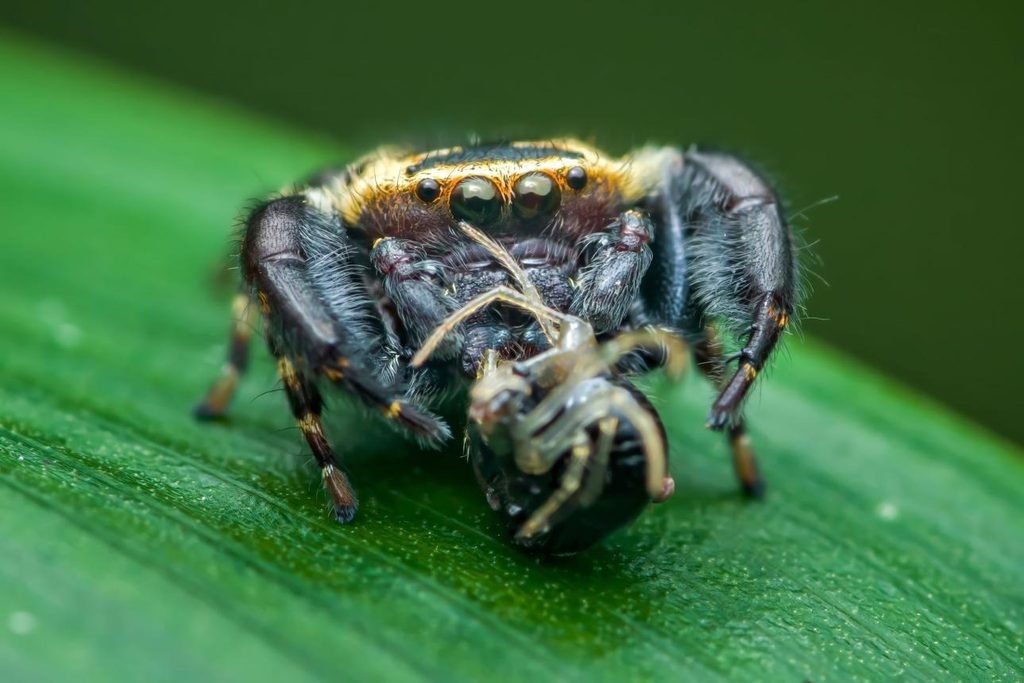
2. They actively hunt. Rather than depending on a typical prey-catching web, many stalk and leap toward small invertebrates.
National Park Service
3. Their vision is remarkably detailed. Researchers have investigated how jumping spiders use visual information to recognize prey and rivals.
PubMed
4. Some can perceive ultraviolet light. Research on particular jumping spider species has explored color vision beyond the range humans normally see. Abilities vary across species.
Smithsonian Magazine
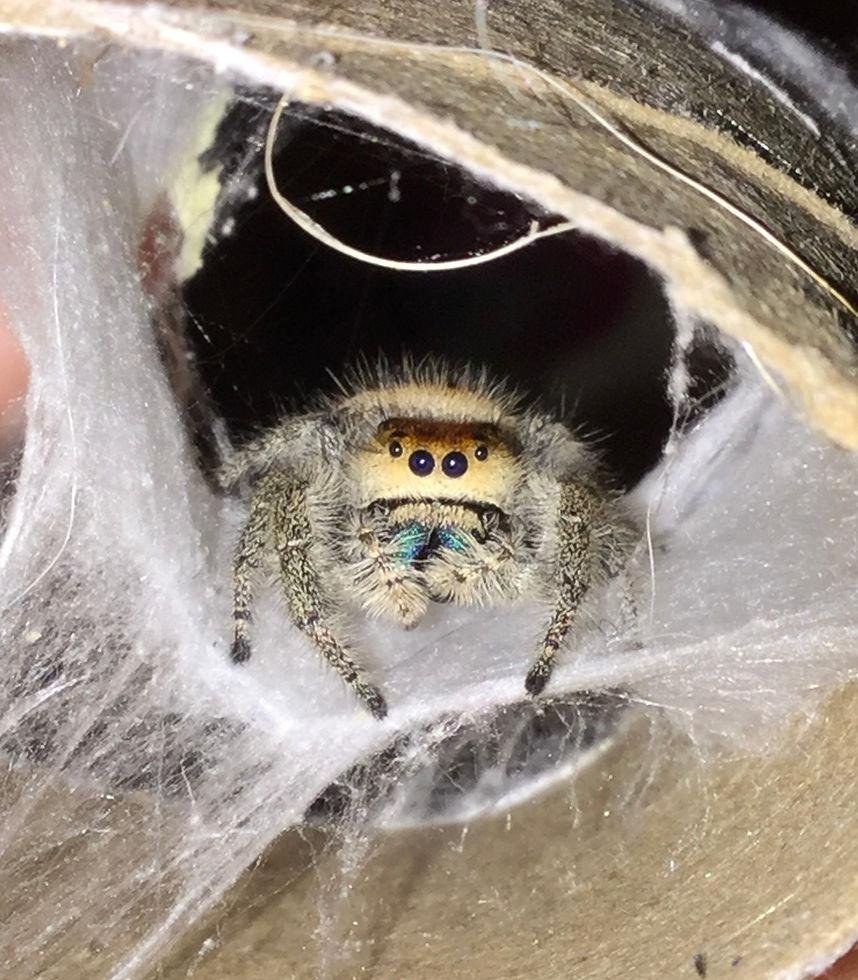
5. They use silk for shelter and safety. Their silk can support resting retreats and anchor lines used during movement and hunting.
National Park Service
+1
6. Their movements can look curious. A spider may pause and turn toward moving objects as it gathers visual information. This behavior is interesting to watch, but it does not prove that the spider feels affection.
7. Some have striking courtship displays. Researchers have studied visual signals and movement in certain jumping spider species, including colorful courtship behavior.
Smithsonian Magazine
Frequently Asked Questions
What is the downside of having a jumping spider?
The biggest drawbacks are their fragility, need for live prey, and limited suitability for handling. A jumping spider may escape through a small opening or suffer injury during a fall. Owners must also learn to recognize molting behavior, maintain a suitable enclosure, and obtain the right feeder insects. Veterinary help can be harder to find than it is for cats or dogs. These limitations may not bother someone who enjoys observation, but they matter if you want an affectionate pet that can safely interact with you every day.
Do jumping spiders bond with humans?
Jumping spiders can become accustomed to familiar surroundings and may appear comfortable when an owner approaches their enclosure. Some may orient toward a person or investigate nearby movement. However, these behaviors do not establish an emotional bond comparable to the relationship people develop with dogs or cats. A spider’s response may reflect visual attention, learned familiarity, or its immediate environment. The most responsible approach is to appreciate the individual animal without assuming it wants physical contact. Consistent, calm care and a secure habitat matter more than attempts to make it interact.
What is the friendliest spider ever?
There is no universally recognized scientific title for the friendliest spider. Some jumping spiders are popular among keepers because they are active during the day, visually engaging, and often reluctant to bite unless threatened. However, temperament varies between individuals, and no species should be treated as guaranteed to enjoy handling. If you are looking for a spider to keep, focus on accurate identification, suitable husbandry, and a captive-bred animal from a knowledgeable source. Choose based on whether you enjoy observing its natural behavior rather than expecting it to act like a tame mammal.
Will a jumping spider bite you?
A jumping spider can bite if it feels threatened, is restrained, or cannot escape. Many prefer to retreat or jump away rather than confront a person, so avoiding unnecessary handling reduces the chance of a bite. If one does bite you, wash the area gently and watch for symptoms. Seek medical advice if pain or swelling becomes concerning, and obtain emergency help for breathing difficulty or signs of a severe allergic reaction. Do not assume every spider bite has the same effect, and avoid relying on an uncertain identification to decide whether symptoms need attention.
Can you leave a jumping spider alone for a weekend?
A short absence may be manageable for a healthy spider with a stable enclosure, but there is no universal rule that fits every species or life stage. Check the habitat, moisture needs, and feeding schedule before leaving. Avoid adding excessive water or extra prey in an attempt to compensate for your absence. Very young spiders and individuals needing closer observation may require a different plan. If you will be away longer, ask an experienced keeper or invertebrate professional to advise you on the specific animal and arrange a suitable check when necessary.
Do jumping spiders need another spider for company?
No. Jumping spiders generally do not need a companion to thrive, and housing them together can create a risk of injury or cannibalism. Separate enclosures also make it easier to track feeding, molting, and health changes for each animal. If you eventually keep more than one, provide an individual secure habitat for each spider. Do not introduce another spider simply because the first one appears inactive or alone. Solitary housing is a straightforward way to reduce avoidable risks while allowing each spider to behave naturally.
Final Thoughts
A jumping spider can be a fascinating pet for someone who enjoys observing wildlife up close. Its hunting style, visual abilities, and silk-building behavior provide plenty of opportunities to learn about the natural world.
The decision comes down to your expectations and willingness to meet its needs. You will need a secure enclosure, suitable live prey, species-specific environmental conditions, and patience during molting. You should also accept that the spider may never enjoy being handled.
Before purchasing one, identify the species, research its care requirements, and find a reliable source for both the animal and its food. Check local wildlife and import rules, particularly if you plan to buy a less common species.
The main takeaway is that jumping spiders are observation pets, not miniature cuddly companions. If you enjoy watching animal behavior and can provide careful, consistent care, one may suit your home. If you want an animal that seeks regular affection or physical interaction, consider a different pet.
Choose based on the animal’s welfare and your ability to meet its needs, rather than its appearance or popularity online.

Emily Carter is a pet care writer at PetJournalHub. She enjoys creating clear, practical, and well-researched articles about pet health, nutrition, grooming, and everyday care. Her goal is to help pet owners make informed decisions through reliable, easy-to-understand content.