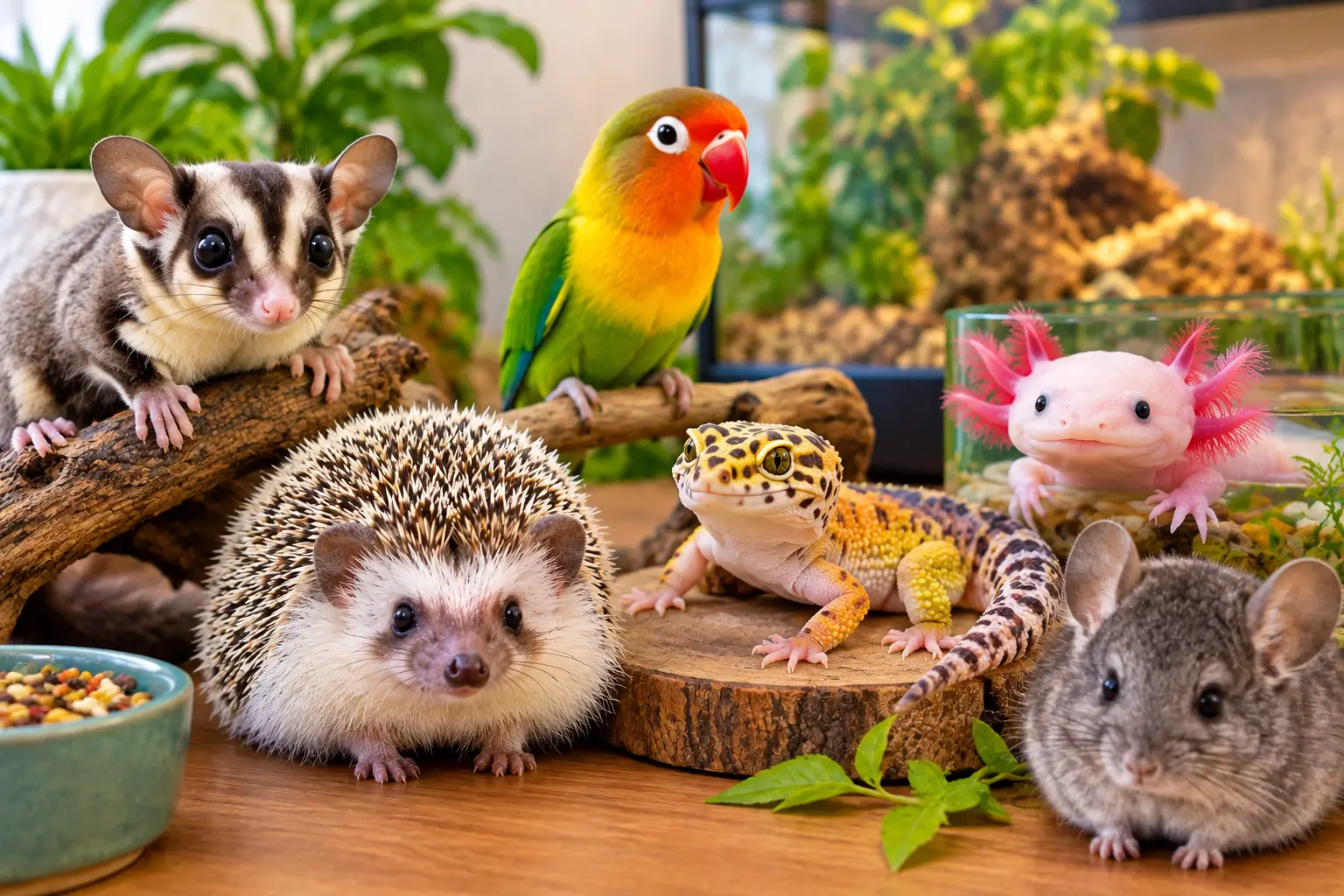
Small exotic pets are non-traditional companion animals — like hedgehogs, sugar gliders, chinchillas, and leopard geckos — that are smaller than a cat or dog and often need specialized housing, diets, and handling. They suit owners who want a unique pet but have limited space, time, or experience with exotics.
Key Takeaways
- Small exotic pets cover mammals, reptiles, and invertebrates — not just one animal type.
- They can be a great fit for apartments, but many still need specific temperature, humidity, or diet setups.
- Some US states and cities restrict or ban certain species, including hedgehogs, sugar gliders, and some reptiles.
- Startup costs often run higher than a hamster cage, mainly due to enclosures and heating equipment.
- A few species tolerate handling well, but many exotics do better as pets you watch rather than hold.
- Always check state and local exotic pet laws before you buy or adopt.
Introduction
You’ve probably seen a hedgehog curled up in someone’s palm on social media, or a sugar glider peeking out of a bonding pouch. That’s what draws most people to small exotic pets in the first place — they feel different from the usual cat-or-dog routine.
But cute videos skip the part where you learn about UVB lighting, humidity gradients, or why some states won’t let you own a specific species at all. This guide covers what small exotic pets actually need day to day, what they cost, and which ones fit different lifestyles.
Interest in exotic pet ownership has grown steadily as more people work from home and want a low-noise, space-friendly companion. Whether that’s a good move for you depends on the species, your schedule, and your local laws — all of which we’ll walk through here.
What Is a Small Exotic Pet?
A small exotic pet is any non-traditional companion animal, smaller than a typical cat or dog, that isn’t a common domesticated species like a Labrador or a tabby cat.
This category is broad. It spans small mammals like hedgehogs, sugar gliders, and chinchillas, reptiles such as leopard geckos and crested geckos, and invertebrates like tarantulas and hermit crabs.
What ties them together isn’t biology — it’s that they each need care routines most first-time pet owners haven’t dealt with before. A leopard gecko needs a heat gradient. A sugar glider needs a specific diet ratio. A chinchilla needs a dust bath instead of water.
Some people also use “exotic pet” loosely to include less common dog or cat breeds, but for pet ownership purposes, the term usually points to species outside the cat-dog-fish-bird mainstream.
Quick Facts Box
| Fact | Details |
| Common types | Hedgehogs, sugar gliders, chinchillas, leopard geckos, degus, fancy rats |
| Typical lifespan | Ranges widely — 2–3 years for some rodents, up to 12–15 years for chinchillas |
| Space needs | Usually low, but enclosure size and setup matter more than floor space |
| Legal status | Varies by US state and city; some states ban certain species or require permits |
| Handling level | Varies by species — some enjoy handling, others prefer minimal contact |
| Where to get one | Reputable breeders, exotic-pet rescues, or specialty pet stores |
Key Characteristics and Care Needs
Most small exotic pets share a few care basics, even though the specifics differ by species. Temperature control is one of the biggest. Reptiles need a warm basking spot and a cooler zone to regulate their body heat. Mammals like sugar gliders and hedgehogs are sensitive to cold and can’t handle drafty rooms.
Diet is another area where exotics differ sharply from cats and dogs. Sugar gliders need a careful mix of protein, fruit, and calcium. Leopard geckos eat live insects, not kibble. Chinchillas need high-fiber hay, similar to a rabbit.
Temperament also varies a lot between species, and even between individual animals of the same species. Some hedgehogs warm up to handling within weeks. Others stay defensive their whole lives. This can vary depending on how a breeder or previous owner socialized the animal as a baby, so it’s worth asking about an individual animal’s history before bringing it home.
Enclosure size matters more than people expect. A chinchilla needs a tall, multi-level cage for jumping. A leopard gecko needs floor space more than height. Getting the wrong enclosure shape is one of the most common early mistakes.
Quick Comparison Snapshot
| Option | Best For | Key Difference |
| Hedgehog | Owners who want a quiet, low-mess pet | Nocturnal, needs a heated enclosure year-round |
| Sugar glider | Social owners with lots of daily time | Bonds closely but needs a same-species companion in most cases |
| Leopard gecko | Beginners new to reptiles | Low handling needs, simple diet of live insects |
| Chinchilla | Owners wanting a longer-lived pet | Longest typical lifespan on this list, dust bath instead of water |
Small Exotic Pets List
Here’s a broader look at what falls under the small exotic pets umbrella. This isn’t a ranked list — it simply shows the range of options.
- Hedgehogs — small, quilled mammals that curl into a ball when startled
- Sugar gliders — small marsupials with a gliding membrane between their limbs
- Chinchillas — soft-coated rodents known for dust baths and long lifespans
- Leopard geckos — ground-dwelling lizards popular with first-time reptile owners
- Crested geckos — arboreal lizards that need less specialized lighting than many reptiles
- Fancy rats — highly social rodents, often described as more interactive than hamsters
- Degus — chinchilla relatives that are active during the day, unlike most rodents on this list
- Hermit crabs — small invertebrates that need humidity and shell options as they grow
Each of these has different legal status depending on where you live, so this list is a starting point for research, not a shopping list.
Best Small Exotic Pets
“Best” depends heavily on your experience level, schedule, and what you’re hoping to get out of pet ownership. That said, a few species come up again and again as strong starting points.
Breeders and vets often recommend leopard geckos for first-time reptile owners because their care routine stays fairly predictable once you set up the enclosure. Owners often praise fancy rats for their intelligence and social nature, closer to a small dog than people expect. Chinchillas appeal to owners who want a longer commitment and don’t mind a nocturnal schedule.
If you’re brand new to exotics, choosing a species with a well-documented care sheet from a reputable source, like a vet-reviewed care guide, is safer than picking based on looks alone.
Small Exotic Pets That Are Easy to Take Care of
Some species genuinely require less day-to-day effort than others, though “easy” is relative — every exotic pet needs more setup than a goldfish.
Many owners cite leopard geckos as low-maintenance among reptiles because they don’t need UVB lighting the way some other lizards do, and their diet stays simple once you stock feeder insects. Hermit crabs also have a reputation for being low-effort day to day, though their humidity requirements take some upfront learning.
On the mammal side, owners with reptile or small-mammal experience often find degus and chinchillas manageable, mainly because their diets are straightforward — high-fiber pellets and hay, without the complex ratios sugar gliders require.
“Easy” still means daily feeding, regular enclosure cleaning, and monitoring for health changes. No small exotic pet is truly hands-off.
Small Exotic Mammal Pets
If you specifically want a mammal rather than a reptile, the small exotic mammal pets category includes hedgehogs, sugar gliders, chinchillas, degus, and fancy rats.
These animals tend to have more expressive personalities than reptiles, which is part of their appeal. Sugar gliders in particular are known for bonding closely with their owners, though this closeness comes with a tradeoff — many gliders develop stress-related behaviors when owners leave them alone too long, so most breeders recommend keeping them in pairs.
Small exotic mammals also tend to have more specific dietary needs than reptiles. A sugar glider’s diet isn’t something you can improvise; getting the calcium-to-phosphorus ratio wrong over time can cause serious health problems. This is a good example of where consulting an exotic-animal vet before bringing one home really matters.
Best Exotic Pets That Cuddle
Not every small exotic pet wants to be held, so if cuddling matters to you, it’s worth narrowing your search early.
Hedgehogs can become comfortable with gentle, frequent handling, though many stay somewhat prickly and independent by nature. Owners often describe sugar gliders as the most affectionate option on this list once the glider has bonded with them, sometimes riding in a pouch the owner wears against the body. Fancy rats also enjoy human interaction, including shoulder-riding and hand-feeding.
Reptiles, by contrast, rarely seek out affection the way mammals do. Leopard geckos may tolerate gentle handling, but they’re not going to seek cuddles the way a sugar glider or rat might. If physical interaction is a priority, lean toward the mammal side of this list rather than reptiles or invertebrates.
Small Exotic Pets for Sale
A quick note from a pet-owner perspective, not a shopping guide: if you’re looking for small exotic pets for sale, prioritize reputable, USDA-licensed breeders or established exotic-pet rescues over unregulated online marketplaces.
Ask to see the animal’s living conditions, request health documentation where available, and confirm the seller can answer detailed care questions. Rescue organizations focused on exotics can also be a good option, since many take in animals whose previous owners underestimated the care involved.
Always verify that owning the species is legal in your state and city before any purchase or adoption goes through.
Daily Care Routine and How to Get Started
Getting started with a small exotic pet takes more upfront research than picking up a hamster at a big-box store. Here’s a general starting sequence:
- Research the specific species’ legal status in your state and city.
- Set up the enclosure completely before bringing the animal home, including any heating, lighting, or humidity equipment.
- Source an appropriate diet, whether that’s live insects, a specific pellet mix, or fresh produce.
- Find an exotic-animal vet in your area before you need one, not after.
- Introduce handling gradually, following species-specific guidance rather than a general “pet” approach.
Daily routines vary by species, but most involve a feeding check, a quick health glance, spot-cleaning the enclosure, and — for social species — dedicated interaction time. Weekly routines usually add a deeper enclosure clean and a supply check.
Cost Breakdown
Costs vary a lot by species, so treat these as general ranges rather than fixed numbers. This can vary depending on where you live and which supplies you choose, so check current pricing locally before budgeting.
- Initial enclosure and equipment: Often the biggest upfront cost, especially for reptiles needing heating and lighting setups
- Purchase or adoption fee: Varies widely by species and source
- Monthly food costs: Generally lower for reptiles eating insects than for mammals needing varied fresh diets
- Vet care: Exotic-animal vet visits often cost more than standard cat or dog visits, since fewer vets specialize in exotics
- Ongoing supplies: Bedding, dust bath sand, enrichment items, and replacement heating bulbs add up over time
Because exotic-vet care can be pricier and harder to find, it’s worth locating a vet and confirming pricing before you commit to a species.
Common Mistakes Pet Owners Make
A few mistakes come up again and again with new exotic pet owners.
Buying the enclosure last, instead of first, is a common one — heating and lighting equipment often takes a few days to arrive and calibrate. Skipping species-specific diet research is another, since many owners assume “exotic” animals can eat like typical rodents or reptiles interchangeably, which isn’t accurate.
Underestimating socialization needs trips people up too, especially with sugar gliders, which can develop stress behaviors when owners leave them alone. And skipping the legal check is a bigger issue than people expect — some cities restrict species that are legal statewide, so a quick state-level search isn’t always enough.
Pros and Cons
| Pros | Cons |
| Often quieter than dogs or many birds | Specialized equipment can mean higher upfront costs |
| Can suit smaller living spaces | Fewer vets specialize in exotic animal care |
| Wide variety of personalities and species to choose from | Legal status varies by state and city |
| Some species have long lifespans, like chinchillas | Many species need very specific diets, not generic pet food |
Similar Options and Alternatives
If none of the species above feel like a perfect fit, a few other small exotic pets are worth researching further.
| Option | Best For |
| Crested gecko | Owners wanting a reptile with simpler lighting needs than many lizards |
| Tarantula | Owners comfortable with minimal handling and a very long-term commitment |
| African dwarf frog | Owners interested in a small aquatic pet instead of a terrestrial one |
| Guinea pig | Owners wanting a highly social rodent, sometimes grouped with exotics depending on local classification |
Each of these has its own care sheet worth reading in full before you decide, since even animals on the same list can have very different day-to-day needs.
When to Consult a Vet or Professional
Any change in eating, energy level, weight, or droppings is worth a vet call, especially with exotic species where symptoms can escalate faster than in cats or dogs.
Because exotic animals often hide illness as a survival instinct, by the time symptoms are obvious, the issue may already be advanced. If you notice lethargy, refusal to eat for more than a day, visible swelling, or unusual breathing, contact an exotic-animal vet promptly rather than waiting to see if it resolves.
Never attempt to diagnose or medicate an exotic pet based on online advice. Dosing and treatment needs vary enormously between species, and what’s safe for one animal can be harmful to another. A licensed veterinarian with exotic-animal experience is the right resource for any health concern.
Fun Facts
- Sugar gliders can glide up to roughly 150 feet using the skin membrane between their limbs.
- Hedgehogs are lactose intolerant, so dairy isn’t a safe treat for them.
- Chinchillas take dust baths instead of water baths to keep their dense fur clean.
- Hobbyists have selectively bred some leopard gecko color morphs over decades.
- Degus are unusual among small pet rodents for being active during the day rather than at night.
- Wild hermit crabs often gather in groups called “intertidal zone” communities, reflecting their natural habitat.
Frequently Asked Questions
What is the smallest exotic pet? Among the species people commonly keep, dwarf hamsters and mourning geckos rank among the smallest small exotic pets available, often just a few inches long as adults. Smaller size can mean a smaller enclosure footprint, which appeals to apartment owners. That said, small size doesn’t always mean simpler care — some tiny species still need very specific humidity or temperature setups. Always check a species’ full care sheet rather than choosing based on size alone.
What are some unique small pets? Beyond the usual hedgehog or gecko, some owners keep less common species like African pygmy hedgehogs, hissing cockroaches, or vinegaroons. These tend to appeal to hobbyists interested in invertebrates or unusual mammals rather than typical companion behavior. Availability and legality vary a lot by region for these less common species, so research local exotic pet laws carefully before pursuing one, since some jurisdictions restrict species that seem harmless.
What are some cute exotic pets? Owners frequently name hedgehogs and sugar gliders among the most visually appealing small exotic pets, which is part of why they’re popular on social media. Chinchillas and degus also draw attention for their soft fur and expressive faces. Keep in mind that “cute” doesn’t always predict a good match — a photogenic species can still have care needs that don’t fit your lifestyle, so look past appearance to the daily routine involved.
What is the best tiny pet? For most beginners, the “best” tiny pet balances manageable care with a predictable temperament, which is why leopard geckos and fancy rats come up often in that conversation. Your ideal choice really depends on whether you want a reptile or mammal, how much handling you want, and your budget for setup and vet care. Talking to an exotic-pet-experienced vet before choosing can help match a species to your specific situation.
Final Thoughts
Small exotic pets can make wonderful companions, but they ask for more research than a typical first pet. The species that fits your neighbor’s lifestyle might not fit yours, and that’s fine — the range of options here is part of the appeal.
Before bringing one home, check your local laws, set up the enclosure completely, and find an exotic-animal vet in your area. Taking those steps early makes the rest of pet ownership much smoother.
Whichever small exotic pet you choose, the animals that do best are the ones whose owners researched their specific needs before the excitement of bringing them home took over. A little patience upfront goes a long way.

Sophia Bennett is an animal care contributor at PetJournalHub. She writes educational articles about companion animals, pet wellness, training, and daily care. She believes that trustworthy information helps every pet owner build a healthier and happier life for their pets.