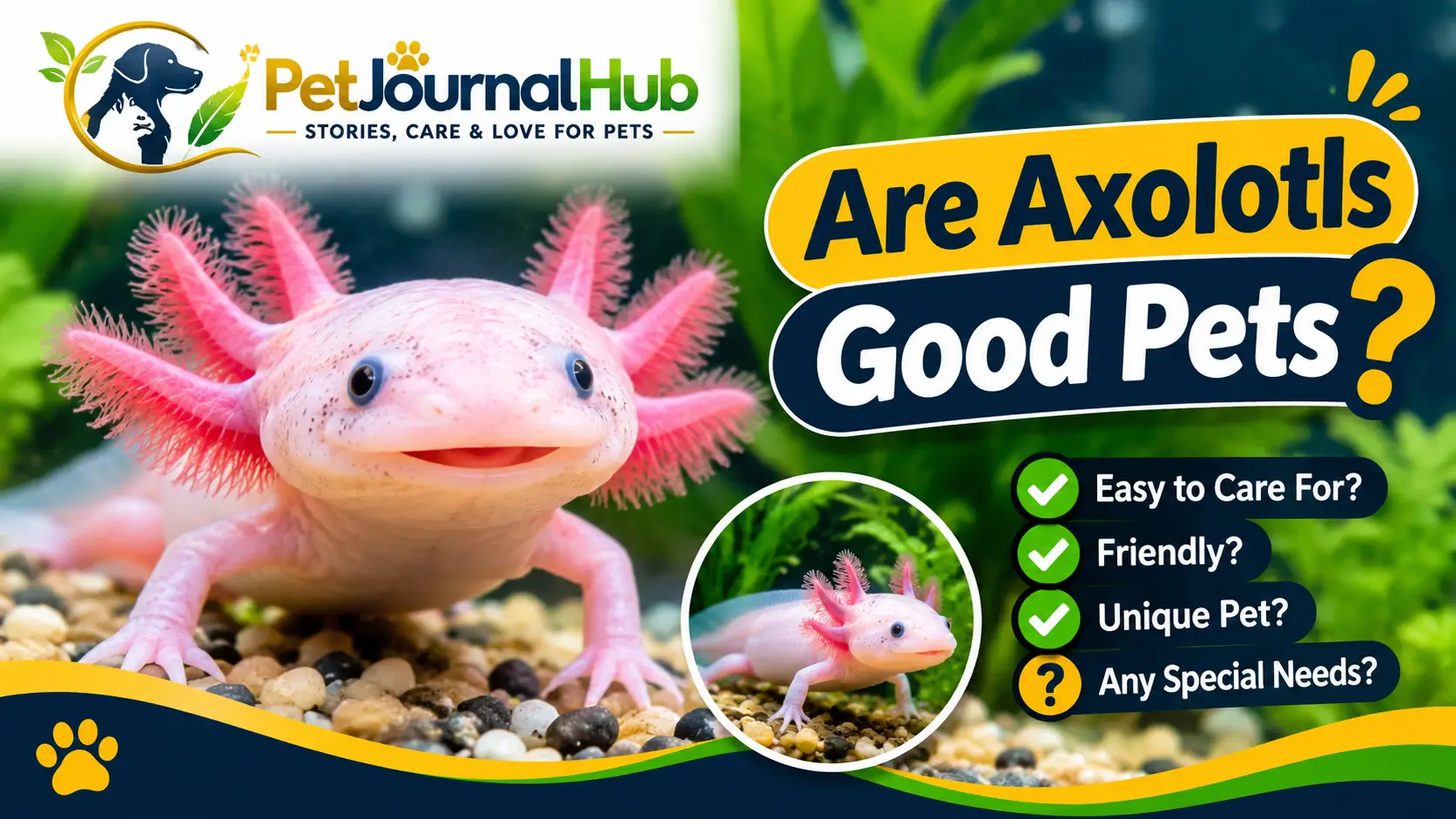
Axolotls can make good pets for people who enjoy aquatic animals and can maintain a carefully managed aquarium. They need clean, cool water, a fully cycled tank, suitable food, and regular monitoring. However, they aren’t cuddly pets, and their sensitive skin and delicate bodies make frequent handling unsafe.
Key Takeaways
- Axolotls are aquatic amphibians native to Mexico.
- They suit patient owners who enjoy aquarium care.
- They need cool, clean, well-filtered water.
- They should not live with unsuitable fish or other animals.
- Their care involves ongoing equipment, food, and veterinary costs.
- Local laws may restrict or prohibit axolotl ownership.
Introduction
Axolotls have become popular among people who enjoy unusual and fascinating pets. Their wide smiles, fluffy external gills, and unusual appearance make them stand out from ordinary aquarium animals. Many people first discover them through pet videos and photographs.
However, their appearance tells only part of the story. Axolotls have specific environmental needs. They depend on cool water, stable aquarium conditions, and a suitable diet to remain healthy.
If you’re thinking about getting one, you may wonder whether an axolotl fits your lifestyle. You might also want to know whether children can care for one, how much money ownership requires, and whether these unusual amphibians enjoy human company.
This guide answers those questions from a responsible pet-ownership perspective. It explains their behavior, natural habitat, aquarium setup, feeding needs, health concerns, and legal considerations.
You’ll also learn why an axolotl isn’t the right choice for every household. Some people enjoy watching aquatic animals more than handling pets. Others may struggle to maintain cool water throughout the year.
Understanding these differences before purchasing an animal can help you make a responsible decision.
What Are Axolotls?
Ajolote silvestre (wild type): el morfo natural original
Golden Axolotl – A Rare and Beautiful Creature
7
An axolotl (Ambystoma mexicanum) is an aquatic salamander that retains its juvenile features throughout adulthood. Unlike most salamanders, it normally stays underwater instead of transforming into a land-dwelling adult.
People sometimes call it the Mexican walking fish. However, this name is misleading because axolotls are amphibians, not fish.
They have four small legs, a long tail, external feathery gills, and a broad head. Their unusual appearance makes them interesting animals to observe.
What Makes Axolotls Different?
Axolotls have a biological feature called neoteny. This means they reach sexual maturity while keeping several characteristics associated with their larval stage.
Their external gills help them take oxygen from water. They can also use their lungs and skin for gas exchange.
Another remarkable feature is regeneration. Axolotls can regrow lost limbs and repair certain damaged tissues. However, this ability doesn’t make them immune to injuries or poor care.
Common Axolotl Colors
Captive-bred axolotls come in several color varieties.
- Wild type: Brown, dark gray, or greenish coloring with darker markings.
- Leucistic: Pale pink or white body with dark eyes.
- Golden albino: Yellow or golden coloring with light-colored eyes.
- White albino: Pale body and pinkish or reddish eyes.
- Melanoid: Very dark coloring with reduced iridescent pigmentation.
These varieties have different appearances, but their basic care requirements remain similar.
Quick Facts About Axolotls
| Fact | Details |
| Scientific name | Ambystoma mexicanum |
| Animal group | Amphibian |
| Family | Ambystomatidae |
| Native country | Mexico |
| Natural habitat | Freshwater lake and canal habitat |
| Adult length | Usually around 9–10 inches |
| Lifespan | Approximately 10–15 years in captivity |
| Diet | Carnivorous |
| Activity | Often more active in dim conditions |
| Social needs | Can live alone |
| Care level | Intermediate |
| Conservation status | Critically endangered in the wild |
These figures provide general guidance. Individual size and lifespan can vary with genetics, health, and care.
Where Do Axolotls Come From?
Axolotls originate from the freshwater lake system around Mexico City, particularly Lake Xochimilco. Their natural environment includes freshwater canals and aquatic vegetation.
Their native habitat has changed dramatically because of urban development, pollution, water management, and introduced species.
These pressures have contributed to severe declines in wild populations.
Why Is Their Natural Habitat Important?
Understanding their natural environment helps explain their aquarium needs.
Axolotls need freshwater conditions and suitable temperatures. They also benefit from hiding places and a relatively calm environment.
A home aquarium should provide stable conditions rather than simply looking attractive.
The San Diego Zoo explains that habitat restoration and water management play important roles in protecting wild axolotls.
San Diego Zoo Animals & Plants+1
History and Evolution of Axolotls
Axolotls have attracted scientific attention for many years because of their unusual development and regenerative abilities.
Scientists have studied their ability to regrow limbs and repair certain tissues. Their biology provides valuable information for research into development and regeneration.
Over time, captive breeding also made axolotls available to research facilities and responsible private keepers.
Their popularity as pets increased as aquarium enthusiasts became interested in unusual aquatic species.
However, popularity creates an important responsibility. Buyers should choose legitimate captive-bred animals rather than support the collection of wild specimens.
Key Characteristics and Care Needs
Axolotls have several features that make them different from traditional aquarium pets. Their care depends on maintaining a stable aquatic environment.
1. Size and Appearance
Most adult axolotls reach approximately 9–10 inches in length, although some grow larger.
Their bodies have a soft appearance. Their external gills extend from both sides of the head, and their long tails help them move through water.
They need enough horizontal space to move, turn, and explore their surroundings.
2. Temperament and Behavior
Axolotls are generally calm animals. They spend much of their time resting near the bottom of the aquarium.
They may become more active when they notice food or movement around their tank.
They aren’t affectionate in the same way as dogs or cats. However, some learn to recognize feeding routines and approach the aquarium glass when their owner arrives.
3. Temperature Requirements
Temperature control is one of the most important parts of axolotl care.
The Royal Veterinary College recommends an environmental temperature of approximately 16–18°C (61–64°F). Temperatures that become too high can create serious health risks.
Royal Veterinary College+1
An aquarium thermometer helps owners monitor changes.
In warmer climates, aquarium fans or a suitable cooling system may become necessary. Never assume ordinary room temperature will remain suitable throughout the year.
4. Water Quality
Clean-looking water isn’t always safe water.
Axolotls need stable water conditions, and their aquarium must have an established biological filter.
Important water measurements include:
- Ammonia: 0 ppm.
- Nitrite: 0 ppm.
- Nitrate: Keep low through appropriate maintenance.
- pH: A suitable, stable freshwater range.
Use an aquarium test kit rather than judging water quality by appearance.
5. Aquarium Space
A long aquarium provides useful floor space for an adult axolotl.
Veterinary husbandry guidance commonly recommends at least 20 gallons for an adult, with larger tanks offering more stable conditions.
LafeberVet+1
Provide smooth hiding places and avoid sharp decorations.
6. Lighting and Substrate
Axolotls often prefer dim surroundings. Bright lighting without shaded hiding places can cause stress.
Avoid small gravel and pebbles. Axolotls may accidentally swallow them while feeding, which can cause dangerous digestive blockages.
Bare-bottom aquariums or suitable fine sand are safer options.
Quick Comparison Snapshot
Different axolotl varieties offer different appearances. However, their care requirements are broadly similar.
| Option | Best For | Key Difference |
| Wild type | Traditional appearance | Dark, natural markings |
| Leucistic | Light-colored appearance | Pinkish body and dark eyes |
| Golden albino | Bright aquarium appearance | Yellow or golden coloring |
| Melanoid | Dark appearance | Deep pigmentation |
Choose an animal based on its health and the reliability of its breeder, not color alone.
Are Axolotls Good Pets for Adults?
Axolotls can suit adults who enjoy aquarium maintenance and observing aquatic animals. They may be especially appealing to people who prefer quiet pets rather than animals that need daily physical interaction.
Adults should understand the responsibilities before bringing one home.
For example, you need to monitor water temperature, test aquarium conditions, remove waste, and provide suitable food.
You also need a plan for veterinary care. Not every general veterinary clinic treats amphibians, so finding an experienced exotic-animal veterinarian beforehand is important.
An adult with a busy lifestyle can still own an axolotl, but the aquarium needs regular attention.
They aren’t ideal for someone who wants a pet that requires little maintenance.
Is It Cruel to Keep an Axolotl as a Pet?
Keeping an axolotl isn’t automatically cruel. Responsible captive ownership can provide a suitable environment when owners meet its physical and behavioral needs.
However, poor housing, unsuitable temperatures, bad water quality, and excessive handling can cause suffering.
The biggest concern is whether the owner can maintain appropriate conditions for the animal’s entire life.
When Can Captive Ownership Be Responsible?
Responsible ownership involves:
- Buying from a reputable captive-breeding source.
- Providing an appropriately sized aquarium.
- Cycling the aquarium before introducing the animal.
- Maintaining suitable water temperature.
- Testing water regularly.
- Providing hiding places and appropriate nutrition.
- Finding an amphibian-experienced veterinarian.
The World Wildlife Fund highlights conservation, legality, welfare, and responsible sourcing as important considerations for exotic pet ownership.
WWF
When Does Ownership Become Unfair?
Keeping an axolotl becomes a welfare concern when someone cannot provide its basic needs.
For example, placing one in a small decorative bowl without proper filtration is not responsible care.
Likewise, buying an axolotl because it looks cute without researching its long-term needs can lead to neglect.
Before purchasing one, consider whether you can maintain its environment consistently.
Are Axolotls Good Pets Reddit Discussions?
Online pet communities can help prospective owners understand the practical side of keeping unusual animals.
Axolotl discussions often involve aquarium cycling, cooling equipment, feeding routines, tank maintenance, and common beginner mistakes.
However, individual experiences don’t replace veterinary guidance or reliable husbandry information.
What Should You Learn From Online Communities?
Look for detailed discussions that explain both successful and unsuccessful experiences.
Pay attention to posts about:
- Maintaining safe aquarium temperatures.
- Choosing suitable filtration systems.
- Preventing accidental substrate ingestion.
- Finding exotic-animal veterinarians.
- Managing aquarium problems during hot weather.
Be cautious about advice that recommends skipping water testing or keeping axolotls in unsuitable conditions.
A popular opinion doesn’t automatically make a care practice safe.
Editorial note: This section addresses the supplied Reddit search keyword. It does not present unverified Reddit comments or claim a specific community consensus.
Are Axolotls Good Pets for 10 Year Olds?
Axolotls can interest 10-year-old children, but they shouldn’t be responsible for their own care.
At this age, children can learn about aquarium ecosystems, animal behavior, and responsible ownership.
However, an adult must supervise every important care task.
What Can Children Learn?
A child can help with simple activities such as observing feeding behavior, recording temperatures, and watching the animal explore.
These activities can encourage curiosity about biology and aquatic environments.
Parents should explain why touching, tapping the glass, or disturbing the aquarium can harm the animal.
What Should Adults Handle?
Adults should remain responsible for:
- Water testing and aquarium maintenance.
- Temperature control.
- Purchasing suitable food.
- Monitoring health and behavior.
- Arranging veterinary appointments.
An axolotl should be a family pet with adult responsibility, not a child’s independent responsibility.
Are Axolotls Good Pets for Kids?
Axolotls may be suitable for families with children who enjoy watching aquatic animals.
However, they aren’t suitable for children who want to hold, cuddle, or play with their pets.
Their delicate skin and external gills make frequent handling a poor choice.
Are They Better Than Traditional Children’s Pets?
That depends on what a child expects from an animal.
A dog or cat can offer more direct interaction. An axolotl provides a different experience based on observation and aquarium care.
Parents should also consider the financial commitment. A suitable aquarium, cooling equipment, filtration, and regular supplies can cost more than expected.
If a child mainly wants an interactive companion, another pet may be a better choice.
Axolotl as a Pet for Sale: What Should Buyers Check?
Buying an axolotl requires more research than choosing an ordinary aquarium fish.
The animal should come from a responsible captive breeder or legitimate seller who understands its care requirements.
Questions to Ask Before Buying
Ask the seller about:
- The animal’s age and approximate size.
- Its feeding history.
- Its current water temperature.
- Whether it eats reliably.
- Any previous health concerns.
- Its captive-bred origin.
- Any documentation required by local regulations.
Signs of a Healthy Axolotl
A healthy-looking animal generally has intact limbs, clean skin, and external gills without obvious damage.
Its body should not show clear signs of injury, severe swelling, or unusual deterioration.
However, appearance alone cannot confirm good health. Ask for a veterinary history where available.
Avoid Impulse Purchases
Don’t buy an axolotl simply because a pet shop has one available.
Prepare the aquarium first. Confirm that it has completed its cycling process and that the water conditions are suitable.
Also, never release an unwanted axolotl into local waterways. Contact a responsible rescue, experienced keeper, or appropriate animal authority instead.
Why Are Axolotls Illegal in Some Places?
Axolotl ownership is restricted in certain locations because of wildlife regulations, conservation concerns, and rules governing exotic animals.
However, axolotls aren’t illegal everywhere. Laws differ between countries, states, and local authorities.
Why Do Governments Restrict Them?
There are several reasons:
- Wildlife protection: Wild axolotls face serious threats in their native habitat.
- Import restrictions: Some jurisdictions regulate the movement of protected wildlife.
- Invasive species concerns: Authorities may restrict certain exotic animals to protect local ecosystems.
- Animal welfare: Some rules address the responsible keeping and trading of exotic species.
What About Ownership in the United States?
Some US states restrict or prohibit axolotl ownership. California, New Jersey, and Maine are commonly cited examples, but legal requirements can change.
Check your state wildlife agency and local regulations before purchasing one.
International buyers should also check import, export, and exotic-animal rules in their own countries. Don’t assume that a seller’s willingness to ship means ownership is legal.
Are Axolotls Nice to Humans?
Axolotls aren’t naturally aggressive toward people. They generally avoid direct interaction and spend much of their time underwater.
Some become familiar with their owner’s presence, especially around feeding time.
However, recognizing a person isn’t the same as forming a human-style emotional bond.
Do They Recognize Their Owners?
An axolotl may learn to associate movement near its aquarium with food.
It might swim toward the glass when someone approaches. This behavior can look like recognition, but it doesn’t prove affection.
Can They Bite People?
Axolotls have small teeth used mainly for gripping food.
They may snap at fingers during feeding or when they mistake movement for food. Their bites generally aren’t serious, but owners should avoid unnecessary contact.
Use appropriate feeding tools when needed, and wash your hands before aquarium maintenance.
Daily Care Routine: How to Get Started
Axolotl care becomes easier when you follow a consistent schedule. A simple routine helps you identify environmental changes before they become serious problems.
Step 1: Prepare the Aquarium
Choose a suitable aquarium with enough horizontal space.
Install a gentle filtration system and provide smooth caves or hiding places.
Avoid sharp decorations and small gravel. Make sure the aquarium has a secure cover.
Step 2: Cycle the Aquarium
Never place an axolotl into a newly filled aquarium without preparing the biological filter.
Aquarium cycling allows beneficial bacteria to establish themselves. These bacteria help process toxic waste.
Test ammonia and nitrite levels to confirm that the system can handle waste safely.
This process often takes several weeks. Don’t rush it just because the aquarium water looks clear.
Step 3: Monitor Temperature
Check the water temperature every day.
Aim for the recommended cool range and avoid sudden changes.
If your room becomes warm, use suitable aquarium cooling equipment. Monitor the water rather than relying on the room’s temperature.
Step 4: Feed Suitable Food
Axolotls eat animal-based foods.
Suitable options can include:
- Earthworms.
- Appropriate axolotl or carnivore pellets.
- Bloodworms as part of a varied diet.
- Other suitable aquatic invertebrates.
Earthworms are a common staple for adult axolotls. Choose food that matches the animal’s size.
Step 5: Remove Waste
Remove leftover food and visible waste from the aquarium.
Decomposing food can affect water quality. Regular maintenance helps prevent unnecessary problems.
Step 6: Perform Water Changes
Replace a suitable portion of the aquarium water according to water-test results and your maintenance plan.
Use properly conditioned water that matches the aquarium’s temperature.
Avoid replacing all the water unnecessarily because this can disrupt the aquarium’s biological balance.
Step 7: Observe Your Axolotl
Watch its appetite, movement, skin, gills, and general appearance.
Changes in behavior can sometimes indicate an environmental or health problem.
A written care log can help you notice patterns over time.
Axolotl Cost Breakdown
The purchase price represents only one part of axolotl ownership.
You also need to budget for aquarium equipment, electricity, food, maintenance products, and veterinary care.
| Expense | What You Need |
| Axolotl | Healthy captive-bred animal |
| Aquarium | Suitable long aquarium |
| Filter | Gentle, reliable filtration |
| Cooling | Fan or aquarium chiller if needed |
| Thermometer | Daily temperature monitoring |
| Water testing | Ammonia, nitrite, nitrate, and pH tests |
| Decorations | Smooth hides and safe aquarium items |
| Food | Earthworms and suitable pellets |
| Maintenance | Water conditioner and cleaning equipment |
| Veterinary care | Amphibian-experienced veterinarian |
Initial Setup Costs
Your initial investment may be substantial because you need to establish a complete aquarium before bringing the animal home.
The aquarium, filtration, testing equipment, and cooling system usually deserve priority over decorative accessories.
Monthly Expenses
Regular expenses include electricity, food, water conditioners, and replacement supplies.
Cooling equipment may increase electricity costs in warmer climates.
Unexpected Veterinary Costs
Keep an emergency fund for veterinary appointments and treatment.
Amphibian veterinary care can require specialized knowledge, so identify a suitable clinic before purchasing an axolotl.
Budgeting tip: Obtain local quotes from aquarium suppliers and veterinary clinics. Prices vary by country, equipment quality, and availability.
Common Mistakes Pet Owners Make
New owners sometimes underestimate how sensitive axolotls are to their surroundings.
Avoiding these common mistakes can help protect their health.
1. Buying an Axolotl Before Preparing the Tank
An aquarium needs proper preparation before the animal arrives.
Cycling the tank and testing its water should happen first.
2. Ignoring Water Temperature
Warm water can place considerable stress on an axolotl.
Use a reliable thermometer and prepare a cooling plan before hot weather arrives.
3. Using Small Gravel
Axolotls may swallow small stones while eating.
This can cause digestive obstruction. Choose safer substrate options instead.
4. Handling Them Too Often
Their skin is delicate and sensitive to physical damage.
Avoid picking them up for entertainment or taking unnecessary photographs outside the water.
5. Keeping Them With Unsuitable Tankmates
Fish may nip their external gills, while smaller fish may become food.
A species-only aquarium is generally the safer option.
6. Overfeeding
Uneaten food can spoil and damage water quality.
Feed suitable portions and remove leftovers.
7. Ignoring Legal Requirements
Check local ownership and import rules before purchasing an axolotl.
Never rely entirely on online advertisements or a seller’s claims.
Pros and Cons of Keeping Axolotls
Axolotls offer an unusual aquarium experience, but their needs can make ownership challenging.
| Pros | Cons |
| Unusual and fascinating appearance | Sensitive to water conditions |
| Interesting feeding behavior | Require cool water |
| Don’t need outdoor walks | Need regular aquarium maintenance |
| Can live for 10–15 years | Long-term commitment |
| Can live alone | Limited physical interaction |
| Fascinating regeneration ability | Need specialized veterinary care |
| No fur or traditional pet grooming | Not suitable for frequent handling |
The main advantage is their fascinating aquatic behavior. The biggest disadvantage is the need for consistent environmental control.
Similar Pets and Alternatives
If you’re interested in axolotls but aren’t sure about their care requirements, consider other aquatic or unusual pets.
Each alternative has different housing, dietary, and welfare needs.
| Option | Best For |
| Betta fish | People interested in a colorful aquatic pet |
| Goldfish | Owners prepared for proper aquarium space and filtration |
| African dwarf frog | People interested in observing small aquatic amphibians |
| Leopard gecko | People interested in a land-dwelling reptile |
| Crested gecko | Owners interested in an arboreal reptile |
| Fire-bellied toad | Experienced keepers interested in amphibians |
Remember that these alternatives aren’t automatically easier or less expensive.
Research their individual care requirements before choosing one.
When to Consult a Vet or Professional
Axolotls can develop health problems related to poor water quality, unsuitable temperatures, infections, injuries, and feeding difficulties.
Contact an amphibian-experienced veterinarian if you notice concerning changes.
Warning Signs to Watch For
Pay attention to:
- Refusing food repeatedly.
- Unusual swelling or body changes.
- Damaged or deteriorating gills.
- Skin sores, redness, or unusual growths.
- Loss of balance or difficulty swimming.
- Unusual floating or difficulty staying submerged.
- Sudden changes in activity.
These signs don’t identify a specific illness. A veterinarian must examine the animal and assess its environment.
What Should You Do Before the Appointment?
Check the aquarium temperature and test the water.
Record recent feeding habits and note when the symptoms started.
Take photographs or videos if they help document visible changes.
Don’t try home medication, salt baths, or other treatments without veterinary guidance. Some treatments can make an amphibian’s condition worse.
Fun Facts About Axolotls
Download A Frog With A Big Head And Big Eyes | Wallpapers.com
Axolotls have several remarkable biological features.
- They are salamanders, not fish. Their common nickname, Mexican walking fish, doesn’t describe their actual animal group.
- They retain juvenile features. Their external gills remain visible into adulthood.
- They can regenerate limbs. Their bodies can regrow certain lost structures.
- They have external gills. These feathery structures help them absorb oxygen from water.
- They are native to Mexico. Their natural range is closely associated with the Xochimilco lake and canal system.
- They have a long captive lifespan. Many can live approximately 10–15 years with appropriate care.
- They have several color varieties. Captive-bred axolotls can have wild-type, leucistic, albino, and melanoid appearances.
These features make axolotls fascinating animals for people interested in amphibian biology.
VCA Animal Hospitals+2
Frequently Asked Questions
Do Axolotls Like to Be Touched?
Axolotls generally don’t need or enjoy physical handling. Their skin is delicate, and direct contact can cause stress or injury. Oils, soap residue, and other substances on human hands may also create risks. It’s better to observe your axolotl inside its aquarium. If you must move it for veterinary care or an emergency, follow a safe transfer method recommended by an amphibian veterinarian. Avoid touching it simply to make it more comfortable with you. Respecting its natural behavior is a better way to provide good care.
Should I Buy 1 or 2 Axolotls?
For most first-time owners, starting with one axolotl is the simpler choice. Axolotls don’t need companions to remain healthy, and keeping one avoids some risks associated with group housing. Two animals need more aquarium space, additional hiding places, and careful feeding management. They may also bite one another, particularly when sizes differ or food competition occurs. If you eventually consider keeping two together, consult an experienced amphibian keeper or veterinarian first. You should also have a separate enclosure ready if they need separation.
What Are Some Sad Facts About Axolotls?
One of the saddest facts about axolotls is their critically endangered status in the wild. Their natural habitat around Mexico City has suffered from pollution, urban development, water management changes, and introduced species. Although captive-bred axolotls are available in the pet trade, that doesn’t mean their wild populations are healthy. Their unusual appearance has also increased demand for them as pets. Responsible buyers should support legitimate captive breeding and conservation efforts. Never purchase wild-caught animals or release captive pets into natural waterways.
Can an Axolotl Live in Dirty Water?
No. Dirty or chemically unsafe water can seriously harm an axolotl. Waste products such as ammonia and nitrite can damage its health, even when the aquarium looks reasonably clean. Leftover food and animal waste can also disrupt water quality. Use a reliable aquarium test kit to monitor the water instead of judging it by appearance. Maintain an established biological filter and perform suitable partial water changes. If testing shows unsafe conditions, seek advice from an experienced aquatic veterinarian or qualified aquarium professional.
How Long Do Axolotls Live as Pets?
Axolotls can live approximately 10–15 years in captivity when their needs receive proper attention. Their lifespan depends on genetics, nutrition, water conditions, and overall health. Before buying one, consider whether you can maintain its aquarium throughout this commitment. You may also need to arrange care during holidays, travel, or unexpected situations. A long lifespan makes an axolotl a serious responsibility rather than a temporary aquarium purchase.
Can Axolotls Live With Fish?
Keeping axolotls with fish is generally not recommended. Small fish may become food, while larger or aggressive fish may damage their delicate external gills. Some fish also require warmer water than axolotls prefer. These differences make a shared aquarium difficult to manage safely. A species-only aquarium is usually the more responsible choice. If you’re considering tankmates, ask an amphibian-experienced veterinarian before introducing another animal.
Final Thoughts
Axolotls are fascinating aquatic animals with unusual appearances and remarkable biological abilities. They can make rewarding pets for people who enjoy observing aquatic life and maintaining a carefully managed aquarium.
However, they aren’t suitable for everyone. Their need for cool water, reliable filtration, suitable nutrition, and regular water testing requires consistent attention.
Families considering an axolotl should also understand that children need adult supervision. These animals aren’t cuddly companions and should receive minimal handling.
Before purchasing one, research local ownership laws, prepare the aquarium, and locate an experienced amphibian veterinarian. Choose a reputable captive breeder who can explain the animal’s history and feeding routine.
If you can provide the right environment for its entire lifespan, an axolotl can become an interesting and rewarding addition to your home.
The best decision isn’t based on how unusual an animal looks. It’s based on whether you can meet its needs every day.

Emily Carter is a pet care writer at PetJournalHub. She enjoys creating clear, practical, and well-researched articles about pet health, nutrition, grooming, and everyday care. Her goal is to help pet owners make informed decisions through reliable, easy-to-understand content.