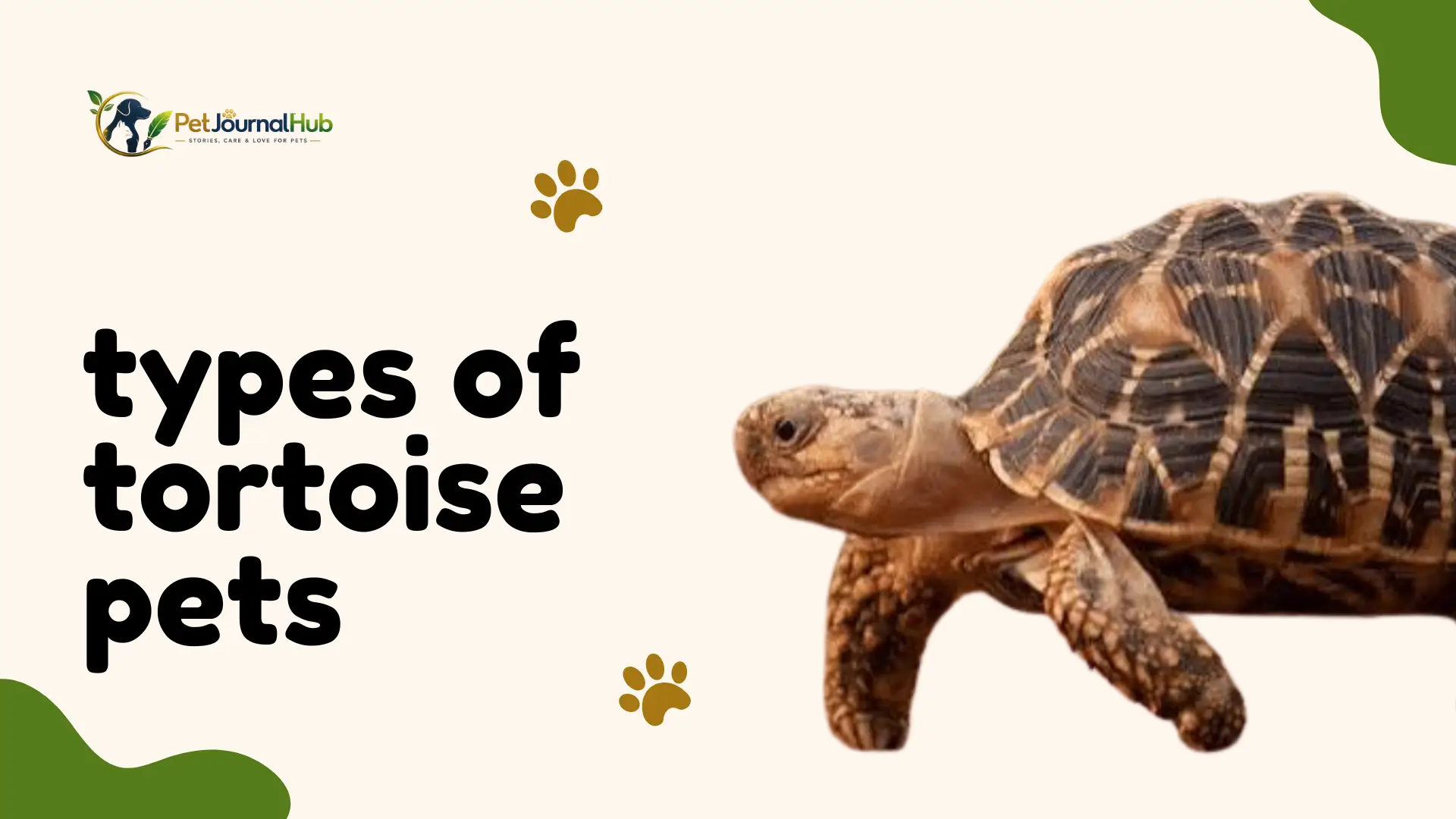
Types of tortoise pets range from small, hardy species like the Russian and Greek tortoise to large, long-lived giants like the Sulcata. Each species has different size, temperature, and space needs, so picking the right one depends on your home, climate, and how much room you can offer as the tortoise grows.
Key Takeaways
- The most common pet tortoise species are Russian, Greek, Hermann’s, Sulcata, Leopard, and Red-footed tortoises.
- Russian and Greek tortoises are usually the best fit for beginners because of their smaller adult size.
- Sulcata and Leopard tortoises grow very large and need serious long-term planning.
- Tortoises need a proper enclosure, UVB lighting, and a species-specific diet — not just a backyard.
- Most pet tortoise species can live 40 to 80+ years, so this is a long-term commitment, not a short-term pet.
- Always confirm species-specific care with an exotics vet, since needs vary by breed and region.
Introduction
People search for types of tortoise pets when they’re thinking about bringing home a shelled companion for the first time. Tortoises feel different from cats or dogs. They’re quiet, slow-moving, and can outlive their owners.
That appeal is real, but so is the confusion. Pet stores and online sellers list dozens of species, and not all of them belong in a backyard hobbyist’s home. Some stay small enough for an indoor enclosure. Others grow to the size of a coffee table and need a heated outdoor pen.
This guide walks through the tortoise species people actually keep as pets, what each one needs, and how to figure out which type fits your space, climate, and experience level. Whether you’re comparing types of tortoise pets for a first-time purchase or just curious what’s out there, you’ll find clear, honest answers here.
Different Types of Pet Tortoises
There are different types of tortoises for pets, ranging from small species to larger varieties that need spacious outdoor enclosures. Russian, Greek, and Hermann’s tortoises are popular options for suitable homes, while Sulcata and Leopard tortoises require much more room as adults. The best type of tortoise for a pet depends on your experience, available space, local climate, and ability to provide proper long-term care. If you prefer smaller species, compare their adult size and care requirements before choosing.
What Is a Pet Tortoise?
A pet tortoise is a land-dwelling reptile from the family Testudinidae, kept in a home enclosure or outdoor pen rather than in the wild. Unlike turtles, tortoises don’t swim — they’re built for walking on land and digging burrows.
Pet tortoises come in a wide range of sizes. Some species, like the Russian tortoise, stay under 8 inches long as adults. Others, like the Sulcata, can reach well over 100 pounds. What they share is a slow metabolism, a long lifespan, and specific needs around heat, UVB light, and diet.
Most pet tortoises are herbivores. They eat leafy greens, weeds, and select vegetables, with very limited fruit. Their care setup usually includes a basking area, a cooler zone, and substrate they can dig into.
Quick Facts Box
| Fact | Details |
| Common pet species | Russian, Greek, Hermann’s, Sulcata, Leopard, Red-footed |
| Typical lifespan | 40–80+ years, depending on species and care |
| Diet | Mostly leafy greens and weeds; limited fruit |
| Housing | Indoor enclosure or outdoor pen with heat and UVB |
| Legal status | Some species restricted by state; always check local law |
| Best for beginners | Russian and Greek tortoises |
Key Characteristics and Care Needs
Every pet tortoise needs three basics: heat, UVB light, and a diet matched to its species. Get these wrong, and even a hardy tortoise can develop shell or bone problems over time.
Temperature is non-negotiable. Tortoises are cold-blooded, so they rely on their environment to regulate body heat. Most species need a basking spot in the mid-90s°F and a cooler area to retreat to, though exact numbers vary by species.
UVB lighting matters just as much as heat. Without it, tortoises can’t process calcium properly, which leads to soft or deformed shells over time. This applies whether the tortoise lives indoors or has access to natural sunlight outdoors.
Diet is where a lot of new owners go wrong. Tortoises are grazers, not treat-eaters. Most species do best on a rotation of weeds, leafy greens, and calcium-dusted vegetables, with fruit kept rare or avoided depending on the species.
Space needs grow with the tortoise. A hatchling Sulcata can live in a modest indoor setup, but a full-grown adult needs a large, secure outdoor space. This is one of the biggest planning mistakes new owners make.
Quick Comparison Snapshot
| Option | Best For | Key Difference |
| Russian Tortoise | First-time owners, small spaces | Compact adult size, cold-hardy |
| Greek Tortoise | Beginners, indoor-outdoor setups | Similar size to Russian, calmer pace |
| Sulcata Tortoise | Experienced owners with outdoor space | Grows very large, needs a pen, not a tank |
| Hermann’s Tortoise | Owners wanting an active, engaging pet | Curious personality, moderate adult size |
Types of Tortoise Pets With Pictures
If you’ve searched for types of tortoise pets with pictures, you’re probably trying to identify a species before you commit. Visual differences between species are often the fastest way to tell them apart.
Russian tortoises have a flatter, rounder shell and olive-to-brown coloring. Greek tortoises look similar but usually show bolder yellow-and-black patterning on the shell. Hermann’s tortoises have a more domed shell with a notable tail spur.
Sulcatas stand out immediately once mature — their shells are tan or sand-colored, and their sheer size sets them apart from every other common pet species. Leopard tortoises get their name from the spotted, leopard-print pattern across their shell.
Since exact coloring and shell shape can vary between individuals, photo comparison alone isn’t always reliable for species ID. If you’re unsure what species a tortoise is, a reptile vet or an established tortoise breed club can help confirm it.
Types of Tortoise Pets for Sale
This section is written from a buyer’s perspective, not a breeding or trade angle. When people search types of tortoise pets for sale, they’re usually comparing where to buy and what to expect price-wise.
Tortoises are sold through reptile-specialty breeders, some exotic pet stores, and reptile expos. Reputable breeders can usually tell you the tortoise’s age, health history, and captive-bred status, which matters for both legality and the animal’s wellbeing.
Buying captive-bred is important. Wild-caught tortoises can carry higher stress levels, parasites, and in some cases legal complications, since certain species are protected under wildlife trade rules.
Before buying, check your state’s regulations. Some species, including certain Mediterranean tortoises, have specific import or ownership restrictions depending on where you live. A reputable seller should be able to confirm this with you.
All 49 Tortoise Species
You may see references online to “49 tortoise species,” but the exact number is a moving target. Tortoise taxonomy changes as researchers reclassify subspecies, so the total count depends on which classification system you’re looking at.
What’s more useful for a pet owner is knowing which species are actually kept and legally available as pets. That list is much shorter — generally a dozen or so species show up regularly in the US and UK pet trade.
The rest of the world’s tortoise species are wild, protected, or simply not suited to captivity due to size, diet, or conservation status. If a listing claims to have a rare or exotic species you don’t recognize, treat that as a reason to ask more questions, not less.
Best Pet Tortoise for Beginners
For most new owners, the Russian tortoise or Greek tortoise is the best starting point. Both stay small, tolerate a range of temperatures, and have straightforward dietary needs.
Here’s why beginners tend to do well with these two species:
- Manageable adult size — both typically stay under 8–9 inches, so indoor housing stays practical.
- Hardy temperament — they tolerate minor husbandry mistakes better than more sensitive species.
- Widely available care information — because they’re common, vets and breed clubs have more experience with them.
- Lower enclosure cost — a smaller tortoise means a smaller, less expensive setup to start.
Species to avoid as a first tortoise include Sulcatas and Leopard tortoises. They’re wonderful animals, but their adult size and outdoor space requirements can overwhelm a first-time owner.
Russian Tortoise
The Russian tortoise is one of the most popular pet tortoise species in the US, and it’s easy to see why. It’s small, active, and tolerates a wider temperature range than many other species.
Adults typically reach 6–8 inches, making them practical for a properly sized indoor enclosure. They’re known for being more food-motivated and active than some other small species, often digging and exploring their enclosure throughout the day.
Russian tortoises still need a proper basking area, UVB lighting, and a weed-and-greens-based diet. Despite their reputation as hardy, they’re not low-maintenance — they just tend to forgive small setup mistakes better than more delicate species.
Hermann’s Tortoise
Hermann’s tortoises are known for their personality. Many owners describe them as curious and food-driven, often approaching the front of the enclosure when they see their owner.
They reach a moderate adult size, generally landing between the compact Russian tortoise and the mid-sized Greek tortoise, though this can vary by subspecies. Hermann’s tortoises are native to parts of southern Europe, and their care setup should reflect a warm, dry climate.
Diet-wise, they follow the same general pattern as other Mediterranean tortoises: leafy greens, weeds, and calcium supplementation, with fruit kept minimal. Their shell has a more pronounced dome shape than a Russian tortoise’s flatter shell.
Daily Care Routine and How to Get Started
Getting started with a pet tortoise means setting up the enclosure correctly before the tortoise ever arrives. Here’s a simple starting checklist:
- Set up the enclosure first. Include a basking area, a cooler zone, UVB lighting, and appropriate substrate for digging.
- Test the temperatures. Use a thermometer to confirm both the basking spot and cool zone hit the right range before adding the tortoise.
- Prepare the diet. Have species-appropriate greens and weeds ready, along with a calcium supplement.
- Plan a water source. Most tortoises need a shallow dish for soaking and drinking.
- Research your specific species. Care details shift enough between species that general “tortoise care” advice isn’t always precise enough.
Once the tortoise is settled, daily care usually includes fresh food and water, a quick health check, and monitoring temperature and humidity. Weekly care includes cleaning the enclosure and checking UVB bulbs, since they lose effectiveness over time even if they still light up.
Cost Breakdown
Tortoise costs vary a lot depending on species, age, and setup quality. This is a general guide, and actual prices will vary by breeder, region, and species availability.
- Purchase price: Smaller species like Russian tortoises are often less expensive than larger or rarer species like Sulcatas or Leopard tortoises.
- Enclosure setup: Includes the tank or pen, substrate, heat lamp, and UVB fixture.
- Ongoing costs: Food, UVB bulb replacements (these need regular swapping), and occasional vet visits.
- Long-term costs: Larger species eventually need outdoor housing, which can mean fencing, heated shelters, or a dedicated pen.
This can vary depending on your location and the species you choose, so it’s best to research current prices from reputable local breeders or exotic pet suppliers before budgeting.
Common Mistakes Pet Owners Make
New tortoise owners tend to repeat a few avoidable mistakes. Knowing them ahead of time can save both money and the tortoise’s health.
- Choosing a species that outgrows the space. A cute Sulcata hatchling becomes a large adult that needs a serious outdoor setup.
- Skipping UVB lighting. Natural window light doesn’t provide usable UVB, since glass filters it out.
- Feeding the wrong diet. Too much fruit or the wrong greens can cause long-term health issues.
- Underestimating the lifespan. Many pet tortoises can outlive their owners, so long-term planning matters.
- Housing tortoises with other pets or tortoises without research. Some species don’t cohabitate well, and mixing species isn’t recommended without expert guidance.
Pros and Cons
| Pros | Cons |
| Long lifespan means a lasting companion | Long lifespan also means a lasting commitment |
| Quiet, low-noise pet | Enclosure and heating setup take real upfront effort |
| Many species have calm, engaging personalities | Larger species need significant outdoor space |
| Generally low grooming needs | Diet and lighting mistakes can cause real health problems |
| Can be a rewarding, educational pet for families | Some species carry legal restrictions in certain states |
Similar Breeds and Alternatives
Beyond the species already covered, a few other tortoises show up regularly in the pet trade. This table adds species not detailed above, rather than repeating the earlier comparison.
| Option | Best For |
| Leopard Tortoise | Owners with outdoor space wanting a striking, patterned shell |
| Red-Footed Tortoise | Owners who can maintain higher humidity levels |
| Indian Star Tortoise | Experienced keepers, since care needs are more specific |
| Egyptian Tortoise | Advanced keepers only, due to its small, delicate, and conservation-sensitive status |
When to Consult a Vet or Professional
Any change in appetite, shell texture, or activity level is worth a call to a reptile-experienced vet. Tortoises hide illness well, so subtle changes can matter more than they seem.
Signs worth checking with a vet include a soft or flaking shell, discharge from the eyes or nose, unusual lethargy, or refusal to eat for more than a few days. These can point to husbandry issues or underlying health problems that need professional evaluation.
Not every general vet treats reptiles, so it’s worth finding an exotics or reptile-specialized vet before you need one. Routine checkups, even when the tortoise seems healthy, can catch shell or metabolic issues early.
Fun Facts
- Tortoises are entirely land-based, while turtles are generally adapted for water.
- Some tortoise species are among the longest-lived animals kept as pets, with several reported to live well past 50 years.
- A tortoise’s shell is fused to its spine and ribs — it can’t leave its shell.
- Sulcata tortoises are among the largest mainland tortoise species in the world.
- Tortoises can go without food for extended periods due to their slow metabolism, though this isn’t something to test intentionally.
- Many tortoise species can recognize their owner’s routine and approach at feeding time.
Frequently Asked Questions
What is the best type of tortoise for a pet? For most households, the Russian tortoise or Greek tortoise works best. Both stay a manageable size as adults and tolerate a wider range of care conditions than larger species. They’re a common starting point for first-time reptile owners because their enclosure and diet needs are easier to meet consistently, and their smaller size keeps long-term space planning simpler than with giant species like the Sulcata.
What are all 49 different types of tortoises? There isn’t one universally agreed number, since tortoise taxonomy shifts as species get reclassified. Rather than a fixed list of 49, it’s more accurate to say tortoises span dozens of species worldwide, most of which aren’t part of the pet trade. Only a small group — including Russian, Greek, Hermann’s, Sulcata, Leopard, and Red-footed tortoises — are commonly kept as pets in the US and UK.
What is the friendliest type of tortoise? Personality varies by individual, but Hermann’s tortoises are often described by owners as especially curious and interactive, sometimes approaching people at the enclosure glass. Sulcatas are also frequently noted for being food-driven and responsive to their owners. Friendliness isn’t guaranteed by species alone — handling frequency and a calm environment shape temperament too.
Which tortoise is best for home? For indoor or small-yard homes, Russian and Greek tortoises fit best because of their compact adult size. If you have a larger yard in a warm climate, a Hermann’s tortoise offers more personality without the massive space needs of a Sulcata or Leopard tortoise. Match the species to your actual available space, not just your favorite look.
Final Thoughts
Picking from the many types of tortoise pets really comes down to matching a species to your space, climate, and how much long-term commitment you’re ready for. A Russian or Greek tortoise fits most first-time owners well, while Sulcatas and Leopard tortoises reward owners who can offer serious outdoor room.
Whatever species you choose, the basics stay the same: proper heat, real UVB light, and a diet built around greens and weeds rather than treats. Get those right, and a pet tortoise can be one of the most rewarding, long-lived companions you’ll ever keep. Take your time choosing — this is a decision that can last decades.

Daniel Brooks is a pet research writer at PetJournalHub. He specializes in pet behavior, product research, and responsible pet ownership. He focuses on delivering accurate, reader-friendly guides that help pet owners provide the best care for their animals.