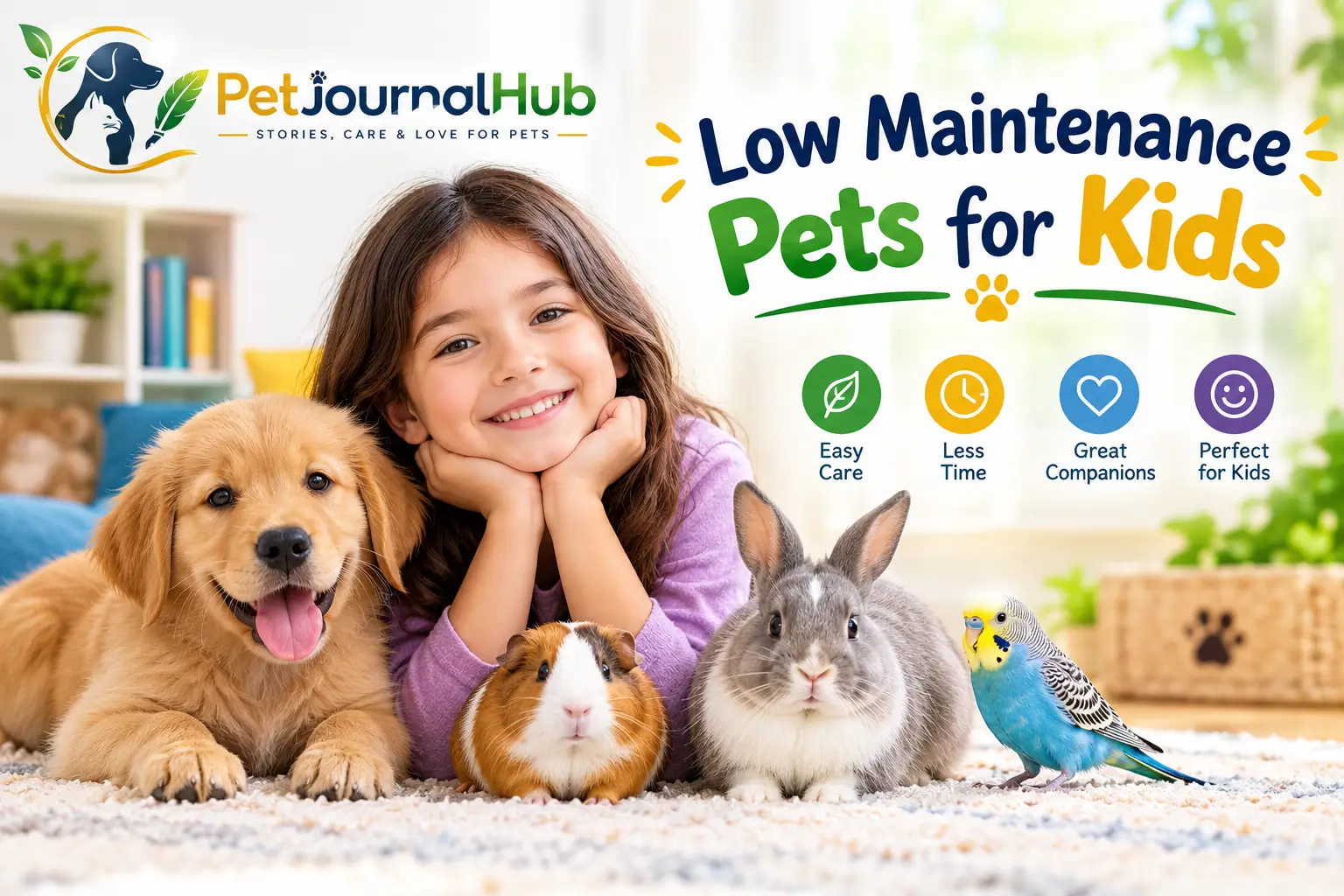
For families, “low maintenance” should mean a pet with manageable daily care, not a pet that needs little care. Good choices depend on the child’s age, handling skills, family schedule, available space, and the adult’s willingness to stay responsible for feeding, cleaning, and veterinary care.
Key Takeaways
- Guinea pigs, hamsters, and fish can fit different family routines, but each has different care needs.
- Younger children need more adult supervision, especially during feeding and handling.
- No small pet is completely hands-off. Every animal needs proper food, housing, cleaning, and health care.
- Children under 5 should avoid contact with reptiles, amphibians, poultry, and rodents because of increased illness risks.
- A pet should match the child’s abilities, not simply the child’s age.
- Parents should plan to remain the primary caregiver, even when children help.
Introduction
Choosing a first pet can feel exciting until parents start thinking about the daily routine. Who will feed it? Who will clean the habitat? What happens during vacations? Can the child safely hold the animal?
Those questions matter because a small animal still depends completely on its family. A hamster may not need walks, but it still needs suitable housing, food, water, enrichment, and regular cleaning. A guinea pig needs even more daily care than many first-time owners expect. Fish need proper water quality rather than simply a bowl of water.
That is why families searching for low maintenance pets for kids should focus on manageable care, not the idea of a “no-work” pet.
Age also changes the answer. A pet that works for a responsible 12-year-old may not suit a preschooler. Children develop hand control, patience, and an understanding of animal boundaries at different rates.
The safest approach starts with the adults. Parents should choose the species, prepare the habitat, learn its care routine, and supervise the child. The child can then take part in age-appropriate tasks.
This guide compares practical options, explains their real care needs, and shows how to match a pet with a child’s age and family routine.
What Is low maintenance pets for kids?
The phrase describes pets whose everyday care can fit reasonably well into a family routine while children learn age-appropriate responsibility. It does not mean the animal needs little food, cleaning, enrichment, or veterinary attention.
Common choices include hamsters, guinea pigs, fish, and some other small companion animals. Each option has different strengths and limitations.
A hamster may suit a family that wants an animal children can observe without constant handling. Guinea pigs offer more opportunities for gentle interaction but require a committed daily routine. Fish avoid handling concerns but still need proper aquarium care.
The best choice therefore depends on four questions:
- How old is the child?
- How much direct handling will the child expect?
- How much daily work will the adults accept?
- Can the family afford the correct habitat and veterinary care?
Parents should answer those questions before choosing an animal.
Quick Facts Box
| Fact | Details |
| Best approach | Choose based on the animal’s needs and child’s abilities |
| Main caregiver | An adult should remain responsible |
| Common small options | Guinea pigs, hamsters, fish |
| Handling | Always match handling to species and child |
| Cleaning | Every habitat needs regular cleaning |
| Veterinary care | Seek veterinary help when health or behavior changes |
| Young children | Extra hygiene and supervision matter |
| Reptiles | CDC advises against contact for children under 5 |
CDC guidance specifically warns that rodents, reptiles, amphibians, and poultry can carry germs that pose greater risks to young children.
History and Evolution of the Family Pet
Families have kept companion animals for centuries, but the idea of a child having a small “starter pet” has changed over time.
Older pet advice often treated animals such as hamsters, fish, rabbits, and guinea pigs as simple introductions to responsibility. Modern pet care takes a more welfare-focused approach.
Today, families have more information about species-specific housing, diet, enrichment, social needs, and veterinary care. That has changed the meaning of an “easy pet.”
A small enclosure does not automatically mean simple care. For example, guinea pigs have specific nutritional needs, including a regular source of vitamin C.
The modern goal should therefore be appropriate care made manageable for the family, rather than finding an animal that requires almost no work.
Key Characteristics and Care Needs
The easiest family pet depends on what your household considers manageable. A good match should fit the child, home, budget, schedule, and adult caregiver.
Temperament
Look for an animal whose normal behavior fits the child’s expectations.
Some children want a pet they can watch. Others want something they can gently hold. Those are different requirements.
A nocturnal animal may frustrate a child who expects daytime play. A fragile animal may not suit a young child who struggles with gentle handling.
Housing
The habitat should come before the animal.
Parents should research the correct enclosure, bedding or substrate, food containers, hiding places, temperature requirements, and enrichment for the species.
Never buy an animal first and assume a small starter cage will work permanently.
Nutrition
Different species need very different diets.
Guinea pigs, for example, need grass-based hay, suitable pellets, fresh produce, and a regular source of vitamin C.
Fish also need species-appropriate food and suitable water conditions. Feeding more food does not make a pet healthier.
Hygiene
Children should learn handwashing as part of pet ownership.
CDC recommends washing hands after handling animals, their food, waste, habitats, or supplies.
Quick Comparison Snapshot
| Option | Best For | Key Difference |
| Guinea pig | Families wanting gentle interaction | Social small mammal with significant daily care |
| Hamster | Families wanting a compact pet | Often active at night and needs careful handling |
| Betta fish | Children who enjoy observation | No direct handling, but water care matters |
| Adult cat | Families wanting a more interactive companion | More space, cost, and long-term responsibility |
No option wins for every family. The right choice depends on the child’s age and the adult’s ability to provide consistent care.
Low maintenance pets for kids in india
Families in India can consider many of the same small companion animals, but local conditions matter. Climate, access to qualified veterinarians, housing rules, availability of proper food, and local pet regulations can affect the decision.
A pet should never become difficult to care for simply because the family cannot find the correct supplies nearby.
For example, a family considering a small mammal should check whether appropriate food, bedding, housing, and veterinary support are realistically available in their area.
Heat also deserves attention. Indoor temperatures can become uncomfortable for some species, particularly during hot weather. Parents should research the animal’s temperature requirements rather than relying on general advice.
For families in apartments, noise and space also matter. A pet that looks small in a shop may still need much more usable habitat space at home.
Before bringing an animal home, identify a veterinarian who treats that species. If specialized veterinary care is unavailable nearby, that limitation should influence the decision.
Best low maintenance pets for kids
The most practical choices often include guinea pigs, hamsters, and fish, but “best” depends on the family rather than a universal ranking.
Guinea pigs
Guinea pigs can suit families that want a social small mammal and can commit to daily care. Their diet includes hay, suitable pellets, and fresh produce, including sources of vitamin C.
They need appropriate housing, cleaning, and attentive observation.
Hamsters
Hamsters can fit families that prefer a smaller animal and more observation than constant interaction. Parents should teach children not to wake or grab a sleeping hamster.
A child who wants daytime cuddles may find a hamster frustrating.
Fish
Fish make sense for children who enjoy watching animals rather than touching them.
However, parents should not treat fish as decoration. Aquarium care includes maintaining suitable water conditions, feeding appropriately, and cleaning equipment.
The best family choice is the animal whose actual needs match the household.
Low maintenance pets that like to cuddle
If cuddling is the main goal, families should slow down before choosing a pet. “Likes to cuddle” varies between individual animals and species.
Some guinea pigs may become comfortable with gentle handling. However, children should never force an animal to stay in their arms.
A better goal involves teaching children to read body language. If the animal struggles, hides, freezes, vocalizes unusually, or tries to escape, the child should stop handling it.
Fish do not provide cuddling, but they can still offer companionship through observation.
Cats can provide more direct affection, but they also bring greater long-term responsibilities, including litter care, food, veterinary care, and household planning.
For any species, the child’s role should involve respectful interaction rather than treating the animal like a toy.
Good starter pets for 10 year olds
A 10-year-old may handle more responsibility than a preschool child, but age alone does not determine readiness.
A child at this age might help measure food, refill water, maintain a checklist, or assist with supervised habitat cleaning. An adult should still monitor the routine.
Guinea pigs can provide opportunities for gentle interaction, while fish can teach routine through feeding and aquarium observation.
Parents should also test responsibility before purchasing an animal. Ask the child to follow a simple daily schedule for several weeks using a household task chart.
If the child consistently forgets the task, that gives the family useful information. A living animal should not become the test subject for whether a child will remember chores.
Good starter pets for 7 year olds
Seven-year-olds can learn basic pet-care habits, but adults should remain closely involved.
At this age, children may enjoy observing fish or helping with simple, supervised tasks. Some families may also consider guinea pigs when an adult handles the main care routine.
The child should learn three basic rules:
- Never chase an animal.
- Never squeeze or pull an animal.
- Stop handling when the animal tries to move away.
Parents should also control feeding. Children can accidentally overfeed animals when they think extra food shows affection.
The goal at this age is participation, not independence.
Low maintenance pets for 4 year olds
A four-year-old should not become the primary caregiver for any pet.
Young children can struggle with gentle handling, hygiene, and understanding animal boundaries. CDC specifically advises that children under 5 avoid contact with rodents, reptiles, amphibians, and poultry because of increased illness risks.
That makes many commonly suggested small pets poor choices for direct interaction at this age.
If a family already owns a pet, adults should supervise every interaction. The child should wash hands with soap and water afterward.
For a family choosing a new pet, observation-based options may reduce handling concerns. Parents still need to provide all essential care.
A four-year-old can learn kindness around animals without being responsible for their care.
Low-maintenance pets for teens
Teenagers can often take on more pet-care tasks, but the adult remains responsible for making sure those tasks happen.
A teenager may successfully manage a feeding chart, help clean an enclosure, monitor supplies, and report changes in appetite or behavior.
The family should consider school schedules, sports, travel, exams, and vacations before choosing a pet.
A pet that depends on a teenager’s daily availability still needs a backup caregiver.
Teens may also understand more advanced animal-care concepts. That makes this a good age to teach the difference between routine care and veterinary care.
For example, a teen can learn to recognize when an animal’s eating, activity, or behavior changes and tell an adult promptly.
Good starter pets for 8 year olds
Eight-year-olds often sit in the middle ground between supervised participation and growing independence.
A child at this age might help with feeding, recording routines, and gentle interaction. The adult should check the habitat and confirm that the animal receives everything it needs.
Fish can work well for children who enjoy observation. Guinea pigs may appeal to children who want more interaction.
The family’s lifestyle matters more than a strict age chart. Two eight-year-olds can have very different levels of patience, motor control, and responsibility.
Parents should choose based on demonstrated behavior rather than promises made during the pet-store visit.
Daily Care Routine / How to Get Started
The safest way to start involves preparing the entire care system before bringing the pet home.
Step 1: Research the species
Learn its diet, housing, lifespan, social needs, handling rules, and common health concerns.
Use veterinary and animal-welfare sources rather than relying only on short social-media videos.
Step 2: Prepare the habitat
Set up the enclosure before the animal arrives.
Check that food, water, bedding, hiding areas, and other required supplies are ready.
Step 3: Create an adult-led schedule
Write down:
- Feeding times
- Water checks
- Cleaning tasks
- Habitat checks
- Supply replacements
- Veterinary contact information
Step 4: Give the child a limited role
Choose tasks that match the child’s age.
Young children can observe and help with supervised routines. Older children can take on more structured tasks.
Step 5: Build a backup plan
Decide who will care for the animal during vacations, illness, school trips, or family emergencies.
This step prevents many avoidable problems.
Cost Breakdown
The purchase price of a pet often represents only a small part of the total cost.
Families should budget for the habitat, food, bedding or substrate, cleaning supplies, enrichment, replacement equipment, and veterinary care.
Fish deserve special attention because a cheap fish does not automatically mean a cheap aquarium. The tank, filtration, water-care supplies, and other equipment can cost more than the animal.
Guinea pigs also require ongoing food and habitat supplies. Their nutritional needs make proper food a priority rather than an optional upgrade.
Hamsters need suitable housing, bedding, food, enrichment, and veterinary support when problems arise.
Because prices vary by location, species, brand, and veterinary clinic, families should create a local budget before choosing the pet.
Common Mistakes Pet Owners Make
Choosing based on appearance
A cute animal may not match the family’s lifestyle.
Research normal behavior before choosing.
Assuming small means easy
Small bodies do not mean small responsibilities.
Many small animals need carefully managed habitats and diets.
Letting the child become the only caregiver
Children can help, but adults remain responsible for the animal’s welfare.
Buying unsuitable housing
The smallest enclosure on the shelf may not meet the animal’s needs.
Research housing requirements before purchasing.
Ignoring hygiene
Handwashing matters after handling animals, food, waste, or habitat equipment.
Choosing a reptile for a preschool child
CDC advises against reptile and amphibian contact for children under 5 because of the risk from germs such as Salmonella.
Pros and Cons
| Pros | Cons |
| Can teach responsibility | Adults still need to supervise |
| Often need less space than dogs | Small does not mean zero care |
| Many options suit different ages | Species have very different needs |
| Some require little direct handling | Some children want more interaction |
| Can fit apartment living | Housing still needs proper setup |
| May offer a manageable first pet experience | Veterinary care can still cost money |
Similar Breeds, Species, and Alternatives
These alternatives give families more choices without assuming that every child needs the same type of animal.
| Option | Best For |
| Adult cat | Families wanting affection and indoor companionship |
| Betta fish | Children who prefer observation |
| Guinea pig | Families wanting gentle small-mammal interaction |
| Hamster | Families comfortable with a more nocturnal pet |
| Gerbil | Families interested in active small mammals |
| Rabbit | Families prepared for more space and long-term care |
| Budgie | Older children interested in bird behavior and interaction |
| Aquarium snails | Observation-focused households with an established aquarium |
| Hermit crab | Families interested in observation and habitat care |
The alternatives above should not be treated as interchangeable. Each species has its own housing, nutrition, social, and health requirements.
When to Consult a Vet or Professional
Contact a veterinarian when a pet shows a significant change in eating, drinking, activity, breathing, movement, stool, or normal behavior.
Do not rely on online advice to diagnose an animal.
Small mammals can hide signs of illness, so unusual behavior deserves attention. Fish may also show changes that require assessment of water conditions and, when appropriate, veterinary guidance.
For reptiles and amphibians, families should identify an experienced exotic-animal veterinarian before bringing the pet home. CDC notes that these animals require specialized care and that not every veterinarian treats them.
If you are unsure whether a symptom needs urgent attention, call a veterinary clinic and describe what you have observed.
Never give medication based on a human dose or another pet’s prescription.
Fun Facts
- Guinea pigs cannot make vitamin C on their own and need a regular dietary source.
- Reptiles can carry Salmonella even when they look healthy and clean.
- Children under 5 face a higher risk of serious illness from germs carried by certain animals.
- Fish require environmental care even though children do not need to handle them.
- A pet’s small physical size does not predict how much care its habitat needs.
- Some pets fit observation better than physical handling.
- Proper handwashing forms an important part of safe pet ownership.
Frequently Asked Questions
What is the lowest maintenance pet for kids?
There is no single lowest-maintenance pet for every family because “easy” depends on the care system you can provide. Fish often require less direct handling than mammals, which may make them suitable for children who enjoy watching animals. However, an aquarium still needs proper setup, water care, feeding, and cleaning. Parents should also consider whether the child wants interaction or simply enjoys observing animals. The lowest-maintenance choice should therefore combine manageable habitat care with the child’s expectations. A cheap or small animal does not automatically require less responsible ownership.
What are some easy pets for kids to care for?
Hamsters, guinea pigs, and fish often appear in family discussions about easier pets, but each demands adult supervision and species-specific care. A hamster may fit a household that prefers observation and limited handling. Guinea pigs offer more opportunities for interaction but require a committed food and cleaning routine. Fish avoid direct handling but require proper aquarium management. The important question is not which animal needs the fewest chores. Ask which animal your family can care for correctly every day, including weekends, holidays, and unexpected schedule changes.
What is the cleanest pet to have?
There is no universally cleanest pet because cleanliness depends on the animal, habitat, and cleaning routine. Fish do not shed fur around the home, but their aquarium still produces waste and requires regular maintenance. Small mammals can create bedding, hay, or food messes around their enclosure. Cats groom themselves, yet their litter boxes require regular cleaning. Families should focus on manageable hygiene rather than expecting a completely mess-free pet. Regular cleaning, safe waste handling, and handwashing help reduce household mess and support healthier interactions with animals.
What’s the easiest low maintenance pet?
The easiest choice depends on what the family wants from the relationship. A fish may suit a child who enjoys watching animals and helping with a predictable routine. A hamster may suit a family comfortable with an animal that has different activity patterns from people. Guinea pigs may suit families wanting more social interaction but who can handle greater daily care. Parents should also consider habitat cost, veterinary access, lifespan, cleaning, and the child’s ability to follow safety rules. “Easy” should always mean manageable and properly cared for, not neglected or hands-off.
Final Thoughts
Choosing a family pet works best when parents start with the animal’s needs instead of the child’s excitement.
A good first pet should fit your household’s schedule, space, budget, and ability to provide consistent care. The child can then become part of that routine at a level that matches their age.
For younger children, observation and gentle participation often make more sense than independent handling. Older children can gradually take on feeding records, cleaning assistance, and other supervised tasks.
Most importantly, don’t let the label “low maintenance” lower your standards. Every animal deserves appropriate food, housing, enrichment, hygiene, and veterinary attention.
The right pet is not necessarily the smallest, cheapest, or easiest animal available. It is the animal your family can care for properly for its entire life.

Emily Carter is a pet care writer at PetJournalHub. She enjoys creating clear, practical, and well-researched articles about pet health, nutrition, grooming, and everyday care. Her goal is to help pet owners make informed decisions through reliable, easy-to-understand content.