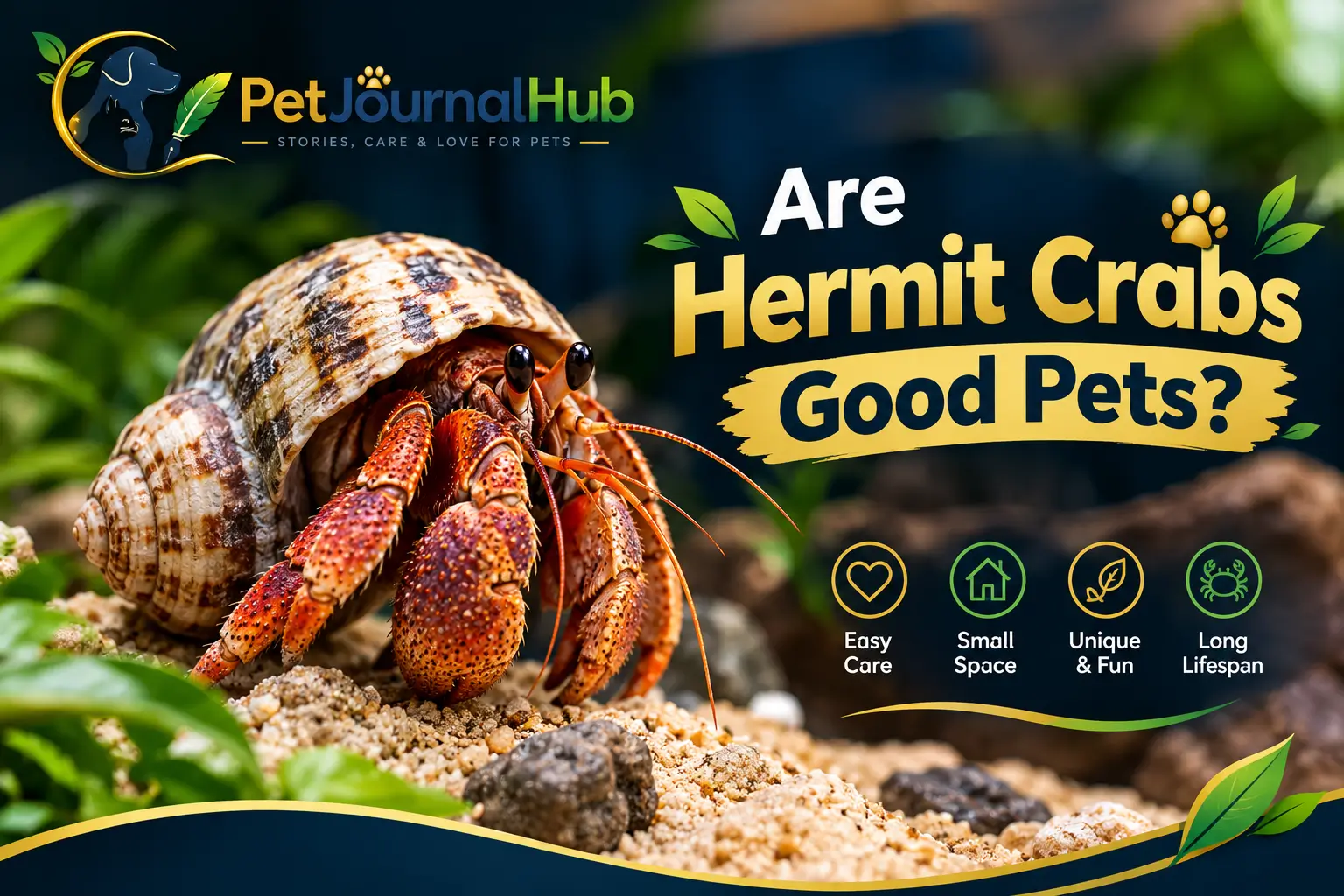
Hermit crabs can make interesting pets for patient owners who enjoy watching animal behavior rather than handling their pets often. They need a warm, humid habitat, deep substrate for molting, suitable shells, fresh and saltwater, and a varied diet. They aren’t maintenance-free, and their long-term needs make careful preparation essential before buying one.
Key Takeaways
- Hermit crabs suit observant owners who enjoy creating and maintaining a natural habitat.
- Land hermit crabs need controlled humidity, warmth, deep substrate, and access to fresh and marine-saltwater pools.
- They are social animals, but overcrowding and competition for shells can cause problems.
- They usually tolerate observation better than frequent handling.
- Proper habitat equipment and ongoing care can cost much more than the crab itself.
- Check local wildlife rules and choose captive-bred animals when a suitable, reputable source exists.
Introduction
Hermit crabs often catch people’s attention because they carry shells, explore their surroundings, and use their claws to investigate food. Pet stores sometimes sell them in small plastic enclosures, which can make their care look simple. However, their real needs extend far beyond a tiny tank and a dish of water.
Many prospective owners want to know whether these crustaceans suit beginners, children, apartments, or busy households. Others wonder whether hermit crabs recognize people, bite, smell, or require expensive equipment. Understanding their behavior and habitat needs helps answer those questions before a purchase.
The most important distinction is between land hermit crabs and marine hermit crabs. Land species breathe air through modified gill structures and need a warm, humid terrestrial habitat. Marine species live in aquatic environments and require appropriate saltwater conditions. Their care requirements differ, so buyers must identify the species before preparing an enclosure.
This guide explains what responsible ownership involves, including food, water, temperature, humidity, shell selection, molting, costs, and common mistakes. It also covers safety, veterinary care, and alternatives for people who want a different kind of pet.
The goal is simple: help you decide whether a hermit crab fits your time, budget, and expectations. A well-prepared habitat can support natural behaviors, while an unsuitable setup can put the animal at risk.
What Are Hermit Crabs?
Hermit crabs are crustaceans related to crabs, lobsters, and shrimp. Unlike many true crabs, most familiar hermit crab species have soft, vulnerable abdomens. They protect this part of their bodies by occupying empty shells.
Pet owners commonly encounter land hermit crabs from tropical coastal regions. These animals spend much of their time on land but still depend on moisture and access to water. Marine hermit crabs, by contrast, live underwater and need a suitable aquatic environment.
Hermit crabs grow by molting, a process in which they shed their old exoskeleton. They may bury themselves during this vulnerable period. Owners must leave molting animals undisturbed and provide enough substrate for safe burrowing.
Their shell is not permanently attached to their body. As a crab grows, it may need a larger shell with an appropriate opening and shape. Competition for suitable shells can cause stress and conflict among crabs sharing an enclosure.
For these reasons, hermit crabs need specialized care. They are not simply decorative animals that can thrive in any small container.
Quick Facts About Hermit Crabs
| Fact | Details |
|---|---|
| Animal group | Crustaceans |
| Common pet type | Tropical land hermit crabs |
| Natural habitat | Varies by species; many land species occupy tropical coastal areas |
| Main food | Varied plant foods, protein sources, and calcium-rich foods |
| Housing | Secure, appropriately sized enclosure with suitable substrate |
| Humidity | High humidity for common tropical land species; exact needs vary |
| Water | Fresh water and properly prepared marine saltwater for many land species |
| Molting | They shed their exoskeleton as they grow |
| Handling | Occasional, gentle handling only when necessary |
| Lifespan | Can reach many years and sometimes decades with appropriate care; species and conditions matter |
| Social needs | Many commonly kept land species benefit from compatible company and adequate space |
| Main challenge | Maintaining the correct habitat and supporting natural behaviors |
These facts mainly describe commonly kept tropical land hermit crabs. Always confirm the species before applying a care guide, especially when considering marine species.
Where Do Pet Hermit Crabs Come From?
Many land hermit crab species live in tropical coastal regions. Depending on the species, they may use beaches, coastal forests, damp soil, and other sheltered areas. They often rely on natural moisture and nearby water sources.
Their dependence on coastal environments matters because a home enclosure must provide the right balance of warmth, humidity, shelter, and water access. A dry room or an unheated tank may not meet those needs.
Wild collection also raises animal-welfare and conservation concerns. Transport, poor holding conditions, and unsuitable retail enclosures can place crabs under stress. Buyers should ask sellers about species identification, sourcing, and the animal’s condition.
Don’t release an unwanted pet into the wild. A released crab may fail to survive, introduce disease, or disrupt a local ecosystem. Contact an experienced exotic-animal rescue, reputable specialist, or relevant wildlife authority for rehoming advice.
History and Evolution of Hermit Crabs as Pets
Hermit crabs have attracted interest because of their unusual shell use and relatively small size. Retailers have marketed them as novelty pets, particularly for people looking for something different from a cat, dog, or fish.
Their small appearance can hide their complex needs. A commercial display may emphasize colorful shells or portability instead of long-term habitat requirements. This has contributed to misconceptions about how easy they are to keep.
Responsible husbandry focuses on natural behaviors rather than novelty. Modern keepers increasingly recognize the importance of deep digging substrate, suitable spare shells, humidity control, varied food, and careful handling.
There is no need to claim a recent surge in popularity to explain their appeal. Their unusual appearance alone can spark curiosity. Prospective owners should focus on reliable species-specific care information rather than social media trends or retail claims.
Key Characteristics and Care Needs
Hermit crabs have distinctive needs that owners should understand before bringing one home.
Habitat: Land hermit crabs need a secure enclosure with enough floor space and depth for digging, exploring, climbing, and hiding. Avoid tiny travel-style containers as permanent homes.
Temperature and humidity: Tropical land species need a warm, humid environment. Use suitable thermometers and a reliable humidity gauge to monitor conditions. Follow a species-specific care guide rather than guessing.
Substrate: Provide a deep, diggable substrate that holds its structure and moisture. Many commonly kept land hermit crabs need enough depth to bury themselves completely during molting.
Water: Many land hermit crabs need separate fresh and marine-saltwater pools. Use dechlorinated fresh water and an appropriate marine aquarium salt mix for the saltwater pool. Never use table salt to prepare it.
Shells: Keep several clean, appropriately sized natural shells available. Avoid painted shells, which may expose crabs to harmful coatings or fragments.
Food: Offer a varied diet with suitable plant foods, protein sources, and calcium-rich options. Remove spoiled food promptly.
Social environment: Many land hermit crabs live in groups in nature. However, sharing an enclosure requires enough space, hiding places, food, water, and suitable shells to reduce competition.
Quick Comparison Snapshot
The following comparison covers four possible choices for someone deciding which small pet best matches their expectations.
| Option | Best For | Key Difference |
|---|---|---|
| Land hermit crab | People who enjoy habitat building and observing behavior | Needs a warm, humid terrestrial habitat and access to suitable water pools |
| Freshwater shrimp | People interested in watching a small aquatic community | Requires a stable freshwater aquarium rather than a terrestrial enclosure |
| Isopods | People who enjoy observing tiny invertebrates | Usually kept in a moist, carefully managed terrestrial habitat |
| Small freshwater fish | Owners who prefer watching active aquatic animals | Requires suitable aquarium filtration, water quality management, and species-specific care |
None of these animals is completely maintenance-free. Research each species before deciding, and choose an animal whose habitat needs you can consistently meet.
Are Hermit Crabs Good Pets for Beginners?
Hermit crabs can suit beginners who are willing to learn specialized husbandry before bringing them home. They are less suitable for people who expect an inexpensive pet that needs only occasional feeding and cleaning.
The learning curve mainly involves maintaining stable habitat conditions. Owners must monitor temperature and humidity, prepare safe water, provide suitable substrate, and understand molting behavior. These tasks require planning even when the crab looks inactive.
A beginner should prepare the enclosure before acquiring the animal. Research the exact species, gather reliable equipment, and make sure a suitable exotic-animal veterinarian is available. A knowledgeable specialist can help you identify problems that ordinary pet-care guides may overlook.
Hermit crabs are a reasonable choice for patient observers. If you want a pet that enjoys frequent handling or direct interaction, another animal may suit you better.
Are Hermit Crabs Friendly?
Hermit crabs may become accustomed to a predictable environment, but owners shouldn’t expect the same social responses they might receive from a dog or cat. Their behavior often reflects their surroundings, physical condition, and need for shelter.
A crab that explores your hand isn’t necessarily seeking affection. It may be investigating a new surface, looking for somewhere to climb, or responding to movement. Avoid interpreting normal exploration as proof of a strong bond.
Some individuals tolerate careful handling better than others. Give the crab time to settle after a move, and avoid picking it up unnecessarily. Never pull it from its shell or force it to interact.
The best way to build a calm routine is to keep the habitat stable and observe the animal without disturbing it. Watch for normal eating, exploring, and burrowing instead of expecting cuddling or training.
Are Hermit Crabs Dangerous?
Hermit crabs generally pose a low risk to people when handled carefully, but their claws can pinch. A frightened or poorly supported crab may grip a finger to protect itself or maintain its hold.
Avoid placing fingers near the claws, squeezing the body, or pulling the animal away from a surface. Let the crab move voluntarily whenever possible. If you must handle it, support its body securely without forcing it to withdraw or abandon its shell.
Wash your hands after handling a crab, its water, substrate, or enclosure contents. Keep aquarium and terrarium equipment clean, and avoid touching your face during maintenance.
Children should interact with hermit crabs only under close adult supervision. Anyone with a wound, weakened immune system, or specific medical concern should ask a healthcare professional about appropriate hygiene precautions.
What Do Hermit Crabs Eat?
Hermit crabs need a varied diet rather than a single commercial food. For commonly kept land species, suitable foods may include leafy greens, small amounts of fruit, vegetables, unsalted nuts, protein sources, and calcium-rich foods.
Offer small portions and rotate suitable ingredients. Examples include dark leafy greens, squash, carrot, plain cooked egg, and unseasoned fish or shrimp. Check each ingredient for species suitability, and avoid seasoning, sauces, and heavily processed foods.
Calcium supports the formation of the exoskeleton. Suitable sources may include cuttlebone or clean, appropriately prepared eggshell. Keep food fresh and remove leftovers before they spoil or attract pests.
Don’t assume that a food is safe simply because a human can eat it. Avoid foods with added salt, sugar, oils, or spices. When uncertain, consult a reliable species-specific diet guide or an exotic-animal veterinarian.
Fresh water and marine-saltwater access are also essential for many land hermit crabs. These water needs are separate from the food bowl and require their own safe setup.
Hermit Crab Pet for Sale: What Should You Check?
If you’re searching for a hermit crab for sale, focus on the animal’s welfare and the seller’s knowledge rather than its shell color or price. Ask for the exact species name and confirm that local rules allow its possession.
Look for a seller who can explain the animal’s diet, habitat, sourcing, and care history. The crab should have access to suitable conditions and should not show obvious injury, severe weakness, or an unusually foul smell. A quick visual inspection cannot guarantee good health, however.
Before purchasing, ask these questions:
- What species is this crab?
- Where did it come from?
- What food and water does it currently receive?
- Does it show any signs of injury or unusual behavior?
- What enclosure conditions does the seller maintain?
- Can the seller recommend a knowledgeable exotic-animal veterinarian?
Prepare the habitat before bringing the crab home. Never buy an animal as an impulse gift or because a shop sells it alongside a small plastic cage.
Are Hermit Crabs Good Pets for Kids?
Hermit crabs can provide children with opportunities to observe animal behavior and learn about habitats. They work best as family pets when an adult takes full responsibility for their care.
Young children may expect to hold, pet, or play with a crab. These actions can frighten the animal and increase the risk of pinches or accidental drops. A child may also disturb a crab that has buried itself to molt.
Adults should manage habitat checks, water preparation, food safety, and cleaning. Children can help with age-appropriate tasks, such as observing behavior or recording feeding times, under supervision.
Choose another pet if the main goal is frequent physical interaction. Hermit crabs offer more through observation and responsible habitat care than through cuddling or play.
Hermit Crabs as Pets: Pros and Cons
Hermit crabs offer a different kind of pet experience. Their appeal depends on whether you enjoy watching natural behaviors and maintaining a specialized habitat.
| Pros | Cons |
|---|---|
| Interesting climbing, digging, and shell-changing behavior | Require specific temperature and humidity conditions |
| No need for walks outdoors | Need a carefully prepared enclosure and ongoing monitoring |
| Small animals that can fit in a suitable home setup | Small size does not mean low care requirements |
| Varied feeding can provide enrichment | Need a suitable diet and safe water preparation |
| Quiet compared with many household pets | Usually don’t enjoy frequent handling |
| Can be rewarding for patient observers | Molting can involve long periods underground |
| May suit people interested in invertebrates | Suitable veterinary help can take extra planning |
The main advantage is the opportunity to observe a fascinating animal without expecting constant interaction. The main drawback is the specialized care that its small size can cause people to underestimate.
Daily Care Routine: How to Get Started
A simple routine makes it easier to notice changes in your crab’s behavior and keep its habitat stable.
1. Check temperature and humidity. Read the gauges each day and compare them with the needs of your species. Adjust the enclosure safely if readings drift outside the recommended range.
2. Inspect water supplies. Make sure the fresh and saltwater pools remain clean and accessible. Replace dirty water with properly prepared water, and ensure the crab can enter and leave the pools safely.
3. Offer a varied diet. Provide suitable food in small portions. Remove spoiled leftovers and clean food dishes as needed.
4. Observe without disturbing. Watch for climbing, eating, digging, and other normal behavior. Avoid digging up a buried crab unless a qualified professional advises intervention for a specific emergency.
5. Check shells and habitat features. Make sure suitable spare shells remain available. Look for sharp edges, unstable decorations, damaged equipment, or areas where the crab could become trapped.
6. Keep a simple care log. Record temperature, humidity, food offered, water changes, and unusual behavior. This record can help you identify patterns and provide useful information to a veterinarian.
7. Schedule regular maintenance. Clean equipment and replace unsuitable or contaminated materials as needed. Avoid sudden, unnecessary changes to the habitat, especially when a crab may be molting.
Consistency matters more than handling the animal often. A stable enclosure helps you provide better care while allowing the crab to behave naturally.
Cost Breakdown: How Much Does a Hermit Crab Cost?
The purchase price represents only one part of the cost of ownership. A suitable habitat, monitoring equipment, water supplies, substrate, shells, food, and replacement equipment can add up quickly.
| Expense | What to Budget For |
|---|---|
| Crab purchase or adoption | Varies by species, seller, and location |
| Enclosure | A secure tank with enough room for digging and climbing |
| Substrate | Sufficient depth and a suitable moisture-holding mix |
| Heating and monitoring | Safe heating equipment, thermometer, and humidity gauge |
| Water setup | Suitable pools, dechlorinator, and marine aquarium salt |
| Shells and enrichment | Several suitable spare shells, hides, and safe climbing features |
| Food and supplements | A varied diet and appropriate calcium sources |
| Veterinary care | Examination and treatment costs that vary by provider and location |
Prices differ by country, supplier, enclosure size, and equipment quality. Rather than relying on a single advertised starter-kit price, request local quotes and make a complete shopping list before buying the crab.
Keep an emergency fund for veterinary care and equipment failure. If the full setup is outside your budget, wait until you can provide the habitat the animal needs.
Common Mistakes Pet Owners Make
Many hermit crab problems begin when owners copy a setup that looks attractive but doesn’t meet the animal’s needs.
Using a tiny enclosure: Small novelty cages often lack room for digging, climbing, water pools, and multiple shells. Choose an enclosure based on the species and the number of animals.
Ignoring humidity: Dry conditions can threaten the health of tropical land hermit crabs. Monitor humidity instead of relying on occasional misting or guesswork.
Providing only one water source: Many land species need both fresh water and marine-saltwater access. Research safe pool design, water treatment, and the correct salt mix.
Using painted shells: Decorative coatings may chip or expose the crab to unsafe materials. Offer suitable natural shells in several sizes and shapes.
Disturbing a molting crab: Digging up a buried animal can cause serious harm. Give it privacy and enough substrate for safe molting.
Feeding only one type of food: A varied diet helps meet different nutritional needs. Rotate appropriate foods and provide a suitable calcium source.
Handling too often: Frequent handling can cause stress and increase the chance of a fall. Prioritize observation and gentle, necessary interaction.
Buying before researching: A low purchase price doesn’t make a species easy to keep. Prepare the habitat and identify a suitable veterinarian first.
Similar Pets and Alternatives to Consider
If a hermit crab doesn’t match your expectations, consider another small animal with care requirements that better fit your home. The best alternative depends on whether you prefer an aquatic habitat, a terrestrial enclosure, or more visible social behavior.
| Option | Best For |
|---|---|
| Leopard gecko | Owners interested in a terrestrial reptile who can provide species-specific heating, lighting, and feeding |
| Crested gecko | Keepers who prefer a climbing reptile and can maintain suitable humidity and temperature |
| Betta fish | People who enjoy watching an aquatic animal and can maintain a properly equipped, cycled aquarium |
| African dwarf frog | Aquatic-pet enthusiasts prepared to manage water quality and species-specific feeding |
| Giant African land snail, where legal | Invertebrate enthusiasts who can meet its humidity, diet, and legal requirements |
| Isopod colony | People interested in small invertebrates and careful observation of a contained habitat |
These alternatives have different needs and should not be treated as effortless replacements. Research their adult size, lifespan, diet, habitat requirements, veterinary access, and local legal status before choosing one.
When to Consult a Vet or Professional
Find an exotic-animal veterinarian with experience treating crustaceans or invertebrates before an emergency occurs. Not every general veterinary clinic has the equipment or knowledge needed to assess a hermit crab.
Seek professional advice if you notice unexplained weakness, repeated inability to right itself, obvious injury, persistent refusal to eat outside a known molting period, abnormal odor, or unusual behavior that continues after you check the habitat.
Molting requires special care. A crab may disappear underground for an extended period, and the timing varies by individual and species. Don’t assume that a buried crab has died, and don’t dig it up simply because you haven’t seen it.
If a crab develops a problem, record the habitat’s temperature and humidity, recent food changes, water preparation, and any possible exposure to chemicals. Share those details with the veterinarian.
Avoid home treatments, pesticides, medications, or improvised remedies unless a qualified professional recommends them. If you suspect exposure to a cleaner or other toxic substance, seek prompt veterinary guidance and explain exactly what the animal encountered.
Fun Facts About Hermit Crabs
- They borrow shells: Many hermit crabs rely on empty shells to protect their vulnerable abdomens.
- They change shells: As they grow or find a better fit, they may move into another suitable shell.
- They molt: Their hard outer covering cannot expand continuously, so they shed it as they grow.
- They use their surroundings: Climbing, digging, and exploring help them interact with their habitat.
- They need moisture: Common tropical land species depend on humid conditions and access to water.
- They aren’t all land animals: Marine hermit crabs live underwater and need aquatic care.
- Shell choice matters: A suitable shell offers protection, so access to several appropriate options supports natural behavior.
Their everyday behavior becomes more interesting when the enclosure provides enough room and safe opportunities to explore.
Frequently Asked Questions
Are hermit crabs hard to keep alive?
Hermit crabs can be challenging to keep healthy because they need a carefully managed habitat. Temperature, humidity, water quality, substrate depth, nutrition, and suitable shells all matter. Their small size can make it easy to underestimate these needs.
The biggest challenge often comes before the crab arrives: preparing an appropriate enclosure and learning the care requirements of its species. Once the setup works well, a consistent routine helps you monitor conditions. If your crab’s behavior changes unexpectedly, check the environment and contact an experienced exotic-animal veterinarian for guidance.
Do hermit crab bites hurt?
A hermit crab’s pinch can hurt, particularly if a larger crab grips the skin firmly. The level of discomfort depends on the crab’s size, the location of the pinch, and how long it holds on. Avoid provoking a crab or pulling it forcefully away from your hand.
Let the animal move voluntarily and support it carefully when handling is necessary. Supervise children closely, and wash your hands after contact with the crab or its habitat. If a pinch breaks the skin, clean the wound and seek medical advice if you develop signs of infection or have other health concerns.
Can hermit crabs bond with humans?
Hermit crabs may become accustomed to familiar surroundings and predictable care, but evidence doesn’t support assuming they form human bonds in the same way dogs often do. Exploring a hand or approaching food doesn’t necessarily indicate affection.
You can still build a calm relationship through consistent, gentle routines. Keep handling brief and necessary, avoid sudden movements, and allow the crab to retreat whenever it chooses. Observe whether it eats, explores, and uses its habitat normally. The most meaningful sign of good care is healthy behavior, not how often the crab climbs onto you.
Is it okay to have a hermit crab as a pet?
Keeping a hermit crab can be appropriate when local laws allow it and you can meet its species-specific needs. Before buying one, prepare a secure enclosure, learn how to manage humidity and temperature, arrange suitable food and water, and identify a knowledgeable veterinarian.
Think carefully about your expectations, too. Hermit crabs generally suit people who enjoy observing animal behavior rather than handling a pet every day. Avoid impulse purchases, painted shells, and undersized travel cages as permanent homes. If you cannot provide a suitable habitat for the animal’s long-term needs, waiting or choosing another pet is the more responsible decision.
How long can a pet hermit crab live?
Lifespan varies by species, individual health, and care conditions. Some commonly kept land hermit crabs can live for many years, and some may live for decades under appropriate conditions. Short lifespans reported after purchase don’t necessarily reflect their natural potential.
Because ownership can involve a long commitment, plan for future moves, changes in household finances, and access to appropriate care. Ask a knowledgeable specialist about the expected lifespan of the exact species you’re considering. Avoid choosing a crab solely because a seller describes it as an easy, short-term pet.
Do hermit crabs need another hermit crab?
Many commonly kept land hermit crabs show social behavior and may benefit from compatible company. However, keeping several together doesn’t automatically guarantee good welfare. Crowding, inadequate food, a shortage of suitable shells, and limited hiding places can create competition.
Research the social needs of your species before deciding how many animals to keep. Provide enough enclosure space, multiple feeding and water areas where appropriate, and several suitable spare shells. Monitor interactions without interfering with normal behavior unnecessarily. If aggression or injury occurs, seek specialist advice about safe housing and separation.
Do hermit crabs smell bad?
A healthy, well-maintained hermit crab enclosure shouldn’t have a strong, persistent foul odor. Smells often point to spoiled food, dirty water, poor cleaning routines, or unsuitable habitat conditions. Remove food waste promptly and maintain clean water supplies.
Don’t use perfumes, air fresheners, or harsh cleaning chemicals to cover an odor. These products may expose the crab to harmful substances. If a strong smell seems to come directly from the animal, especially alongside weakness or other unusual signs, contact an exotic-animal veterinarian. A change in odor alone cannot tell you what is wrong, so professional assessment may be necessary.
Final Thoughts
Hermit crabs offer a rewarding experience for people who enjoy observing unusual animals and building natural habitats. Their shell changes, climbing, digging, and feeding behaviors can make everyday observation fascinating. However, these animals need much more than a small container and occasional food.
Before choosing one, identify the species and learn its exact needs. Prepare the enclosure, establish safe water supplies, provide deep substrate and spare shells, and plan for ongoing food and equipment costs. You should also locate an appropriate veterinarian before problems arise.
Consider your expectations honestly. If you want an animal that enjoys cuddling, frequent handling, or direct interaction, a hermit crab may not suit you. If you enjoy careful observation and can maintain a stable environment, it may be a better match.
Responsible ownership begins with preparation, not purchase. By putting the animal’s welfare first, you can make an informed choice and avoid many common care mistakes.

Emily Carter is a pet care writer at PetJournalHub. She enjoys creating clear, practical, and well-researched articles about pet health, nutrition, grooming, and everyday care. Her goal is to help pet owners make informed decisions through reliable, easy-to-understand content.