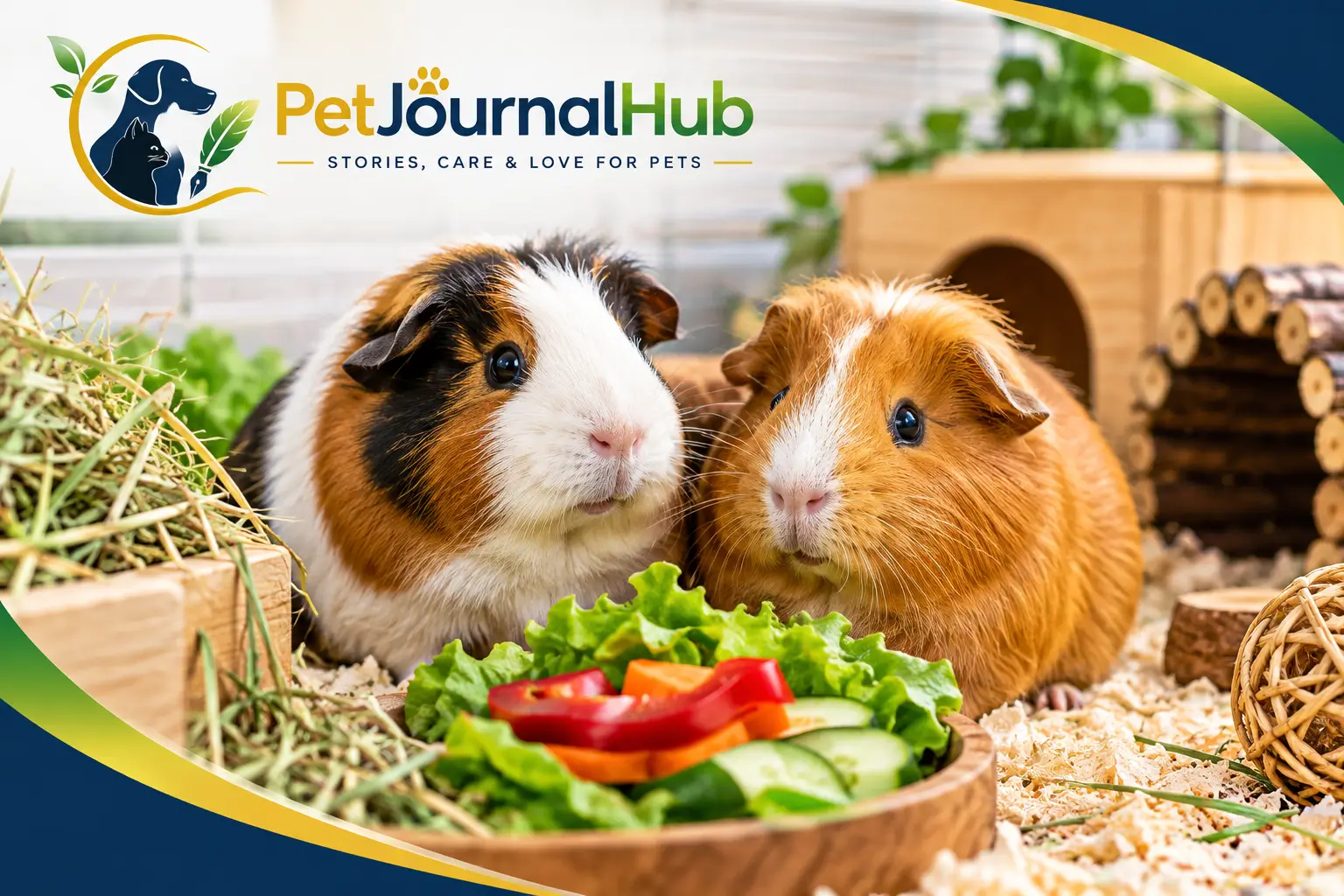
Featured Snippet Answer:
Guinea pigs are social, gentle herbivores that need a spacious enclosure, a companion, unlimited grass hay, fresh vegetables, vitamin C, clean water, and daily care. They can suit families and first-time owners, but they are not “no-maintenance” pets. Their social needs, diet, housing, grooming, cleaning, and veterinary care all deserve careful planning before adoption.
Key Takeaways
- Guinea pigs are social animals and generally do best with a compatible guinea pig companion.
- They need much more than a small pet-store cage, with room to exercise and hide.
- Grass hay should form the foundation of their diet, with fresh produce and species-appropriate pellets.
- Guinea pigs need a regular source of vitamin C because their bodies cannot make it.
- Daily spot cleaning, fresh food, water checks, and behavior monitoring form the basic routine.
- They can make gentle companion animals, but children still need adult supervision during handling.
Introduction
People often search for guinea pigs when they want a small companion that feels more interactive than a fish or hamster. Guinea pigs have expressive sounds, distinct personalities, and a habit of getting excited about food. They can learn familiar voices and become comfortable with gentle human handling.
That appeal sometimes creates a problem. Their small size can make them look easier to care for than they really are.
A healthy guinea pig needs a proper enclosure, regular cleaning, constant access to hay, fresh water, suitable vegetables, vitamin C, exercise, hiding areas, and social companionship. They also need owners who notice changes in eating, drinking, droppings, movement, and behavior.
The good news is that the routine becomes manageable once the setup works. The key is to plan for the animal’s actual needs instead of buying a small cage and adding supplies later.
This guide explains what new owners should know before bringing a guinea pig home. It covers temperament, housing, food, handling, cleaning, costs, common mistakes, veterinary care, and alternatives.
What Is guinea pigs as pets?
Guinea pigs are small domesticated herbivorous mammals commonly kept as companion animals. Their scientific name is Cavia porcellus, and people also call them cavies.
Pet guinea pigs come in many coat types, colors, and patterns. Some have short hair, while others have long or more unusual coats. Coat type changes grooming needs, but every guinea pig still needs the same basic foundation of proper food, housing, exercise, social contact, and veterinary care.
Guinea pigs are prey animals. That helps explain why they may freeze, hide, or startle when something approaches quickly. A calm environment and predictable handling can help them feel secure.
They also communicate through sounds and body language. A guinea pig may squeak when it expects food, chatter when annoyed, or become very still when frightened.
The RSPCA describes guinea pigs as highly social animals and recommends keeping them with compatible guinea pig companions rather than housing them alone whenever possible.
Quick Facts Box
| Fact | Details |
| Scientific name | Cavia porcellus |
| Common name | Guinea pig or cavy |
| Animal group | Mammal; rodent |
| Diet | Herbivorous |
| Main food | Grass hay and suitable grass-based foods |
| Vitamin C | Required regularly through diet |
| Social needs | Usually happiest with compatible guinea pig companions |
| Housing | Spacious enclosure with solid flooring |
| Enrichment | Hiding areas, tunnels, safe chew items, exercise |
| Typical lifespan | Often around 5–6 years, with variation between individuals |
| Main owner tasks | Feeding, cleaning, monitoring, handling, enrichment, vet care |
RSPCA guidance lists a typical lifespan of about five to six years, while individual guinea pigs may live longer.
Where Do Guinea Pigs Come From?
Modern pet guinea pigs trace their history to South America, particularly the Andes region. Their wild relatives lived in grassland and lower-slope environments.
Domestication happened long before guinea pigs became common household pets in North America and Europe. People in South America kept and bred guinea pigs for different purposes, including companionship and food.
Modern companion guinea pigs differ from their wild relatives in appearance and behavior. Selective breeding produced the wide range of coat colors, lengths, and textures seen in pets today.
Their natural history still matters to owners. Guinea pigs evolved around grazing, social living, hiding, and staying alert to danger. Those traits help explain why hay, companionship, tunnels, shelters, and safe exercise remain important in a home environment.
History and Evolution
Guinea pigs have a long relationship with people in South America. Over time, domesticated populations spread beyond the Andes and eventually became companion animals in many parts of the world.
The pet trade later developed many recognizable varieties. Breeders selected for coat length, texture, color, and pattern, creating types such as short-haired, Abyssinian, Peruvian, and other varieties.
Today, the important distinction for an owner is not which coat looks cutest. It is whether the animal’s needs match your household.
For example, a long-haired guinea pig needs more regular grooming than a short-haired one. The RSPCA warns that exaggerated physical features in some breeds can create welfare concerns, and long coats can become badly matted without suitable care.
Key Characteristics and Care Needs
Guinea pigs are social, active, food-focused animals that need daily interaction and a carefully planned habitat. Their small bodies do not mean their care requirements are small.
Temperament
Many guinea pigs become friendly with patient owners. They often learn household routines and recognize familiar sounds.
However, individual personalities differ. One guinea pig may approach your hand quickly, while another may need weeks to feel comfortable.
Never force interaction. Give a nervous guinea pig time to approach you.
Housing
Housing needs careful planning because many commercial cages provide too little usable floor space.
Merck Veterinary Manual recommends at least 7.5 square feet for one guinea pig, with additional space for each extra animal. It also stresses the importance of solid flooring to reduce the risk of foot and limb injuries.
The enclosure should include:
- Solid, comfortable flooring
- Dry, absorbent bedding
- Safe hiding places
- Tunnels or similar enrichment
- Food and water areas
- Enough room for exercise
- Good ventilation
- Protection from temperature extremes
Grooming
Short-haired guinea pigs usually need less grooming than long-haired varieties.
Long-haired guinea pigs may need frequent brushing to prevent tangles and mats. Check around the rear end regularly, especially if the coat becomes dirty.
Nail care also matters. Ask your veterinarian to show you the safest technique if you have never trimmed small-animal nails.
Social life
Guinea pigs generally need guinea pig companionship. Introductions should happen gradually and under supervision.
Never assume two unfamiliar guinea pigs will immediately get along. Sex, age, personality, previous experience, and introduction method can all affect the relationship.
Quick Comparison Snapshot
| Option | Best For | Key Difference |
| Short-haired guinea pig | First-time owners | Simpler coat care |
| Long-haired guinea pig | Owners who enjoy grooming | Requires more coat maintenance |
| Rescue guinea pig | Owners open to adoption | May already have a known personality and care history |
| Young guinea pig | Owners prepared for extra monitoring | Growing animals have different nutritional needs |
The table compares common ownership choices rather than ranking them. Individual temperament and health still matter more than appearance.
10 Reasons Not to Get a Guinea Pig
Guinea pigs can be rewarding companions, but they do not suit every household. Think carefully about these potential challenges before adopting.
1. They need companionship
A guinea pig may not thrive with a solitary lifestyle. You should plan for compatible guinea pig companionship and enough resources for each animal.
2. They need daily care
Food, water, spot cleaning, observation, and interaction form part of the everyday routine.
3. They need more space than many people expect
A tiny starter cage does not meet their exercise needs. Proper floor space can take up a noticeable part of a room.
4. Hay creates mess
Hay gets everywhere. Expect loose pieces around the enclosure and nearby floor.
5. They produce frequent droppings
Guinea pigs eat frequently and produce plenty of waste. Regular cleaning becomes part of ownership.
6. Their diet needs planning
You cannot rely on random vegetables or generic small-pet food. Their diet needs fiber and regular vitamin C.
7. Vet care still matters
Small mammals can become seriously ill without obvious warning. You need access to a veterinarian who understands guinea pigs.
8. They dislike rough handling
A guinea pig can become frightened when someone grabs, squeezes, chases, or lifts it incorrectly.
9. They need protection from other pets
Dogs and cats may frighten or injure guinea pigs. Even friendly household pets need careful separation and supervision.
10. They are a long-term responsibility
A guinea pig can live for several years. Make sure you can maintain its care through changes in school, work, housing, and family routines.
Guinea Pigs for Sale
If you are looking for guinea pigs for sale, focus on health, history, and responsible sourcing rather than price alone. Rescue organizations and reputable rehoming groups can also offer guinea pigs that need homes.
Before taking one home, ask about:
- Age and sex
- Previous diet
- Housing conditions
- Social history
- Known health concerns
- Previous veterinary care
- Current food
- Whether the animal has lived with other guinea pigs
Sex identification deserves special attention. The RSPCA notes that sexing young guinea pigs can prove difficult, and mistakes can lead to accidental breeding.
If you choose a breeder, look for clean housing, healthy animals, honest answers, and responsible breeding practices. Avoid sellers who cannot explain the animal’s diet or living conditions.
Are Guinea Pigs Good Pets?
Yes, guinea pigs can suit households that want an interactive small companion and can provide proper daily care. They work particularly well for owners who enjoy watching behavior, preparing fresh food, and building trust through gentle interaction.
They are not ideal for someone who wants a pet that needs almost no attention.
Families should also understand that an adult must remain responsible for care. Children can help with supervised feeding, cleaning, and gentle interaction, but they should not carry the entire responsibility.
The RSPCA similarly advises that adults should take responsibility for small-pet care, even when children participate.
Guinea Pigs in the Wild
Wild guinea pig relatives come from South America, including areas around the Andes. Their natural lifestyle helps explain several behaviors seen in domestic animals.
Guinea pigs are grazing herbivores. They spend long periods eating plant material and remain alert to potential threats.
They also rely on hiding and social contact. A pet guinea pig does not need a replica of the wild, but its enclosure should allow natural behaviors such as eating, exploring, hiding, resting, and interacting with another guinea pig.
Understanding those instincts helps owners create better environments instead of treating the animal like a decorative cage pet.
Do Guinea Pigs Bite?
Guinea pigs can bite, but biting does not define their normal temperament. A frightened, painful, stressed, or poorly handled guinea pig may bite as a defensive response.
Sudden grabbing can scare them because they are prey animals. Approach from the front, move slowly, and support the body properly during handling.
Never punish a guinea pig for biting. Instead, look for the trigger.
If a normally calm guinea pig suddenly starts biting, hiding, eating less, or resisting movement, contact a veterinarian. A behavior change can sometimes signal stress, pain, or illness.
Guinea Pigs Meaning
The term “guinea pig” refers to the domesticated cavy commonly kept as a companion animal. The animal does not actually come from Guinea, and it is not a pig.
The name has a complicated history, and several explanations exist for how the English name developed. The safest point for pet owners is that the common name does not accurately describe the animal’s biological origins.
“Cavy” provides a useful alternative term. You may see it used by veterinarians, rescue groups, breeders, and guinea pig enthusiasts.
Are Guinea Pigs Friendly?
Guinea pigs can become friendly and comfortable around people, especially when owners use calm, consistent handling. However, friendliness varies between individual animals.
A new guinea pig may hide during the first days or weeks. Give it time to learn your voice, smell, movements, and routine.
Sit nearby and speak quietly. Offer appropriate food without chasing the animal. Over time, many guinea pigs learn that human interaction brings safe and positive experiences.
The RSPCA notes that guinea pigs handled carefully from a young age can become accustomed to people, while rough handling can make them fearful.
What Do Guinea Pigs Eat?
Guinea pigs need a high-fiber diet built around good-quality grass hay. Fresh produce and species-appropriate pellets provide additional nutrients, including vitamin C.
Hay should remain available at all times. It supports normal digestion and helps wear down continuously growing teeth.
Suitable fresh foods can include vegetables and leafy greens such as bell pepper, cucumber, romaine lettuce, parsley, and other appropriate produce. Introduce dietary changes gradually.
Avoid giving lawnmower clippings. Also avoid foods that reputable veterinary or welfare guidance identifies as unsafe, such as avocado, garlic, potato, and iceberg lettuce.
Guinea pigs cannot make their own vitamin C. Merck Veterinary Manual recommends regular dietary vitamin C and notes that grass-based pellets and fresh produce can provide it.
Do not guess about supplements or special diets. Ask your veterinarian for advice when a guinea pig has a health condition, unusual weight, pregnancy, or another special nutritional need.
Daily Care Routine: How to Get Started
A predictable routine makes guinea pig care much easier. Break the work into short daily tasks instead of allowing mess and supplies to build up.
Morning
Check your guinea pigs before feeding.
Look at their posture, appetite, activity, water supply, and droppings. Refill hay and provide fresh food according to your feeding plan.
Remove obvious wet or dirty bedding.
During the day
Give the guinea pigs access to safe exercise and enrichment.
Check that hiding places remain accessible. Watch for bullying if you keep more than one guinea pig.
Spend some quiet time nearby. Gentle interaction helps build trust.
Evening
Refresh food and water as needed. Remove wet bedding and obvious waste.
Take a quick look at the animals before bed. A sudden change from normal behavior deserves attention.
Weekly
Deep-clean the enclosure on a regular schedule. The exact frequency depends on enclosure size, bedding, number of guinea pigs, and how quickly the habitat becomes dirty.
RSPCA guidance recommends daily spot cleaning and regular deeper cleaning, with at least weekly deep cleaning as a general guide.
Cost Breakdown
Guinea pig ownership has three main cost categories: the animal itself, the initial setup, and ongoing care.
The enclosure often represents one of the biggest upfront expenses. A suitable setup may require more space than a new owner expects.
Your initial shopping list can include:
- Spacious enclosure
- Solid flooring
- Safe bedding
- Hay
- Species-appropriate pellets
- Fresh vegetables
- Water bottle or suitable water container
- Food dishes
- Hiding shelters
- Tunnels
- Safe chew items
- Grooming tools
- Carrier for veterinary visits
Ongoing expenses include hay, bedding, food, replacement supplies, and veterinary care.
Avoid choosing a guinea pig because it looks inexpensive to purchase. The animal’s purchase price represents only one part of the commitment.
Veterinary costs also vary by location and by the individual animal. Emergency treatment can cost substantially more than routine care, so an emergency fund makes sense.
Common Mistakes Pet Owners Make
Many guinea pig problems start with a setup that looks convenient to humans but does not meet the animal’s needs.
Choosing a tiny cage
Small cages limit exercise and make it harder to provide separate resting, feeding, and hiding areas.
Keeping one guinea pig alone
Guinea pigs are social animals. Plan for compatible companionship rather than assuming daily human attention fully replaces another guinea pig.
Feeding too many treats
Sugary foods can crowd out healthier parts of the diet. Keep treats small and focus on hay, suitable vegetables, and appropriate pellets.
Skipping hay
Hay is not an optional snack. It plays a central role in digestion and dental wear.
Using unsafe flooring
Wire or grid flooring can contribute to foot and limb problems. Solid flooring offers a safer foundation.
Ignoring temperature
Guinea pigs can struggle with temperature extremes. Keep their environment stable and protect the enclosure from direct heat, direct sun, drafts, and sudden changes.
Handling too roughly
Never chase or grab a guinea pig from above. Support the animal’s body and approach calmly.
Waiting when appetite changes
A guinea pig that suddenly stops eating needs prompt veterinary attention. Do not attempt to diagnose or treat a potentially serious condition at home.
Pros and Cons
| Pros | Cons |
| Social and expressive | Need regular daily care |
| Can become comfortable with gentle handling | Need a properly sized enclosure |
| Interesting vocal behavior | Hay and bedding create mess |
| Suitable for supervised family interaction | Need compatible companionship |
| No daily walks | Diet needs careful planning |
| Can fit many indoor homes | Veterinary care still matters |
| Distinct personalities | Long-term commitment |
Similar Breeds and Alternatives
Different small pets suit different lifestyles. The important question is not which animal looks easiest, but which animal’s needs match your home.
| Option | Best For |
| Rabbit | Owners who can provide more space and longer-term care |
| Rat | Owners seeking an intelligent, highly interactive small mammal |
| Hamster | Owners who prefer a smaller, generally solitary pet |
| Gerbil | Owners interested in active small mammals and digging behavior |
| Chinchilla | Experienced owners prepared for specialized housing and temperature needs |
| Betta fish | People who prefer observation rather than hands-on interaction |
Do not assume one small mammal can use another species’ food, housing, or social setup. Each species has different biological needs.
When to Consult a Vet or Professional
Choose a veterinarian before an emergency happens. Ideally, find a practice with experience treating guinea pigs or other small mammals.
Contact a veterinarian promptly if you notice major changes in:
- Eating or drinking
- Droppings
- Breathing
- Movement
- Weight
- Energy
- Posture
- Grooming
- Urination
- Behavior
A guinea pig that stops eating deserves particular attention because normal food intake plays an important role in digestive function.
Behavior changes can also signal fear, pain, stress, or illness. The RSPCA recommends veterinary or qualified behavior support when concerning changes continue.
Do not give human medicines or leftover pet medications unless a veterinarian specifically directs you to do so.
Fun Facts
- Guinea pigs are also called cavies.
- Their scientific name is Cavia porcellus.
- Guinea pigs cannot make their own vitamin C.
- Their teeth continue growing throughout life.
- Guinea pigs are social animals.
- They communicate using a wide range of sounds.
- They are herbivores that rely heavily on high-fiber foods.
- Their South American origins explain why their natural behavior includes grazing, hiding, and group living.
The RSPCA notes that guinea pigs can remain active for many hours across the day and night rather than following a simple human-style sleep schedule.
Frequently Asked Questions
Are guinea pigs good as pets?
Guinea pigs can make good companion animals for people who want a social small mammal and can commit to daily care. They have recognizable personalities and often become comfortable with gentle human interaction. However, they need more than a cage, food bowl, and occasional attention. Their welfare depends on suitable housing, companionship, hay, fresh foods, vitamin C, exercise, enrichment, cleaning, and veterinary care. They also need protection from rough handling and household predators. For families, an adult should remain responsible for care while children participate under supervision.
Will guinea pigs cuddle you?
Some guinea pigs enjoy sitting calmly with a trusted person, but not every guinea pig wants to cuddle. Individual personality, previous handling, age, and confidence all affect how comfortable a guinea pig feels in your arms. Many prefer gentle petting while keeping all four feet on a safe surface. Instead of forcing cuddles, build trust slowly. Sit near the enclosure, speak softly, offer appropriate food, and let the animal approach. If your guinea pig struggles or tries to escape, return it safely rather than holding it longer.
Do guinea pigs smell in the house?
Guinea pigs themselves usually do not create a strong odor when owners maintain a clean, dry habitat. Most noticeable smells come from urine, soiled bedding, wet hay, or an enclosure that needs cleaning. Daily spot cleaning helps control odor, while regular deeper cleaning keeps the habitat hygienic. Enclosure size also matters because cramped spaces become dirty faster. Good ventilation helps without exposing the animal to drafts or temperature extremes. If an unusual smell suddenly comes from the animal rather than the enclosure, ask a veterinarian to check for a possible health problem.
What is the downside of owning a guinea pig?
The biggest downside for some owners is the daily workload. Guinea pigs need regular feeding, hay, water checks, spot cleaning, exercise, enrichment, and observation. They also need adequate space and compatible companionship, so owning two does not simply mean doubling the same tiny setup. Another consideration involves veterinary access. Guinea pigs need species-appropriate medical care, and not every general practice has the same level of experience with small mammals. Before adopting, make sure your schedule, living space, budget, and access to veterinary care can support the commitment.
Final Thoughts
Guinea pigs can bring a surprising amount of personality into a home. Their sounds, routines, food preferences, and individual quirks make them much more interactive than their small size suggests.
The biggest mistake is treating them as simple cage pets. A good setup gives them room to move, places to hide, safe enrichment, constant access to suitable hay, fresh food, clean water, and companionship.
Think about the commitment before bringing one home. Consider enclosure space, cleaning, food costs, veterinary access, and who will handle daily care.

Emily Carter is a pet care writer at PetJournalHub. She enjoys creating clear, practical, and well-researched articles about pet health, nutrition, grooming, and everyday care. Her goal is to help pet owners make informed decisions through reliable, easy-to-understand content.