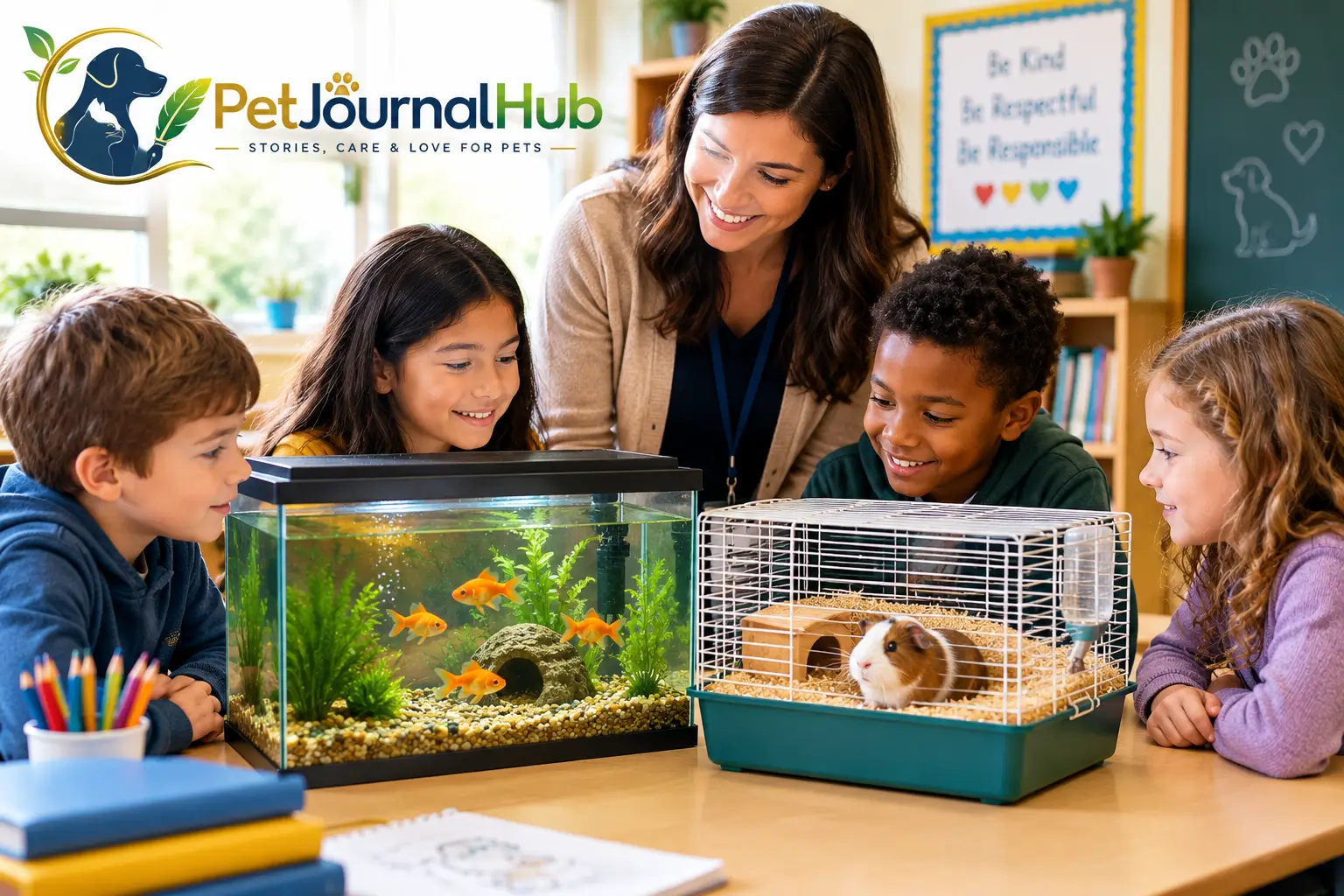
Good class pets are animals that fit the students’ age, classroom space, school rules, and daily care capacity. Popular choices include fish, guinea pigs, hamsters, and some other domesticated animals. The right choice should offer educational value while keeping animal welfare, hygiene, supervision, allergies, and weekend care at the center of the decision.
Key Takeaways
- A classroom pet should match the students’ age, classroom setup, and teacher’s ability to supervise care.
- Fish can work well when students mainly observe rather than handle the animal.
- Guinea pigs and hamsters require more hands-on care, cleaning, space, and adult oversight.
- Children under 5 need extra precautions around animals. The CDC advises against reptiles, amphibians, poultry, rodents, and ferrets in settings with children under 5.
- Every classroom needs a plan for weekends, holidays, school breaks, illness, and emergencies.
- Handwashing after touching animals, food, habitats, or equipment remains a basic safety rule.
Introduction
Teachers often look for classroom pets because animals can turn everyday lessons into hands-on experiences. A pet can give students a chance to observe behavior, practice responsibility, discuss nutrition, and learn why living things need consistent care.
The challenge comes when the excitement of having an animal gets ahead of the practical work. A classroom has noise, movement, visitors, cleaning routines, school breaks, and many young hands. Not every pet handles that environment well.
The question is not simply which animal looks cute or seems easy to care for. Teachers also need to consider habitat size, temperature, food, cleaning, veterinary care, allergies, student age, school policies, and who takes responsibility after the final bell.
The CDC specifically recommends adult supervision around classroom animals and advises schools to create dedicated animal-interaction areas. It also recommends keeping animals away from places where people prepare or eat food.
This guide explains how to choose a classroom animal responsibly. It compares common options, discusses age groups, outlines daily care, and covers the safety issues teachers should address before bringing an animal into school.
What Are Good Class Pets?
Good class pets are domesticated animals whose welfare and care needs fit the classroom environment. The best match depends less on popularity and more on the animal’s needs, student age, available space, and the adults responsible for care.
A classroom pet should have a secure habitat, suitable food and water, appropriate temperature and lighting when needed, and regular cleaning. It should also have a plan for veterinary care.
The ASPCA says classroom pets should live in a non-stressful environment that meets the needs of their species. It also recommends minimizing handling, supervising interactions, and planning for weekends and school closures.
Common classroom choices include:
- Fish
- Guinea pigs
- Hamsters
- Some domesticated birds
- Certain other domesticated animals, depending on school rules and care requirements
The right choice can differ greatly between a kindergarten room and a high school science classroom.
Quick Facts Box
| Fact | Details |
| Main goal | Provide safe, educational animal interaction |
| Best starting point | Match the species to age, space, and care capacity |
| Daily responsibility | Food, water, habitat checks, observation, and cleaning as needed |
| Adult role | Supervision and responsibility for animal welfare |
| Hygiene | Wash hands after handling animals or their habitat |
| Weekend plan | Required before bringing an animal to school |
| Food areas | Keep animals and their equipment away from food preparation and eating areas |
| Health care | Arrange appropriate veterinary care and emergency planning |
The CDC notes that even healthy-looking animals can carry germs. Students should wash their hands after touching animals, food, habitats, or related equipment.
History and Evolution of Classroom Pets
Classroom animals have long served as hands-on teaching tools. Schools have used animals to help children observe behavior, life cycles, habitats, nutrition, and responsibility.
The idea has evolved as educators and health organizations have placed more attention on animal welfare and infection prevention. Modern classroom planning therefore needs to consider both the educational value and the animal’s quality of life.
The CDC continues to recognize animals as useful educational tools while emphasizing safeguards that reduce infection and injury risks.
Today, a responsible classroom pet program involves more than putting an animal in a cage. Teachers need a care plan, hygiene rules, adult supervision, and a backup arrangement for times when school closes.
Key Characteristics and Care Needs
The most suitable classroom animals tend to have care routines that the teacher can reliably manage. That does not mean the animal requires little work.
Temperament matters
A classroom can become noisy and unpredictable. Students may move around suddenly, talk loudly, or crowd around an enclosure.
Animals need a place where they can retreat from constant activity. Handling should never become a requirement simply because students want to touch the pet.
Habitat matters
Consider the animal’s enclosure before choosing the species. The habitat should provide enough room for normal movement and appropriate environmental conditions.
Keep the enclosure secure. Do not place it where students can knock it over, tamper with equipment, or easily reach the animal without supervision.
Care matters
Every animal needs species-appropriate food, water, cleaning, and health care. Teachers should research the complete care routine before making a decision.
A pet that looks simple in a store may require much more work once its full needs are considered.
Student interaction matters
Observation can provide excellent learning opportunities without constant handling. The ASPCA recommends minimizing handling and supervising student interactions.
Quick Comparison Snapshot
| Option | Best For | Key Difference |
| Fish | Observation-based learning | Students usually observe rather than handle |
| Guinea pig | Older elementary students with strong adult oversight | Social mammal with significant daily care needs |
| Hamster | Older students learning about small-animal care | Needs a suitable habitat and careful handling |
| Domesticated bird | Observation and behavior lessons | Noise, space, cleaning, and handling require planning |
These options are not automatically suitable for every classroom. Student age, school policy, allergies, space, and the individual animal all matter.
Top 10 Classroom Pets
Although the phrase “top 10” suggests a ranking, there is no universal top-ten list that fits every classroom. A better approach compares animal types against the actual needs of the students and teacher.
Fish often make sense when observation forms the main learning activity. They can support lessons about aquatic environments and animal behavior without requiring students to handle them.
Guinea pigs can offer more direct interaction, but their care needs deserve careful planning. PetMD notes that guinea pigs may work in classrooms with older children, adult supervision, and reliable daily, weekend, and holiday care.
Hamsters can also support lessons about small-mammal behavior and responsible care. However, teachers should research the species carefully and teach students how to interact gently.
Birds may offer opportunities to observe vocalization, movement, feeding, and behavior. Their noise level and habitat requirements can make them a poor match for some rooms.
The goal should never be choosing an animal because it appears popular. Choose the animal whose needs the classroom can consistently meet.
Good Class Pets for Kindergarten
Kindergarten classrooms need especially careful animal selection because young children require close supervision around animals. The CDC advises against reptiles, amphibians, poultry, rodents, and ferrets in settings with children under 5.
For very young students, observation may offer a safer classroom model than frequent handling. A teacher might use an enclosed habitat and let children watch feeding, movement, and other natural behaviors.
Teachers should also consider allergies and individual student needs. Ask families about relevant concerns before introducing an animal.
Keep the animal away from food areas. Create a clear handwashing routine after any supervised contact.
The teacher should remain responsible for the animal. Children can participate in age-appropriate observation and simple learning activities, but they should not carry the burden of essential animal care.
Best Classroom Pets for High School
High school classrooms can support more advanced animal-related learning because students may handle more complex concepts and follow detailed care instructions.
The best animal depends on the subject. A biology class might focus on behavior or ecology, while an animal science course may have different goals.
Older students can help maintain observation logs, study feeding patterns, record habitat conditions, or research species-specific behavior. Still, student participation does not remove the teacher’s responsibility for animal welfare.
Teachers should also check school policies before bringing any animal onto campus. Local rules may apply to certain species, and veterinary documentation may matter for some animals.
A classroom should never keep an animal simply because it creates an interesting display. Its needs must remain the priority.
Best Classroom Pets for Elementary School
Elementary classrooms can benefit from animals when teachers build clear routines around observation, respect, and hygiene.
Fish may work well for classes that want an observation-centered experience. Older elementary students may also participate in supervised care tasks when the species and school policy allow it.
Small mammals can require more planning. Guinea pigs, for example, need appropriate housing, food, cleaning, and careful handling. PetMD describes them as social animals that can become frightened and says classroom suitability depends on age, supervision, and a reliable care plan.
Teachers should establish rules before students interact with an animal. These rules can include quiet voices, gentle movements, no chasing, no kissing, and handwashing afterward.
The classroom should also provide the animal with a quiet retreat.
Class Pet Ideas
Class pet ideas work best when they connect the animal to a clear learning goal. The pet should support education rather than become a distraction.
A fish habitat can support observation journals and discussions about aquatic life. A small mammal can support lessons about behavior, food, habitat design, and responsibility.
Teachers can also build non-contact activities around a pet. Students might create observation charts, draw habitat diagrams, research natural behaviors, or write care instructions.
Another option involves short-term educational animal visits rather than permanent classroom ownership. This approach can provide exposure to animals without creating a year-round care obligation.
Whatever model a teacher chooses, the animal should have a safe space away from constant student attention.
Good Class Pets for Teachers
For teachers, the practical question is not simply whether an animal is manageable during school hours. The teacher needs a complete care plan that covers every day the school is closed.
Before choosing an animal, answer these questions:
- Who feeds the animal each day?
- Who checks its water and habitat?
- Who cleans the enclosure?
- Where does the animal stay during weekends?
- Who provides care during holidays?
- Who pays routine veterinary costs?
- What happens if the teacher is absent?
- What happens if the animal becomes sick?
- What happens if a student has an allergy?
- What does the school district allow?
The ASPCA specifically highlights the need for care arrangements during weekends and school closures.
A teacher should never depend on students alone to maintain essential care.
Best Class Pets for 5th Grade
Fifth grade can provide opportunities for more structured animal-care lessons, but age alone does not make a species appropriate.
Teachers can use classroom pets to teach observation, responsibility, life science, habitats, and animal behavior. Students can help maintain records under adult supervision.
A fish may suit an observation-focused classroom. A small mammal may offer more opportunities for supervised interaction, but it also creates greater cleaning and handling responsibilities.
Students should learn that animals are not classroom toys. They need quiet periods, proper food, safe habitats, and respect for their natural behavior.
A strong classroom program also teaches students when not to touch an animal.
Fake Class Pet Ideas
Fake class pet ideas can provide many educational benefits without keeping a live animal in the classroom. They work particularly well when allergies, school policies, space, or staffing make live animals impractical.
Teachers can create a class pet experience using:
- A stuffed animal with a rotating “home”
- A classroom mascot
- A digital animal-care project
- A fictional pet care journal
- A habitat-building assignment
- A virtual observation project
- A student-created animal character
These activities can teach responsibility without placing an actual animal in a busy classroom.
They also eliminate weekend feeding, veterinary planning, enclosure cleaning, and animal-welfare concerns. For some classrooms, that makes a non-live option the more practical educational choice.
Daily Care Routine / How to Get Started
Start with the school’s rules before purchasing or adopting an animal. Some schools or districts may restrict certain species.
Next, confirm that the classroom can meet the animal’s environmental and care needs.
Step 1: Choose the learning goal
Decide what students should learn. Observation, animal behavior, responsibility, and life science may require different setups.
Step 2: Research the species
Use reliable veterinary and animal-care sources. Learn about food, habitat, temperature, cleaning, behavior, handling, and veterinary needs.
Step 3: Build the habitat first
Set up the enclosure before the animal arrives. Make sure equipment works and the habitat provides appropriate conditions.
Step 4: Create classroom rules
Explain how students should behave around the animal. Include rules about touching, feeding, noise, hygiene, and personal space.
Step 5: Create a care calendar
Write down every recurring task. Include weekends, holidays, school closures, and emergency backup care.
Step 6: Plan hygiene
Students should wash their hands after handling an animal or touching its food, habitat, or equipment.
Step 7: Monitor the animal
Watch for changes in eating, activity, behavior, or appearance. Contact a veterinarian if you have concerns about the animal’s health.
Cost Breakdown
Classroom pet costs extend beyond the initial purchase or adoption.
The main expense categories include:
- Habitat or aquarium
- Bedding or substrate where appropriate
- Food
- Water equipment
- Cleaning supplies
- Enrichment items
- Lighting or heating equipment where required
- Transportation
- Veterinary care
- Emergency care
Prices vary widely by species, location, equipment, and individual animal needs. Avoid choosing an animal based only on its purchase price.
A low-cost animal can still require expensive equipment or veterinary care. A teacher or school should create a realistic annual budget before bringing an animal into the classroom.
Common Mistakes Pet Owners Make
Choosing based on appearance
A cute animal may have complex care needs. Research the species before making a commitment.
Forgetting school breaks
Animals need care every day, including when students are not at school.
Allowing too much handling
Constant touching can create stress. Give animals a quiet place and let them retreat when needed.
Ignoring allergies
Ask families about allergies and other relevant concerns before introducing an animal.
Cleaning in the wrong place
The CDC advises against cleaning animal habitats and equipment in areas used to prepare or serve human food.
Letting students become the only caregivers
Students can learn through supervised participation. Adults should remain responsible for essential care and safety.
Skipping veterinary planning
Teachers should know which veterinary professional can treat the species before an emergency occurs.
Pros and Cons
| Pros | Cons |
| Creates hands-on learning opportunities | Requires daily responsibility |
| Can teach empathy and respect | Needs weekend and holiday care |
| Supports observation skills | Can create allergy concerns |
| Gives lessons a real-world connection | Requires cleaning and hygiene routines |
| Can encourage responsible behavior | Some animals dislike frequent handling |
| Adds interest to science lessons | Veterinary costs can occur |
A classroom pet can support learning, but the educational benefit never removes the animal’s welfare needs.
Similar Breeds, Products, and Alternatives
Instead of choosing another live animal, teachers can consider different ways to achieve the same educational goal.
| Option | Best For |
| Aquarium observation project | Classes focused on watching animal behavior |
| Classroom terrarium | Lessons about habitats and environmental conditions |
| Stuffed classroom mascot | Responsibility activities without live-animal care |
| Digital pet project | Technology-based animal-care lessons |
| Short educational animal visit | Temporary exposure without permanent ownership |
| School garden observation | Studying living systems without keeping a classroom pet |
These alternatives can help schools avoid situations where a live animal does not fit the classroom.
When to Consult a Vet or Professional
Contact a licensed veterinarian when a classroom animal shows signs of illness, injury, unusual behavior, or a major change in eating or drinking.
Teachers should also seek professional guidance before choosing an unfamiliar species. A veterinarian can explain species-specific health and welfare needs.
For animals that may carry health risks, schools should also follow public-health guidance. The CDC recommends appropriate veterinary care and says schools should consider allergies, asthma, and other student health concerns when planning animal contact.
If an animal bites someone, wash the wound with soap and water. Seek medical care when the wound looks serious, develops concerning symptoms, or when rabies vaccination status creates a concern.
Fun Facts
- Animals can support hands-on learning when schools use appropriate safety safeguards.
- Healthy-looking animals can still carry germs that cause illness.
- Students should wash their hands after handling animals or animal habitats.
- The CDC advises extra caution around animals for children younger than 5.
- The ASPCA supports classroom pets when teachers meet the animals’ welfare needs.
- Classroom animals should have care arrangements during weekends and school closures.
- Students can learn about animals without physically handling them.
- A classroom pet should never have to tolerate constant student attention.
Frequently Asked Questions
What is the best class pet to have?
There is no single best classroom pet for every school. The right choice depends on student age, classroom space, school rules, allergies, adult supervision, and the animal’s care requirements. Fish may suit observation-focused classrooms, while some small mammals can provide more direct interaction for older students. The most important test involves welfare: can the classroom provide appropriate food, habitat, cleaning, veterinary care, and weekend coverage? Teachers should also consider whether students can interact safely without stressing the animal.
What pets can you have in a classroom?
Possible classroom animals include fish, some small mammals, and certain domesticated birds, but school rules and local requirements can limit the choices. The CDC specifically advises that reptiles, amphibians, poultry, rodents, and ferrets are not suitable for settings with children under 5. The animal must also have a secure habitat and proper adult supervision. Before bringing any species to school, check district policies and confirm that the teacher can meet its complete care needs throughout the school year.
What are some cute pets for a classroom?
Fish, guinea pigs, hamsters, and domesticated birds often appeal to students because they are interesting to watch. However, appearance should never drive the decision. Guinea pigs, for example, need proper housing, nutrition, social consideration, cleaning, and careful handling. PetMD notes that they can work in some classrooms with older children and strong adult oversight, but they are not maintenance-free animals. A stuffed animal, mascot, or digital pet can also provide a fun alternative when a live animal would not fit the classroom.
What is the most common classroom pet?
There is no reliable universal statistic showing that one animal is the most common classroom pet across all schools. Fish, small mammals, and other domesticated animals appear in classroom settings, but popularity varies by school, age group, local rules, and teacher preference. Instead of focusing on what other classrooms keep, teachers should evaluate the animal’s welfare requirements. A species that works in one classroom may not work in another because of allergies, space, noise, temperature, supervision, or the availability of weekend care.
How do you keep a classroom pet safe during school breaks?
Create a written care plan before bringing the animal to school. The plan should identify who provides food, water, habitat checks, cleaning, and veterinary help during weekends, holidays, and unexpected closures. The ASPCA specifically says classrooms need arrangements for animal care during weekends and periods when school is closed. Do not assume that students or families will automatically provide care. Assign a responsible adult and keep emergency contact information available.
Can a classroom pet help children learn responsibility?
Yes, a classroom animal can create practical opportunities to discuss responsibility, observation, empathy, and animal welfare. However, students should not carry sole responsibility for essential animal care. Teachers can assign age-appropriate tasks while retaining adult oversight. Activities such as observation logs, habitat diagrams, feeding records, and behavior journals can turn the animal into a learning resource. The animal should remain a living being rather than becoming a classroom object that students handle whenever they want.
Final Thoughts
A classroom pet can add real value to lessons when the teacher plans around the animal rather than simply placing an animal in the room.
Start with the species’ needs. Then consider student age, classroom space, school policy, allergies, hygiene, supervision, and the care plan for every school closure. These factors matter more than whether an animal looks cute or appears easy to keep.
Observation can also provide powerful learning without frequent handling. For some classrooms, a fish tank or another contained habitat may work. For others, a non-live classroom mascot or digital animal project may make more sense.
The safest choice is the one the school can support consistently throughout the animal’s life. If you are unsure about a species, speak with a veterinarian and check your school or district rules before bringing the animal onto campus.
A thoughtful classroom pet program teaches students something even more important than animal facts: living creatures deserve patience, respect, proper care, and responsible adults.

Emily Carter is a pet care writer at PetJournalHub. She enjoys creating clear, practical, and well-researched articles about pet health, nutrition, grooming, and everyday care. Her goal is to help pet owners make informed decisions through reliable, easy-to-understand content.