Featured Snippet Answer:
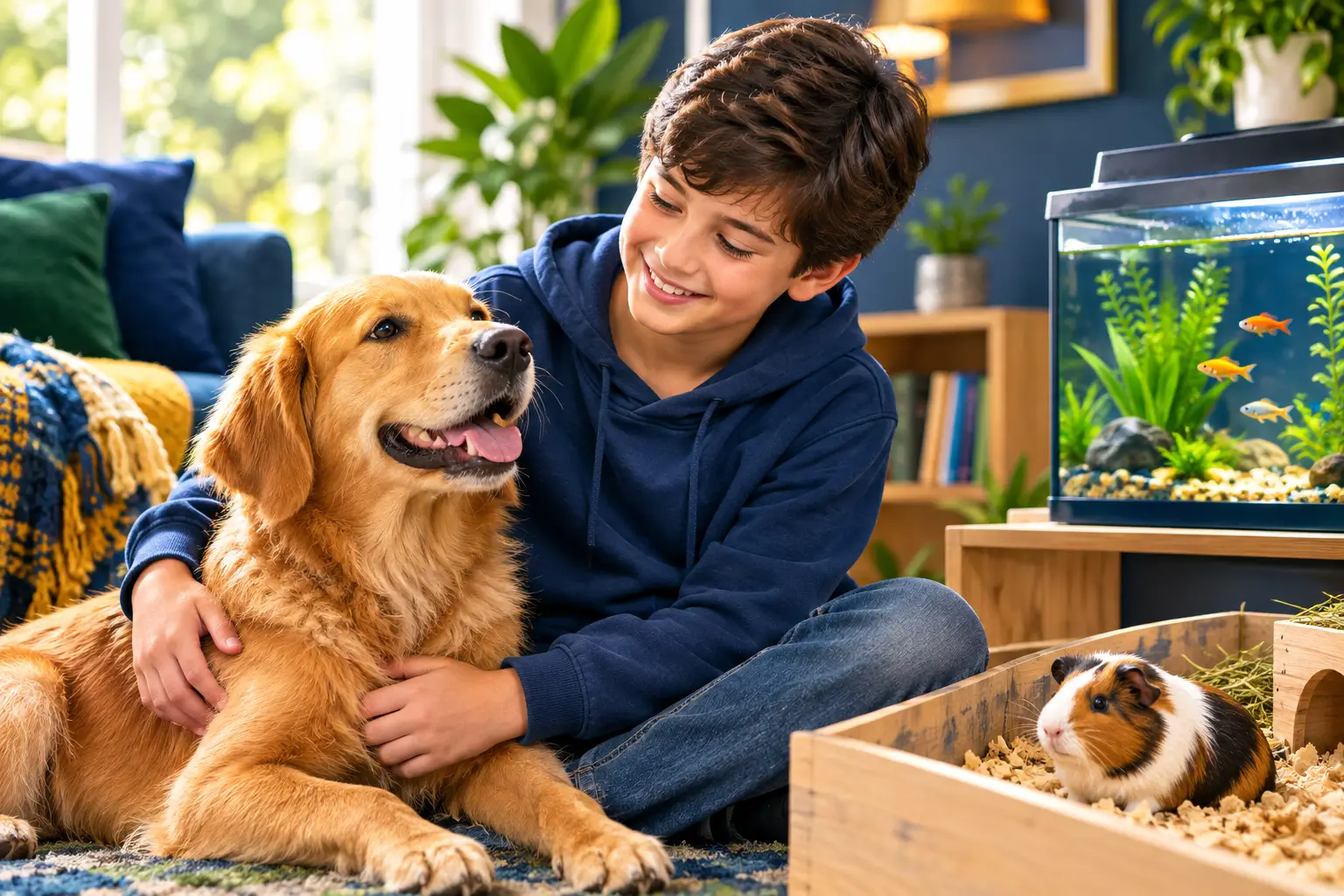
Good starter pets for 10 year olds include carefully matched family dogs, cats, guinea pigs, fish, and some other small companion animals. The right choice depends on the child’s maturity, the family’s time, available space, budget, and the animal’s care needs. Adults should remain responsible for the pet’s health, safety, veterinary care, and long-term welfare.
Key Takeaways
- A 10-year-old can handle many age-appropriate pet-care tasks, but adults remain responsible for the animal.
- Guinea pigs can offer a hands-on small-pet experience, while fish may suit families wanting less physical handling.
- Dogs and cats need more long-term planning than their friendly personalities might suggest.
- A pet’s temperament, housing, exercise, diet, and veterinary needs matter more than appearance.
- Children should learn gentle handling, boundaries, hygiene, and safe interaction before getting a pet.
- Never choose an animal simply because it looks easy to care for.
Introduction
Finding a family pet can feel exciting until you start thinking about food, cleaning, exercise, training, housing, veterinary care, and the years of commitment ahead. Parents searching for good starter pets for 10 year olds often want an animal that helps a child learn responsibility without placing unrealistic duties on young shoulders.
Age matters, but it does not tell the whole story. A mature 10-year-old may manage regular feeding, simple grooming, supervised exercise, or enclosure care. Another child of the same age may need much more help. The animal matters too. A dog has very different needs from a guinea pig or fish.
The American Kennel Club notes that children around age 10 and older may handle many day-to-day dog-care tasks, but adults still carry the ultimate responsibility.
This guide focuses on the practical side of choosing a first pet. It looks at common options, care demands, costs, safety, and age-specific considerations. It also explains why the easiest-looking pet is not always the easiest pet for your particular family.
The goal is simple: help parents and children choose an animal whose needs fit their real household, not just the pet they currently find cutest.
What Is good starter pets for 10 year olds?
Good starter pets for 10 year olds are companion animals whose care requirements match a child’s abilities while still allowing adults to provide full supervision and support.
There is no official list of pets that every 10-year-old should own. The better approach involves matching the child and animal. Consider the child’s patience, ability to follow routines, comfort around animals, and willingness to respect boundaries.
Dogs and cats can become wonderful family companions, but they require substantial long-term commitment. Guinea pigs, fish, and certain other small companion animals can provide different experiences with different care demands. The ASPCA recognizes dogs, cats, rabbits, guinea pigs, birds, fish, and certain other animals as companion-animal species when kept responsibly.
Parents should also remember one important rule: the pet belongs to the whole family. A child can help with daily tasks, but an adult must remain ready to take over when school, activities, illness, vacations, or changing interests interfere.
Quick Facts Box
| Fact | Details |
| Target age | Around 10 years old |
| Main decision-maker | Parent or adult caregiver |
| Child’s role | Age-appropriate daily care and learning |
| Adult’s role | Health, safety, finances, veterinary care, and supervision |
| Popular choices | Dogs, cats, guinea pigs, fish, and selected small companion animals |
| Key selection factors | Temperament, space, time, budget, handling needs, and lifespan |
| Main safety rule | Teach children to respect animal boundaries |
| Best starting point | Match the pet to the entire family’s lifestyle |
Where Do Starter Pets for Children Come From?
Starter pets do not come from one particular breed, species, or historical tradition. The phrase describes a practical category used by families when they look for an appropriate first companion animal for a child.
The concept has grown from a simple idea: children can learn empathy and responsibility through supervised participation in animal care. The animal itself does not need to perform a special educational role. It simply needs a safe home where its natural needs receive proper attention.
The ASPCA lists several domestic species that can live as companion animals when families keep them legally and responsibly. It also opposes keeping wild animals and wild/domestic hybrids as pets.
That distinction matters. An unusual animal may look fascinating online, but novelty does not make an animal suitable for a child.
History and Evolution of the First-Pet Idea
Families have kept companion animals for generations, but the idea of choosing a specific “starter pet” has become more common as parents look for manageable ways to introduce children to animal care.
Modern families also have more choices. A child might live with a dog, cat, rabbit, guinea pig, fish, bird, or another domestic companion animal. Housing, school schedules, local rules, family budgets, and access to veterinary care all influence the decision.
Today, responsible pet selection focuses less on finding the “easiest” animal and more on understanding what the animal needs throughout its life.
That shift is important because small size does not automatically mean low responsibility. For example, Merck Veterinary Manual notes that hamsters have delicate bones and are nocturnal, which can make them a poor match for some young children.
Key Characteristics and Care Needs
The right first pet should fit the child’s ability and the family’s routine. Start by looking beyond appearance.
Temperament matters. Children need animals they can learn to interact with calmly. A pet that becomes frightened by sudden movements may need more careful handling.
Daily routine matters. Every animal needs consistent care. Depending on the species, that may include feeding, cleaning, grooming, exercise, enrichment, or habitat maintenance.
Space matters. A small animal still needs appropriate housing. Guinea pigs, for example, need considerably more enclosure space than many first-time owners expect. Merck Veterinary Manual recommends substantial floor space and a solid enclosure floor for guinea pigs.
Adult support matters most. A child may promise to handle everything, but school, sports, friends, holidays, and changing interests can affect routines. Adults should plan to remain responsible for the animal for its entire life.
Quick Comparison Snapshot
| Option | Best For | Key Difference |
| Family dog | Active families | Requires exercise, training, supervision, and daily interaction |
| Family cat | Families wanting a companion with different exercise needs | Usually less dependent on scheduled outdoor exercise than dogs |
| Guinea pig | Children who enjoy gentle hands-on care | Needs proper housing, diet, cleaning, and careful handling |
| Fish | Families interested in observation and routine | Requires correct water conditions and aquarium maintenance |
These are broad categories rather than guarantees. Individual temperament and care needs can vary significantly.
Good Starter Pets for 11 Year Olds
Eleven-year-olds may handle more responsibility than younger children, but parents should still choose according to the individual child rather than age alone.
A child at this stage may help with feeding, cleaning, grooming, training, or exercise. The exact responsibilities should depend on the animal and the child’s abilities.
For dogs, the American Kennel Club describes children age 10 and older as potentially capable of many daily care tasks, including feeding, play, exercise, potty duty, and grooming.
However, parents should not turn that guidance into a rule that every 11-year-old can independently care for a dog. Veterinary visits, emergency decisions, expenses, training, and long-term planning remain adult responsibilities.
Good Starter Pets for 12 Year Olds
A 12-year-old may be ready for a larger share of routine pet care, especially if the child already follows household responsibilities without constant reminders.
This can be a useful age to teach planning. A child might keep a feeding chart, help prepare supplies, or participate in training sessions with an adult.
For larger or more demanding pets, parents should look at the whole family’s schedule. A child’s willingness to help does not remove the need for adult backup.
The best lesson is consistency. Caring for an animal means completing necessary tasks even when the child feels tired, busy, or distracted.
Good Starter Pets for 10 Year Olds Girl
Girls can enjoy any companion animal that fits their family and individual interests. Pet suitability should not depend on gender.
Instead, consider what the child actually enjoys. Does she like outdoor activity, quiet observation, grooming, training, or gentle handling? Does she want an animal she can interact with regularly, or would she rather watch and learn about animal behavior?
A calm child who enjoys gentle handling may have different needs from an energetic child who wants an active companion.
Parents should also avoid choosing a pet based only on appearance. A cute animal still needs species-appropriate food, housing, enrichment, health care, and protection.
Good Starter Pets for 14 Year Olds
A 14-year-old may have stronger organizational skills and more independence, but the family should still treat pet ownership as an adult-supported commitment.
Teenagers often have changing schedules. School, sports, jobs, social activities, and vacations can make a daily routine difficult.
Before choosing a pet, ask the teenager to explain the complete care plan. Who feeds the animal during exams? Who cleans the enclosure? Who handles veterinary appointments? Who provides care during vacations?
If the answers depend entirely on the teenager, the plan may need more adult support.
Good Starter Pets for 7 Year Olds
Seven-year-olds can participate in pet care, but they generally need closer adult supervision than older children.
Simple tasks can include helping measure food, filling a water bowl with an adult, putting toys away, or gently brushing an appropriate animal. The child should not become the sole person responsible for the pet.
Safety education also matters. Children need to understand that animals are not toys. A sleeping, eating, frightened, or uncomfortable pet should receive space.
This lesson becomes especially important with dogs. The AKC recommends teaching children to respect dogs’ boundaries and supervising interactions.
Good Starter Pets for 10 Year Olds Boy
Boys can enjoy any pet that fits their family’s lifestyle and the animal’s needs. Gender should not determine which species a child can responsibly care for.
Instead, look at behavior and interests. A child who loves outdoor activity may enjoy helping with an active dog. A child who prefers observation may enjoy learning about fish or another suitable small companion animal.
The key question is not “Which pet suits a boy?” It is “Which pet can this child safely and consistently help care for?”
Parents should involve children in research before making the final decision. That process can reveal whether the child understands the animal’s real needs.
Good Starter Pets for 13 Year Olds
Thirteen-year-olds can often participate in more advanced routines, but independence should develop gradually.
A teenager might help maintain an enclosure, prepare supplies, participate in training, or track routine care. Parents should still monitor the animal’s condition and make decisions about veterinary treatment.
This age can also be a good time to teach budgeting. Ask the child to identify recurring expenses such as food, bedding, habitat supplies, grooming items, and veterinary care.
Learning the financial side of pet ownership helps children understand that an animal remains a responsibility after the excitement of bringing it home fades.
Good Starter Pets for 9 Year Olds
Nine-year-olds often sit between younger-child supervision and the greater independence expected from older children.
A suitable pet should therefore allow the child to participate without requiring the child to carry the entire responsibility.
Parents can create a simple routine with three categories:
- Child helps: age-appropriate feeding, gentle interaction, simple cleaning, or supervised exercise.
- Adult checks: food amounts, water, habitat condition, behavior, and safety.
- Adult owns: veterinary care, emergency decisions, major expenses, and long-term planning.
This system can make pet care feel like a shared family responsibility instead of a chore assigned entirely to a child.
Daily Care Routine: How to Get Started
Start the routine before the pet arrives. Prepare the habitat, food, cleaning supplies, and safety rules first.
A basic family plan can look like this:
Morning: Check food, water, housing, and the animal’s general appearance.
After school: Complete age-appropriate interaction, exercise, grooming, or enrichment.
Evening: Complete the animal’s scheduled care and return supplies to their places.
Weekly: Review cleaning tasks, supplies, equipment, and upcoming appointments.
For a dog, the routine may include exercise, training, meals, bathroom needs, and supervised family interaction. For a guinea pig, housing, food, water, and enclosure maintenance become important parts of the routine. For fish, aquarium care and water quality require consistent attention.
Children should also learn to notice changes in behavior. A sudden change can signal a problem, so parents should contact a veterinarian when they have health concerns rather than relying on online diagnosis.
Cost Breakdown
Pet ownership costs vary widely by species, location, veterinary prices, food choices, housing, and unexpected needs. Avoid choosing an animal simply because its initial purchase or adoption cost looks low.
A realistic budget should include:
- Initial adoption or purchase costs
- Habitat or housing
- Food and treats
- Bedding or substrate when required
- Toys and enrichment
- Grooming supplies
- Routine veterinary care
- Preventive care when recommended for the species
- Emergency veterinary expenses
- Pet care during travel
Dogs can carry significant ongoing expenses because families may need food, training, grooming, exercise equipment, and veterinary care. The AKC also notes that unexpected illness or injury can create substantial veterinary costs.
Small pets are not automatically cheap. Proper housing and nutrition can cost more than families expect. Guinea pig housing, for example, needs meaningful floor space rather than a tiny decorative cage.
Common Mistakes Pet Owners Make
One common mistake involves choosing a pet based only on how cute it looks.
Another involves assuming a small animal requires little care. Size does not determine an animal’s housing, nutrition, enrichment, or veterinary needs.
Families also sometimes promise that a child will handle every task. That plan can fail when school or other commitments become demanding. Adults should always have a backup plan.
Another mistake involves ignoring the animal’s natural behavior. Hamsters, for example, are nocturnal. Their activity pattern may not match a child who wants daytime interaction.
Finally, some families overlook safety rules. Children should never tease, chase, grab, or disturb an animal that needs space.
Pros and Cons
| Pros | Cons |
| Teaches age-appropriate responsibility | Adults remain responsible |
| Can encourage empathy and gentle behavior | Pets require long-term commitment |
| Gives children a chance to learn animal care | Costs continue beyond the initial purchase |
| Can provide companionship | Some animals need specialized care |
| Creates family learning opportunities | Children’s interests can change |
Research discussed by the AKC suggests that participating in pet care may support children’s responsibility, empathy, confidence, and other aspects of development.
Those benefits should not become a reason to overlook the animal’s welfare. The pet’s needs always come first.
Similar Pet Options and Alternatives
If the first choice does not fit your household, consider other companion animals after researching their complete care requirements.
| Option | Best For |
| Adult rescue dog | Families wanting a dog while considering an individual animal’s temperament |
| Adult cat | Families seeking a companion and willing to manage lifelong care |
| Guinea pig | Families prepared for appropriate enclosure space and daily care |
| Fish | Families interested in aquarium keeping and observation |
| Rabbit | Families willing to research housing, diet, handling, and veterinary needs |
| Bird | Families prepared for species-specific social and environmental needs |
| Selected small mammals | Families willing to learn the specific species’ behavior and care needs |
The ASPCA includes rabbits, birds, guinea pigs, fish, and selected small mammals among companion-animal species.
The important word is selected. Not every animal sold as a pet makes a suitable choice for a child.
When to Consult a Vet or Professional
Contact a veterinarian when you notice a health or behavior change that concerns you. Do not rely on online articles to diagnose an animal or choose medication.
A veterinarian can help with preventive care, nutrition questions, illness concerns, behavior changes, and species-specific health needs.
Professional help can also make sense before adoption. Ask about the animal’s expected lifespan, diet, housing, common health concerns, and appropriate handling.
If you are choosing a dog, a qualified trainer or behavior professional can also help families understand the animal’s behavior and build safe routines. The AKC emphasizes supervision and teaching children to respect dogs’ boundaries.
If the child has ADHD or another developmental or behavioral concern, do not choose a pet as a substitute for professional care. ADHD treatment should be discussed with the child’s healthcare provider, and the CDC identifies behavior therapy, medication, and school supports as parts of evidence-based care depending on age and individual needs.
Fun Facts
- Dogs can help families build shared routines around feeding, exercise, and training.
- Children can participate in pet care through age-appropriate responsibilities.
- Hamsters are nocturnal, so their activity often increases later in the day.
- Hamsters have delicate bones and need careful handling.
- Guinea pigs need more floor space than many small-pet cages provide.
- Fish still require consistent environmental care even though they do not need physical handling.
- Small size does not automatically mean simple care.
- Adult supervision remains an important part of safe child-pet interaction.
Frequently Asked Questions
What is the best first pet for a 10-year-old?
There is no single first pet that fits every 10-year-old. The better choice depends on the child’s maturity, the family’s schedule, available space, budget, and ability to provide adult supervision. A family dog or cat may work well when adults want a long-term household companion. A guinea pig or fish may suit families looking for a different kind of interaction. Parents should research the animal’s complete care needs before deciding. Most importantly, the child should help with care without becoming the sole person responsible for the animal’s health or safety.
What animal is good for ADHD?
No animal should be described as a treatment or cure for ADHD. A pet may provide companionship and create opportunities for routines, activity, and responsibility, but those benefits vary between children and animals. ADHD care should come from qualified healthcare professionals and may include behavior therapy, medication, and school-based support depending on the child’s age and needs. If a family is considering a pet, focus on the child’s ability to follow safe routines and the animal’s needs rather than expecting the pet to manage ADHD symptoms.
What are the top 10 easiest pets?
There is no universal list of the 10 easiest pets because “easy” depends on the species and the owner’s situation. Fish may seem simple because they do not need walking, but aquarium care requires consistent attention. Hamsters need specialized housing and have nocturnal behavior. Guinea pigs require proper enclosure space, food, and routine care. Dogs demand exercise, training, social interaction, and veterinary care. A better approach is to compare the animal’s housing, feeding, cleaning, handling, exercise, lifespan, and veterinary needs with your family’s actual routine.
What is the easiest pet for a kid?
The easiest pet for one child may be difficult for another. Parents should consider maturity, patience, handling skills, available time, and adult support before choosing. The animal’s needs should come first. For example, a hamster may look easy because it is small, but Merck Veterinary Manual notes that hamsters are fragile and active at night, which can make them unsuitable for some young children. A family should choose an animal that everyone can safely care for rather than searching for the animal with the fewest chores.
How can parents teach a child to care for a pet?
Start with small, repeatable responsibilities. A child can help with feeding, supervised grooming, cleaning simple areas, or preparing toys depending on the animal. Use a written schedule so the child understands what happens each day. Parents should check the work rather than assuming it happened. The AKC recommends matching responsibilities to a child’s age and ability while keeping adults responsible for the pet. This approach teaches responsibility without making the animal dependent on a child who may forget a task.
Final Thoughts
Choosing a first pet for a 10-year-old should start with the animal’s needs, not the child’s excitement.
A good family match depends on several pieces working together: the child’s maturity, the adults’ availability, the household budget, living space, daily schedule, and the animal’s temperament and care requirements.
A child can gain valuable experience from helping with feeding, grooming, cleaning, exercise, training, or observation. But those responsibilities should remain age-appropriate. Adults need to provide the safety net and take full responsibility for veterinary care, expenses, emergencies, and long-term welfare.
The best first-pet experience also teaches an important lesson: animals are living companions, not toys or short-term projects.
Take time to research the species. Visit reputable shelters, breeders, rescues, or pet professionals where appropriate. Ask questions about the animal’s behavior and care needs. Then choose only when your whole household can commit to providing a safe and suitable home.
That approach gives both the child and the pet a much better start.

Sophia Bennett is an animal care contributor at PetJournalHub. She writes educational articles about companion animals, pet wellness, training, and daily care. She believes that trustworthy information helps every pet owner build a healthier and happier life for their pets.