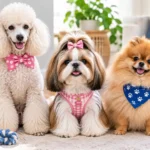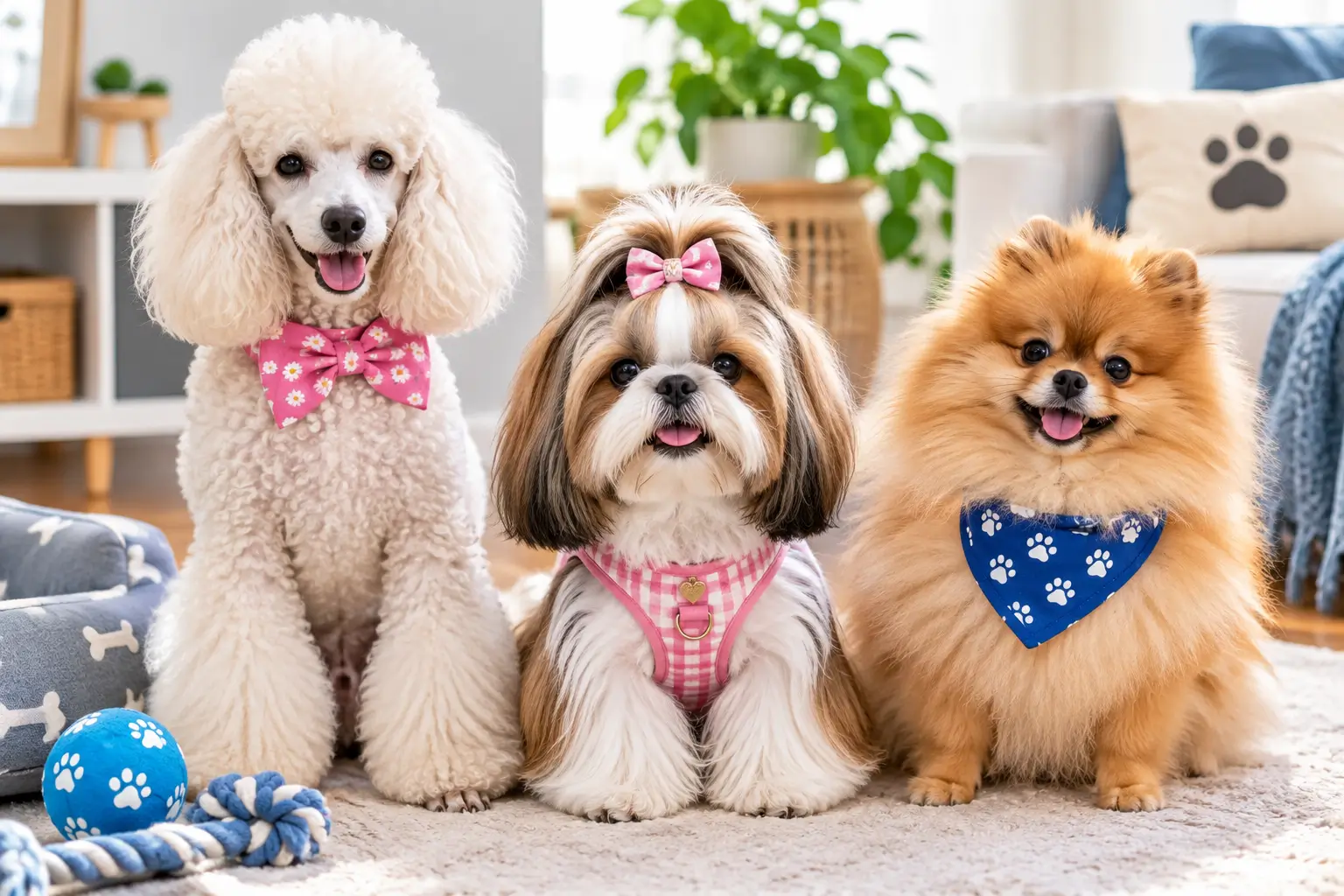
Fashionable pets are companion animals whose appearance, grooming style, or safe accessories give them a distinctive, polished look. Popular examples include well-groomed Poodles, Shih Tzus, Pomeranians, and other dogs with recognizable coats or styles. Fashion should always come after comfort, health, movement, and safe pet care.
Key Takeaways
- Fashion can mean grooming, color, accessories, or practical clothing.
- Poodles, Shih Tzus, and Pomeranians have distinctive coats and styling options.
- Clothing should fit correctly and never restrict breathing, movement, or vision.
- Grooming needs vary widely by breed and coat type.
- Adoption and responsible ownership matter more than appearance.
- Never leave a dressed pet unattended when clothing could snag or create a hazard.
Introduction
Pet owners have always enjoyed celebrating the personality and appearance of their animals. Today, that interest extends from carefully maintained coats to colorful collars, seasonal sweaters, raincoats, bandanas, and other accessories.
Searches for fashionable pets often come from people who want a companion that looks distinctive. Some people admire a beautifully groomed Poodle. Others love the flowing coat of a Shih Tzu or the fluffy appearance of a Pomeranian. For many owners, the appeal has less to do with trends and more to do with expressing a pet’s personality.
There is an important line, though. A stylish look should never come at the expense of comfort or safety. The American Kennel Club advises owners to introduce clothing gradually, check the fit carefully, and supervise dogs while they wear clothes. Clothing that restricts movement or catches on objects can create unnecessary risks.
This guide explains what makes a pet look fashionable, which breeds offer distinctive styling possibilities, how grooming fits into the picture, and how to choose accessories responsibly. It also covers adoption, puppy-shopping searches, costs, mistakes, and practical safety questions.
What Is fashionable pets?
Fashionable pets are pets whose grooming, natural appearance, or carefully chosen accessories create a distinctive and polished look. The term does not describe a specific breed, species, or official category of pet.
A fashionable appearance can come from several things:
- A well-maintained coat
- A breed’s naturally distinctive features
- A professional grooming style
- A practical sweater or raincoat
- A simple collar or harness
- Seasonal accessories
- A clean, healthy overall appearance
Poodles offer a strong example. Their curly coats support many grooming styles, while the breed comes in Toy, Miniature, and Standard varieties. Regular coat care remains important because longer hair can mat without proper brushing.
Shih Tzus also have a recognizable long, silky coat. Owners may keep the coat long or choose a shorter trim that makes everyday maintenance easier.
The key point is simple: fashion should complement good pet care, not replace it.
Quick Facts Box
| Fact | Details |
| Meaning | A pet with a distinctive, well-groomed, or stylish appearance |
| Common examples | Poodles, Shih Tzus, Pomeranians, Maltese, Papillons |
| Main style areas | Grooming, collars, harnesses, coats, bandanas, seasonal wear |
| Biggest priority | Comfort, health, movement, and safety |
| Grooming needs | Depend on breed, coat, length, and lifestyle |
| Clothing rule | Use proper fit and supervise the pet |
| Best starting point | Choose the pet’s needs before choosing its style |
Where Does fashionable pets Come From?
The phrase does not have one documented breed, historical, or cultural origin. It describes a broad idea that combines pet ownership with grooming, accessories, and personal style.
Breed-specific grooming has a much longer history. Poodles, for example, have long been associated with elaborate coat presentation, while Shih Tzus have distinctive long coats that owners can maintain in different styles.
Modern pet fashion also includes practical products. Raincoats can help keep some dogs cleaner during wet walks, while boots may protect paws in certain environments. The American Kennel Club notes that clothing can serve practical purposes as well as appearance.
History and Evolution
Pet styling did not begin with social media. People have groomed companion animals for generations, particularly dogs whose coats require regular maintenance.
Over time, grooming became both functional and aesthetic. Owners learned different ways to maintain coats, trim hair, and present particular breeds. Dog shows also helped popularize recognizable breed presentation and professional grooming.
Today, the idea extends beyond the show ring. Everyday owners may choose a simple haircut, a patterned bandana, or a weather-appropriate jacket.
Social media has made unusual grooming and pet accessories easier to share. However, popularity does not automatically make a particular accessory safe. A product still needs to fit the individual pet.
Key Characteristics and Care Needs
A stylish pet starts with ordinary care. Clean skin, healthy nails, appropriate grooming, good nutrition, exercise, and routine veterinary care matter more than accessories.
Grooming
Grooming needs depend heavily on coat type. Poodles need regular coat maintenance, while long-coated Shih Tzus need frequent brushing to prevent tangles and mats. Pomeranians also need regular brushing because of their thick double coat.
Temperament
Appearance should never be the only reason to choose a breed. A pet’s energy level, social needs, training requirements, and ability to fit your household matter just as much.
Shih Tzus, for example, are companion-oriented and adaptable, but their coat requires significant care. Pomeranians are small, lively dogs that also need consistent grooming and training.
Accessories
Choose accessories that serve a clear purpose and fit correctly. A collar, harness, coat, or bandana should not interfere with normal movement or breathing.
Quick Comparison Snapshot
| Option | Best For | Key Difference |
| Poodle | Owners who enjoy grooming | Curly coat with many styling possibilities |
| Shih Tzu | Companion-focused homes | Long, flowing coat and regular grooming needs |
| Pomeranian | Owners who like a fluffy look | Small body with a prominent double coat |
| Papillon | Active small-dog households | Distinctive ear feathering and lively temperament |
Breed characteristics vary between individual dogs, so prospective owners should research the specific breed and meet the animal before making a commitment.
Fashionable pets puppies
Puppies can look especially appealing because their small size and developing coats attract attention. However, appearance should not drive a puppy decision by itself.
A puppy needs appropriate socialization, training, veterinary care, nutrition, exercise, and a safe home. Coat type can also change as the dog matures, so the adult appearance may differ from what you see in a young puppy.
Before choosing a puppy, consider:
- Expected adult size
- Grooming requirements
- Exercise needs
- Training needs
- Breed temperament
- Veterinary expenses
- Your daily schedule
A puppy that looks fashionable but does not fit your lifestyle can become difficult for both owner and dog.
Fashionable pets puppies for sale
People searching for fashionable puppies for sale should look beyond photographs and coat appearance. Responsible acquisition starts with learning about the puppy’s health history, living conditions, parents, socialization, and the seller’s practices.
Avoid making a decision from a picture alone. Ask questions about veterinary records, vaccinations, parasite prevention, registration where applicable, and the puppy’s current routine.
Local laws and seller requirements vary, so prospective owners should verify the details themselves. A responsible breeder or adoption organization should also be willing to discuss the breed’s care requirements rather than focusing only on appearance.
Remember that an attractive coat can require substantial grooming expenses throughout a dog’s life.
Fashionable pets adoption
Adoption can provide another path for people who want a distinctive-looking companion. Shelters and rescue groups may have dogs and cats with unusual markings, coats, personalities, or mixed-breed features.
The adoption process should focus on the animal’s needs and your household. Ask about known behavior, medical history, activity level, and compatibility with children or other animals when that information is available.
Mixed-breed pets can have unique appearances that make them just as visually distinctive as purebred animals. More importantly, adoption gives you an opportunity to choose a companion based on personality and lifestyle fit rather than appearance alone.
Pets Center
A pet center can refer to a pet store, adoption facility, grooming business, boarding service, or another local pet-care operation. Because the phrase can describe different businesses, check exactly what services a particular location provides.
If you visit a pet center, look for clean facilities, clear information, appropriate animal care, and staff who answer questions about long-term ownership.
For grooming services, ask what experience the groomer has with your pet’s breed and coat type. A good grooming conversation should cover coat condition, desired length, handling needs, and any areas that require special care.
Pet cent
“Pet cent” is an ambiguous search phrase rather than a clear pet-care category. If you encountered it while looking for a business, confirm the exact business name, location, and services before visiting.
Do not assume that similarly named businesses offer the same products or standards. For purchases or grooming, verify current details directly with the business.
From a pet owner’s perspective, the useful lesson is simple: search terms do not tell you whether a facility is appropriate for your animal. Check the actual provider and service details.
Pet shop puppies for sale
Pet-shop puppy searches require the same careful approach as any puppy purchase. A cute photograph cannot tell you enough about a puppy’s health, behavior, socialization, or future needs.
Ask where the puppies come from and what health information the seller provides. Also consider whether the breed suits your household before discussing appearance.
If you are comparing puppies, make a checklist before visiting. This helps prevent an emotional purchase based only on looks.
A good checklist includes:
- Adult size and exercise needs
- Expected grooming workload
- Typical temperament
- Veterinary care requirements
- Food and supply costs
- Training time
- Local ownership rules
Dogs for adoption Old Bridge, NJ
This phrase has a strong local-adoption intent. If you live in or around Old Bridge, New Jersey, search local shelters and rescue organizations rather than assuming one particular organization has a specific breed available.
Availability changes quickly. A dog listed today may find a home tomorrow, while another suitable dog may appear later.
When evaluating an adoption listing, focus on the dog’s temperament, known medical information, activity needs, and household compatibility. Appearance can help you identify what catches your eye, but behavior and care requirements should guide the final choice.
Wayne puppies for sale
“Wayne puppies for sale” also reflects local commercial intent. The relevant Wayne depends on the location, so confirm the state or region before contacting a seller.
If you are considering a puppy from a local seller, inspect the animal’s living conditions where appropriate and request clear health information. Ask about the puppy’s parents, veterinary care, socialization, and return policies.
Do not treat rarity, unusual coloring, or a highly styled photograph as proof of quality. Responsible ownership begins with health, temperament, and a realistic understanding of the dog’s lifelong needs.
Daily Care Routine: How to Get Started
A fashionable appearance starts with a healthy daily routine.
1. Check the coat
Run your hands through the coat and look for mats, dirt, skin changes, or areas that cause discomfort. Grooming frequency depends on coat type.
2. Brush when appropriate
Long or curly coats often need more frequent brushing. Poodles and long-coated Shih Tzus require regular coat maintenance to reduce tangling and matting.
3. Keep nails maintained
Long nails can affect comfort and movement. Ask a groomer or veterinarian to show you the correct technique if you are unsure.
4. Introduce accessories slowly
Let your pet sniff and inspect a new item before putting it on. Reward calm behavior and stop if the pet shows clear discomfort.
5. Check the fit
Clothing should allow normal movement and should not interfere with breathing, vision, or hearing. AKC recommends accurate measurements because sizing varies between brands.
6. Supervise
Never assume an accessory remains safe simply because it fit correctly at first. Watch your pet while wearing clothing or accessories.
Cost Breakdown
The cost of maintaining a stylish pet varies widely. The biggest differences usually come from breed, coat type, grooming frequency, accessory choices, location, and whether you use professional services.
Typical expense categories include:
| Expense | What Changes the Cost |
| Grooming | Coat length, breed, service frequency |
| Brushes and combs | Coat type and tool quality |
| Shampoo | Pet’s coat and skin needs |
| Clothing | Material, size, design, brand |
| Collars/harnesses | Size, construction, features |
| Professional grooming | Location and coat condition |
| Veterinary care | Pet age, health, preventive needs |
Avoid choosing a breed solely because its purchase price fits your budget. Long-term grooming, food, training, routine veterinary care, and unexpected expenses can matter much more.
Common Mistakes Pet Owners Make
Choosing appearance over lifestyle
A beautiful coat does not tell you whether a dog fits your activity level or schedule.
Buying the wrong size
Clothing that feels tight can restrict movement. Oversized clothing can slip, catch, or cause a pet to trip.
Leaving clothing on unattended
A pet can chew, snag, or become caught in clothing. AKC specifically recommends supervision while dogs wear clothing.
Ignoring heat
Extra layers can contribute to overheating. This matters especially during warm weather or physical activity.
Overlooking grooming needs
A glamorous long coat may require frequent brushing and professional maintenance.
Using accessories with small detachable parts
Buttons, beads, ribbons, snaps, and other loose components can create hazards if a dog chews and swallows them.
Pros and Cons
| Pros | Cons |
| Lets owners express a pet’s personality | Accessories can add ongoing costs |
| Grooming can keep coats clean and manageable | Some breeds need significant grooming |
| Some clothing has practical uses | Poor fit can restrict movement |
| Can protect against certain weather conditions | Extra layers can contribute to overheating |
| Creates opportunities for bonding | Not every pet enjoys wearing accessories |
Similar Breeds and Alternatives
The following options offer different looks and care profiles without suggesting that one is universally better than another.
| Option | Best For |
| Maltese | Owners interested in a small companion with a long coat |
| Bichon Frise | Families interested in a fluffy, rounded appearance |
| Papillon | Owners who like distinctive ears and an active small dog |
| Yorkshire Terrier | People drawn to a long, silky coat and small size |
| Havanese | Owners seeking a social companion with a soft coat |
| Italian Greyhound | People who prefer a sleek, fine-boned appearance |
| Chinese Crested | Owners interested in a highly distinctive appearance |
| Pekingese | People drawn to a compact dog with a distinctive coat and face |
These breeds have different exercise, grooming, training, and temperament needs. Research the complete breed profile before choosing one. The AKC breed groups provide a useful starting point for understanding how these dogs differ.
When to Consult a Vet or Professional
Contact a veterinarian when grooming or accessory use raises a health concern. Examples include persistent skin irritation, unexplained hair loss, wounds, changes in movement, breathing difficulty, or signs of overheating.
A professional groomer can also help when you cannot safely manage a difficult coat. Poodles and long-coated Shih Tzus may require regular professional grooming depending on the coat style you choose.
If a pet becomes distressed while wearing clothing, remove the item. Do not force the animal to continue wearing it.
If you suspect overheating or another urgent health problem, move the pet to a safer environment and contact a veterinarian promptly. AKC notes that signs such as heavy panting, weakness, vomiting, disorientation, or breathing difficulty can indicate overheating.
Fun Facts
- Poodles come in Toy, Miniature, and Standard varieties.
- Pomeranians have a thick double coat and typically weigh no more than 7 pounds according to the AKC breed profile.
- Shih Tzus have long, flowing coats that require regular maintenance.
- A shorter “puppy clip” can make Shih Tzu coat care easier.
- Poodles can have many different grooming styles because of their curly coats.
- Proper clothing fit matters for both comfort and movement.
- Some dog clothing serves practical purposes, including protection from cold or wet weather.
- Accessories should never replace routine health and grooming care.
Frequently Asked Questions
What are the most fashionable pets to have today?
There is no official list of the “most fashionable” pets because style depends on personal taste. Dogs such as Poodles, Shih Tzus, Pomeranians, Maltese, and Papillons often attract attention because of distinctive coats, facial features, or grooming possibilities. Poodles offer several size varieties and many coat-styling options. Shih Tzus have long, flowing coats, while Pomeranians have a prominent fluffy double coat.
The better approach is to choose a pet whose temperament, exercise needs, grooming workload, and care requirements match your household.
How can you make your pet look more fashionable and stylish?
Start with healthy grooming rather than accessories. Keep the coat clean, brush it according to its needs, maintain nails appropriately, and use a professional groomer when the style requires skills you do not have.
After basic care, consider simple accessories such as a well-fitted collar, harness, bandana, or weather-appropriate coat. Introduce new items gradually and watch your pet’s behavior.
Avoid anything that restricts breathing, movement, hearing, or vision. AKC recommends checking clothing fit carefully and supervising dogs while they wear clothing.
What are the best fashionable accessories for pets?
The most useful accessories depend on the pet and the purpose. A properly fitted harness can support everyday walking, while a weather-appropriate coat may help some dogs stay comfortable in cold or wet conditions.
For purely decorative choices, simple items such as a lightweight bandana can provide a stylish appearance without covering much of the body. Avoid accessories with loose or detachable pieces that a pet could chew.
Always check the fit before use. Clothing or accessories should not interfere with breathing, movement, hearing, or vision.
Which pet breeds are known for their unique and stylish appearance?
Several breeds have distinctive features that many owners find visually appealing. Poodles have curly coats and multiple size varieties. Shih Tzus have long, silky coats and expressive faces. Pomeranians have small bodies and thick double coats. Papillons have recognizable feathered ears.
Other breeds, including Maltese, Havanese, Yorkshire Terriers, and Chinese Cresteds, also have recognizable appearances.
However, appearance should remain only one part of the decision. Grooming, exercise, training, temperament, and veterinary needs should guide the choice.
Are fashionable pet clothes and accessories safe for dogs and cats?
They can be safe when owners choose suitable products, check the fit, and supervise the pet. Clothing should not restrict normal movement or interfere with breathing, hearing, or vision.
Avoid small detachable decorations, dangling pieces, and accessories that the pet can easily chew. AKC also recommends removing clothing when a dog is unattended because items can snag or create choking hazards.
Watch for stress or overheating. If the pet repeatedly tries to remove the item, freezes, pants heavily, or appears uncomfortable, take it off and reassess whether the product suits that animal.
How often should a fashionable pet be groomed?
There is no single grooming schedule for every pet. Coat type, length, lifestyle, skin condition, and the chosen haircut all affect grooming needs.
Long-coated Shih Tzus may need daily brushing, while Poodles also need regular coat maintenance to prevent mats. Pomeranians need frequent brushing to maintain their thick coats.
Ask a professional groomer to create a routine if you are unsure. A veterinarian can help when skin, coat, or other health concerns appear.
Final Thoughts
Style can be a fun part of pet ownership, but the healthiest-looking pet is not necessarily the one wearing the most accessories. A clean coat, comfortable body condition, healthy skin, maintained nails, good behavior, and appropriate veterinary care provide the foundation.
If you want a distinctive-looking companion, start by researching breeds and individual animals that fit your lifestyle. Poodles, Shih Tzus, Pomeranians, and many other breeds offer recognizable appearances, but their care requirements differ.
When you add clothing or accessories, choose function and comfort first. Measure carefully, introduce new items slowly, and supervise your pet. Remove anything that causes discomfort, restricts movement, or creates a safety concern.
A great pet style should look good and feel good to the animal wearing it. That balance gives you a companion who can stay comfortable while still showing plenty of personality.

Sophia Bennett is an animal care contributor at PetJournalHub. She writes educational articles about companion animals, pet wellness, training, and daily care. She believes that trustworthy information helps every pet owner build a healthier and happier life for their pets.