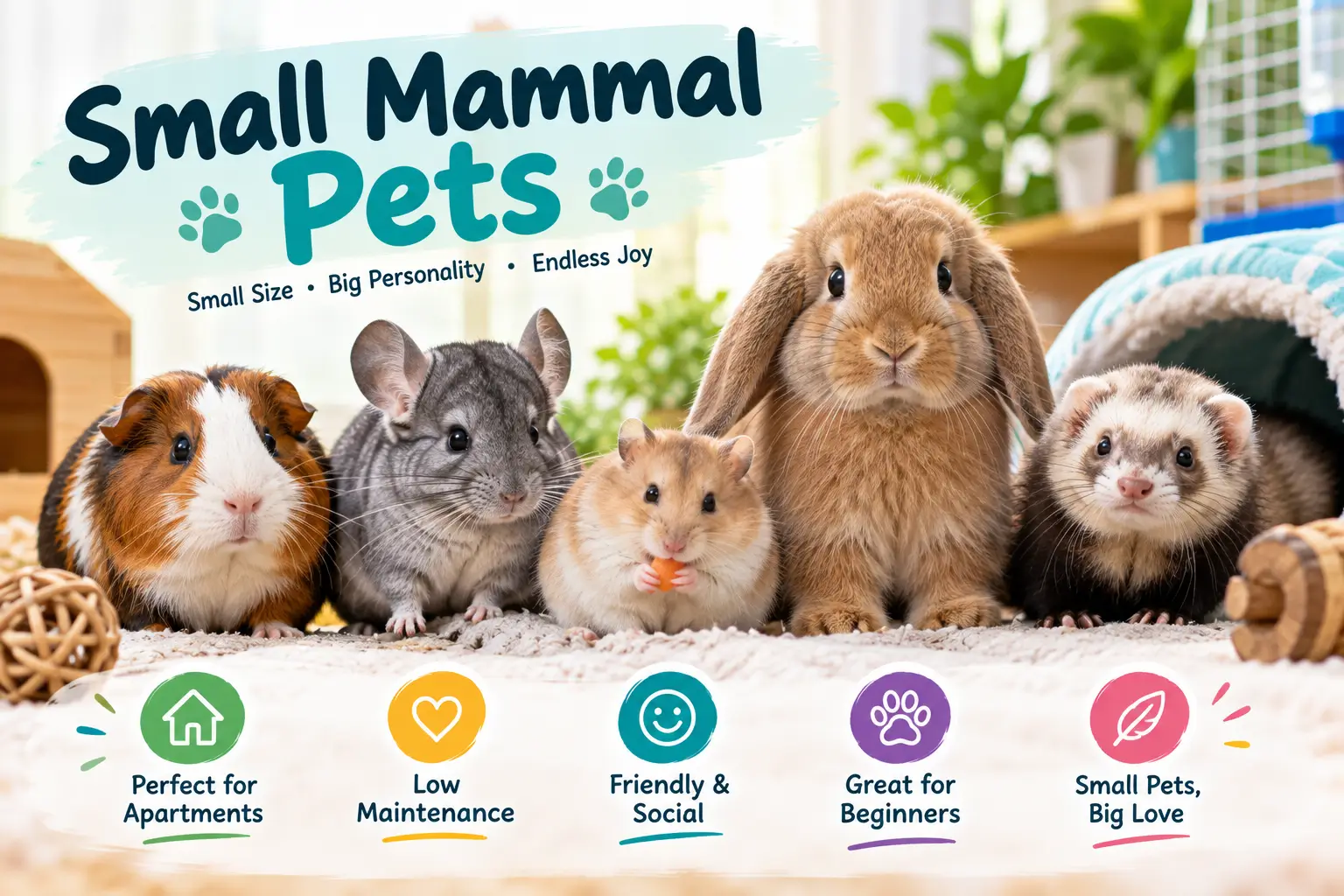
Small mammal pets are compact, low-space animals like guinea pigs, hamsters, rabbits, gerbils, and rats that people keep as companions. They fit apartments and homes with limited space, need less daily commitment than a dog, and each species has its own personality, handling needs, and care routine.
Key Takeaways
- Small mammal pets include guinea pigs, hamsters, rabbits, gerbils, rats, mice, and chinchillas.
- They’re a good fit for apartments, first-time pet owners, and families teaching kids responsibility.
- Costs vary by species but typically include a cage or hutch, bedding, food, and occasional vet visits.
- Lifespans range widely — from 2 years for hamsters to 8–12 years for rabbits and guinea pigs.
- Some species (like guinea pigs and rats) are more social and cuddly than others (like hamsters).
- Always research a species’ specific needs before bringing one home; care requirements are not one-size-fits-all.
Introduction
Not everyone has room for a dog or the schedule for a cat. That’s where small mammal pets come in. They take up less space, cost less to feed, and still give you a real bond with an animal.
Interest in small mammal pets has stayed steady for years, especially among apartment dwellers, college students, and parents looking for a starter pet for their kids. Social platforms like Reddit’s pet communities have also helped more people discover species they’d never considered, like degus or chinchillas.
Choosing the right small mammal pets isn’t just about cuteness. Each species has different social needs, noise levels, handling tolerance, and lifespans. A hamster and a rabbit might both fit in a spare room, but they live completely different lives.
This guide walks through the most common options, what daily care actually looks like, realistic costs, and the mistakes new owners tend to make. By the end, you’ll know which small mammal fits your space, budget, and time.
What Is Small Mammal Pets?
Small mammal pets is a broad term for compact, domesticated (or well-established as pets) mammal species that people keep as companions rather than farm or working animals. The group includes rodents, lagomorphs (rabbits), and a few other small species.
Common examples include:
- Guinea pigs
- Hamsters (Syrian and dwarf varieties)
- Rabbits
- Gerbils
- Rats and mice
- Chinchillas
- Hedgehogs
Each of these comes from a different background. Guinea pigs were domesticated in South America thousands of years ago. Hamsters, by contrast, only became common pets in the mid-1900s. That history shapes how social or independent each species tends to be today.
Quick Facts Box
| Fact | Details |
| Common species | Guinea pigs, hamsters, rabbits, gerbils, rats, chinchillas, hedgehogs |
| Typical lifespan | 2–12 years, depending on species |
| Space needed | A dedicated cage or hutch, not free roam of a whole house |
| Social needs | Varies — guinea pigs and rats are social; hamsters prefer solitude |
| Activity pattern | Many species (hamsters, gerbils) are most active at night |
| Beginner-friendly | Yes, for most species, with proper research first |
Key Characteristics and Care Needs
Small mammal pets share a few basics: they need a secure enclosure, fresh water daily, species-appropriate food, and regular cage cleaning. Beyond that, their needs split quite a bit by species.
Guinea pigs need daily vitamin C in their diet since they can’t produce it themselves. Rabbits need a diet built mostly around hay, not pellets. Hamsters are largely solitary and can fight if housed together. This can vary depending on the individual animal’s temperament, so it’s best to research your specific species closely before bringing one home.
Temperament Differences
Some small mammal pets enjoy being held; others tolerate it at best. Rats and guinea pigs tend to bond closely with owners. Hamsters and gerbils are quicker, more independent, and startle more easily.
Space and Enclosure Needs
Bigger is almost always better. A guinea pig or rabbit needs significantly more floor space than a hamster. Cramped housing is one of the most common welfare issues in small mammal pet ownership.
Quick Comparison Snapshot
| Option | Best For | Key Difference |
| Guinea Pig | Kids and families | Very social, needs a same-species friend |
| Hamster | Solo owners, small spaces | Solitary, most active at night |
| Rabbit | Owners wanting a longer bond | Longest lifespan, needs the most space |
| Gerbil | Owners who like watching activity | Highly active, digs constantly |
Small Mammal Pets List
If you’re weighing your options, here’s a working list of the most popular choices among new owners today.
- Guinea pigs – social, vocal, and gentle
- Syrian hamsters – solitary but easy to handle
- Rabbits – affectionate but need lots of space
- Rats – smart, trainable, and bond closely with people
- Gerbils – active, curious, and low-odor
- Chinchillas – soft-furred, need dust baths instead of water baths
- Hedgehogs – quiet and low-maintenance, but not big cuddlers
This list isn’t ranked by “best.” The right pick depends entirely on your space, schedule, and how much handling you want from your pet.
Small Mammal Pets Guinea Pigs
Guinea pigs are one of the most recommended small mammal pets for families, and for good reason. They’re gentle, rarely bite, and communicate through a range of squeaks and chirps that owners quickly learn to recognize.
They should always live with at least one other guinea pig. A solo guinea pig can become stressed and withdrawn without company of its own kind.
Guinea pigs also need daily fresh vegetables and a vitamin C supplement or C-fortified pellets, since they can’t make this vitamin internally like some other animals can. Skipping this can lead to health problems, so it’s worth checking product labels or asking your vet for guidance.
Small Rodent Pets List
Rodents make up a big chunk of small mammal pets, but they’re not interchangeable. Here’s how the main rodent options stack up:
- Hamsters – solitary, nocturnal, low grooming needs
- Gerbils – social in same-sex pairs, love to dig
- Rats – highly social, need daily interaction
- Mice – small, quick, best watched rather than handled often
- Chinchillas – long-lived for a rodent, need cooler temperatures
Rats often surprise new owners with how affectionate they can be. They’re frequently described by owners as dog-like in how they respond to their name and enjoy play.
Small Exotic Mammal Pets
“Exotic” in the pet world usually means a species that isn’t a traditional cat, dog, or common rodent. Hedgehogs and sugar gliders fall into this category among small mammal pets.
These species often come with extra legal or licensing requirements, depending on where you live. Some states and cities restrict or ban ownership of hedgehogs or sugar gliders entirely. Always check local laws before considering one.
Exotic small mammals also tend to need more specialized diets and veterinary care. Not every vet treats exotics, so finding one who does should happen before you bring the animal home, not after.
Best Small Pets for Cuddling
If cuddling matters most to you, some small mammal pets are simply better suited to it than others. Guinea pigs and rats top this list. Both tend to enjoy lap time once they trust their owner.
Rabbits can also become cuddly, but many prefer to be petted while on the ground rather than picked up. Being lifted can feel unsafe to a rabbit, since it mimics being caught by a predator.
Hamsters and gerbils, meanwhile, are better described as “fun to watch” than “cuddly.” They can be handled gently, but they’re not built for long snuggle sessions the way guinea pigs are.
Daily Care Routine and How to Get Started
Every small mammal pet needs a version of the same daily routine, even though the specifics differ by species.
- Check and refill fresh water each morning.
- Provide the correct daily food (hay-based for rabbits and guinea pigs, seed or pellet mix for hamsters and gerbils).
- Spot-clean the cage to remove waste and soiled bedding.
- Offer time outside the cage in a secure, supervised space, if appropriate for the species.
- Do a full cage clean weekly, or more often if odor builds up.
Before bringing a pet home, set up the enclosure first. This gives the animal a ready space and avoids a stressful first day spent building a cage while the pet waits in a box.
Cost Breakdown
Costs vary a lot by species, but here’s a general range new owners can expect.
- Starter setup (cage, bedding, food, water bottle): $50–$200
- Monthly food and bedding: $10–$40
- Annual vet checkups: $30–$100, more if specialty care is needed
- Adoption or purchase price: $10–$50 for most rodents, $20–$75 for rabbits
This can vary depending on the species, your location, and whether you adopt through a rescue or buy from a breeder or pet store.
Small Mammal Pets for Sale
Some searches for small mammal pets are really about where to buy one. If that’s you, a few starting points are worth knowing.
Local animal shelters and small-animal rescues often have guinea pigs, rabbits, and rats available, usually at a lower cost than pet stores. Breed-specific rescue groups also exist for rabbits and guinea pigs in many areas.
If you do buy from a pet store or breeder, ask about the animal’s age, health history, and whether it’s been handled regularly. A well-socialized young animal is typically easier to bond with than one that hasn’t had much human contact.
Common Mistakes Pet Owners Make
New owners tend to repeat a few of the same errors with small mammal pets.
- Buying a cage that’s too small for the species
- Housing a single guinea pig or rat without a companion
- Feeding an all-pellet diet to rabbits instead of hay-based
- Skipping vet visits because the pet “seems small and low-risk”
- Handling nocturnal pets like hamsters during the day, which disrupts their sleep
Most of these come from good intentions paired with incomplete research. A little reading before adoption day prevents most of them.
Pros and Cons
| Pros | Cons |
| Lower space needs than dogs or cats | Some species have short lifespans |
| Generally lower cost of ownership | Not all species enjoy handling |
| Good option for apartments | Enclosure cleaning is a weekly must |
| Wide variety of personalities to choose from | Exotic species may need specialist vets |
Similar Options and Alternatives
Beyond the species already covered, a few other small mammals sometimes come up in the same conversation.
| Option | Best For |
| Degus | Owners who want a highly social, chattier rodent |
| Sugar gliders | Owners ready for a nocturnal, exotic-care commitment |
| Ferrets | Owners wanting a playful, dog-like small mammal |
| Chinchillas | Owners in cooler climates who want a long-lived rodent |
Ferrets and chinchillas need noticeably more specialized care than a starter hamster or guinea pig, so they’re often better suited to owners with some small-pet experience already.
When to Consult a Vet or Professional
Any change in eating, drinking, or bathroom habits in a small mammal pet is worth a vet call. These animals often hide illness well, so subtle changes can matter more than they seem.
Overgrown teeth, matted fur, labored breathing, or sudden weight loss all warrant a same-week vet visit. Because small mammals are prey animals by instinct, they tend to mask pain until it’s fairly advanced.
Always use a vet familiar with your specific species. Not every general vet treats guinea pigs, rabbits, or exotics regularly, so it’s worth confirming this when you first choose a clinic.
Fun Facts
- Guinea pigs are not actually pigs, and they don’t come from Guinea — they originated in the Andes region of South America.
- A group of rabbits is sometimes called a “fluffle.”
- Hamsters can store food in their cheek pouches to carry back to their nest.
- Rats are known for being ticklish and can make ultrasonic laughing-like sounds during play.
- Chinchillas take dust baths instead of water baths to keep their fur clean.
- Gerbils are natural diggers and will tunnel through bedding for hours if given the chance.
Frequently Asked Questions
What is the best small mammal pet? There isn’t one universal “best” — it depends on your lifestyle. Guinea pigs suit families who want a social, gentle pet that welcomes handling. Hamsters suit people with less space and less time for daily interaction. If you want the most affection, guinea pigs and rats tend to rank highest among owners for how closely they bond.
What is the easiest mammal pet? Hamsters are often considered the easiest to care for day to day, since they’re solitary, don’t need a same-species companion, and have simple dietary needs. That said, “easy” doesn’t mean “no responsibility” — they still need a proper cage size, fresh food and water, and weekly cleaning like any other small mammal pet.
What are some small mammals? Beyond the common pet species, “small mammals” also includes wild animals like shrews, moles, and voles, though those aren’t kept as pets. In the pet world specifically, the term usually points to guinea pigs, hamsters, gerbils, rabbits, rats, mice, and chinchillas — animals bred and raised for companionship rather than found in the wild.
What are some cute small mammals? Cuteness is subjective, but hamsters, guinea pigs, and rabbits are consistently the most popular picks people describe as “cute” small mammal pets. Baby versions of these species — like guinea pig pups, which are born furred and mobile — are especially popular on social media, which has helped drive interest in these pets among younger owners.
Final Thoughts
Small mammal pets offer something a lot of people are looking for: real companionship without the space, cost, or time commitment of a bigger animal. Whether that’s a pair of guinea pigs chirping at feeding time or a hamster building tunnels through its bedding, each species brings its own kind of joy.
The key is matching the animal to your actual lifestyle, not just its appearance. A cuddly guinea pig and an independent hamster both make wonderful pets — for very different kinds of owners.
Take the time to research your specific species, set up their space before they arrive, and find a vet who knows how to care for them. Do that, and you’ll be set up for a happy, healthy relationship with your new pet.

Emily Carter is a pet care writer at PetJournalHub. She enjoys creating clear, practical, and well-researched articles about pet health, nutrition, grooming, and everyday care. Her goal is to help pet owners make informed decisions through reliable, easy-to-understand content.