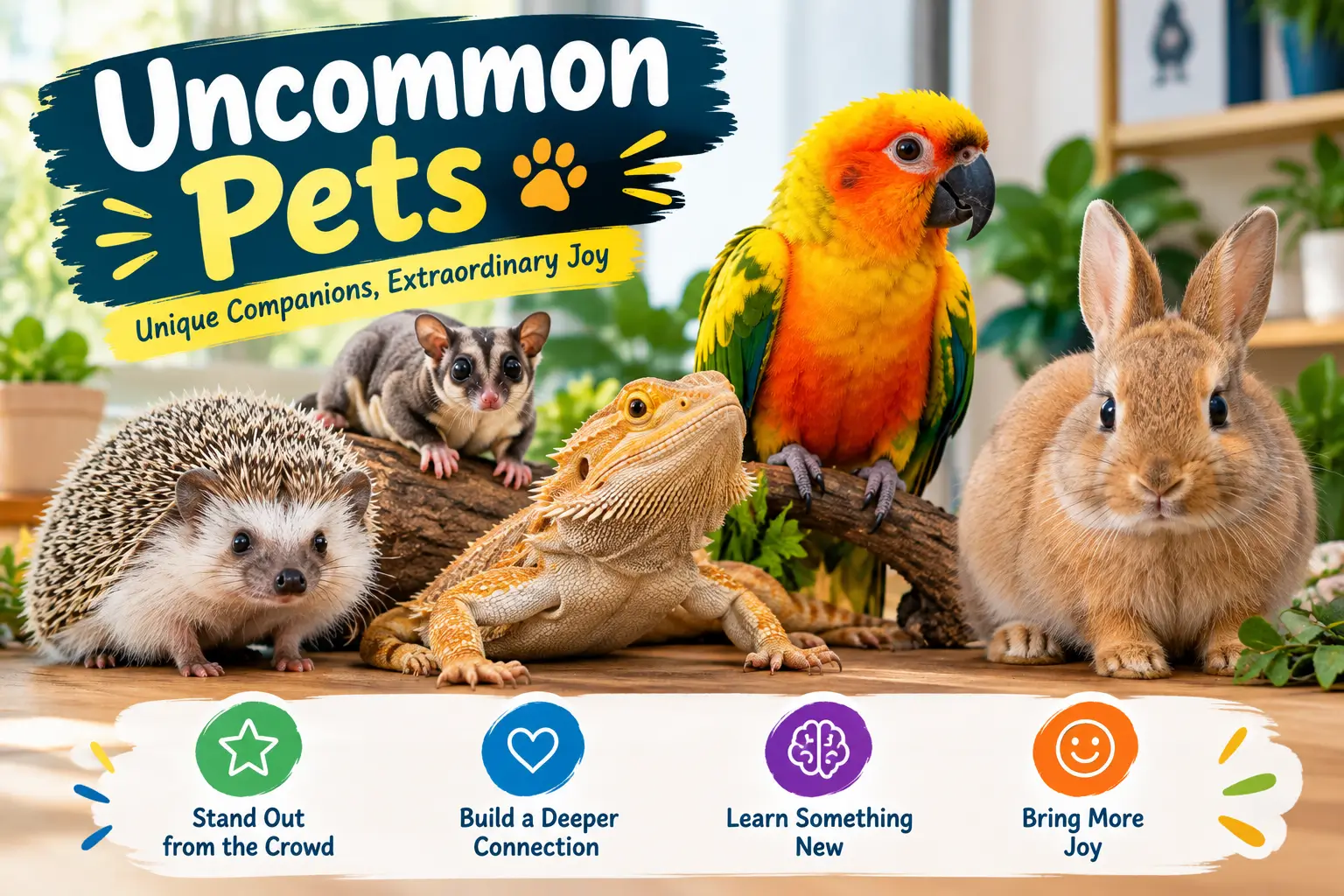
Uncommon pets are animals that fall outside the usual cats, dogs, and goldfish — think hedgehogs, sugar gliders, tarantulas, and reptiles. Some are easy to legally own with basic supplies. Others need special permits, licensed vets, or years of hands-on experience before they’re a safe fit for a home.
Key Takeaways
- Uncommon pets range from low-maintenance (hermit crabs, betta fish) to highly demanding (fennec foxes, large snakes).
- Legality depends on your state, county, and sometimes your city — always check local exotic pet laws before buying.
- Most uncommon pets need a specialist vet, not a regular cat-and-dog clinic.
- Costs vary a lot. Setup and habitat expenses often cost more than the animal itself.
- Kids can enjoy many uncommon pets, but adult supervision matters for handling and hygiene.
- This guide covers real pets you can own, not virtual pets from games like Adopt Me.
Introduction
Scrolling past another cat video, you start to wonder what else is out there. Maybe a hedgehog. Maybe something with scales. You’re not alone.
More people are searching for uncommon pets than ever. Small apartments, remote work schedules, and social media have all played a part. As a result, a quiet, low-shedding animal that fits in a spare room appeals to a lot of first-time exotic pet owners.
However, uncommon pets aren’t a one-size-fits-all category. Some are nearly as easy as a hamster. Others, on the other hand, need specialized lighting, humidity control, or a state permit. That’s why this guide walks through what these animals actually need, what they cost, and how to avoid the mistakes new owners make most often.
By the end, you’ll know which uncommon pets fit your space, your schedule, and your comfort level with something a little different.
What Are Uncommon Pets?
Uncommon pets are any companion animals that aren’t among the top few most popular choices, like dogs, cats, or common fish. They include small mammals, reptiles, amphibians, invertebrates, and some birds.
The category is broad on purpose. A hedgehog and a ball python have almost nothing in common, except that neither one is a typical family pet. What links them is that they ask new owners to learn something before bringing one home.
Some examples people search for most:
- Hedgehogs
- Sugar gliders
- Bearded dragons
- Axolotls
- Tarantulas
- Chinchillas
- Madagascar hissing cockroaches
- Fennec foxes (where legal)
Each one comes with its own care routine, diet, and legal status. That’s the biggest difference between uncommon pets and traditional ones: you can’t assume general “pet knowledge” transfers over.
Quick Facts Box
| Fact | Details |
| Legal status | Varies by state, county, and city; always confirm locally |
| Vet care | Usually requires an exotic-animal vet, not a standard clinic |
| Lifespan range | From 1–2 years (some insects) to 15+ years (tortoises, parrots) |
| Cost range | Can vary widely depending on species, habitat, and ongoing supplies |
| Best for | Owners willing to research a species before buying |
| Popularity trend | Interest has grown alongside small-space living and social media pet content |
Where Uncommon Pet Ownership Comes From
People have kept unusual animals for a long time, but the reasons have shifted. Exotic animal keeping has roots in falconry, aviaries, and reptile collecting hobbies that go back generations.
What’s newer is the everyday appeal. Smaller homes, more renters, and pet-friendly social platforms have made low-footprint animals like hedgehogs and geckos more visible. Still, this can vary depending on the region and local pet culture, so it’s hard to pin one single cause. Overall, what’s clear is that curiosity, not just novelty, drives a lot of the interest today.
Key Characteristics and Care Needs
Uncommon pets don’t share one care style, but a few patterns show up again and again.
Habitat matters more than food. Many uncommon pets need a specific temperature, humidity level, or enclosure size to stay healthy. In fact, getting this wrong causes more health problems than diet mistakes do.
Handling varies by species. Some, like bearded dragons, tolerate gentle handling well. Others, like many tarantulas, do better mostly left alone.
Social needs differ too. Sugar gliders bond closely with people and other gliders. Reptiles, however, generally don’t need companionship the way mammals do.
Before buying any uncommon pet, therefore, research its specific temperament, lifespan, and space needs. A quick species-specific care sheet from a vet or reputable breeder saves a lot of trial and error.
Quick Comparison Snapshot
| Option | Best For | Key Difference |
| Hedgehog | First-time exotic pet owners | Low space needs, mostly solitary |
| Bearded Dragon | Owners comfortable with reptile care | Needs UVB lighting and heat gradient |
| Sugar Glider | Owners home often, social bonding | Needs a same-species companion |
| Axolotl | Owners who want a calm aquatic pet | Fully aquatic, no land access needed |
Uncommon Pets List
A categorized list makes it easier to compare options across animal types instead of scrolling one long list.
Small mammals: hedgehogs, chinchillas, sugar gliders, degus
Reptiles: bearded dragons, leopard geckos, ball pythons, tortoises
Amphibians: axolotls, pacman frogs, fire-bellied toads
Invertebrates: tarantulas, hissing cockroaches, giant millipedes
Birds (less common types): cockatiels, quaker parrots, finches
Each category has its own learning curve. Reptiles need the most equipment upfront. Invertebrates tend to need the least daily interaction.
10 Most Awesome and Unusual Pets
Where the list above sorts by category, this is a spotlight on standout picks people ask about most.
- Fennec fox (where legal, and only through licensed breeders)
- Axolotl
- Hedgehog
- Sugar glider
- Bearded dragon
- Chinchilla
- Madagascar hissing cockroach
- Tarantula
- Serval (heavily restricted; check state law carefully)
- Green tree python
These made the list for a mix of appearance, manageable care, and steady search interest. A few, like servals and fennec foxes, come with serious legal and ethical considerations that go beyond typical pet ownership.
Unusual Pets That Are Legal to Own
Legality is the single most important thing to check before buying an uncommon pet. Laws differ by state, and sometimes by city or homeowners association.
Generally legal in most US states, though local rules still apply:
- Hedgehogs (banned in a few states, including California and Hawaii)
- Bearded dragons
- Leopard geckos
- Chinchillas
- Sugar gliders (restricted in some states)
Often restricted or banned:
- Servals and other wild cat hybrids
- Venomous reptiles without a permit
- Certain primates
This can vary depending on your specific state and county, so it’s best to confirm with your local wildlife agency or animal control office before buying anything exotic.
Uncommon Pets in the World
Pet culture looks different depending on where you live. What’s common in one country can be tightly restricted in another.
In parts of Japan, owning insects like beetles as pets is a long-standing hobby, complete with dedicated pet stores. Meanwhile, the UK treats reptiles and amphibians as widely accepted, well-regulated pets. By contrast, US exotic pet laws shift dramatically from state to state, with some allowing animals that neighboring states ban outright.
This global variety shows that “uncommon” is relative. An animal that’s a mainstream pet in one country might be illegal or unheard of in another.
Uncommon Pets in Adopt Me
Quick clarification here: “Adopt Me!” is a popular Roblox video game about collecting and raising virtual pets, not a resource for owning real animals. If you landed on this article looking for real-life versions of unusual Adopt Me pets, most of them (like foxes, owls, and dragons) map loosely to real hedgehogs, birds of prey, or reptiles covered elsewhere in this guide. For actual pet care advice, stick to the sections above and below — game mechanics don’t reflect real animal needs.
Cool Pets to Have in Your Room
Apartment and dorm living pushes a lot of people toward smaller, quieter pets that don’t need much floor space.
Good room-sized options include:
- Betta fish (single tank, minimal footprint)
- Leopard geckos (small terrarium)
- Hermit crabs (compact habitat, social in small groups)
- Hissing cockroaches (low odor, easy bin setup)
Avoid choosing a pet just because it’s small, though. Even a compact enclosure needs the right temperature and cleaning routine to keep the animal healthy.
Unusual Pets for Kids
Kids often want something they can watch and occasionally hold, without the daily walk commitment of a dog.
Better choices for families with younger children:
- Hermit crabs (easy to observe, gentle care routine)
- Bearded dragons (calm temperament, tolerates handling)
- Guinea pigs (technically common, but a gentle bridge pet for kids new to exotics)
Adult supervision still matters. Reptiles and amphibians can carry salmonella, so handwashing after handling is a must, especially for young kids.
Unusual Pets for Sale
This is a commercial-intent search, so it’s worth a shorter, separate note rather than blending it into care advice above.
When buying an uncommon pet, choose a reputable breeder or a rescue over a random online marketplace listing. Ask about the animal’s origin, health history, and any permits required in your area. Avoid sellers who can’t answer basic care questions or who rush the sale.
Daily Care Routine and How to Get Started
Getting started with any uncommon pet follows a similar pattern, even though the specifics change by species.
- Research the species thoroughly before buying, including lifespan and adult size.
- Set up the full habitat before the animal arrives, not after.
- Confirm local laws and find an exotic vet in your area.
- Establish a feeding and cleaning schedule from day one.
- Watch for behavior changes in the first few weeks, since stress can affect appetite.
Consistency matters more than perfection. A simple, repeatable routine keeps most uncommon pets healthier than an elaborate setup that’s hard to maintain.
Cost Breakdown
Costs vary widely across uncommon pets, so treat these as general ranges rather than fixed numbers.
- Initial setup (habitat, lighting, substrate): often the largest upfront cost, sometimes more than the animal itself
- The animal: price depends heavily on species, breeder, and rarity
- Ongoing food and supplies: monthly costs are usually manageable but recur for the animal’s whole lifespan
- Vet care: exotic vet visits can cost more than standard cat and dog visits
This can vary depending on the species and your location, so get a specific quote from a local exotic vet before committing.
Common Mistakes Pet Owners Make
A few mistakes show up again and again with first-time uncommon pet owners.
- Buying the animal before building the habitat
- Assuming small size means low maintenance
- Skipping research on lifespan (some tortoises live decades)
- Not locating an exotic vet until there’s an emergency
- Handling reptiles or amphibians without washing hands afterward
Most of these come from excitement outpacing preparation. Fortunately, slowing down before the purchase avoids nearly all of them.
Pros and Cons
| Pros | Cons |
| Often quieter than dogs or cats | Vet care can be harder to find |
| Many need less daily interaction | Legal status varies and can change |
| Can fit small living spaces | Setup costs can be high upfront |
| Interesting to observe and learn about | Lifespan and care needs are often underestimated |
Similar Options and Alternatives
If the pets above don’t feel like the right fit, these alternatives offer a gentler entry point into exotic pet ownership.
| Option | Best For |
| Guinea pig | Families wanting a social, low-risk starter exotic |
| Rat (fancy rat) | Owners who want an intelligent, trainable small pet |
| Cornsnake | Reptile beginners, due to a generally calm temperament |
| Crested gecko | Owners wanting a reptile with simpler humidity needs |
| Parakeet | Bird lovers wanting a smaller, quieter bird than a parrot |
When to Consult a Vet or Professional
Any new uncommon pet should see a vet experienced with exotic animals shortly after you bring it home. This first visit helps catch health issues early and confirms the animal is settling in well.
Contact a vet promptly if you notice:
- Loss of appetite lasting more than a day or two
- Unusual lethargy or hiding behavior
- Visible skin, shell, or shedding problems
- Labored breathing
Never attempt to diagnose or medicate an uncommon pet yourself. Species-specific dosing and treatment should always come from a licensed veterinarian familiar with that animal.
Fun Facts
- Axolotls can regenerate entire limbs, not just tail tips.
- Hedgehogs are lactose intolerant, despite old myths about giving them milk.
- Some tortoise species can live well beyond 50 years with proper care.
- Sugar gliders can glide up to roughly 150 feet between trees in the wild.
- Bearded dragons can wave one arm as a social signal to other dragons.
- Hissing cockroaches make their sound by pushing air through abdominal openings, not their mouths.
Frequently Asked Questions
What is the most uncommon pet?
There’s no single official answer, since “most uncommon” depends on your region and local laws. In much of the US, animals like fennec foxes, servals, and certain venomous reptiles sit at the rarer end, mostly due to permit requirements. In everyday households, hissing cockroaches and axolotls tend to surprise people the most, simply because they’re unfamiliar rather than illegal.
What are the best unusual pets?
“Best” depends on your lifestyle more than the animal itself. Renters often do well with hedgehogs or geckos, since both have small footprints. Families with kids tend to have better experiences with hermit crabs or bearded dragons, thanks to their calmer temperaments. Match the pet to your daily schedule and space, not just its appearance.
What are some unique pets?
Beyond the usual hedgehog or bearded dragon suggestions, a few less-discussed options include degus, giant African millipedes, and fire-bellied toads. Degus are social rodents that need same-species companionship. Millipedes and toads need specific humidity levels but ask for very little daily interaction, making them a good fit for owners with unpredictable schedules.
What are 100 different types of pets?
No single list of 100 pets exists as an official standard, since new species enter the hobby regularly and laws change by region. Broadly, pets fall into a few groups: common companion animals (dogs, cats), small mammals (hedgehogs, chinchillas), reptiles and amphibians (geckos, axolotls), birds, fish, and invertebrates (tarantulas, hermit crabs). Checking a current, region-specific exotic pet list is more useful than a fixed number.
Final Thoughts
Uncommon pets open up a different kind of pet ownership. They ask for more upfront research, but many reward that effort with a calmer, lower-footprint companion than a traditional dog or cat.
Regardless of which animal you choose, the most important steps stay the same. First, check your local laws. Next, build the habitat before the animal arrives. Finally, line up an exotic vet early, not during an emergency.
In short, start with a species that matches your schedule and living space, not just the one that looks the coolest online. A well-matched uncommon pet tends to be a happier, healthier one, and a much better experience for you too.

Emily Carter is a pet care writer at PetJournalHub. She enjoys creating clear, practical, and well-researched articles about pet health, nutrition, grooming, and everyday care. Her goal is to help pet owners make informed decisions through reliable, easy-to-understand content.