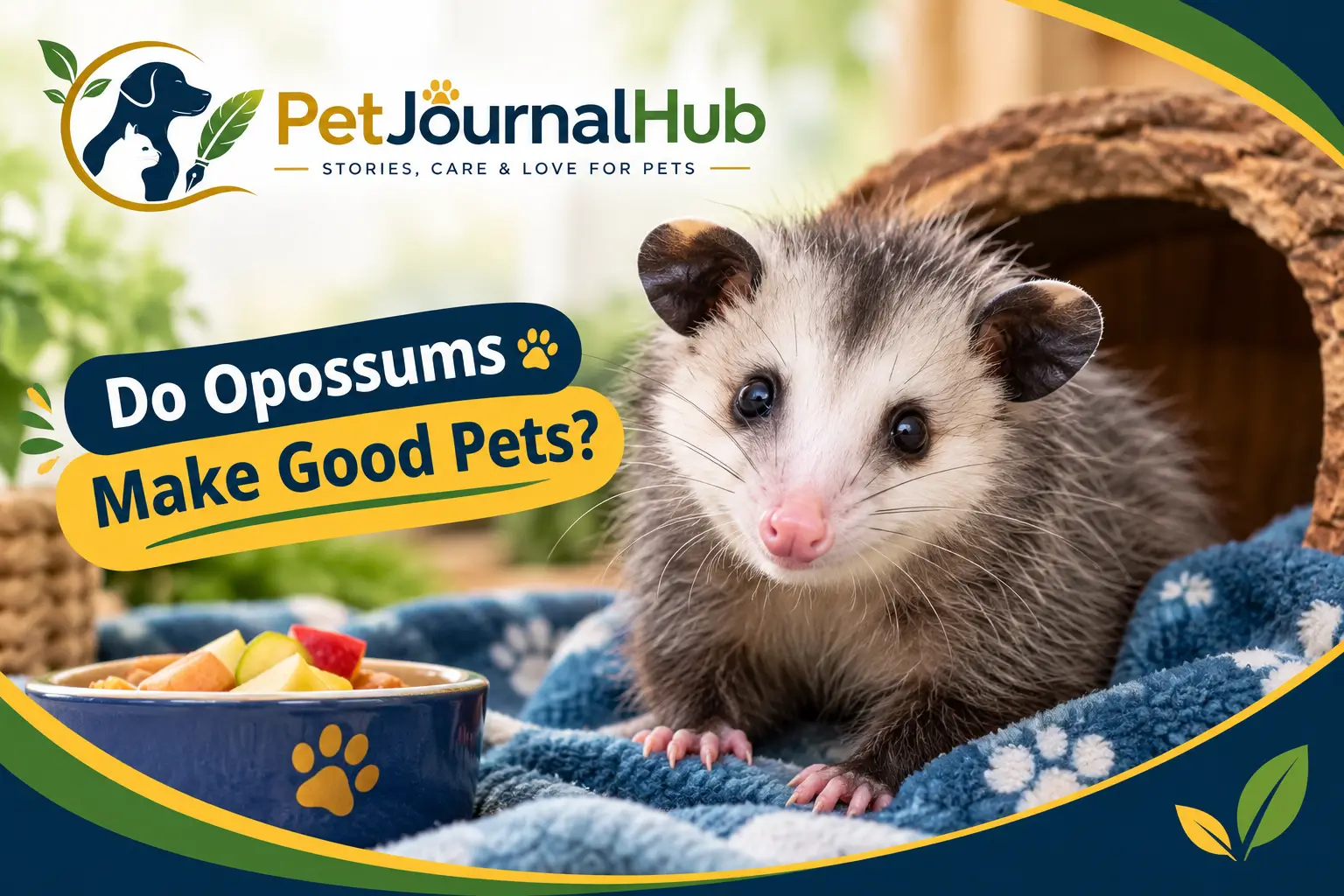
Opossums generally do not make good pets for the average household. These nocturnal marsupials have specialized care needs, require suitable space and an appropriate diet, and may be illegal to keep without a permit. Although some captive-bred species can adapt to experienced keepers, a wild opossum usually belongs in its natural habitat, not a family home.
Key Takeaways
- North American Virginia opossums are wild animals, not domesticated companions.
- Opossums need specialized housing, balanced nutrition, and access to an experienced exotic-animal veterinarian.
- Wildlife ownership laws vary by state, country, and species. Always check local rules first.
- Short-tailed opossums differ from larger Virginia opossums and require their own care plan.
- Never remove a healthy opossum from the wild to raise it as a pet.
- Domesticated small mammals may offer a more practical option for people seeking an unusual companion.
Introduction
Opossums have an unusual charm. Their pointed faces, hairless tails, and curious movements make them interesting animals to watch. Photos and videos can also make them look surprisingly comfortable around people.
That appeal often leads animal lovers to wonder whether an opossum could become a household companion. Some people imagine feeding one by hand, watching it explore a room, or building a special enclosure in their home.
However, an animal that looks calm in a video may have very different needs in everyday life. Opossums follow natural behavior patterns that can conflict with a typical human schedule. They also need the right food, a safe environment, and veterinary care from someone who understands their species.
Before bringing home an unusual animal, you should also consider its legal status. Some places prohibit private ownership of native wildlife, while others require permits or allow only certain captive-bred species.
This guide explains the differences between common opossums and short-tailed opossums, their behavior, lifespan, care requirements, possible costs, and legal concerns. It also explores what friendly behavior really means and which alternatives may suit a first-time exotic-pet owner better.
The goal is simple: help you make a responsible decision that protects both you and the animal.
What Does Pet Ownership Mean for Opossums?
Opossum ownership means caring for a marsupial whose physical and behavioral needs differ from those of familiar household pets. Some species can live in captivity under appropriate conditions, but that does not make every opossum suitable for private ownership.
The first step is identifying the species.
The Virginia opossum (Didelphis virginiana) is the only marsupial native to North America. It has grayish fur, a pointed snout, rounded ears, and a long, mostly hairless tail. It also tends to live alone and stay active at night. 【turn188628search4】【turn188628search16】
A gray short-tailed opossum (Monodelphis domestica) is a different animal. It is much smaller and has a history of use in research and captive animal keeping. Its size may appeal to exotic-pet enthusiasts, but it still needs species-specific care.
Neither species has the same long history of domestication as dogs or cats. Even an animal raised around humans can retain natural defensive behaviors.
For that reason, potential owners should research the exact species, check local wildlife laws, and find a qualified veterinarian before considering ownership.
Quick Facts Box
| Fact | Details |
| Animal group | Marsupial mammals |
| North American species | Virginia opossum |
| Common activity pattern | Mostly nocturnal |
| Social behavior | Generally solitary |
| Diet | Omnivorous; exact needs depend on species |
| Housing | Secure, enriched, species-appropriate enclosure |
| Handling | Requires patience and careful, low-stress interaction |
| Veterinary care | An exotic-animal veterinarian with relevant experience |
| Ownership rules | Vary by species and location |
| Best fit | Experienced, legally authorized keepers rather than typical households |
Where Do Opossums Come From?
Opossums belong to the marsupial group of mammals. Like kangaroos, female opossums carry developing young in a pouch.
The Virginia opossum lives across much of North America, including wooded areas, fields, and urban neighborhoods. It often uses sheltered spaces such as hollow trees, abandoned burrows, and other protected areas. 【turn188628search12】【turn188628search16】
Gray short-tailed opossums come from South America. Their smaller size and different natural history distinguish them from the Virginia opossum.
Australian possums are another group entirely. Brushtail and ringtail possums are native Australian marsupials, not the same species as North American opossums. Australia also protects many native mammals under wildlife laws. 【turn188628search7】【turn188628search10】
These differences matter because people sometimes use the words opossum and possum interchangeably. A care guide for one species may not apply to another.
History and Evolution
Opossums evolved as wild mammals, not as animals bred over generations for household companionship.
The Virginia opossum adapted to many environments, including areas near people. Its ability to eat a broad range of foods and use different shelters helps explain its success in urban and suburban settings.
However, living near humans does not mean an animal has become domesticated. A wild opossum may tolerate a nearby person while still avoiding handling and unfamiliar surroundings.
Gray short-tailed opossums have a different captive history. Researchers have studied them in controlled settings, and some experienced keepers maintain them in captivity. Their availability does not remove the need for appropriate housing, diet, veterinary care, and legal checks.
Online interest in unusual animals can make private ownership appear easier than it really is. Before following a social media trend, assess the animal’s long-term needs rather than judging its suitability from a short video.
Key Characteristics and Care Needs
Opossums have several traits that make them fascinating to observe but challenging to keep.
Activity: Virginia opossums usually become active around dusk and remain active through the night. Their natural schedule may conflict with a household that expects a pet to interact during the day. 【turn188628search11】【turn188628search16】
Temperament: They often avoid confrontation in the wild. When frightened or restrained, however, an opossum may hiss, bare its teeth, bite, or scratch.
Space: These animals need a secure environment that supports natural movement and exploration. A small carrier or ordinary cage cannot meet their long-term needs.
Nutrition: Opossums eat both plant and animal foods in the wild. A captive animal needs a balanced diet tailored to its species, age, and health. Random fruit, leftovers, or dog food alone do not provide a reliable feeding plan.
Enrichment: Hiding places, safe climbing opportunities where appropriate, and ways to investigate the environment help support natural behavior.
Health care: Owners need access to a veterinarian familiar with the particular species. A regular dog-and-cat clinic may not have the training or equipment required.
These requirements can make opossum ownership expensive and time-consuming. More importantly, mistakes can affect the animal’s health and welfare.
Quick Comparison Snapshot
This table compares four possible choices for someone interested in an unusual animal. It is a starting point, not a claim that every species suits every household.
| Option | Best For | Key Difference |
| Virginia opossum | Wildlife observation and rehabilitation by authorized professionals | A wild North American marsupial with specialized needs |
| Gray short-tailed opossum | Experienced keepers who can meet its needs legally | Smaller species with different housing and care requirements |
| Domestic rat | People seeking an interactive small mammal | Domesticated, social, and generally easier to source responsibly |
| Guinea pig | Households seeking a herbivorous companion | Needs a hay-based diet, suitable space, and compatible care arrangements |
An animal’s size alone does not determine how easy it is to keep. Research its lifespan, daily needs, social behavior, and veterinary requirements before choosing a companion.
Do Opossums Make Good Pets Reddit?
People discussing exotic animals online may share stories about hand-raised opossums, unusual bonds, or memorable experiences. These accounts can offer personal perspectives, but they cannot establish whether an animal suits most households.
A single keeper’s experience may depend on the animal’s species, early history, health, and living conditions. It may also leave out the cost of specialist care or the work involved in maintaining a safe enclosure.
When reading Reddit discussions or other forums, look for practical details rather than cute photos alone. Does the owner explain the diet, legal requirements, veterinary access, and behavior challenges? Do they describe what happens when the animal becomes stressed?
Use personal stories as starting points for further research, not as proof that wild opossums make suitable pets.
Pet Opossum Lifespan
An opossum’s lifespan depends heavily on its species and living conditions. Virginia opossums often have short lives in the wild, while captive gray short-tailed opossums can live longer under suitable care.
The Opossum Society of the United States describes the Virginia opossum’s average lifespan as roughly one to two years in the wild. A veterinary client handout from Lafeber gives a longer potential range for captive Virginia opossums, illustrating how conditions and individual circumstances can affect longevity. 【turn188628search8】【turn188628search45】
Gray short-tailed opossums have different lifespan estimates. Animal Diversity Web reports that some can live several years in captivity. 【turn188628search9】
Do not use one lifespan figure for every opossum. If you are considering a captive-bred animal, ask a qualified veterinarian or experienced, reputable breeder about the specific species and realistic care expectations.
Do Australian Possums Make Good Pets?
Australian possums generally do not make suitable private pets for ordinary households. Many native possums receive legal protection, and private keeping may require specific authorization or may not be permitted at all.
For example, New South Wales restricts which native mammal species people may keep as pets. Its official guidance lists only two permitted native mammal species under the relevant pet-keeping licensing system, neither of which is a possum. 【turn188628search0】
Rules differ across Australian states and territories, so one state’s guidance cannot answer the question for the whole country. Wildlife protection also reflects the animals’ natural needs and the importance of preserving native populations.
If you find a possum in your roof or garden, do not assume you can keep it. Contact the appropriate wildlife authority or a licensed wildlife professional for advice.
People who admire Australian possums can enjoy them through responsible wildlife observation, conservation programs, or educational resources.
Opossum Pet for Sale
Before searching for an opossum for sale, confirm that private ownership of the exact species is legal where you live. A seller’s willingness to sell an animal does not prove that the transaction complies with wildlife laws.
If your jurisdiction permits a particular captive-bred species, investigate the source carefully. Ask for the scientific species name, breeding history, health records, and documentation required by local authorities.
A responsible source should also explain the animal’s diet, expected adult size, behavior, housing needs, and veterinary requirements. Be cautious of sellers who offer wild-caught animals, cannot identify the species, or promise that an opossum will behave exactly like a cuddly domestic pet.
Never take an orphaned animal from the wild and raise it as a companion without professional direction. Young wildlife may need specialized care, and unauthorized rehabilitation can harm the animal or break local laws. Contact a licensed wildlife rehabilitator if you find an injured or genuinely orphaned opossum. 【turn188628search3】【turn188628search17】
How Much Does a Pet Possum Cost?
The cost of keeping an opossum varies by species, location, legal requirements, source, and veterinary needs. There is no reliable single price that applies to all opossums or all regions.
The purchase price, where legal, is only one part of the expense. Housing, food, enrichment, routine veterinary visits, and emergency care can add substantially to the long-term cost.
Before making a decision, budget for these categories:
- Acquisition and paperwork: Any lawful purchase, required permit, inspection, or other official fee.
- Housing: A secure enclosure, suitable bedding or nesting materials, hiding places, and cleaning supplies.
- Food: A species-specific diet with appropriate ingredients and safe storage.
- Veterinary care: Initial examinations, preventive care, diagnostic tests, and unexpected treatment.
- Enrichment: Safe items and changes that encourage natural activity.
- Emergency savings: Funds for urgent veterinary care or equipment replacement.
Ask an experienced exotic-animal veterinarian for a realistic estimate before committing. If suitable veterinary services are unavailable nearby, that is a serious reason to reconsider ownership.
Also remember that the cheapest animal may create the greatest welfare risk if the seller cannot provide trustworthy health and origin records.
Can Opossums Be Friendly?
Opossums can learn to tolerate familiar people, and some captive individuals may become calmer with gentle, consistent care. However, tolerance does not necessarily mean affection, trust, or a desire for physical contact.
A frightened opossum may hiss, open its mouth defensively, or attempt to escape. Some individuals react more strongly to handling than others. Age, previous experiences, health, and species can all influence behavior.
Avoid forcing interaction to make an opossum seem friendly. Give the animal places to hide and let a qualified keeper guide any necessary handling.
If you want a companion that actively seeks human interaction, a domesticated species may be a better match. Choose an animal whose natural behavior and care needs fit your expectations instead of trying to change its instincts.
Opossums as Pets
Keeping an opossum involves more than providing food and a cage. The owner must meet the animal’s physical needs, support its natural behavior, arrange appropriate veterinary care, and comply with wildlife regulations.
For most people, a Virginia opossum is better appreciated as a wild animal. It can explore its surroundings and follow natural behaviors without the stress that captivity or forced handling may cause.
Some short-tailed opossums live in captivity, but their small size does not make them low-maintenance pets. Their diet, housing, activity patterns, and health needs still require careful planning.
Anyone considering a legal captive-bred specimen should first speak with a veterinarian experienced with that exact species. The keeper should also have an appropriate enclosure ready before the animal arrives.
For everyone else, wildlife watching, volunteering with an authorized rehabilitation organization, or choosing a domesticated small mammal offers a more responsible path.
Short-Tailed Opossum
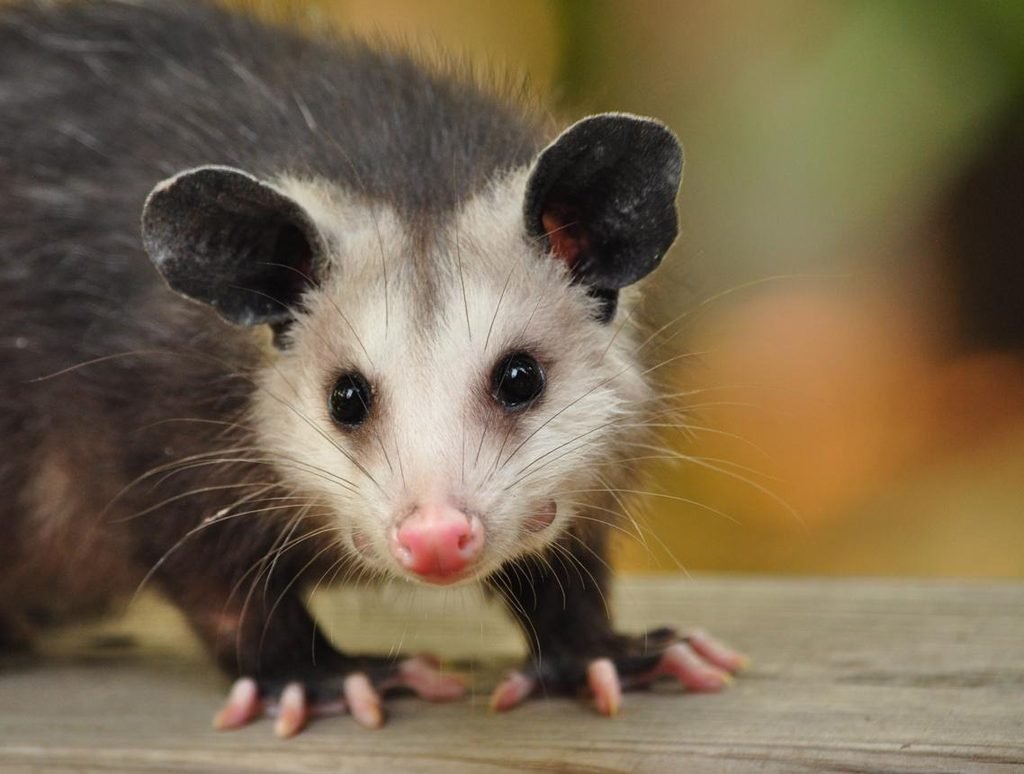
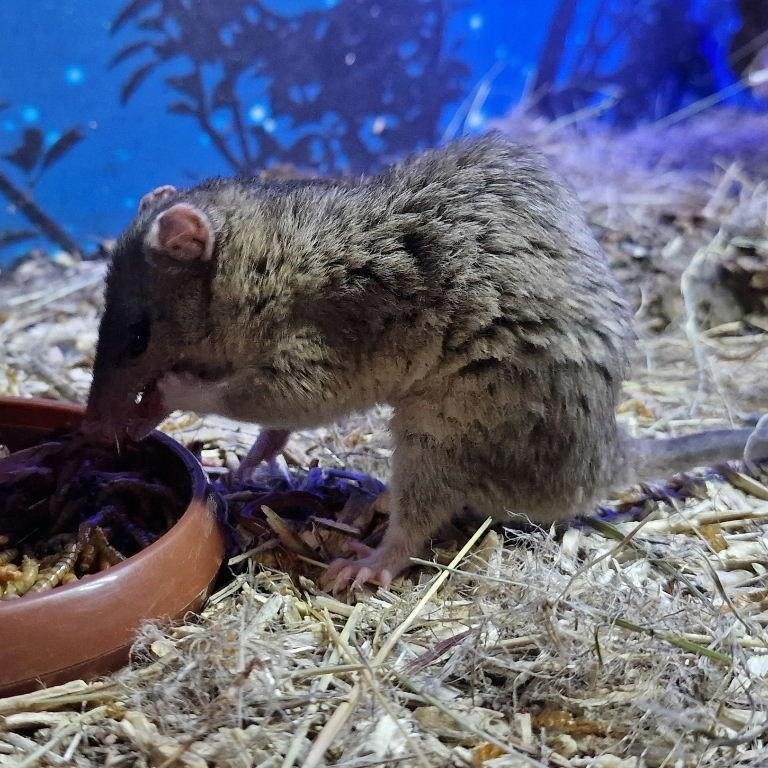
The gray short-tailed opossum is a small South American marsupial that some experienced exotic-animal keepers maintain in captivity. It differs from the larger Virginia opossum in size, behavior, and care requirements.

8
This species may appeal to people who want a less common mammal. However, a small body does not mean a simple care routine. Short-tailed opossums need secure housing, a suitable diet, appropriate enrichment, and access to veterinary expertise.
They also tend to live alone and may show aggression toward other members of their species. Keeping two together without a sound understanding of their behavior can cause injuries. 【turn188628search9】
Before considering one, confirm its legal status and investigate the needs of captive-bred individuals. Ask an experienced veterinarian about enclosure design, nutrition, handling, and health checks.
Do not assume that care instructions for a Virginia opossum apply to this species. Their requirements differ, so use guidance specific to the animal you intend to keep.
Daily Care Routine: How to Get Started
Anyone legally caring for a captive opossum needs a consistent routine. The exact schedule depends on the species, age, health, and advice of the attending veterinarian.
1. Prepare a suitable enclosure
Choose a secure enclosure that provides enough room for natural movement and exploration. Include suitable hiding places and species-appropriate enrichment.
Check for gaps, sharp edges, loose fittings, and materials the animal might chew or swallow. Keep the enclosure away from household hazards and other animals.
2. Follow a species-specific feeding plan
Do not create a diet from internet anecdotes alone. An exotic-animal veterinarian should help establish an appropriate feeding plan based on the species and its nutritional needs.
Measure portions as directed, provide clean drinking water, and remove spoiled food promptly. Avoid feeding random leftovers or relying on one food type.
3. Respect the animal’s activity pattern
Virginia opossums usually become active at night. Plan observation, feeding, and necessary care around the animal’s natural behavior whenever practical.
Avoid waking an animal repeatedly for attention. Provide a quiet daytime resting area and reduce unnecessary disturbance.
4. Clean the enclosure safely
Remove waste and soiled bedding as needed. Clean food and water containers regularly, following veterinary guidance for suitable cleaning products.
Avoid strong fumes and make sure the enclosure is safe before returning the animal.
5. Observe behavior and appetite
Learn the animal’s normal habits so you can spot changes early. Keep track of eating, drinking, movement, stool, and activity.
A sudden change may indicate stress or illness. Contact a qualified veterinarian when concerning signs appear.
6. Arrange regular veterinary care
Find an appropriate veterinarian before bringing the animal home. Ask about routine examinations, preventive care, nutrition, and emergency services.
Do not wait for a health problem to find out whether a local clinic treats opossums.
Common Mistakes Pet Owners Make
Even experienced animal lovers can underestimate the needs of an unusual species. These mistakes can cause stress, health problems, or legal trouble.
- Taking wildlife home: Finding a young opossum alone does not prove it needs rescuing. Contact a wildlife professional before intervening.
- Assuming tameness means domestication: An animal may tolerate people without enjoying close contact.
- Using the wrong diet: A varied natural diet does not automatically translate into a safe homemade feeding plan.
- Providing too little space: A small animal still needs room to move, explore, hide, and rest.
- Ignoring local laws: Wildlife rules can restrict possession, transport, sale, and rehabilitation.
- Skipping veterinary planning: Not every veterinarian has experience with marsupials.
- Expecting daytime companionship: A naturally nocturnal animal may spend much of the day resting.
- Following unverified online advice: A feeding tip or handling trick that worked for one animal may be unsafe for another.
Responsible ownership begins with understanding the animal rather than expecting the animal to fit a preferred lifestyle.
Pros and Cons
Opossums have interesting natural behaviors, but those qualities do not automatically make them good household companions.
| Pros | Cons |
| Fascinating to observe | Usually active at night |
| Distinctive marsupial biology | Specialized care requirements |
| Omnivorous feeding habits in nature | Captive diets need careful planning |
| Some species can live in captivity | Legal ownership may be restricted |
| Can be rewarding subjects for wildlife education | Handling and social needs may not suit families |
| Offer opportunities to learn about native wildlife | Specialist veterinary care may be difficult to find |
For most households, the disadvantages outweigh the appeal of keeping a wild opossum. A person interested in wildlife may gain more satisfaction from observing these animals outdoors or supporting licensed rehabilitation work.
Similar Breeds and Alternatives
If you want an unusual small companion, consider animals with established captive-care practices. The right choice still depends on your budget, available space, local laws, and willingness to meet the animal’s needs.
| Option | Best For |
| Domestic rat | People seeking an intelligent, interactive small mammal who can provide social companionship and appropriate housing |
| Guinea pig | Owners who prefer a herbivore and can provide constant access to suitable hay, fresh water, and enough floor space |
| Hamster | People who want a smaller animal and understand its species-specific activity pattern, enclosure, and handling needs |
| Domestic mouse | Experienced small-pet keepers who can provide secure housing, enrichment, and suitable social arrangements for the species and sex |
| Domestic rabbit | Households prepared for a longer commitment, substantial space, careful diet management, and rabbit-experienced veterinary care |
| Wildlife observation | People who admire opossums but do not want to keep a wild animal in captivity |
These alternatives are not interchangeable. Rats often enjoy interaction, guinea pigs need a carefully managed herbivorous diet, and hamsters may dislike frequent handling. Research each species before choosing one.
When to Consult a Vet or Wildlife Professional
Seek professional help if an opossum appears injured, weak, unusually inactive, unable to move normally, or distressed. Changes in appetite, breathing, balance, or behavior also warrant prompt attention.
Do not attempt to diagnose or treat a wild animal yourself. Do not give human medicines, leftover pet medication, or improvised remedies.
If you discover a possibly orphaned or injured opossum, contact a licensed wildlife rehabilitator or a veterinarian who treats wildlife. Avoid feeding it or giving it water unless a qualified professional instructs you to do so. The wrong intervention can complicate treatment. 【turn188628search17】
If a captive opossum already lives with you, arrange care with a veterinarian experienced in the relevant species. Ask for help with diet, housing, stress, and any new symptoms.
Also contact your local wildlife authority if you are unsure whether keeping, transporting, or purchasing the animal is lawful. Legal permission and suitable care are separate requirements; meeting one does not guarantee the other.
Fun Facts About Opossums
Opossums have several remarkable traits that make them interesting wildlife to observe.
- They are marsupials. Female opossums carry developing young in a pouch, much like other marsupials.
- They have opposable thumbs on their hind feet. These help them grip surfaces while climbing. 【turn188628search4】
- They are generally nocturnal. Virginia opossums usually forage after dark and rest in sheltered places during the day.
- They eat a varied diet. Wild Virginia opossums consume both plant and animal foods.
- They are usually solitary. Adults generally live alone outside breeding and maternal periods.
- They can swim. Virginia opossums have swimming ability as well as climbing skills. 【turn188628search11】
- They may use defensive displays. Hissing and showing their teeth can help them respond to a perceived threat.
These facts are a reminder that opossums are adapted to a life very different from that of a typical household pet.
Frequently Asked Questions
Can opossums bond with humans?
Some captive opossums may learn to recognize familiar caregivers and tolerate their presence. However, the strength and nature of that relationship vary by species, temperament, early experiences, and handling history. A calm animal is not necessarily seeking affection, and an animal that accepts food from a person may still feel stressed by touch. Avoid forcing physical contact or treating a wild animal like a domesticated companion. If you care for a legally kept opossum, follow guidance from a veterinarian or experienced species specialist. Respecting its boundaries matters more than creating a human-like bond.
Do possums like being petted?
There is no single answer for every possum or opossum. Some captive individuals may tolerate gentle contact, while others find handling frightening and respond by trying to escape, hissing, or biting. Their reaction can also change with age, health, and previous experiences. Do not assume that stillness means an animal enjoys being touched. If you legally care for a captive animal, ask a qualified specialist which forms of contact, if any, suit its species. Avoid picking up wild possums for cuddling, and never approach an unfamiliar animal simply to test its temperament.
What is the lifespan of a possum?
Lifespan varies by species and environment. Virginia opossums often live around one to two years in the wild, while some captive individuals may live longer with suitable care. Gray short-tailed opossums have different lifespan expectations and may live several years in captivity. These figures are general guides, not guarantees for an individual animal. Diet, health, living conditions, genetics, and veterinary care can influence longevity. Before considering ownership, ask a veterinarian familiar with the exact species about realistic lifespan expectations and the long-term commitment involved.
Is a possum a good house pet?
A possum generally does not make a good house pet for the average household. Wild species have natural behaviors, activity patterns, and care needs that can conflict with life in a home. Some species may also fall under strict wildlife laws. A secure enclosure alone cannot guarantee good welfare, and ordinary pet-care advice may not meet a marsupial’s needs. People with appropriate authorization and specialist knowledge may care for certain captive species, but that is different from recommending one to a typical family. If you want a companion animal, consider a domesticated species with established care guidance.
Final Thoughts
Opossums are fascinating mammals, but keeping one at home involves challenges that many prospective owners overlook. Their natural activity patterns, specialized diet, housing requirements, and need for suitable veterinary care make them a poor fit for most households.
The distinction between wild Virginia opossums, captive-bred short-tailed opossums, and Australian possums also matters. Each has different characteristics, and local laws may restrict ownership or require special permission.
If you are seriously considering an exotic mammal, research its needs before looking for a seller. Confirm that ownership is legal, find a qualified veterinarian, prepare appropriate housing, and make sure you can meet the animal’s needs throughout its life.
If you simply admire opossums, you do not need to own one to appreciate it. Watching wildlife responsibly or supporting a licensed rehabilitation organization can help you enjoy these unusual animals without disrupting their natural lives.
The best pet is one whose needs you can meet consistently. For most people, a domesticated small mammal offers a more practical companion than a wild opossum.

Sophia Bennett is an animal care contributor at PetJournalHub. She writes educational articles about companion animals, pet wellness, training, and daily care. She believes that trustworthy information helps every pet owner build a healthier and happier life for their pets.