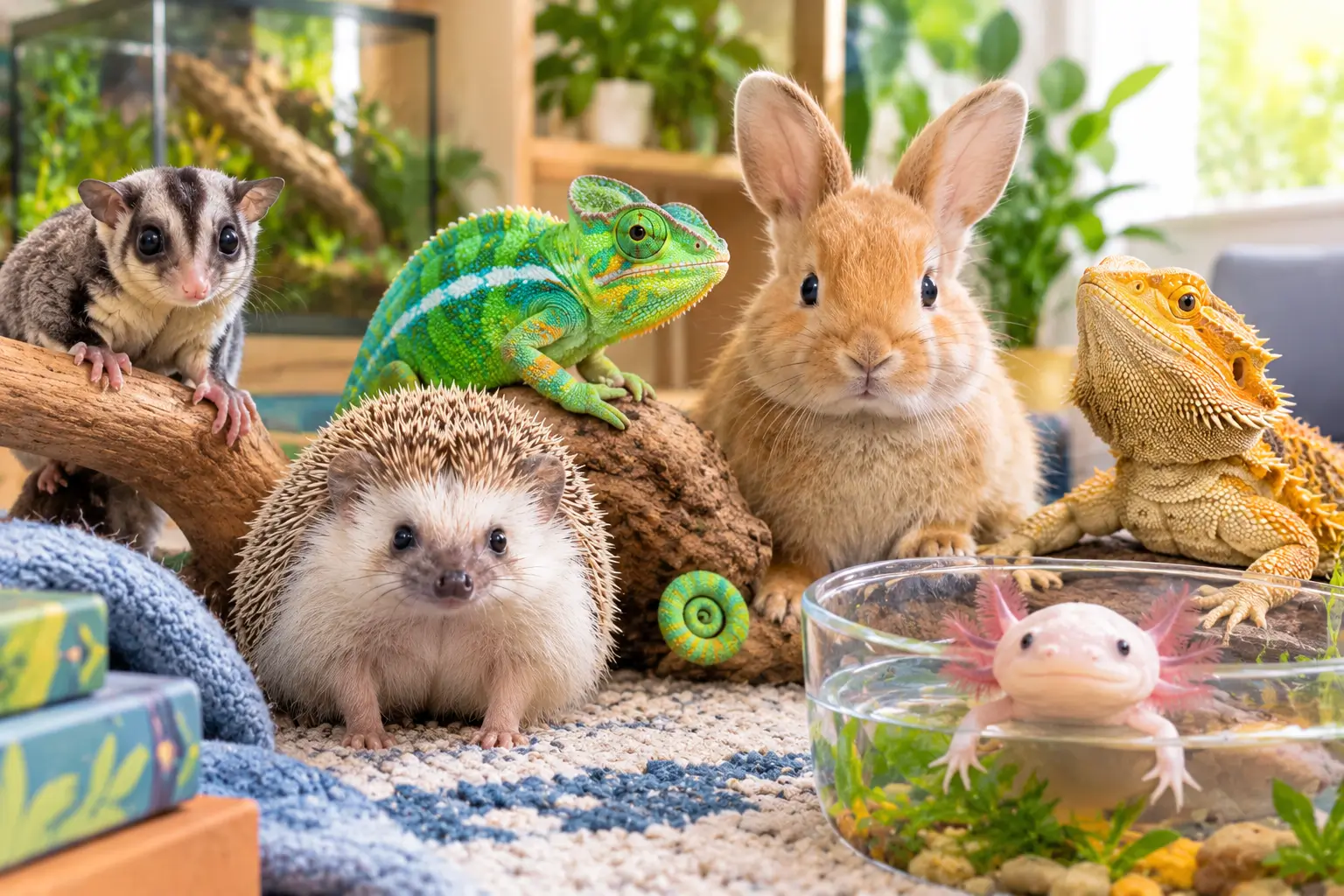
Cute exotic pets are non-traditional animals — like sugar gliders, hedgehogs, fennec foxes, and chinchillas — kept as companions instead of typical pets like dogs or cats. They tend to have small bodies, big eyes, and unusual behaviors that make them popular on social media, though many need specialized care and aren’t legal everywhere.
Key Takeaways
- “Cute exotic pets” covers small, unusual animals such as sugar gliders, hedgehogs, chinchillas, fennec foxes, and certain reptiles.
- They’re best for owners who enjoy research and routine, not people who want a low-effort pet.
- Legal status varies by state, county, and even city, so checking local laws always comes first.
- Startup costs often run higher than a cat or dog once you add proper housing and diet.
- Many exotic species have specific health needs, so finding an exotic-experienced vet matters before you bring one home.
- Cuteness on video doesn’t always match daily reality, so research the temperament, not just the looks.
Introduction
Scroll through any pet video feed and you’ll spot them fast. A sugar glider gliding between hands. A hedgehog curled into a tiny ball. A fennec fox with ears bigger than its face. These clips rack up millions of views, and it’s no surprise people start searching for cute exotic pets soon after.
Part of the appeal is simple. These animals look different from the usual cat or dog. They photograph well, they’re small enough for apartment life, and owning one feels like a fun conversation starter.
But exotic pets come with real questions. Is the animal even legal where you live? Can you afford proper housing and food? Will it actually enjoy being held, or is that just good editing?
This guide walks through the most common cute exotic pets, what daily care actually looks like, real cost ranges, and the safety details that matter most. By the end, you’ll know whether a cute exotic pet fits your life, and which one might be the best match.
What Is a Cute Exotic Pet?
A cute exotic pet is any small, unusual, non-domesticated (or only lightly domesticated) animal kept as a companion for its appearance or personality. Think sugar gliders, hedgehogs, chinchillas, and fennec foxes rather than farm animals or large predators.
The word “exotic” in pet care doesn’t mean dangerous or rare in the wild. It simply means the animal isn’t a traditional companion species like a dog, cat, or common goldfish. Some exotic pets are common in captivity even though they’re wild by nature.
Common examples people search for include:
- Sugar gliders
- Hedgehogs
- Chinchillas
- Fennec foxes
- Degus
- Certain small reptiles, like leopard geckos
- Some rodent species, like flying squirrels
Each of these has a different personality, activity schedule, and care level. A sugar glider is nocturnal and social. A hedgehog is mostly solitary and also active at night. That single difference already changes how each fits into a household.
Quick Facts Box
| Fact | Details |
| Category | Small exotic mammals and reptiles kept as companions |
| Common examples | Sugar gliders, hedgehogs, chinchillas, fennec foxes, degus |
| Typical lifespan | Varies widely by species, from 3–5 years (hedgehogs) to 10–15 years (sugar gliders) |
| Legal status | Varies by state and city; some species are banned or require permits |
| Best living setup | Secure enclosures with species-specific temperature and space needs |
| Activity pattern | Many popular species are nocturnal or crepuscular |
Where Does the Cute Exotic Pet Trend Come From?
The exact starting point isn’t fully documented, so it’s hard to pin down one origin. What’s clearer is that interest has grown alongside pet-focused social media, where short clips of unusual animals spread quickly.
Sugar gliders and hedgehogs, for example, saw noticeable spikes in online searches as short-form video became popular. This lines up with a broader pattern where visually striking or “pocket-sized” pets get more attention online than they used to.
That said, exotic pet keeping itself isn’t new. Small mammals and reptiles have been kept by hobbyists for decades. What changed is visibility, not the animals themselves.
Key Characteristics and Care Needs
Cute exotic pets share a few traits that set them apart from typical household pets. Most are small, many are nocturnal, and nearly all need specific temperature and diet conditions to stay healthy.
Temperament varies a lot by species. Sugar gliders are social and often do better in pairs. Hedgehogs tend to be more independent and can be prickly, literally, when startled.
Size and space needs are usually modest, but don’t confuse “small” with “low-maintenance.” A chinchilla needs a tall, multi-level cage. A fennec fox needs secure outdoor or indoor space to run and dig.
Diet is one of the biggest care differences from cats or dogs. Many exotic species need very specific food ratios, and getting this wrong can cause real health problems over time. This can vary depending on the species and its life stage, so it’s best to confirm exact diet plans with an exotic-experienced vet.
Handling style matters too. Some exotics tolerate daily handling well once they’re used to a routine. Others prefer to be watched more than touched. Matching your expectations to the actual animal saves a lot of frustration later.
Quick Comparison Snapshot
| Option | Best For | Key Difference |
| Sugar Glider | Owners who want a social, interactive pet | Needs a companion glider and a nocturnal schedule |
| Hedgehog | Owners who like a quieter, low-noise pet | More solitary, spiky defense behavior when scared |
| Chinchilla | Owners with space for a tall cage | Needs dust baths instead of water baths |
| Fennec Fox | Experienced owners with legal access | Requires far more space and specialized permits |
Cute Exotic Pets Names
If you’re browsing for cute exotic pets by name, a few come up again and again in searches and pet forums. These aren’t ranked by popularity data, just the ones most commonly discussed by exotic pet owners:
- Sugar glider
- Hedgehog
- Chinchilla
- Fennec fox
- Degu
- Leopard gecko
- Flying squirrel
- Serval (only legal in select areas, and rarely a beginner pet)
Names alone don’t tell you much about fit, though. A degu, for example, sounds unfamiliar to many new owners, but it’s a social rodent that needs company and daily interaction, similar in spirit to a chinchilla.
Cute Exotic Pets List (and Exotic Pets List)
When people search for a general list of exotic pets, they’re usually comparing categories rather than looking for one specific animal. Here’s a simple breakdown by group:
Small mammals: sugar gliders, hedgehogs, chinchillas, degus, fennec foxes
Reptiles: leopard geckos, bearded dragons, ball pythons
Birds: some conure and lovebird species, depending on local exotic bird laws
Amphibians: certain frog and salamander species kept by experienced keepers
This list isn’t exhaustive, and exact legality changes by location. Some animals on a general “exotic pets list” are actually illegal to own in certain states without a permit, so this is always worth checking before falling for a cute photo online.
Unusual Pets That Are Legal to Own
Legal status is one of the most overlooked steps in choosing an exotic pet. Some animals that look easy to find online are actually restricted or banned in specific states, counties, or cities.
Species like hedgehogs, sugar gliders, and chinchillas are legal in many U.S. states, but not all. A few states restrict or ban hedgehog ownership entirely, while others require permits for animals like fennec foxes.
Before assuming a pet is legal, check three levels:
- State wildlife or agriculture department rules
- County-level ordinances
- City or HOA-specific pet restrictions
Skipping this step is one of the most common reasons exotic pet owners run into trouble later, sometimes after they’ve already fallen in love with the animal.
Top 10 Cutest Pets to Own
“Cutest” is subjective, but a few species consistently show up on lists like this because of their appearance and personality combination:
- Sugar glider
- Hedgehog
- Chinchilla
- Fennec fox
- Degu
- Leopard gecko
- Guinea pig (not exotic, but often grouped with these lists)
- Flying squirrel
- Miniature rabbit breeds
- Certain dwarf hamster breeds
Notice a few of these, like guinea pigs and dwarf hamsters, aren’t technically exotic. They’re included here because search lists often blend “unusual” with “genuinely exotic,” which can blur the line for new owners.
Cute Exotic Pets on Adopt Me
If you landed here searching “cute exotic pets adopt me,” you’re most likely thinking of Adopt Me!, the popular Roblox game where players collect and raise virtual pets, some labeled “exotic” in-game.
That’s a different world from real pet ownership. In-game exotic pets don’t need real food, vet visits, or legal permits. If the game sparked interest in real exotic pets, that’s a great reason to start researching actual care needs, cost, and legality before getting one in real life.
Top 100 Cutest Animals
Broader “cutest animals” lists usually include far more than exotic pets. They mix in wild animals people will never own, like red pandas or quokkas, alongside pets people actually keep at home.
For pet owners specifically, the overlap that matters is small mammals and a handful of reptiles. If an animal from a “cutest animals” list isn’t legally or ethically keepable as a pet, it belongs on your admiration list, not your adoption list.
Top 5 Cutest Animal in the World
Rankings like “top 5 cutest animal in the world” are opinion-based and change depending on the source. Common names that show up across many of these lists include red pandas, quokkas, fennec foxes, sugar gliders, and baby otters.
Of that group, the fennec fox and sugar glider are the two most realistically kept as pets, and even then, only with the right space, permits, and experience level. The rest are best enjoyed through photos and documentaries rather than home ownership.
Daily Care Routine and How to Get Started
Getting started with a cute exotic pet works best as a step-by-step process, not an impulse decision.
- Research the species thoroughly, including diet, lifespan, and legal status in your area.
- Find an exotic-experienced vet before you bring the animal home, not after a problem shows up.
- Set up housing first, including the right cage size, temperature, and enrichment items.
- Start with a simple daily routine: feeding times, cage cleaning, and short handling sessions.
- Watch for stress signs in the first few weeks, like hiding, reduced eating, or excessive vocalizing.
- Adjust based on the individual animal, since personality varies even within the same species.
Most nocturnal exotic pets, like sugar gliders and hedgehogs, do best with a predictable evening routine, since that matches their natural active hours.
Cost Breakdown
Costs vary a lot by species, but a few patterns hold true across most cute exotic pets.
Initial setup tends to be the biggest expense. Proper cages, heating elements, and enrichment items can cost more upfront than a basic dog or cat setup.
Ongoing food costs are usually moderate, but specialized diets, like fresh produce mixes for sugar gliders, can add up monthly.
Vet care is often the most underestimated cost. Exotic-experienced vets are less common than general practice vets, and visits can cost more due to specialized knowledge.
Exact numbers depend heavily on species, location, and whether you buy new or secondhand equipment, so it’s best to research pricing for your specific animal and region before committing.
Common Mistakes Pet Owners Make
A few mistakes show up again and again with new exotic pet owners:
- Skipping the legal check and finding out too late that the pet isn’t allowed locally.
- Underestimating space needs, especially for chinchillas and fennec foxes.
- Assuming social media cuteness equals easy care, when many exotics need daily, specific routines.
- Delaying vet visits until a health issue is already visible.
- Buying from unverified sellers instead of reputable breeders or rescues.
Most of these mistakes come from moving too fast. A little extra research time before adoption prevents most of the common regrets people report.
Pros and Cons
| Pros | Cons |
| Unique, low-noise companionship for many species | Higher setup and vet costs than typical pets |
| Great fit for small living spaces | Legal restrictions vary widely by location |
| Distinct personalities and behaviors | Fewer vets specialize in exotic animal care |
| Strong appeal for people who enjoy research-based pet care | Some species need companions of their own kind |
Similar Options and Alternatives
If a cute exotic pet doesn’t end up being the right fit, a few alternatives offer some of the same appeal with fewer legal or care hurdles.
| Option | Best For |
| Guinea pig | Owners who want a social, gentle small pet without exotic permits |
| Rabbit | Owners who want a bigger personality and interactive play |
| Bearded dragon | Owners interested in reptiles with a calmer temperament |
| Rat | Owners who want high intelligence and strong bonding potential |
These options aren’t identical to a sugar glider or fennec fox, but they scratch a similar itch for something outside the usual cat-or-dog choice.
When to Consult a Vet or Professional
Any new or unusual behavior in an exotic pet deserves a vet check, since these animals often hide illness until it’s advanced. Signs like reduced appetite, unusual lethargy, or changes in droppings should never wait.
Before adopting, it also helps to confirm a nearby vet actually treats your specific species. Not every general vet clinic accepts exotic patients, and finding this out during an emergency is far from ideal.
For anything related to diagnosis, medication, or dosing, always rely on a licensed veterinarian rather than online advice, including this article. General care guidance can point you in the right direction, but it can’t replace an in-person exam.
Fun Facts
- Sugar gliders can glide up to roughly 150 feet between trees in the wild, using a skin membrane between their limbs.
- Hedgehogs are known for “anointing,” a behavior where they lick a new scent and spread frothy saliva on their spines.
- Fennec foxes have the largest ears relative to body size of any fox species, which helps them release heat in hot climates.
- Chinchillas take dust baths instead of water baths to keep their dense fur clean.
- Degus are highly social rodents and are rarely kept alone successfully.
- Many exotic pet species are crepuscular, meaning most active at dawn and dusk rather than fully nocturnal or daytime.
Frequently Asked Questions
What is the cutest exotic animal?
There’s no single official answer, since “cutest” depends on personal taste. Fennec foxes and sugar gliders come up most often in these conversations because of their oversized ears and expressive eyes. Both also happen to be among the more realistically keepable exotic pets, which adds to their popularity in searches and social media clips.
What is the best exotic pet to have?
The best exotic pet depends on your living space, schedule, and local laws rather than one universal answer. For many first-time exotic pet owners, hedgehogs and chinchillas tend to be more manageable than species like fennec foxes, mainly because of lower space and permit requirements. Matching the species to your actual lifestyle matters more than picking the trendiest option.
What is a cuddly exotic pet?
Cuddliness varies a lot even within species, but sugar gliders are often described as one of the more affectionate exotic pets once they bond with an owner. That bonding process, often called “bonding time” in glider communities, can take weeks of gentle, consistent handling. Hedgehogs, by contrast, tend to tolerate handling more than actively seek it out.
What is the most unusual pet?
“Unusual” often points to animals further outside typical pet-keeping, like certain insects, tarantulas, or exotic amphibians rather than mainstream exotics like hedgehogs. These pets usually require very specific habitat setups and aren’t a good fit for beginners. If you’re drawn to something in this category, research care requirements even more carefully than you would for a sugar glider or chinchilla.
Final Thoughts

Sophia Bennett is an animal care contributor at PetJournalHub. She writes educational articles about companion animals, pet wellness, training, and daily care. She believes that trustworthy information helps every pet owner build a healthier and happier life for their pets.