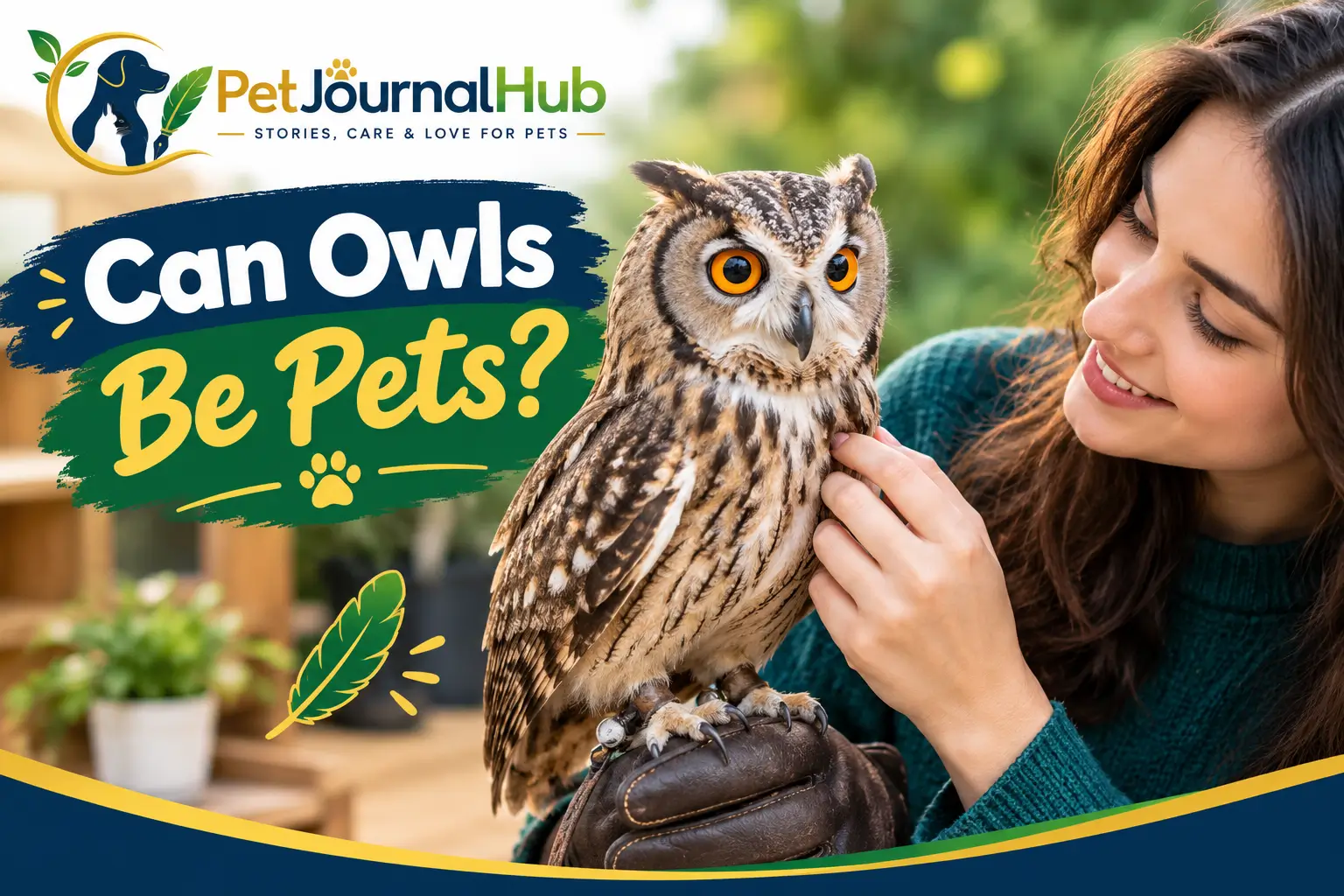
Owls generally do not make suitable household pets because they have specialized diets, large space needs, natural hunting behaviors, and complex welfare requirements. Some people and licensed facilities may legally care for certain owls, but ownership rules vary by location and species. Before considering an owl, check local wildlife laws and consult a qualified bird-of-prey professional.
Key Takeaways
- Owls are wild predators, not domesticated companion animals.
- Their care requires suitable flight space, whole-prey diets, and specialized veterinary support.
- Laws may prohibit private ownership or require permits and proof of lawful origin.
- Owls may tolerate familiar handlers without enjoying physical contact.
- Never capture a wild owl or purchase one without verifying its legal status.
- Domestic birds and other suitable pets offer safer choices for most households.
Introduction
Owls attract attention because of their large eyes, quiet flight, distinctive calls, and mysterious nighttime habits. Their appearance can make them seem like fascinating companions. Pictures and videos online may also give the impression that an owl can live comfortably in an ordinary home.
However, caring for a wild bird involves much more than providing food and a safe place to sleep. Owls hunt, respond to environmental changes, and follow natural behaviors that a typical household cannot easily support. Their needs differ greatly from those of cats, dogs, and common companion birds.
People researching owl ownership often want to know whether these birds can become friendly, how much they cost, and whether keeping one is legal. These questions matter even more in places where wildlife laws differ between regions.
This guide explains the practical realities behind the question of whether an owl belongs in a home. It covers behavior, feeding, housing, legal considerations in Pakistan and other jurisdictions, expenses, and alternatives. It also explains what to do if you find an injured or young owl.
The goal is to help readers make an informed, welfare-first decision rather than rely on attractive photographs or claims from wildlife sellers.
What Does Keeping an Owl as a Pet Mean?
Keeping an owl as a pet means taking responsibility for a living wild predator in a captive setting. It involves providing suitable housing, species-specific nutrition, enrichment, daily observation, and professional care.
Owls belong to the bird order Strigiformes. The group includes barn owls and typical owls, with more than 200 species worldwide. Their sizes, habitats, diets, and activity patterns vary considerably.
The Nature Conservancy+1
Unlike domesticated animals, owls have not undergone generations of selective breeding for ordinary household companionship. Even an owl raised by people retains its natural instincts and specialized needs.
For example, a barn owl and a large eagle-owl require different amounts of space, different prey sizes, and different management plans. A single care routine cannot suit every species.
People also need to distinguish between a bird that tolerates handling and one that benefits from human contact. An owl may learn to associate a familiar person with food without becoming a cuddly companion.
For most households, observing owls in the wild or through a reputable wildlife center offers a better way to appreciate them.
Quick Facts About Owls
| Fact | Details |
| Animal group | Birds of prey |
| Scientific order | Strigiformes |
| Main activity pattern | Mostly nocturnal, with some exceptions |
| Natural diet | Depends on species; often rodents, insects, or other prey |
| Social behavior | Varies by species and breeding stage |
| Housing needs | Secure, species-appropriate space and suitable perches |
| Human interaction | May tolerate trained handlers but often avoid unnecessary contact |
| Veterinary care | Requires access to a veterinarian experienced with birds of prey |
| Legal status | Depends on species, location, and applicable permits |
| Suitable for most beginners? | No |
These facts describe owls as a group. Individual requirements depend on the exact species, its age, health, and origin.
The Nature Conservancy+2
Where Do Owls Come From?
Owls live in a wide range of natural habitats, including forests, grasslands, deserts, wetlands, and agricultural landscapes. Different species occupy different regions and use different nesting sites.
Some nest in tree cavities, while others use cliffs, abandoned buildings, or existing nests. Their habitat needs reflect how they hunt, rest, breed, and avoid threats.
The Nature Conservancy+1
An owl’s natural environment provides opportunities for flight, hunting, shelter, and other behaviors. A bedroom, small cage, or ordinary backyard cannot automatically replace those conditions.
Wild owls may also face habitat loss and other conservation pressures. Buying a bird without checking its origin can contribute to wildlife trafficking or the removal of animals from natural populations.
If you admire owls, supporting habitat conservation and responsible wildlife education can help protect them without creating the problems associated with private ownership.
History and Evolution of Owls as Companions
Humans have associated owls with wisdom, mystery, nighttime activity, and spiritual symbolism for centuries. Different cultures have interpreted these birds in different ways.
Their role in popular entertainment has also increased public interest. Stories, fantasy films, and online photographs sometimes portray owls as easy-to-handle companions.
That image does not reflect the full demands of their care. Wildlife rehabilitation centers and zoological institutions manage owls under specialized conditions, often with trained staff, suitable facilities, and access to veterinary support.
A bird living in a professional facility is not evidence that the same species will thrive in a private home. Educational demonstrations and rehabilitation programs also operate under different goals and rules from pet ownership.
The important distinction is between appreciating an owl and expecting it to behave like a domesticated animal.
Key Characteristics and Care Needs
Owls have sharp talons, hooked beaks, excellent hunting adaptations, and species-specific behaviors. These features help them survive in nature but create practical challenges in captivity.
Temperament and behavior
An owl may defend itself when frightened, restrained, or approached too closely. Its talons can cause serious injuries. Stress may also affect its appetite and behavior.
Individual temperament varies. A bird that appears calm in a photograph may still find close contact uncomfortable.
Housing and flight space
Owls need secure, appropriate housing that supports movement, resting, and natural behaviors. Depending on the species, this may require a purpose-built outdoor aviary with suitable perches, shelter, and flight space.
A small cage is not an adequate long-term solution. Housing must also protect the bird from escape, predators, unsafe materials, and extreme weather.
Nutrition
Many owls eat whole prey, such as mice or rats, although diets vary by species. Their nutritional requirements involve more than simply offering pieces of meat.
The Merck Veterinary Manual discusses the specialized nutritional needs of birds of prey, including appropriate prey and feeding management.
Merck Veterinary Manual
Veterinary support
An owl needs access to a veterinarian experienced with raptors or other appropriate wildlife species. Ordinary companion-bird experience may not cover every aspect of owl medicine.
Enrichment and natural behavior
Suitable enrichment can encourage movement, exploration, and other species-appropriate behaviors. A qualified professional should design the plan for the individual bird.
These requirements explain why owl care demands considerable preparation and specialist support.
Quick Comparison Snapshot
The following comparison covers broad care considerations rather than recommending owl species for private ownership.
| Option | Best For | Key Difference |
| Barn owl | Licensed wildlife education or professional care | Often hunts small mammals and needs suitable flight space |
| Eagle-owl | Specialized, appropriately authorized facilities | Some species are very large and have powerful talons |
| Screech owl | Qualified facilities caring for small owl species | Small size does not remove specialist care needs |
| Domestic budgerigar | People seeking a small companion bird | Domesticated companion species with different care and social needs |
The exact needs of each owl depend on its species. The budgerigar is included as an alternative, not as a direct biological equivalent.
Can Owls Be Pets in Pakistan?
Whether you can legally keep an owl in Pakistan depends on the species, the province or territory, and the applicable wildlife rules and permits. Do not assume that every owl is legal to own simply because a seller offers one.
Pakistan’s wildlife regulations include rules governing the possession and trade of wild animals. For example, the Balochistan Wildlife Act addresses certificates of lawful possession and permits for certain acquisitions. The Islamabad wildlife legislation also contains provisions concerning lawful possession. These examples do not establish a single nationwide rule for every owl species.
TIPP+2
Before taking any action, contact the relevant provincial or territorial wildlife department. Ask about:
- Whether the exact owl species is protected.
- Whether private possession is allowed.
- Which permits or certificates apply.
- Whether legal-origin documentation is required.
- Whether transport, purchase, breeding, or cross-border movement requires additional authorization.
Do not rely on a seller’s verbal assurance or an online advertisement. A seller’s claim does not replace official permission.
If you find an injured owl, contact a wildlife authority or qualified rehabilitator instead of keeping it at home.
Can We Keep an Owl as a Pet in Islam?
People asking this question may be looking for religious guidance as well as practical ownership advice. Islamic rulings can depend on the circumstances, including the treatment of animals, the purpose of keeping them, and whether their welfare or other rights are harmed.
It would be misleading to claim that every form of owl ownership is automatically permitted or prohibited in Islam without an appropriate religious source and consideration of the circumstances.
From an animal-welfare perspective, keeping a wild owl without adequate space, proper food, specialist care, or lawful authorization can cause serious problems. Capturing a wild bird or supporting an unlawful wildlife trade raises additional concerns.
For a religious ruling, consult a qualified Islamic scholar who can consider the specific situation. For legal permission, consult the relevant wildlife authority. These are separate questions, and satisfying one does not automatically satisfy the other.
Pet Owls for Sale: What Should You Know?
Online listings and private sellers may advertise owls as exotic pets. However, an advertisement does not establish that the bird came from a lawful source or that the buyer can legally possess it.
Before considering any wildlife transaction, verify the exact species and its legal status with the relevant authority. Ask what documentation applies and whether the seller can establish lawful origin.
Be cautious if a seller:
- Refuses to identify the species.
- Cannot provide required legal documents.
- Encourages you to hide the bird from authorities.
- Offers a wild-caught owl without credible provenance.
- Claims that an owl needs only a small cage and ordinary meat.
Do not buy an owl because it looks tame in a video. The bird may be frightened, stressed, or responding to a trained handler.
For most readers, the safest choice is to avoid private owl sales and support reputable wildlife organizations instead.
Can Owls Be Friendly?
Owls can become familiar with people under certain circumstances, but familiarity does not necessarily mean affection. A bird may learn to recognize a handler or associate that person with food.
Its response depends on factors such as species, individual temperament, past experiences, and handling practices. A bird that tolerates a familiar person may still resist touching or close contact.
Owls also communicate differently from common companion pets. A calm posture does not always mean that a bird welcomes interaction, and defensive behavior should not be treated as disobedience.
Responsible care focuses on reducing fear and allowing appropriate choice. It does not depend on forcing an owl to accept cuddling, posing for photographs, or repeated handling.
People seeking an affectionate companion will generally find domesticated pets better suited to their expectations.
Can Owls Be Pets for Sale? Understanding the Legal Difference
The phrase “pet owl for sale” can refer to different situations, including a lawful transfer to an authorized facility, a permitted captive-breeding program, or an illegal wildlife transaction.
Those situations are not interchangeable. Whether a transaction is lawful depends on the relevant jurisdiction, the species, the source of the bird, and any required permits.
In the United States, for example, the Migratory Bird Treaty Act restricts the capture, possession, sale, and transport of protected native migratory birds unless an applicable authorization or exception allows the activity. Rules differ across species and circumstances.
U.S. Fish & Wildlife Service+1
In Pakistan, readers should verify applicable provincial or territorial wildlife requirements before acquiring any owl.
A person should never treat a seller’s availability, a social media post, or a high price as proof of legality. Check the official rules first, and walk away if the seller cannot provide credible documentation.
Owl Pet Price: What Does an Owl Cost?
There is no reliable universal owl pet price. The amount advertised by a seller may vary with species, location, legal status, and other factors. An online asking price does not show the full cost of responsible care.
The purchase price is only one possible expense. Housing, food, veterinary examinations, emergency treatment, permits, and professional advice may create substantial ongoing costs.
Potential expenses include:
- Housing: Secure, species-appropriate accommodation and perches.
- Food: Suitable prey and safe storage.
- Veterinary care: Examinations, diagnostic testing, and treatment.
- Legal compliance: Applicable permits, certificates, and transport requirements.
- Specialist support: Advice from experienced raptor professionals.
Exact costs require information about the species, location, and legal circumstances. Avoid publishing a fixed price in Pakistani rupees without current, credible evidence.
If someone advertises a baby owl at a very low price, do not assume that the offer is safe or lawful. Confirm its origin and legal status with the wildlife authority before considering any transaction.
Do Owls Like to Be Pet?
Most owls should not be treated as animals that enjoy petting in the way many people expect from cats or dogs. Some individuals may tolerate limited contact with a familiar handler, but tolerance is not proof of enjoyment.
Touching or restraining an owl can cause fear or defensive behavior. Its talons and beak also pose an injury risk to people who handle it incorrectly.
Professionals who work with owls use species-appropriate handling methods and limit unnecessary contact. They may use trained procedures for medical examinations, transfers, or other essential tasks.
For ordinary wildlife observation, keep a respectful distance and avoid disturbing nesting birds. If you are responsible for an owl under an authorized program, follow the guidance of the qualified professionals overseeing its care.
Are Owls Friendly Pets?
Owls are not reliably friendly pets in the ordinary household sense. Some may become accustomed to a particular handler, while others may remain wary or defensive.
Their behavior depends on the individual bird, its history, health, environment, and species. Raising an owl from a young age does not guarantee that it will enjoy handling as an adult.
Owls also have natural behaviors that can clash with household routines. Many are active at night, and some make loud calls. Their feeding and housing needs can be difficult to manage in a typical home.
People looking for an animal that enjoys frequent interaction should consider a domesticated companion species instead. Choose a pet whose social needs, daily routine, and care requirements match your lifestyle.
Daily Care Routine: What Would Responsible Owl Care Involve?
Responsible owl care requires a structured routine, suitable facilities, and advice from qualified professionals. The exact schedule depends on the species, age, health, and any rehabilitation or educational role.
For an authorized facility or qualified caregiver, daily responsibilities may include the following.
- Observe the bird. Check its activity, posture, appetite, movement, and droppings. Report unusual changes to the responsible professional.
- Provide an appropriate diet. Follow a species-specific feeding plan created with qualified guidance.
- Maintain clean housing. Remove waste and spoiled food, clean appropriate surfaces, and check water and feeding equipment.
- Inspect the enclosure. Look for damaged mesh, unsafe objects, escape points, and hazards that could injure the bird.
- Support natural behavior. Provide suitable perches, movement opportunities, shelter, and professionally planned enrichment.
- Limit unnecessary handling. Avoid forcing contact or using the bird for photographs and entertainment.
- Arrange professional care. Follow veterinary recommendations and maintain any required records or permits.
A wild owl that needs rescue may require very different care from a healthy bird in an authorized facility. Members of the public should not attempt to raise an orphaned owl or treat an injured one without professional guidance.
The safest response is to contact a wildlife rehabilitator or wildlife authority as soon as possible.
Cost Breakdown: Beyond the Initial Purchase
Owning or caring for an owl can involve ongoing financial and practical responsibilities. Because legal requirements and husbandry needs vary, there is no single cost estimate that applies to every species or country.
| Expense | What It May Include |
| Initial housing | Secure enclosure, suitable perches, and shelter |
| Food | Species-appropriate prey and storage equipment |
| Veterinary care | Health examinations, tests, and treatment |
| Enrichment | Safe equipment that supports natural behaviors |
| Permits and records | Applicable authorization and documentation |
| Emergency expenses | Urgent veterinary assessment and treatment |
| Specialist support | Professional advice on housing, diet, and behavior |
Before any lawful placement, a responsible organization assesses whether it can meet the bird’s needs over time. It also plans for unexpected veterinary costs and changes in the animal’s health.
Do not use an online sale price as a budget for owl care. A cheap bird can still require facilities and professional support that cost far more than the initial purchase.
For most prospective pet owners, these demands make an owl an impractical choice.
Common Mistakes People Make When Considering an Owl
Many problems begin when people judge an owl by its appearance rather than its natural behavior and welfare needs.
Assuming a small owl is easy to care for. Small size does not remove the need for suitable housing, nutrition, and veterinary support.
Believing hand-raised means domesticated. An owl raised by people remains a wild animal with species-specific needs.
Feeding ordinary meat without guidance. A piece of meat alone may not meet a bird of prey’s nutritional requirements. Consult a qualified professional about an appropriate diet.
Merck Veterinary Manual
Buying before checking the law. Rules may cover possession, sale, transport, and the documentation needed to establish lawful origin.
Using a household cage. Ordinary cages may restrict movement and fail to provide suitable conditions for a bird of prey.
Expecting cuddly behavior. An owl may avoid touching or respond defensively to unwanted contact.
Trying to rescue an owl without help. Incorrect handling can injure both the bird and the person attempting to help.
Ignoring long-term responsibility. The caregiver must plan for continuing expenses, professional care, and the bird’s changing needs throughout its life.
Avoiding these mistakes starts with recognizing that admiration does not automatically make private ownership appropriate.
Pros and Cons of Keeping an Owl
The following table describes possible benefits and drawbacks of caring for owls in appropriate settings. It should not be read as a recommendation to keep one as a household pet.
| Pros | Cons |
| Offers opportunities to learn about wildlife | Requires specialized knowledge and facilities |
| Can support education through authorized programs | Private ownership may face strict legal limits |
| Allows trained professionals to support conservation or rehabilitation goals | Food and veterinary needs can be demanding |
| Can deepen understanding of bird behavior | Handling may create stress and injury risks |
| May contribute to public education in suitable settings | Often unsuitable for ordinary household routines |
The benefits depend on the setting and the purpose of care. A wildlife center with qualified staff and appropriate facilities operates under very different conditions from a household seeking a friendly companion.
Similar Pets and Alternatives to Consider
If you like owls because of their appearance, intelligence, or unusual behavior, several alternatives may offer a more practical experience. The best choice depends on the amount of space, time, money, and interaction you can provide.
| Option | Best For |
| Budgerigar | People seeking a small domesticated companion bird |
| Cockatiel | People prepared to provide social interaction and suitable bird care |
| Domestic pigeon | People interested in caring for a domesticated bird with appropriate housing |
| Rabbit | People who want a small mammal and can provide suitable space and daily care |
| Domestic cat | People looking for a companion with individual social and activity needs |
| Wildlife center visits | People who want to learn about owls without owning one |
| Birdwatching | People who enjoy observing wild birds in natural habitats |
Each alternative has its own needs. Budgerigars and cockatiels require appropriate diets, enrichment, and veterinary care. Rabbits need suitable space, companionship considerations, and a proper diet. Cats need safe housing, play, and ongoing healthcare.
Do not choose a pet only because it looks similar to an owl or seems easy to manage. Research its full needs and confirm that you can meet them before bringing it home.
When to Consult a Vet or Wildlife Professional
Contact a qualified wildlife professional or veterinarian experienced with birds of prey if an owl appears injured, weak, unable to fly normally, or trapped in a dangerous situation.
You should also seek professional advice if you have already taken possession of an owl and are unsure about its diet, housing, health, or legal status. Do not release a captive bird into the wild without expert advice, as its origin, health, and ability to survive may be uncertain.
If you find a young owl, do not automatically assume that it is abandoned. Some young birds leave the nest before they can fly strongly, and their parents may still care for them. Keep people and pets away while you seek guidance.
For emergencies:
- Avoid feeding the bird or giving it water by force.
- Do not attempt to examine its wings or talons yourself.
- Keep a safe distance and reduce unnecessary disturbance.
- Contact the relevant wildlife authority or a qualified rehabilitator.
- Follow professional instructions for any necessary intervention.
The Merck Veterinary Manual advises people who find orphaned wild animals to seek appropriate information before attempting rehabilitation.
Merck Veterinary Manual+1
Fun Facts About Owls
Where Are Barn Owls Most Commonly Found? Discover Their Habitats and Ranges – Know Animals
Beautiful view of an owl flying in a forest
Great Horned Owl displays its talons | Backcountry Gallery Photography Forums
9
- Owls belong to two main families. These are barn owls (Tytonidae) and typical owls (Strigidae).
BirdLife International - Most owls are nocturnal. Some species hunt during daylight or around dawn and dusk.
BirdLife International - Their flight can be remarkably quiet. Specialized wing features help many owls approach prey with little sound.
BirdLife International - Their diet varies. Depending on the species, prey can include insects, rodents, small mammals, and other animals.
The Nature Conservancy+1 - Owls produce pellets. They regurgitate indigestible material, such as fur and bones, after eating prey. Researchers can study these pellets to learn about their diet.
BirdLife International - Not every owl looks or behaves alike. Species differ in size, habitat, hunting behavior, and breeding patterns.
The Nature Conservancy+1
These adaptations make owls fascinating wildlife, but they also explain why their needs differ from those of common companion animals.
Frequently Asked Questions
Does an owl like to be petted?
Most owls should not be expected to enjoy petting. Some individuals may tolerate contact with a familiar handler, but that does not mean they welcome it. An owl can respond to unwanted handling with defensive movements, including using its talons or beak.
People should avoid touching wild owls or encouraging others to handle them for photographs. Authorized professionals use appropriate handling procedures when necessary for medical care or other essential tasks.
If you want a companion animal that enjoys regular physical affection, research domesticated pets with social needs that fit your lifestyle. Always respect an animal’s individual boundaries.
Can an owl carry a person?
No. An owl cannot carry an adult person through the air. Even the largest owl species lack the physical capacity to lift and transport a human being.
Large owls can have impressive wingspans and powerful talons, but those adaptations help them hunt prey and move through their environment. They do not give the bird the strength needed to lift a person.
An owl may still injure someone who approaches it carelessly. Never try to pick up, restrain, or encourage an owl to land on you. If you encounter a large owl in the wild, observe it from a safe distance and contact a professional if it appears injured.
How much does a baby owl cost in Pakistan?
There is no dependable nationwide price for a baby owl in Pakistan. Prices advertised online may vary, and a listing alone cannot confirm that a bird has a lawful origin or that private ownership is permitted.
Before considering any purchase, ask the relevant provincial or territorial wildlife department whether the species may legally be possessed and what permits or certificates apply. Do not rely on a seller’s assurances or assume that a captive-bred claim removes every legal requirement.
Remember that the purchase price does not cover specialist housing, suitable food, veterinary treatment, or ongoing care. For most households, a domesticated companion animal is a more practical option.
How to tame an owl?
Taming an owl is not the same as domesticating it. An owl may become familiar with a trained handler, but it retains its natural instincts and may continue to avoid or resist human contact.
Do not try to tame a wild owl by capturing it, withholding food, forcing handling, or repeatedly approaching it. These methods can cause fear, stress, and injury.
Qualified wildlife professionals use appropriate training and handling methods for specific purposes, such as veterinary care or authorized educational work. If you find an owl that needs help, contact a wildlife rehabilitator rather than attempting to raise it yourself.
The best way to appreciate a wild owl is to observe it responsibly and allow it to behave naturally.
Are owls active at night?
Most owl species show nocturnal activity, although some hunt during the day or around dawn and dusk. Their activity patterns depend on the species, prey availability, and environment.
This behavior can conflict with the routine of a household that expects a pet to be active during the day and quiet at night. Calls, movement, and feeding requirements may also affect the people living nearby.
A bird’s activity pattern is a natural need, not a habit that a person should try to suppress for convenience. Anyone responsible for an owl under an authorized program should follow species-specific advice from qualified professionals.
Can an owl live indoors?
A typical home is not suitable housing for an owl. Rooms and ordinary bird cages rarely provide the secure flight space, specialized perches, environmental conditions, and enrichment that the bird needs.
Indoor environments can also contain hazards, such as windows, ceiling fans, pets, and unsuitable objects. Simply allowing an owl to fly around a room does not create a safe or appropriate habitat.
Authorized facilities assess housing according to the individual species and its needs. If you find an owl inside a building, avoid chasing or handling it. Contact a wildlife professional for advice on a safe response.
Final Thoughts
Owls are remarkable wild birds, but they rarely suit the needs of an ordinary household. Their hunting instincts, specialized diets, housing requirements, and need for expert veterinary care make them very different from domesticated companion animals.
Before considering ownership, check the laws that apply to your location and the exact species. In Pakistan, contact the relevant wildlife department to confirm the requirements for lawful possession. Never assume that an online listing or a seller’s promise proves that an owl can legally become your pet.
If you love owls, you do not need to own one to appreciate them. Birdwatching, visiting reputable wildlife centers, and supporting conservation programs can help you learn about these birds while respecting their natural behavior.
For people who want a companion at home, a domesticated bird or another suitable pet is usually a more practical choice. Research its needs, budget for veterinary care, and choose an animal whose welfare you can support throughout its life.
The best decision is one that protects both the animal and the person responsible for its care.

Sophia Bennett is an animal care contributor at PetJournalHub. She writes educational articles about companion animals, pet wellness, training, and daily care. She believes that trustworthy information helps every pet owner build a healthier and happier life for their pets.