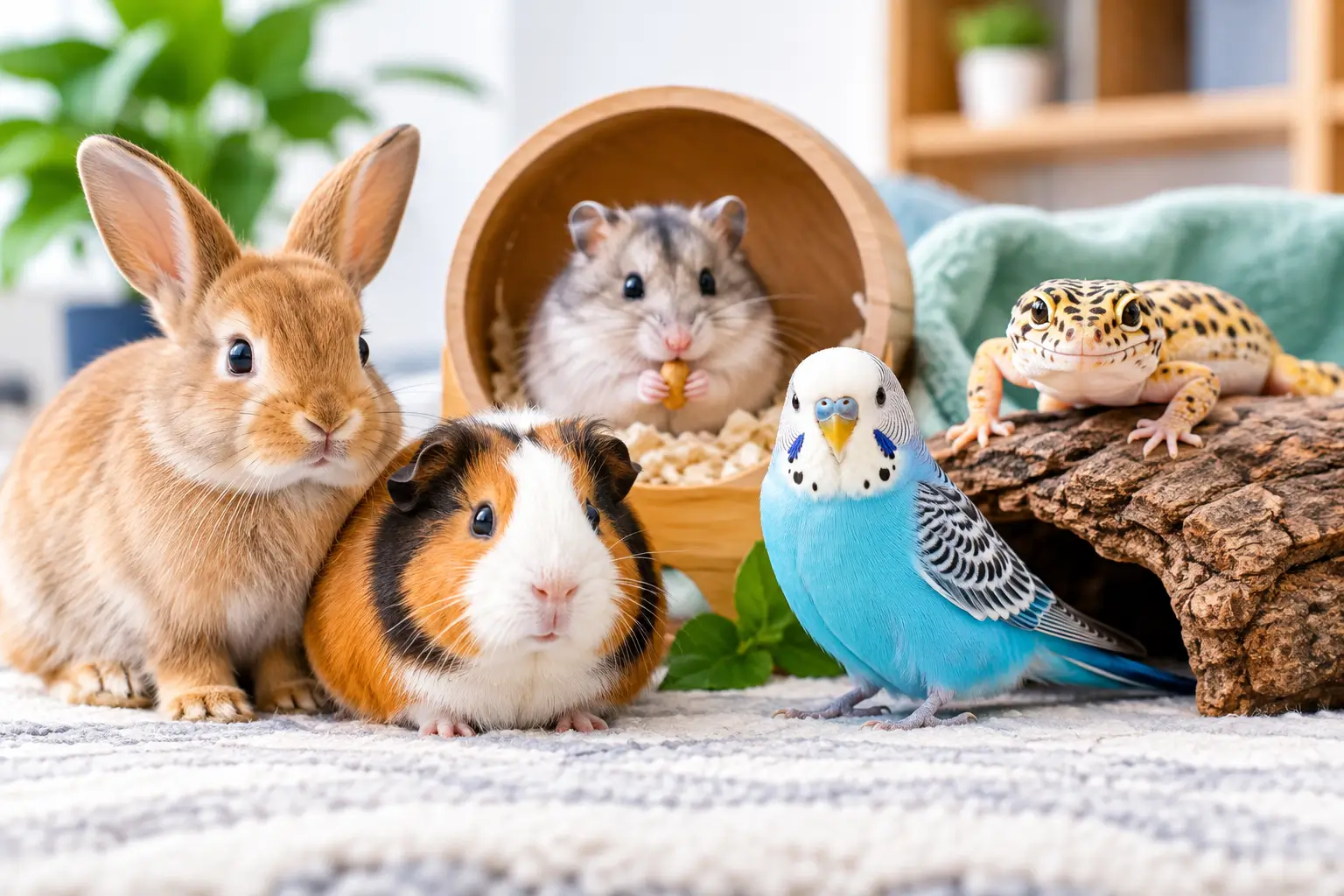
Small pets to have include guinea pigs, hamsters, rabbits, gerbils, rats, and betta fish — animals that fit in small homes, cost less than a dog or cat, and need less daily time. The best choice depends on your space, your schedule, and whether kids will help with care.
Key Takeaways
- Small pets fit apartments, dorms, and busy households better than large animals.
- Guinea pigs and rabbits enjoy handling; hamsters and gerbils prefer less touching.
- Weekly cost ranges from about $5 for fish food to $20+ for rabbit hay and greens.
- Kids do best with calm, sturdy pets like guinea pigs under adult supervision.
- Every small pet still needs a vet who treats exotic or small animals.
- Cage size and cleaning routine matter more than most first-time owners expect.
Introduction
Not everyone has room for a dog that needs daily walks or a cat that claims the couch. That’s why so many people search for small pets to have instead. These animals still bring companionship and daily joy, just in a smaller footprint.
Maybe you live in an apartment with a no-large-pet rule. Maybe your kids are asking for a pet, but you want something manageable first. Or maybe you just love the idea of a quiet, low-key animal companion. Small pets solve all three problems.
Interest in small pets has grown steadily on platforms like Reddit’s pet care communities, where guinea pig and rabbit owners regularly share care tips and cage setups. This guide walks through the most popular options, what daily care actually looks like, and how to pick the right fit for your home.
What Is “Small Pets to Have”?
This phrase covers a category of pets, not one single animal. It includes small mammals, some birds, and low-maintenance fish that suit smaller living spaces.
The most common small pets are guinea pigs, hamsters, gerbils, rats, mice, rabbits, hedgehogs, and betta fish. Each one has its own personality, care needs, and lifespan. Some, like guinea pigs, enjoy being held and talked to every day. Others, like hamsters, are happiest left alone during the day since they’re naturally active at night.
Picking the right small pet means matching the animal’s needs to your lifestyle, not just picking whatever looks cutest at the store.
Quick Facts Box
| Fact | Details |
| Common small pets | Guinea pigs, hamsters, gerbils, rats, rabbits, hedgehogs, betta fish |
| Typical lifespan | 1–3 years (hamster) up to 8–10 years (rabbit, guinea pig) |
| Space needed | Cage or tank, not a full room, though bigger is always better |
| Daily time commitment | 15–45 minutes, depending on species |
| Best for kids | Guinea pigs, rats, and betta fish (with adult supervision) |
| Weekly cost estimate | $5–$25 depending on species and cage size |
Key Characteristics and Care Needs
Small pets vary a lot in temperament. Guinea pigs are social and vocal. They “wheek” loudly when they hear a bag of veggies rustle. Rabbits are intelligent and can even be litter-trained, but they also chew everything in reach, so their space needs rabbit-proofing.
Hamsters and gerbils are burrowers. They need deep bedding to dig through and a solid running wheel, since they can cover several miles overnight. Rats are surprisingly smart and can learn simple tricks, while mice are quicker and more skittish, so they suit hands-off observation more than cuddling.
Betta fish need a heated, filtered tank of at least 5 gallons, not the tiny bowls often sold alongside them. This is a common myth that leads to poor fish health.
Every one of these pets needs species-appropriate food, a clean living space, and regular attention from you. None of them are truly “no maintenance,” even if they’re lower maintenance than a dog.
Lifespan also plays a big role in choosing a pet. Hamsters typically live 2–3 years, which makes them a shorter commitment. Guinea pigs and rabbits, on the other hand, can live 6–10 years with good care, so they’re closer to a mid-length commitment than a quick trial pet. Think about where your life will be in a few years before picking a longer-lived species.
Size differences matter too, and they’re easy to underestimate from a pet store display. A hamster cage might look similar in size to a guinea pig starter cage, but guinea pigs need far more floor space to move around comfortably. Always check the minimum enclosure size for the specific species, not just what fits in your budget.
Quick Comparison Snapshot
| Option | Best For | Key Difference |
| Guinea Pig | Families and cuddle-seekers | Social, vocal, needs a same-species friend |
| Hamster | Solo owners with limited space | Solitary, nocturnal, needs less daily interaction |
| Rabbit | Owners wanting an intelligent, trainable pet | Can be litter-trained but needs more space |
| Betta Fish | Renters or first-time pet owners | No fur, no cage cleaning, just tank maintenance |
Best Small Pets for Cuddling
If you want a pet that enjoys being held, guinea pigs and rats are your best bet. They’re both social animals that bond closely with their owners over time.
Guinea pigs settle into a lap and stay calm once they trust you. Rats are even more interactive. Many will climb onto a shoulder or come when called, once they know you.
Rabbits can also bond deeply with their owners, but many prefer sitting beside you over being picked up. Hamsters and gerbils, by contrast, tolerate brief handling but rarely seek it out. If cuddling matters most to you, skip the solitary burrowers and go with a guinea pig or rat.
Small Pets to Have for Kids
Guinea pigs are widely considered one of the best small pets to have for kids. They’re sturdy enough to handle gentle contact, rarely bite, and make happy little sounds that children love.
Betta fish work well for kids who want responsibility without handling an animal directly. Feeding a fish each day teaches consistency at low risk.
Hamsters are popular gifts for kids, but they’re actually a trickier choice. Their fast movements and nocturnal habits mean they can nip when startled, and their care schedule doesn’t always match a child’s daytime routine. An adult should always supervise handling, no matter which small pet you choose.
Small Pets to Have at Home
For a full-time household pet, think about how much space and quiet time the animal needs. Guinea pigs and rabbits both do well in a home where someone is around most of the day to interact with them.
Hamsters and gerbils fit a home where owners are out during the day, since these pets are most active after dark. A quiet corner, away from heavy foot traffic and direct sunlight, works best for any small pet’s cage.
If you have other pets, keep small animals fully separated from cats and dogs. Even a friendly household dog can trigger prey drive around a caged animal, so supervised interaction only happens with careful, gradual introductions guided by animal behavior professionals.
Small Pets to Have in Your Room
A bedroom setup works for many small pets, as long as noise and smell are managed. Hamsters and gerbils are quiet during the day but can be noisy at night with wheel-running, so light sleepers might want the cage in another room.
Betta fish are ideal for a bedroom. They’re silent, visually calming, and only need a small filtered tank on a stable surface. Guinea pigs do fine in a bedroom too, but their cage needs regular spot-cleaning to control odor.
Whatever pet you choose, keep the enclosure away from direct sunlight, heating vents, and drafty windows. Temperature swings stress small animals more than most owners realize.
Easiest Small Pets to Take Care Of
Betta fish and hamsters usually top the list for easiest small pets to take care of. Fish care comes down to feeding once a day and a regular water change schedule. Hamster care is a straightforward routine of food, water, bedding changes, and wheel access.
Guinea pigs and rabbits need a bit more daily involvement, since they eat fresh vegetables and need more social time. They’re still manageable, just not quite as hands-off as a fish tank.
Here’s a simple way to rank effort level, from least to most daily involvement:
- Betta fish — feed daily, change water weekly
- Hamster or gerbil — clean cage weekly, feed daily
- Rat — feed daily, clean cage twice weekly, needs social time
- Guinea pig — feed fresh veggies daily, spot-clean daily, needs a cage mate
- Rabbit — most space and enrichment needs of this group
Daily Care Routine and How to Get Started
Getting started with any small pet follows a similar pattern. Start with the right enclosure size for the species, since this is the most common mistake new owners make.
- Set up the cage or tank a few days before bringing the pet home, so bedding smells settle in.
- Add species-appropriate bedding, hideouts, and enrichment, such as chew toys or a wheel.
- Establish a feeding schedule and stick to it daily.
- Clean the enclosure on a set schedule, spot-cleaning daily and doing a full clean weekly.
- Handle the pet gently and briefly at first, letting it adjust to your scent and voice.
- Schedule a check-up with a vet who treats small or exotic animals within the first few weeks.
Consistency matters more than perfection here. A predictable routine helps small pets feel secure faster than any single toy or treat.
Cost Breakdown
Startup costs vary a lot by species. A basic hamster or gerbil setup with cage, bedding, and a wheel often runs $50–$100. Guinea pigs and rabbits cost more upfront, usually $100–$200, because they need larger enclosures and more accessories.
Ongoing weekly costs are lower across the board. Fish food and water conditioner might cost $5 a week. Guinea pig and rabbit owners spend more on hay and fresh vegetables, often $15–$25 weekly. This can vary depending on the brand of food and where you shop, so it’s worth comparing local pet store prices before committing.
Vet costs are the wild card. Routine exotic-animal check-ups often cost less than dog or cat visits, but emergency care can add up quickly, so a small savings buffer is smart.
Here’s a rough starting-cost comparison to help with budgeting:
| Pet | Estimated Startup Cost | Estimated Weekly Cost |
| Betta fish | $40–$80 (tank, heater, filter) | $3–$5 |
| Hamster or gerbil | $50–$100 | $5–$10 |
| Guinea pig | $100–$200 | $15–$20 |
| Rabbit | $150–$250 | $20–$25 |
These figures are general estimates and can shift based on your region, the brand of supplies you choose, and whether you buy a starter kit or build the setup piece by piece. Checking prices at a couple of local pet stores before buying gives you a more accurate picture for your area.
Common Mistakes Pet Owners Make
New owners often underestimate cage size, buying whatever fits their space instead of what the species actually needs. Bigger is almost always better for small pets, even if the store recommends a smaller “starter” option.
Another frequent mistake is picking a solitary animal like a hamster and adding a second one, assuming they’ll be friends. Most hamster species are territorial and can fight seriously if housed together.
Owners also tend to underestimate the smell and mess factor. Guinea pigs and rabbits both produce more waste than their size suggests, so a cleaning schedule needs to be realistic from day one, not an afterthought.
Diet mistakes are common too. Many small pets have very specific nutritional needs, and feeding the wrong mix of treats can lead to health problems over time. Guinea pigs, for example, need a steady source of vitamin C in their diet, since they can’t produce it on their own. This can vary by species, so it’s worth checking a care guide or asking your vet what’s appropriate for your specific pet.
Finally, some owners skip the first vet visit entirely, assuming a healthy-looking pet doesn’t need one. Small animals are skilled at hiding illness, so an early check-up helps catch problems before they become serious and gives you a baseline for future visits.
Pros and Cons of Small Pets
| Pros | Cons |
| Lower cost than dogs or cats | Shorter lifespans for some species |
| Fit small living spaces | Cages still need regular deep cleaning |
| Good starter pet for kids, with supervision | Some species (hamsters) dislike frequent handling |
| Quieter than most dogs | Harder to find vets who treat exotic species |
| Lower daily time commitment | Escaped small pets can be tricky to catch |
Similar Options and Alternatives
If none of the main picks feel right, a few other small pets are worth considering. These options add variety beyond the animals already covered in detail above.
| Option | Best For |
| Hedgehog | Owners who want a unique, low-noise pet and can meet its specific warmth and diet needs |
| Chinchilla | Owners who can commit to dust baths and cooler room temperatures |
| Budgerigar (budgie) | Owners wanting an interactive, low-space bird that can learn to talk |
| Leopard gecko | Owners who prefer reptiles over furry pets and want minimal daily handling |
Each of these has specialized needs, so research the specific care requirements before bringing one home. This can vary a lot by species, so check with an exotic-animal vet or breed-specific resource first.
When to Consult a Vet or Professional
Any small pet needs a vet check soon after you bring it home, even if it seems perfectly healthy. Small mammals hide illness well, so subtle changes in eating, energy, or droppings can signal a problem before obvious symptoms appear.
Contact a vet right away if your pet stops eating for more than a day, breathes with visible effort, has a wound, or seems unusually lethargic. Never guess at medication or dosage for a small pet; always let a licensed veterinarian who treats exotic or small animals make that call.
Not every general vet clinic sees guinea pigs, rabbits, or hedgehogs, so it’s worth confirming ahead of time that a clinic near you treats your specific pet.
Fun Facts About Small Pets
- Guinea pigs are known to “popcorn,” jumping straight up when they’re excited.
- A rabbit’s teeth never stop growing, which is why constant chewing matters.
- Hamsters can store food in their cheek pouches to carry back to their burrow.
- Betta fish can recognize their owner’s face over time, based on repeated feeding cues.
- Rats are highly trainable and can learn to navigate simple mazes.
- Gerbils are desert animals, so they need very little water compared to other small pets.
- Some hedgehog species curl into a tight ball as their main defense.
Frequently Asked Questions
What is the best small pet to own? There’s no single “best” pet, since it depends on your lifestyle. Guinea pigs are a strong all-around choice for most households because they’re social, sturdy, and active during the day like their owners. If you’re rarely home during the day, a hamster or gerbil fits better since they’re naturally nocturnal and don’t mind an empty house until evening.
What is the most friendly small pet? Guinea pigs and rats consistently rank as the friendliest small pets. Both species bond with their owners, recognize familiar voices, and often get excited at feeding time. Rabbits can be just as affectionate, though it usually takes more patience and time to earn their trust compared to guinea pigs.
What is a fun, low-maintenance pet? Betta fish are a popular fun, low-maintenance option. They add color and movement to a room, need just a daily feeding and weekly water change, and don’t require handling at all. For a low-maintenance pet with more personality, a hamster is a close second, since its care routine is simple once the cage is set up correctly.
What are some good small pets to keep at home? Guinea pigs, rabbits, and betta fish all work well as home pets, but the right pick depends on your household routine. Homes with kids tend to do best with guinea pigs, since they’re calm and durable. Quieter households or apartments often prefer a rabbit or a well-set-up fish tank, since both keep noise and mess to a minimum.
Final Thoughts
Choosing from the wide world of small pets to have really comes down to matching an animal’s needs to your daily life. A guinea pig thrives with a social, hands-on family. A hamster suits someone who wants companionship without constant interaction. A betta fish fits almost any space, including a small apartment or a college dorm room.
None of these pets are “set and forget,” even though they’re smaller and less expensive than a dog or cat. Every one of them deserves a proper cage or tank, a real care routine, and a vet who knows how to treat them.
Take time to research the specific species you’re drawn to before bringing one home. A little planning now means a healthier, happier pet later, and a much smoother experience for you.

Emily Carter is a pet care writer at PetJournalHub. She enjoys creating clear, practical, and well-researched articles about pet health, nutrition, grooming, and everyday care. Her goal is to help pet owners make informed decisions through reliable, easy-to-understand content.