Best Air Filters for Home With Pets
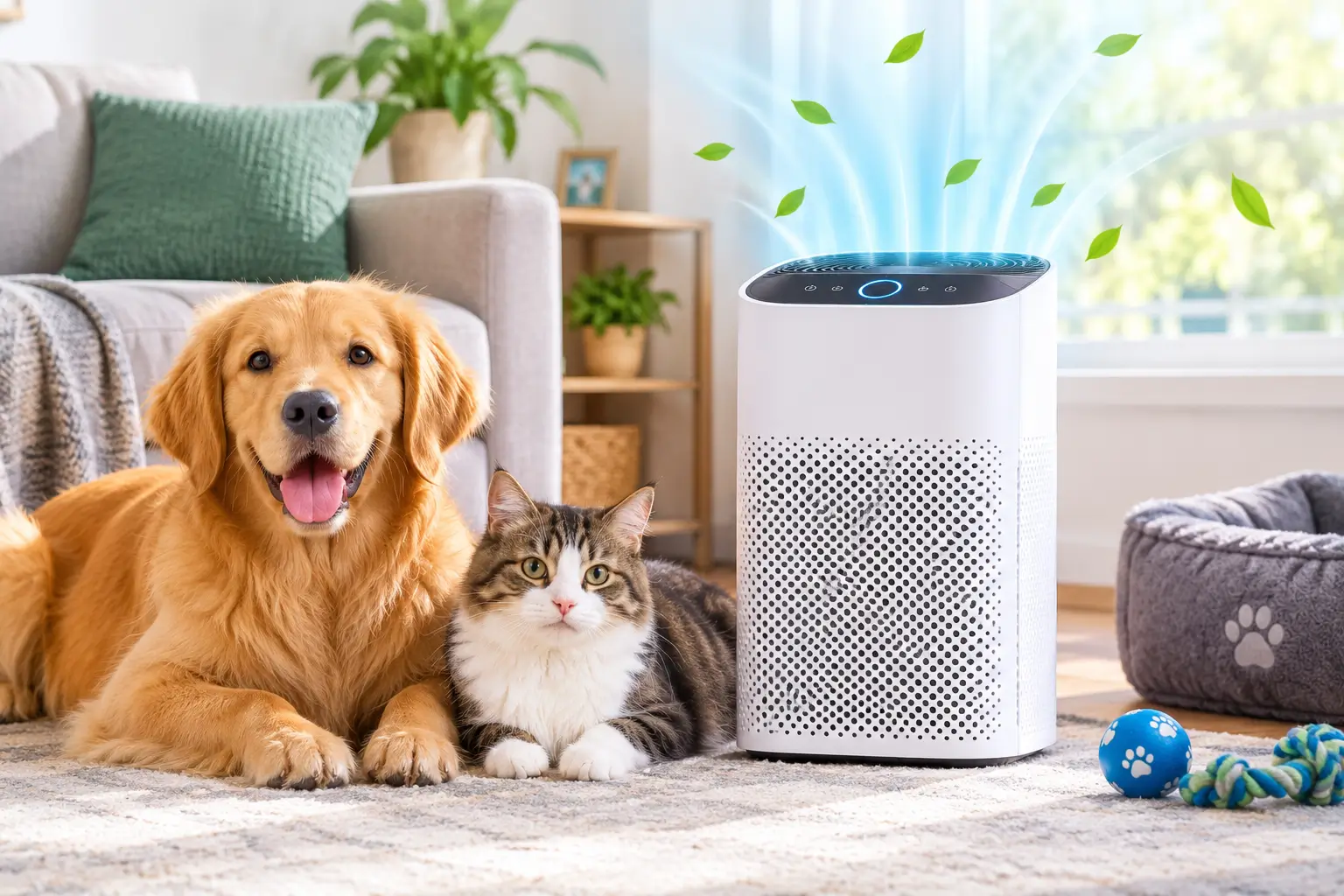
The best air filters for home with pets are true HEPA air purifiers with activated carbon layers, built to trap pet dander, hair, and odor while running quietly enough for daily use. They work by pulling air through dense filter material that catches particles as small as 0.3 microns, which is the size range for most pet dander.
Key Takeaways
- True HEPA filters catch the tiny dander particles that trigger allergies and asthma.
- Activated carbon layers matter most for pet odor control, not just dander.
- Washable pre-filters cut long-term filter replacement costs.
- Room size should match the purifier’s coverage rating (CADR), or it won’t work well.
- Multi-pet homes usually need a higher CADR rating and more frequent filter changes.
- Always check with a vet if a household member has ongoing breathing symptoms, since air filters help but don’t replace medical care.
Introduction
If you share your home with a dog or cat, you already know the drill. Fur on the couch. A faint musty smell by the litter box. A sneeze that hits the second you walk into the bedroom.
That’s why so many pet owners start searching for the best air filters for home with pets. It’s not about loving your pet any less. It’s about breathing easier while you keep them close.
Pet dander is one of the most common indoor allergens, and it’s tiny enough to stay airborne for hours. Regular vacuuming helps with hair. It does almost nothing for what’s floating in the air.
Interest in air purifiers has grown steadily as more people work from home and spend more waking hours indoors with their pets. This guide walks through what actually works, what to skip, and how to pick a filter that fits your space and your pet.
What Is the Best Air Filters for Home With Pets?
The short answer: a true HEPA purifier with a carbon filter, sized correctly for your room.
“Best” here doesn’t mean one single product. It means a category of machines built to handle three specific problems pets create: floating dander, loose hair, and lingering odor. A basic filter that only catches dust won’t cut it. You need one rated to trap particles at the microscopic level, since pet dander is often smaller than what a standard furnace filter can grab.
Most pet-focused air purifiers combine two filter types in one unit. The HEPA layer handles particles. The carbon layer absorbs smells. Some also add a pre-filter to catch large hair clumps before they clog the finer layers underneath.
Quick Facts Box
| Fact | Details |
| Best filter type for pet dander | True HEPA (captures particles down to 0.3 microns) |
| Best add-on for pet odor | Activated carbon layer |
| Ideal filter replacement | Every 6–12 months, sooner with multiple pets |
| Key sizing metric | CADR (Clean Air Delivery Rate) matched to room square footage |
| Noise consideration | Look for a low-speed setting under 50 decibels for bedrooms |
| Maintenance tip | Vacuum pre-filters weekly if the model allows it |
History and Evolution
HEPA filtration wasn’t designed with pets in mind at all. It was developed in the 1940s to capture radioactive particles in industrial and lab settings. The technology later moved into hospitals, then homes, as manufacturers realized the same fine mesh worked well against pollen, smoke, and dander.
Home air purifiers became far more common over the last two decades as awareness of indoor air quality grew. Pet-specific marketing followed once brands noticed how many buyers were shopping with allergy or odor concerns tied directly to their animals.
Key Features to Look For in Pet-Friendly Air Filters
The right filter setup depends on a few core features working together, not just one impressive spec on the box.
True HEPA filtration is non-negotiable. Some products say “HEPA-type” or “HEPA-like,” which is a marketing workaround for filters that don’t meet the real HEPA standard. Look for the words “true HEPA” specifically.
Activated carbon matters just as much for pet owners, since HEPA alone doesn’t remove odor molecules. Carbon layers absorb the gases behind smells like litter box odor or wet-dog smell.
CADR rating tells you how much air the unit actually cleans per hour. A purifier with a low CADR in a large open living room will run constantly and still fall behind.
Filter replacement design is worth checking before you buy. Washable pre-filters save money over time, while fully disposable filter sets can get expensive if you own more than one pet.
Quick Comparison Snapshot
| Option | Best For | Key Difference |
| Compact HEPA purifier | Small bedrooms, single-pet homes | Lower CADR, quieter on low settings |
| HEPA + carbon combo unit | Odor-heavy spaces (litter areas, mudrooms) | Extra carbon layer for smell control |
| Whole-room HEPA tower | Multi-pet or open-concept living areas | Higher CADR, covers larger square footage |
| Budget HEPA unit | Renters or first-time buyers | Smaller filter size, more frequent replacement |
Best Air Purifier for Pets and Dust
The best air purifier for pets and dust is one that pairs true HEPA filtration with a washable pre-filter, since dust and dander both build up fast in pet households.
Dust and dander often travel together. Fur carries dust from outdoor walks, and dander flakes off constantly, especially during shedding seasons. A unit with a coarse pre-filter catches the bigger dust particles first, which keeps the fine HEPA layer from clogging too quickly. This combination extends the life of your main filter and keeps airflow strong.
Best Air Purifier for Pet Allergies and Asthma
For allergy and asthma-sensitive households, the best choice is a true HEPA purifier sized for the room, run continuously rather than just occasionally.
Pet allergens are lightweight and stay suspended in the air far longer than people expect. Running a purifier only when you notice symptoms usually means the damage is already done. Continuous low-speed operation keeps allergen levels steadier throughout the day. If anyone in the home has diagnosed asthma, this is a topic worth raising with their doctor, since air purifiers support symptom management but aren’t a treatment on their own.
Best Air Purifier for Pets With Washable Filter
Washable filter models work best for owners who want lower long-term costs and don’t mind a bit of regular upkeep.
These units typically use a reusable pre-filter alongside a HEPA filter that still needs periodic replacement. The washable part just handles the bulk hair and dust, which you rinse or vacuum every one to two weeks depending on shedding. This setup won’t eliminate filter costs completely, but it stretches the life of the more expensive HEPA component.
Best Air Purifier for Cat Hair
Cat hair is finer and lighter than dog hair, which means it drifts further and settles on surfaces you might not expect, like curtains and light fixtures.
A purifier with strong airflow and a dense pre-filter mesh handles this well. Cats also groom constantly, which releases more airborne dander than hair alone. That’s part of why cat owners often notice allergy symptoms even without visible hair on furniture.
Best Air Purifier for Pet Dander
Pet dander is the main allergy trigger for most pet owners, and true HEPA filtration is the feature that matters most here.
Dander comes from tiny flecks of dead skin, not fur itself, which is why even hairless or low-shedding breeds still produce it. This can vary depending on the individual animal, their skin condition, and grooming frequency, so it’s best to confirm any breed-specific dander claims with your vet rather than relying on general assumptions.
Air Purifier for Pet Odor
Odor control depends far more on the carbon filter than the HEPA layer, since smell comes from gas molecules that HEPA filters aren’t designed to trap.
Litter boxes, wet fur, and accidents all release odor compounds that linger in fabric and air. A thicker carbon filter, sometimes listed by weight in pounds, generally handles stronger odors better than a thin carbon layer built into a combo filter.
Best Affordable Air Purifier for Pets
Budget-friendly options can still work well if you match the unit’s CADR rating to a smaller room instead of expecting whole-house coverage.
The tradeoff with affordable models is usually filter size and replacement frequency, not filtration quality. A smaller true HEPA filter still captures dander effectively. It just needs changing more often, so factor that into your real cost over a year, not just the sticker price.
How to Get Started: Choosing and Setting Up Your Air Filter
Getting started is simpler than most first-time buyers expect. Here’s a practical order of steps:
- Measure your room’s square footage and match it to the purifier’s CADR rating.
- Confirm the filter is labeled true HEPA, not HEPA-type.
- Check if a carbon layer is included for odor control.
- Place the unit away from walls and furniture so air can flow freely into it.
- Run it on a low or medium continuous setting rather than only when odor is noticeable.
- Set a reminder for filter checks every one to three months.
Cost Breakdown
Air purifiers built for pet households vary widely in price, and the unit cost is only part of the picture.
- Entry-level units: Lower upfront cost, smaller HEPA filters, more frequent replacements.
- Mid-range combo units: Higher upfront cost, HEPA plus carbon, moderate replacement frequency.
- Larger whole-room units: Highest upfront cost, but often lower cost per square foot covered.
- Replacement filters: This can vary depending on the brand and filter size, so it’s best to check the manufacturer’s listed replacement schedule and pricing before buying.
Common Mistakes Pet Owners Make
A few habits quietly reduce how well any air filter performs.
Running the purifier only when someone notices a smell means allergens have already built up for hours or days beforehand. Placing the unit in a corner or behind furniture restricts airflow and cuts its effective range. Buying a unit sized for a bedroom and expecting it to cover an open living room is another common gap between expectation and reality. Skipping filter changes because “it still looks clean” is risky too, since dander and odor absorption happen at a microscopic level you can’t see.
Pros and Cons
| Pros | Cons |
| Reduces airborne dander and allergens | Doesn’t remove hair from surfaces or furniture |
| Helps control persistent pet odor | Requires ongoing filter replacement costs |
| Runs quietly enough for bedrooms on low settings | Needs correct room sizing to work well |
| Supports easier breathing for sensitive household members | Not a substitute for vet-diagnosed allergy or asthma treatment |
Similar Options/Alternatives
| Option | Best For |
| Standalone dehumidifier | Homes with musty odor tied to humidity, not just pet smell |
| HVAC-integrated HEPA filter | Whole-home coverage without a standalone unit |
| Enzyme-based odor sprays | Spot-treating specific odor sources like accidents |
| Regular grooming routine | Reducing dander and hair at the source, alongside filtration |
When to Consult a Vet or Air Quality Professional
Air filters help manage allergens in the environment, but they don’t diagnose or treat health issues in people or pets.
If a household member develops ongoing coughing, wheezing, or skin reactions, that’s worth discussing with a doctor rather than assuming an air purifier alone will resolve it. Similarly, if your pet shows signs of skin irritation, excessive shedding, or unusual odor changes, a veterinarian can check for underlying causes like allergies or skin conditions. This can vary depending on the individual pet and household, so it’s best to confirm any health concerns directly with a licensed professional.
Fun Facts
- True HEPA filters are built to capture at least 99.97% of particles at their most penetrating size, based on the accepted industry HEPA standard.
- HEPA technology was originally developed for filtering hazardous particles in industrial settings before moving into home use.
- Pet dander is made of shed skin cells, not fur, which is why even low-shedding pets still produce it.
- Activated carbon works through a chemical process called adsorption, where odor molecules stick to the carbon’s surface.
- Cats groom themselves several times a day, which releases dander into the air more often than people usually realize.
- Indoor air can carry allergens well after a pet leaves a room, since dander stays lightweight and airborne for a while.
Frequently Asked Questions
What is the best air filter for a home with pets? The best option is a true HEPA air purifier paired with an activated carbon filter. The HEPA layer captures dander and hair particles, while carbon handles lingering odors from litter boxes or wet fur. Look for a unit with a CADR rating that matches your room size, since even the best filter underperforms if it’s too small for the space it’s covering.
Are air purifiers good for houses with pets? Yes, they’re genuinely useful for pet households, especially where allergies or strong odors are a concern. They reduce airborne dander and improve overall air freshness. That said, they work best alongside regular grooming and cleaning, not as a replacement for those habits. Combining both gives noticeably better results than relying on filtration alone.
Do pet air filters really work? True HEPA filters do work, backed by decades of use in hospitals and labs before moving into homes. Results depend heavily on correct sizing and consistent use, though. A purifier running occasionally in an oversized room won’t perform the same as one matched to its space and left on continuously at a low setting.
How can I remove pet odor from the air? Activated carbon filters are the most effective air-based solution, since they absorb odor-causing gas molecules that HEPA filters can’t catch. Pairing that with regular litter box cleaning, washing pet bedding weekly, and light ventilation from open windows tackles odor at the source instead of just masking it in the air.
How often should I replace a pet air filter? Most manufacturers recommend every six to twelve months, though homes with multiple pets or heavy shedding often need changes closer to the six-month mark. This can vary depending on the specific filter and household, so checking your unit’s manual for its exact recommendation is the most reliable approach.
Final Thoughts
Choosing the right setup among the best air filters for home with pets really comes down to matching the filter type to your actual problem. If dander and allergies are the main issue, true HEPA does the heavy lifting. If odor is the bigger concern, a strong carbon layer matters more.
No air purifier replaces good habits like regular grooming, frequent vacuuming, and clean bedding. But paired with those routines, the right filter makes a noticeable difference in how a pet-owning home actually feels to breathe in. Start with your room size, check for true HEPA and carbon layers, and build your routine around consistent use rather than occasional runs.

Sophia Bennett is an animal care contributor at PetJournalHub. She writes educational articles about companion animals, pet wellness, training, and daily care. She believes that trustworthy information helps every pet owner build a healthier and happier life for their pets.