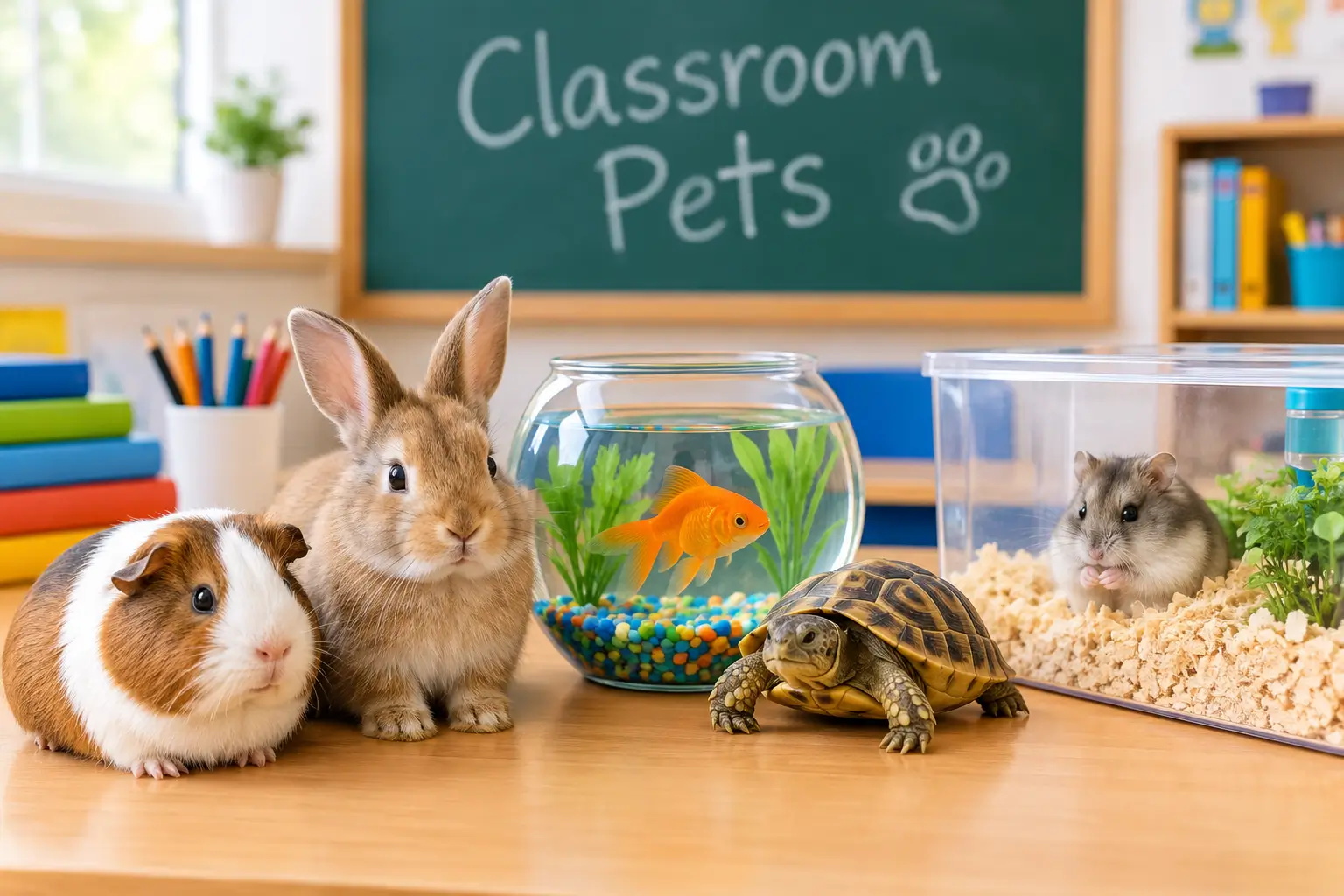
A classroom pet is a small animal kept in a school setting to teach kids responsibility, science, and empathy. The best classroom pets are low-maintenance, safe to handle, and able to survive weekends and school breaks without daily attention. Guinea pigs, bettas, and leopard geckos are common top picks.
Key Takeaways
- The best classroom pets are calm, easy to care for, and safe for kids to observe or handle.
- Guinea pigs, fish, leopard geckos, and hermit crabs are popular choices across grade levels.
- Younger kids do better with pets that need less direct handling, like fish or hamsters in a secure habitat.
- Budget for a habitat, food, and basic supplies — most classroom pets cost $50–$200 to set up.
- Reptiles and amphibians carry a salmonella risk, so handwashing rules matter.
- Always check school policy and student allergies before bringing any animal into a classroom.
Introduction
Teachers search for the best classroom pets every fall, usually right after they’ve decided a fish tank or a cage would make the room feel more alive. A classroom pet gives kids something real to care for. It teaches routine, gentle handling, and what it means to be responsible for another living thing.
Interest in classroom pets has grown alongside more hands-on science curriculums. Many teachers now use a class pet to teach life cycles, habitats, and basic biology instead of just reading about them. It’s a small addition to a classroom, but it changes how kids show up each day.
The tricky part is picking the right animal. Not every pet fits a school schedule, a shared space, or a room full of curious hands. This guide walks through the best classroom pets for different ages, what they cost, and how to keep them healthy and safe.
What Is a Classroom Pet?
A classroom pet is any small animal a teacher keeps in the room for students to observe, feed, or care for. It’s usually chosen because it’s quiet, low-risk, and easy to maintain over weekends.
Common classroom pets include guinea pigs, hamsters, fish, leopard geckos, hermit crabs, and stick insects. Some teachers also keep ant farms or small aquariums with snails or shrimp. The animal is usually housed in a secure tank or cage that stays in one spot all year.
The goal isn’t just decoration. A good classroom pet supports learning. Kids track feeding schedules, watch behavior change, and sometimes help clean the habitat. It works best when the whole class understands the animal’s basic needs from day one.
Quick Facts Box
| Fact | Details |
| Typical setup cost | $50–$200 depending on species |
| Best for young kids | Fish, hamsters in a secure enclosure |
| Best for older kids | Leopard geckos, hermit crabs, guinea pigs |
| Weekend care needed | Varies — fish and reptiles usually need less |
| Common health risk | Salmonella from reptiles and amphibians |
| Average lifespan | 1–2 years (hamsters) up to 15+ years (turtles, tortoises) |
History and Evolution
Classroom pets became more common in the mid-20th century, as science education shifted toward hands-on observation instead of just textbook learning. Fish tanks and small mammal cages started showing up in elementary classrooms as an easy way to teach life cycles.
Interest has grown again in recent years. Many schools now treat a classroom pet as part of a broader push for social-emotional learning, not just science. Caring for an animal gives kids a low-pressure way to practice patience and empathy.
Key Characteristics and Care Needs
The best classroom pets share a few traits. They’re calm around noise, don’t need constant attention, and can handle a slightly unpredictable schedule.
Here’s what matters most when judging any potential classroom pet:
- Temperament: Calm, not easily startled by groups of kids
- Handling needs: Safe to touch or fully hands-off, depending on the species
- Space: Fits in a corner without disrupting the room
- Weekend survival: Can go 2–3 days without direct care, or has a simple auto-feeder
- Noise level: Quiet enough not to distract during lessons
- Allergy risk: Lower risk than cats or dogs, but check with the school nurse
This can vary depending on the specific animal and the age group in the room, so it’s worth matching the pet to the actual class before buying anything.
Quick Comparison Snapshot
| Option | Best For | Key Difference |
| Guinea Pig | Elementary classrooms | Social, needs a cage mate, more daily interaction |
| Betta Fish | Any grade, low-supervision rooms | No handling needed, very low maintenance |
| Leopard Gecko | Middle and high school | Hands-off reptile, long lifespan, minimal noise |
| Hermit Crab | Elementary and middle school | Low cost, but needs humidity monitoring |
Top 10 Classroom Pets
There isn’t one single “best” classroom pet — it depends on the age group and how much handling the teacher wants to allow. But a few animals show up again and again as reliable choices.
Popular options include guinea pigs, betta fish, leopard geckos, hermit crabs, hamsters, stick insects, snails, tree frogs, small tortoises, and ant farms. Each one fits a different classroom style, from hands-on handling to pure observation.
Fish and reptiles tend to be the lowest-maintenance picks. Guinea pigs and hamsters need more daily interaction but reward kids with more personality and visible behavior.
Classroom Pet Ideas Beyond the Usual Picks
If a cage or tank feels like too much commitment, there are lighter options. An ant farm needs almost no daily care and still teaches kids about colony behavior and teamwork.
A small aquarium with snails or shrimp is another low-effort idea. It still gives kids something to observe, without the feeding schedule of a mammal. Stick insects are another favorite — they’re quiet, harmless, and only need fresh leaves every few days.
These ideas work well for teachers who want the educational value of a classroom pet without the daily responsibility of a more active animal.
Best Classroom Pets for Elementary School
Younger kids need pets that are safe even with rough or unpredictable handling. Fish are a strong pick here, since kids can observe without ever touching the tank.
Hamsters can work too, but only in a secure enclosure with supervised handling. Guinea pigs are often a better fit for this age group than hamsters, since they’re generally calmer and less likely to bite when startled.
Avoid reptiles for very young classrooms if possible. Kids under 5 have a higher salmonella risk from handling reptiles and amphibians, according to general public health guidance.
Best Classroom Pets for Middle School
Middle schoolers can usually manage more responsibility, which opens up more options. Leopard geckos are a great fit here — they’re calm, nocturnal, and don’t need daily handling to stay healthy.
Hermit crabs also do well at this age. Students can take turns monitoring humidity and shell changes, which ties in nicely with science lessons on molting and adaptation.
This age group also handles feeding schedules and cleaning routines better, so a guinea pig or small rabbit can work if the school allows it.
Best Classroom Pets for High School
High school classrooms can support pets that need a bit more specialized care, since students are old enough to follow detailed instructions. Bearded dragons are a common choice — they’re social for a reptile and tolerate gentle handling well.
Aquariums with a small community of fish also work well in high school science rooms, especially for lessons on ecosystems and water chemistry. Ant farms remain popular here too, often tied into biology units on social insects.
Older students can also take on more of the actual care, like cleaning tanks or tracking feeding logs, which makes higher-maintenance pets more realistic.
Best Classroom Pets for Teachers
From a teacher’s point of view, the best classroom pet is one that doesn’t add stress to an already full schedule. That usually means low daily upkeep and a pet that can survive a long weekend without a special plan.
Fish and reptiles win here for most teachers, since they don’t need daily handling and can often go a few days without feeding. Guinea pigs are more work but tend to be worth it for teachers who want a pet the whole class bonds with.
It also helps to have a backup plan for school breaks. Some teachers rotate the pet home with a student’s family; others use an automatic feeder for fish tanks.
Best Class Pets for 5th Grade
Fifth graders are usually ready for more hands-on responsibility than younger kids, but still benefit from a pet that’s forgiving of mistakes. Guinea pigs tend to be a strong fit at this age — they’re social, easy to read, and safe to handle with supervision.
Hermit crabs and leopard geckos also work well for 5th grade. Both are low-risk, and the class can take turns with simple care tasks like feeding or checking the habitat.
Are Turtles Good Classroom Pets?
Turtles can live for decades, which makes long-term planning tricky for a classroom. Most turtles also need larger tanks and stronger filtration than teachers expect going in.
There’s also a real safety issue: turtles and other reptiles can carry salmonella, and small turtles have specific handling guidelines because of this. Many schools avoid turtles for younger grades for that reason. If a class does keep one, strict handwashing rules and supervised handling are a must, and it’s worth confirming any specific health guidance with a vet or your local health department.
Daily Care Routine and How to Get Started
Getting started is simpler than most teachers expect. Here’s a basic starting checklist:
- Confirm your school’s policy on classroom pets and check for student allergies.
- Choose a pet that matches your class’s age group and your own schedule.
- Set up the habitat a few days before the pet arrives, so temperature and conditions are stable.
- Create a simple care chart so students know who feeds or checks on the pet each day.
- Plan for weekends, holidays, and summer break before you bring the animal home.
Daily care usually takes just a few minutes — checking food, water, and habitat conditions. The bigger job is teaching kids the routine so it runs smoothly without you.
Cost Breakdown
Costs vary a lot by species, but most classroom pets are affordable to start and maintain.
- Fish: $20–$60 for a starter tank, plus $5–$10 a month for food
- Guinea pigs: $80–$150 for a cage and supplies, plus $20–$30 a month for food and bedding
- Leopard geckos: $100–$200 for a full setup with heating, plus low monthly food costs
- Hermit crabs: $30–$70 for a habitat, with low ongoing costs
This can vary depending on where you shop and whether the school already has some supplies on hand.
Common Mistakes Teachers Make
A few mistakes show up again and again with classroom pets. Knowing them ahead of time saves a lot of trouble.
- Choosing a pet before checking school policy or allergies
- Underestimating weekend and holiday care needs
- Letting handling go unsupervised, especially with reptiles
- Skipping a backup care plan for summer break
- Not researching the pet’s actual lifespan before committing
Most of these come down to planning ahead instead of picking a pet on impulse.
Pros and Cons of Classroom Pets
| Pros | Cons |
| Teaches responsibility and routine | Requires a backup plan for breaks |
| Supports hands-on science lessons | Some pets carry health risks (like salmonella) |
| Builds empathy and calm behavior | Allergies can be an issue for some students |
| Usually low-cost to maintain | Long lifespans (turtles, tortoises) mean long commitment |
Similar Options and Alternatives
| Option | Best For |
| Betta Fish | Classrooms with limited time for hands-on care |
| African Dwarf Frogs | Aquariums that already house fish |
| Stick Insects | Very low-maintenance science observation |
| Snails | Simple life-cycle lessons with almost no upkeep |
| Small Tortoise | Long-term class projects (multi-year commitment) |
When to Consult a Vet or Professional
Any classroom pet showing signs of illness — like not eating, unusual lethargy, or visible injury — should be checked by a vet as soon as possible. Don’t try to diagnose or treat a sick classroom pet yourself.
It also helps to consult a vet before choosing a species, especially for reptiles or amphibians. A vet or reputable breeder can confirm proper habitat setup, since incorrect temperature or humidity is one of the most common causes of health problems in these pets.
Fun Facts About Classroom Pets
- Leopard geckos can live over 15 years with proper care.
- Guinea pigs need vitamin C in their diet, since they can’t produce it themselves.
- Betta fish are territorial and should generally be housed alone.
- Ant farms can show a full colony structure within just a few weeks.
- Hermit crabs must molt and shed their exoskeleton as they grow.
- The FDA has restricted the sale of small turtles since the 1970s due to salmonella concerns.
Frequently Asked Questions
What is the best pet for a classroom? There’s no single best pet — it depends on the age group and how much handling the teacher wants. For most classrooms, low-maintenance options like betta fish or leopard geckos work well because they don’t need daily handling and can handle a quiet weekend alone. Guinea pigs are a strong choice when the goal is more student interaction, since they’re social and easier for kids to read than reptiles.
What animal is good for ADHD? Some kids with attention or focus challenges respond well to animals that offer calm, predictable routines, like fish or small reptiles. Watching a fish tank or a gecko’s slow movements can have a soothing effect for some students. This varies a lot by individual, so it’s worth talking to a teacher, counselor, or pediatrician about what kind of interaction might help a specific child.
What are the top 10 pets for kids? Beyond classroom settings, popular kid-friendly pets include dogs, cats, guinea pigs, rabbits, hamsters, fish, leopard geckos, hermit crabs, birds like budgies, and small tortoises. The right pick depends heavily on the child’s age, the family’s living space, and how much daily care an adult is willing to help with, since even “easy” pets still need supervision from a parent.
What pet should I get as a student? Students living in dorms or small apartments usually do best with low-maintenance pets like fish, a small reptile, or a hamster, since these fit tight spaces and inconsistent schedules better than dogs or cats. Always check housing rules first — many dorms restrict or fully ban pets, and even “allowed” pets sometimes come with size or species limits.
Final Thoughts
Picking the best classroom pet isn’t about finding the cutest option — it’s about matching the animal to your class, your schedule, and your school’s rules. A calm fish tank can teach just as much as a guinea pig, as long as it fits the room it’s going into.
Start small if you’re unsure. A low-maintenance pet like a betta or a leopard gecko gives you room to learn the routine before committing to something more social, like a guinea pig. Whatever you choose, a little planning up front makes the whole year easier for you and the class.

Daniel Brooks is a pet research writer at PetJournalHub. He specializes in pet behavior, product research, and responsible pet ownership. He focuses on delivering accurate, reader-friendly guides that help pet owners provide the best care for their animals.