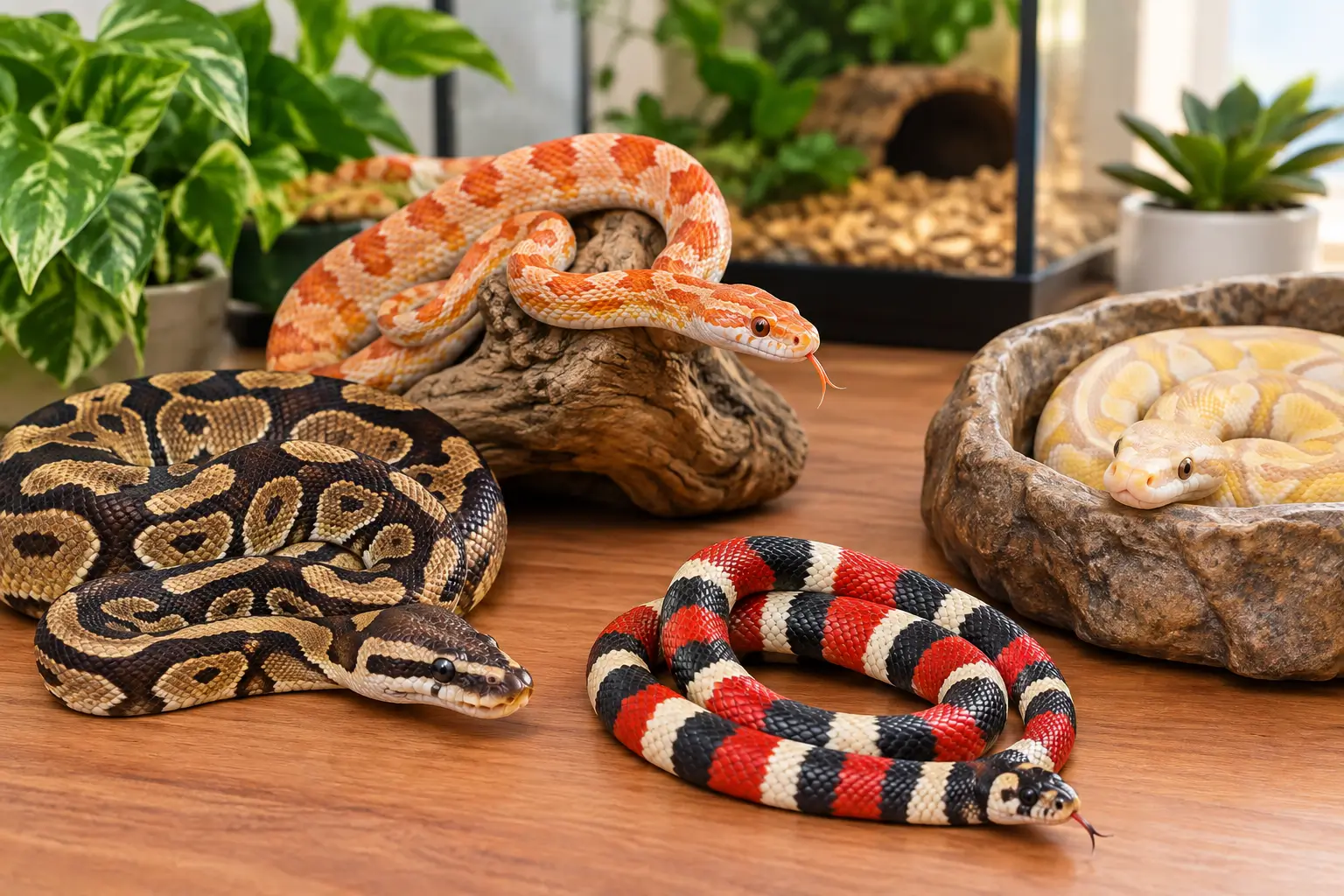
Snakes you can have as pets range from easygoing corn snakes and ball pythons to larger species like boa constrictors, each with different space, handling, and experience needs. Most pet-friendly snakes are non-venomous, low-maintenance compared to dogs or cats, and can live 10 to 30 years with proper care.
Key Takeaways
- Corn snakes and ball pythons are the top picks for first-time snake owners.
- Snake size varies a lot — some stay under 3 feet, others grow past 8 feet.
- Most pet snakes need a secure enclosure, a heat source, and a feeding schedule based on prey size, not a calendar date.
- Venomous species like copperheads are not appropriate pets for most people and are restricted or banned in many areas.
- Upfront costs usually run $150–$500; ongoing costs are lower than most mammals.
- Always check local and state laws before buying any snake.
Introduction
Snake ownership has grown steadily over the past decade, and it’s not hard to see why. Snakes don’t need daily walks. They don’t bark at the mail carrier. Many species live for decades, which means a pet snake can become a genuine long-term companion.
Still, picking the right snake matters. Some species handle well and forgive beginner mistakes. Others grow too large for a typical home, or need experience most new owners don’t have yet.
This guide walks through the snakes you can have as pets, from the friendliest starter species to the giants that need real planning. You’ll also find honest guidance on cost, daily care, and when a species just isn’t a good fit for a beginner.
What Is “Snakes You Can Have as Pets”?
This phrase covers the non-venomous, captive-bred snake species that are legal to own in most areas and suited to life in a home enclosure. It includes small, calm species for beginners and larger, more advanced species for experienced keepers.
Not every snake fits this category. Wild-caught snakes, venomous species, and some large constrictors come with legal restrictions, higher risk, or care needs that go beyond casual pet ownership. A good pet snake is typically captive-bred, has a predictable temperament, and comes from a species with well-documented care requirements.
Popular examples include the corn snake, ball python, king snake, and (for more experienced owners) certain boa species. Each has its own size range, temperament, and care routine, which is why matching the snake to your experience level matters so much.
Quick Facts Box
| Fact | Details |
| Typical lifespan | 10–30 years, depending on species |
| Beginner-friendly species | Corn snake, ball python, king snake |
| Average adult size | 3–6 feet for most popular pet species |
| Enclosure type | Secure, escape-proof tank or PVC enclosure with a locking lid |
| Diet | Pre-killed or frozen-thawed rodents, sized to the snake |
| Handling frequency | 1–3 times per week once settled in |
| Upfront cost | Roughly $150–$500 for snake, enclosure, and supplies |
Key Characteristics and Care Needs
Pet snakes share a few basic needs, even though species vary a lot in size and personality. Every snake needs a temperature gradient in its enclosure, a hide box on both the warm and cool ends, and fresh water at all times.
Temperament also varies by species and by individual snake. Corn snakes and king snakes are generally calm and tolerate handling well. Ball pythons can be shy and may refuse food when stressed. Larger boas need confident, experienced handling because of their strength, not aggression.
Shedding is another shared trait. A healthy snake sheds its skin in one piece every few weeks to months, depending on age and species. Cloudy eyes and dull skin in the days before a shed are completely normal.
Quick Comparison Snapshot
| Option | Best For | Key Difference |
| Corn Snake | First-time owners | Easiest temperament, smallest space needs |
| Ball Python | Owners wanting a calm, low-activity pet | Slower metabolism, more finicky eater |
| King Snake | Owners who want an active, curious pet | Higher activity level, strong feeding response |
| Boa Constrictor | Experienced owners with more space | Grows much larger, needs a bigger enclosure |
Best Snake Pets for Beginners
The best snake pets for beginners are the corn snake, the ball python, and the king snake. All three stay a manageable size, handle well, and have simple, well-documented care needs.
Corn snakes usually top this list. They rarely bite, adapt to handling quickly, and come in dozens of color patterns, called morphs. Ball pythons are a close second. They’re calmer and more compact, though some individuals go through picky eating phases that can worry new owners.
King snakes bring a bit more energy. They’re curious, food-driven, and generally easy to handle, though they should never be housed with other snakes since they’re known to eat other reptiles, including other king snakes.
Corn Snake
The corn snake is one of the most recommended pet snakes in the world, and for good reason. It stays a manageable 3 to 5 feet long, rarely bites, and adjusts to a feeding and handling routine within weeks of coming home.
Corn snakes come in a huge range of colors and patterns thanks to decades of selective breeding. This variety is part of why they’re so popular with both new owners and collectors.
Their care is straightforward: a secure enclosure, a temperature gradient between roughly 75–85°F, and appropriately sized frozen-thawed mice. This can vary depending on the snake’s age and size, so it’s worth checking a species-specific care sheet or asking a reptile vet for specifics.
Medium Sized Snakes for Pets
Medium sized snakes for pets typically stay between 3 and 6 feet as adults, which makes them easier to house and handle than giant species. This category includes corn snakes, king snakes, ball pythons, and most milk snakes.
This size range hits a sweet spot for many owners. The enclosures stay reasonably compact, feeding amounts stay small, and handling doesn’t require the strength or experience that larger constrictors demand.
Medium snakes are also a natural step up for someone who has kept a smaller species and wants a bit more presence without jumping straight to an 8-foot boa.
Big Snakes You Can Have as Pets
Big snakes you can have as pets include species like the boa constrictor and, for very experienced keepers, some python species that can exceed 8 feet. These snakes need significantly more space, stronger enclosures, and confident handling experience.
A full-grown boa constrictor can reach 6 to 10 feet, depending on the specific type and its genetics. That length means a much larger enclosure, higher food costs, and a snake strong enough that handling isn’t something to learn on the fly.
Because of the size and strength involved, big snakes are best suited to owners who’ve already kept smaller species successfully. Many reptile shelters see surrendered giant snakes from owners who underestimated the long-term space and handling commitment.
Most Beautiful Snakes for Pets
Beauty is subjective, but a few pet snake species consistently get singled out for their patterns and colors. Corn snakes, milk snakes, and certain ball python morphs are frequently mentioned by keepers and breeders for their striking looks.
Ball python morphs, in particular, have become a huge part of the reptile hobby. Breeders have developed patterns ranging from deep black “pastels” to bright yellow “albinos,” and rare morphs can carry a high price tag because of how selective breeding for color works.
Milk snakes and king snakes also stand out, often compared to venomous coral snakes because of similar red, black, and yellow banding — though the two are easy to tell apart once you know what to look for, and milk snakes are completely harmless.
What Is the Most Friendly Snake to Have as a Pet
The corn snake is widely considered the friendliest snake to have as a pet. It’s known for tolerating handling well, rarely biting, and adjusting quickly to a regular routine, which makes it a common recommendation from reptile keepers and pet stores alike.
Ball pythons are a close second in terms of temperament. They’re generally docile and slow-moving, though they can be more reserved than corn snakes, especially when first settling into a new home.
“Friendly” for a snake looks different than it does for a dog. It mostly means low bite risk, calm behavior during handling, and a snake that doesn’t stay defensive or stressed once it’s comfortable in its enclosure.
Copperhead Snakes You Can Have as Pets
This section covers copperheads for informational purposes only — they are not recommended as pets for most people. Copperheads are venomous pit vipers, and many US states restrict or fully ban private ownership without a special permit.
Even where legal, keeping a venomous snake requires specialized secure caging, antivenom access planning, and real experience with venomous animal handling. A bite can cause serious injury and requires immediate emergency medical care.
If you’re drawn to a copperhead’s appearance, a non-venomous look-alike like a corn snake or milk snake gives you similar coloring without the legal and safety complications. Anyone seriously considering venomous snake ownership should consult local wildlife authorities and an experienced venomous snake handler first, not a general pet care guide.
Snakes You Can Have as Pets for Sale
When you’re ready to buy, look for captive-bred snakes from reputable breeders or established reptile expos rather than wild-caught animals. Captive-bred snakes are typically healthier, calmer, and better adjusted to handling.
A few signs of a reputable seller: clear answers about the snake’s age and feeding history, a visibly clean and appropriately sized enclosure, and willingness to answer detailed care questions. Be cautious of sellers who can’t confirm feeding history or seem rushed to complete the sale.
Local reptile expos, established breeders, and specialty reptile stores are generally more reliable sources than casual online marketplace listings, where health history is harder to verify.
Daily Care Routine and How to Get Started
Getting started with a pet snake is simpler than most new owners expect, as long as the basics are in place before the snake comes home. Here’s a general starting checklist:
- Set up the enclosure with a secure lid, substrate, hides, and a water dish.
- Install a heat source and thermometer to create a proper temperature gradient.
- Let the snake settle in for 5–7 days before the first handling session.
- Feed on a species-appropriate schedule, usually once every 5–14 days.
- Handle gently for short sessions, gradually increasing time as the snake adjusts.
- Check shedding progress and enclosure humidity weekly.
Consistency matters more than complexity here. Snakes do best with a predictable routine and minimal sudden changes to their environment.
Cost Breakdown
Snake ownership is generally affordable compared to many other pets, though upfront setup costs more than ongoing care. Here’s a rough breakdown, which can vary depending on species, enclosure size, and where you shop:
- Snake itself: $30–$150 for common species like corn snakes; rare morphs can cost much more.
- Enclosure: $100–$300 for an appropriately sized, secure setup.
- Heating and lighting: $30–$80 for heat mats, thermostats, and thermometers.
- Substrate and hides: $20–$50 initially, with occasional substrate replacement.
- Food: $10–$30 per month, depending on snake size and feeding frequency.
- Vet checkups: Costs vary by location and reptile vet availability; budget for at least one initial checkup.
Common Mistakes Pet Owners Make
New snake owners tend to run into the same handful of issues. Buying an enclosure that’s too small is one of the most common — snakes need room to stretch out and explore, not just curl in a corner.
Handling too soon after bringing a snake home is another frequent mistake. A stressed, newly-arrived snake is more likely to refuse food or act defensive. Giving it a settling-in period first almost always pays off.
Feeding prey that’s too large is a third common error. Oversized meals can cause regurgitation or health issues over time. When in doubt about proper prey size, a reptile vet or experienced breeder can help you calibrate.
Pros and Cons
| Pros | Cons |
| Long lifespan, often 10–30 years | Not a cuddly, interactive pet like a dog or cat |
| Low daily maintenance once set up | Upfront enclosure cost can be significant |
| Wide range of sizes and temperaments to choose from | Some species have strict legal restrictions |
| Minimal noise, allergens, and odor | Feeding live or frozen prey isn’t for everyone |
| Many species are beginner-friendly | Long-term commitment given their lifespan |
Similar Snakes and Alternatives
| Option | Best For |
| Milk Snake | Owners who like bold colors but want an easy-care beginner species |
| Rosy Boa | Owners wanting a small, docile boa species |
| Garter Snake | Owners interested in a smaller, active, easy-to-find species |
| Ball Python Morphs | Collectors interested in color and pattern variety |
When to Consult a Vet or Professional
Any change in appetite, unusual lethargy, mouth discoloration, or difficulty shedding should prompt a call to a reptile-experienced veterinarian. Snakes hide illness well, so subtle changes can matter more than they seem.
Respiratory infections, mites, and improper shedding are among the more common issues reptile vets see, though this can vary by species and enclosure setup. A vet familiar with reptiles, not just general pet medicine, will give you the most reliable guidance.
Before bringing any snake home, it’s also worth checking local exotic pet laws. Some cities and states restrict certain species entirely, regardless of how they’re bred or sold.
Fun Facts
- Snakes smell partly through their tongue, using it to carry scent particles to a sensory organ in the roof of their mouth.
- Many pet snake species can go weeks between meals without any health issues.
- A snake’s shed skin is called an “exuvia.”
- Ball pythons get their name from their habit of curling into a tight ball when stressed.
- Corn snakes may have gotten their name from being commonly found near grain stores, where they hunted rodents.
- Snakes don’t have eyelids — a clear scale called a “brille” covers and protects each eye instead.
Frequently Asked Questions
What’s the friendliest snake to have as a pet? Corn snakes are usually named the friendliest pet snake by keepers and breeders. They tolerate handling well, rarely bite, and settle into a routine quickly. Ball pythons are a close second, known for calm, low-activity temperaments. “Friendly” here mostly means predictable, low-stress behavior rather than an interactive bond like you’d get from a dog.
Which snake is best for a pet? For most first-time owners, the corn snake is the best overall pick because of its manageable size, calm temperament, and simple care needs. Ball pythons and king snakes are strong alternatives depending on your preference for activity level. The “best” choice really depends on your available space, experience level, and how much handling you want to do.
What snake is worth $100,000? Extremely rare ball python morphs with unique genetic color combinations have reportedly sold for very high prices at reptile expos and private sales, driven by rarity and breeding potential rather than the snake’s care needs. Exact figures and specific sales can vary widely and aren’t something we can verify case by case, so treat high-dollar morph claims with some skepticism unless they come from a verified breeder source.
What is the cutest pet snake? “Cute” is subjective, but hognose snakes are frequently mentioned for their upturned, pig-like snout and dramatic defensive behaviors, like playing dead. Ball python morphs with soft color patterns and corn snakes with bright patterning also come up often in keeper polls and reptile forums. Appearance shouldn’t be the only factor — temperament and care needs matter more for a good long-term match.
Final Thoughts
Choosing from the many snakes you can have as pets really comes down to matching the species to your experience, space, and comfort level. A corn snake or ball python covers most beginners well, while larger species make more sense once you’ve built up some hands-on experience.
Whatever you choose, prioritize a captive-bred snake, a properly sized enclosure, and a feeding routine you can stick with. Snakes reward consistent, low-drama care more than almost any other pet, and that makes them a genuinely rewarding long-term companion for the right owner.

Daniel Brooks is a pet research writer at PetJournalHub. He specializes in pet behavior, product research, and responsible pet ownership. He focuses on delivering accurate, reader-friendly guides that help pet owners provide the best care for their animals.