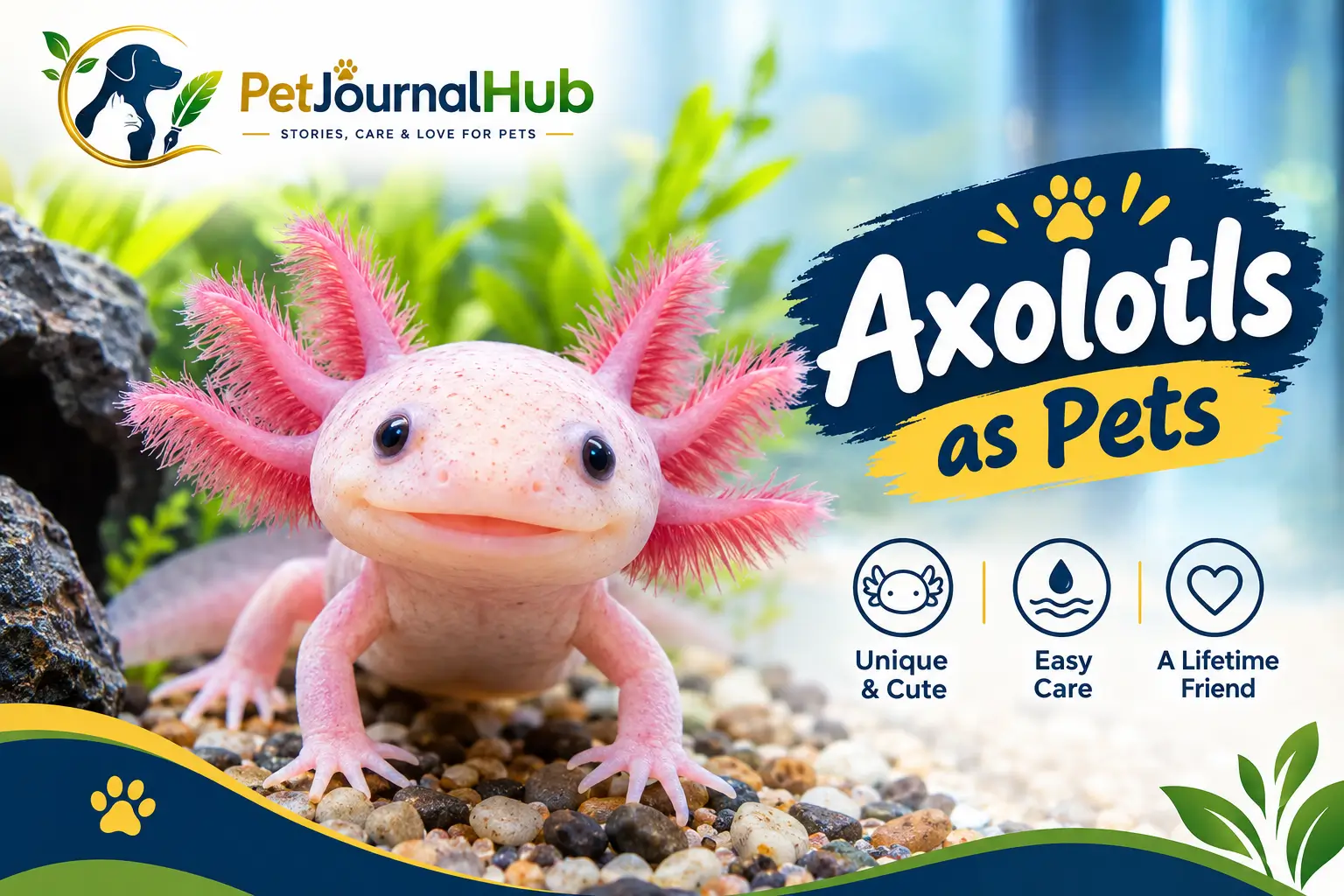
Axolotls are aquatic salamanders that can make fascinating pets for prepared owners. They need a spacious aquarium, cool water, gentle filtration, careful feeding, and regular water testing. Unlike many common pets, they do not enjoy handling or warm surroundings. Before bringing one home, learn its care needs, check local laws, and find an amphibian veterinarian.
Key Takeaways
- Axolotls are amphibians, not fish, despite their nickname, Mexican walking fish.
- They need a fully aquatic habitat with cool, clean water and gentle filtration.
- A properly cycled aquarium matters more than decorative features or expensive accessories.
- Their carnivorous diet includes earthworms and suitable sinking amphibian pellets.
- They are better suited to adults and responsible older teens than young children who expect a cuddly pet.
- Always check local ownership rules and locate an experienced exotic-animal veterinarian before buying one.
Introduction
Axolotls attract attention because of their feathery external gills, wide mouths, and unusual appearance. Some have pink bodies and dark eyes, while others display dark brown, gray, or golden colors. Their curious looks have made them familiar to aquarium enthusiasts and people who enjoy unusual animals.
However, owning one involves more than choosing a cute amphibian and filling a tank with water. Axolotls depend on stable water conditions, cool temperatures, suitable food, and a safe environment. A setup that works for tropical fish may not meet their needs.
People researching axolotls as pets often have practical questions. Can beginners care for them? Do they recognize their owners? How much does the aquarium cost? Can children handle them safely? The answers depend on your expectations, budget, and ability to maintain an aquatic habitat.
These animals can thrive in captivity when owners meet their needs. Yet they are not ideal for everyone. Warm climates, unreliable electricity, limited aquarium space, and a lack of qualified veterinary care can make ownership difficult.
This guide explains the essentials, from choosing a responsible source to preparing an aquarium, feeding your axolotl, and recognizing potential health problems. It also covers legal concerns, common mistakes, and alternatives worth considering before you commit.
What Are Axolotls as Pets?
Axolotls (Ambystoma mexicanum) are aquatic salamanders native to Mexico. They belong to the amphibian group and retain juvenile features, including external gills, throughout their lives. This biological trait is called neoteny.
Unlike many salamanders, axolotls normally remain aquatic rather than undergoing the usual transformation into a land-dwelling adult. They breathe mainly through their external gills and also exchange gases through their skin.
Pet axolotls come in several color varieties. Common examples include wild-type, leucistic, albino, and melanoid forms. These differences affect appearance, not the animal’s basic care requirements.
An axolotl is not a pet you can cuddle, take for walks, or keep in a small bowl. It needs an aquarium that supports its adult size and provides stable water conditions. Responsible ownership means meeting these needs throughout the animal’s life.
Quick Facts Box
| Fact | Details |
| Scientific name | Ambystoma mexicanum |
| Animal group | Amphibian; aquatic salamander |
| Native range | Mexico, particularly the Xochimilco lake and canal system |
| Adult size | Commonly around 9–12 inches, with individual variation |
| Lifespan | Often around 10–15 years in captivity with good care; individual outcomes vary |
| Diet | Carnivorous |
| Preferred temperature | Approximately 60–68°F (16–20°C), with many care guides recommending 60–64°F (16–18°C) |
| Housing | Freshwater aquarium |
| Temperament | Generally calm, but not a handling pet |
| Activity | Often more active during dimmer periods |
| Main care challenge | Maintaining cool temperatures and excellent water quality |
| Conservation status | Critically endangered in the wild |
Use these figures as a starting point, not a substitute for a species-specific care plan. Veterinary and husbandry guidance may differ slightly, especially on temperature ranges and feeding frequency.
Where Do Axolotls Come From?
Axolotls originated in the freshwater lakes and waterways around Mexico City, particularly the Xochimilco system. Their natural habitat once covered a wider area, but urban development and environmental damage have severely reduced suitable habitat.
Wild axolotls face threats from water pollution, habitat loss, invasive fish, and other changes to their ecosystem. Their conservation status makes responsible sourcing especially important.
Captive-bred axolotls are available through legitimate breeders and specialist sellers. A prospective owner should ask about the animal’s origin, health history, feeding habits, and age.
Never capture a wild axolotl or release a captive animal into a pond, canal, or lake. Releasing pets can harm local ecosystems and expose the animal to conditions it cannot survive.
History and Evolution
Scientists value axolotls because of their unusual development and remarkable ability to regenerate certain body structures. Researchers study these abilities to understand tissue growth and repair.
Their external gills and aquatic lifestyle also make them distinctive among salamanders. Axolotls can reach sexual maturity without completing the typical metamorphosis seen in many related amphibians.
Their popularity in home aquariums reflects their unusual appearance and the public’s growing interest in less common pets. However, online attention does not make them simple animals to maintain.
A responsible owner should put welfare ahead of appearance or trends. Choose an axolotl only when you can provide the right environment for its entire life.
Key Characteristics and Care Needs
Axolotls have soft skin, external gills, small eyes, short limbs, and a broad tail that helps them move through water. They usually spend much of their time resting, exploring the aquarium floor, or searching for food.
Their appearance can make them seem hardy, but they are sensitive to environmental changes. Poor water quality, excessive heat, rough handling, and unsafe tank decorations can cause serious problems.
A suitable aquarium needs:
- Enough floor space for the animal to move comfortably.
- A reliable filter that creates gentle water flow.
- A stable temperature within the recommended cool range.
- Dechlorinated water and regular testing.
- Smooth hides and dim areas where the axolotl can retreat.
- A bare bottom or suitable fine sand rather than swallowable gravel.
Plan the habitat before buying the animal. If you cannot maintain cool water during hot weather, postpone ownership until you have a dependable cooling solution.
Quick Comparison Snapshot
This table compares common color varieties, rather than different species. Every option below is the same species and needs the same core care.
| Option | Best For | Key Difference |
| Wild-type | Owners who like natural coloration | Dark, mottled coloring |
| Leucistic | Owners who prefer a pale appearance | Light body, often with dark eyes |
| Albino | Owners who like light-colored animals | Pale coloration and reduced dark pigment |
| Melanoid | Owners who prefer a darker appearance | Dark coloration with little or no reflective iridophore patterning |
Choose based on health, responsible breeding, and your ability to provide proper care. Color alone does not tell you whether an animal is healthy or easy to maintain.
Is It Cruel to Keep an Axolotl as a Pet?
Keeping an axolotl is not automatically cruel, but poor housing can cause serious suffering. The key question is whether an owner can consistently meet the animal’s physical and environmental needs.
A suitable aquarium should provide stable, cool water, safe hiding places, gentle filtration, appropriate food, and enough room to move. Owners must also monitor water chemistry and arrange veterinary care when needed.
The ethical concerns become greater when people buy axolotls on impulse, keep them in tiny containers, or cannot control summer heat. Handling them for photos or entertainment can also cause unnecessary stress.
Wild conservation adds another concern. Choose a reputable captive-bred animal and confirm that ownership and sale are legal where you live. Never release an unwanted pet into the wild.
If you cannot maintain the right conditions or find qualified veterinary support, choosing a different pet is the kinder decision.
Axolotls as Pets for Sale
You may find captive-bred axolotls through specialist amphibian breeders, reputable aquatic shops, or exotic-pet communities. Availability and prices depend on location, age, coloration, and the seller’s standards.
Do not choose a seller based on price or unusual colors alone. Ask how the animal eats, what food it currently accepts, how old it is, and whether it has shown any recent health problems.
Before purchasing, look for an alert animal with intact limbs, clear eyes, and no obvious wounds or unusual growths. Its gills should not show severe damage. These signs cannot guarantee good health, so a veterinary assessment offers additional reassurance.
Ask the seller about:
- Captive-bred origin and any relevant documentation.
- Current diet and feeding schedule.
- Water conditions in the seller’s aquarium.
- Recent illness, injury, or treatment.
- Safe transport arrangements.
Check your local laws before paying. Some jurisdictions restrict axolotl ownership, sale, import, or transport. Avoid sellers who cannot explain the animal’s origin or who encourage unsafe care.
How to Get an Axolotl as a Pet
Start by checking local laws and finding a veterinarian who treats amphibians. Then research reputable captive breeders and compare their animal welfare practices.
Prepare the aquarium before bringing the axolotl home. The tank needs a working filter, a thermometer, safe hides, dechlorinated water, and a suitable substrate. Most importantly, complete the aquarium nitrogen cycle and confirm that water parameters remain stable.
A new tank can contain toxic ammonia and nitrite even when its water looks clean. Beneficial bacteria need time to establish themselves in the filter and other surfaces. Test the water rather than relying on a fixed waiting period.
Once the aquarium is ready, arrange safe transport and ask the seller how to acclimate the animal. Avoid sudden temperature or water-chemistry changes.
Do not buy an axolotl first and solve its housing problems later. A prepared environment gives the animal a safer start and helps you avoid costly emergency changes.
Is an Axolotl a Good Pet?
An axolotl can suit someone who enjoys observing aquatic animals and maintaining an aquarium. It is a poor choice for someone who wants frequent physical interaction or a pet that needs little equipment.
These amphibians offer an interesting way to learn about aquatic habitats, animal behavior, and responsible care. Their individual behavior can be fascinating, especially during feeding or exploration.
However, they need regular water testing, tank cleaning, temperature checks, and suitable food. Their care also requires planning for electricity interruptions, equipment failure, and veterinary expenses.
A good owner enjoys habitat maintenance and can recognize changes in the animal’s normal behavior. Someone who wants an easy starter pet may find a different species more suitable.
How to Take Care of an Axolotl for Beginners
Beginners should focus on three priorities: stable water, appropriate food, and minimal stress. Fancy decorations matter much less than these basics.
1. Choose a suitable aquarium. Many specialist care guides recommend a tank of at least 20 gallons for one adult, with a long aquarium offering useful floor space. Larger tanks can make stable water conditions easier to maintain.
2. Cycle the aquarium. Establish beneficial bacteria before adding the animal. Use a reliable water test kit to confirm that ammonia and nitrite measure zero and that nitrate remains controlled.
3. Keep the water cool. Aim for a stable temperature around 60–64°F (16–18°C) when practical. Monitor the aquarium with a thermometer and prepare a safe cooling plan for hot weather.
4. Install gentle filtration. Axolotls need clean water, but strong currents can stress them or damage their delicate gills. Choose a filter that suits the tank and diffuse the flow when necessary.
5. Add safe hiding places. Smooth caves, aquarium-safe tubes, and suitable plants provide shelter. Avoid sharp decorations, unstable rocks, and objects that can trap the animal.
6. Feed an appropriate diet. Offer suitable earthworms or quality sinking pellets formulated for axolotls or carnivorous aquatic amphibians. Adjust portions to the animal’s size, age, and body condition.
7. Test and maintain the water. Check temperature regularly and monitor ammonia, nitrite, nitrate, and pH. Perform partial water changes according to test results and your aquarium’s needs.
8. Observe without handling. Watch for changes in appetite, swimming, gill appearance, and body condition. Contact an amphibian veterinarian if you notice concerning changes.
Daily Care Routine
Axolotls do not need walks or grooming sessions, but they do need consistent observation and aquarium maintenance.
Each day, check the water temperature, filter operation, and the animal’s general behavior. Look for unusual floating, loss of appetite, visible injuries, or changes in the gills. Remove uneaten food and visible waste promptly.
Feed according to the animal’s age, size, diet, and body condition. Young animals often need more frequent meals than adults. Many adults eat every two to three days, but follow specialist guidance for your individual animal.
Each week, test the water and perform an appropriate partial water change. The exact amount depends on the aquarium’s size, stocking, filter maturity, and test results. Always treat replacement water to remove harmful chlorine or chloramine.
Avoid replacing all the water or cleaning the entire filter at once. Those actions can disrupt the beneficial bacteria that help control toxic waste.
Cost Breakdown
The cost of ownership includes more than the animal’s purchase price. Your main expenses involve the aquarium, filtration, testing equipment, cooling, food, electricity, and veterinary care.
| Expense | What to Budget For |
| Axolotl | Varies by breeder, age, location, and color variety |
| Aquarium and lid | A suitable, secure tank with enough floor space |
| Filter and accessories | Gentle filtration, tubing, and other setup needs |
| Water test kit | Ongoing monitoring of water chemistry |
| Thermometer and cooling | Basic temperature monitoring and possible fans or a chiller |
| Substrate and hides | Safe, smooth aquarium decorations |
| Food | Earthworms and suitable sinking amphibian pellets |
| Electricity | Filter operation and any cooling equipment |
| Veterinary care | Wellness advice, examinations, and unexpected treatment |
There is no reliable single price that fits every country or household. Local availability, import rules, currency changes, and equipment quality can make costs vary widely.
Ask local suppliers for current prices and set aside an emergency veterinary fund. In hot climates, cooling equipment can become one of the most important costs. If you cannot afford both a suitable habitat and emergency care, wait before purchasing an animal.
Common Mistakes Pet Owners Make
Many problems begin when owners treat axolotls like ordinary tropical fish. Their needs differ, particularly in temperature, substrate safety, and handling.
Avoid these common mistakes:
- Using a small bowl: A bowl cannot provide a suitable long-term environment with stable water quality and enough swimming space.
- Skipping the nitrogen cycle: New aquariums can expose animals to toxic ammonia and nitrite.
- Letting water become too warm: Heat can stress axolotls and increase the risk of illness.
- Using small gravel: Axolotls may swallow loose stones, which can cause dangerous intestinal blockages.
- Choosing a strong filter current: Forceful water movement can cause stress and damage delicate gills.
- Handling the animal for fun: Their skin and bodies are delicate, so unnecessary contact can cause injury.
- Overfeeding: Excess food and waste harm water quality, while excessive feeding can contribute to obesity.
- Adding incompatible tank mates: Fish may nip gills, compete for food, or become prey.
- Buying before checking local laws: Ownership and trade rules differ by location.
The safest approach is to establish a stable habitat first, observe the animal regularly, and ask a qualified veterinarian when health concerns arise.
Pros and Cons
| Pros | Cons |
| Distinctive appearance and fascinating biology | Requires carefully controlled water conditions |
| Quiet pet with no need for walks | Needs regular aquarium maintenance |
| Can thrive in a suitable home aquarium | Heat can create serious challenges |
| Interesting feeding and natural behaviors to observe | Not suitable for frequent handling |
| Can live for many years with proper care | Veterinary expertise may be difficult to find |
| Does not need outdoor exercise | Initial equipment and cooling can cost a lot |
The main benefit is the chance to observe an unusual aquatic animal. The main drawback is the specialized environment it needs. Decide based on your ability to meet those needs, not simply on how appealing the animal looks.
Similar Options and Alternatives
If you like unusual aquatic animals but cannot meet an axolotl’s specific needs, compare these alternatives before deciding. Each species has its own requirements, and none should be treated as maintenance-free.
| Option | Best For |
| Betta fish | People who want a fish with visible behavior and color; needs a heated, filtered freshwater aquarium |
| Guppies | Aquarists interested in active fish and breeding; need suitable water conditions and compatible tank mates |
| African dwarf frogs | People interested in small aquatic amphibians; need species-appropriate housing, feeding, and water care |
| Freshwater shrimp | Aquarists who enjoy watching small invertebrates forage; need stable water and compatible tank conditions |
| Aquatic snails | People who enjoy observing slow-moving invertebrates; need suitable water chemistry and species-specific feeding |
These options are not interchangeable with axolotls. Research each animal’s adult size, lifespan, temperature, diet, and compatibility before purchasing it.
When to Consult a Vet or Professional
Find an amphibian or exotic-animal veterinarian before bringing your axolotl home. A professional can help you assess the aquarium, discuss preventive care, and explain what counts as normal behavior for your animal.
Seek prompt veterinary advice if your axolotl stops eating, develops unusual swelling, shows skin sores, loses gill tissue, floats uncontrollably, struggles to move, or shows a sudden change in behavior. These signs can have several causes, including water-quality problems, infection, injury, or digestive issues.
Check water temperature and test the water while arranging professional advice. Share your readings and any recent changes to the tank. Do not add salt, antibiotics, or other medications without veterinary guidance.
Avoid trying to force food into the animal’s mouth or performing home surgery. Axolotls have delicate tissues, and incorrect treatment can worsen an injury.
If the aquarium overheats, take steps to restore a safe, stable temperature without making sudden changes. Ask a veterinarian how to respond if the animal already shows signs of heat stress.
Fun Facts About Axolotls
- They are salamanders, not fish. Their common nickname can cause confusion, but they belong to the amphibian group.
- They retain external gills. Their feathery gills remain visible throughout their usual aquatic life.
- They show neoteny. They can reach reproductive maturity while retaining juvenile features.
- They can regenerate certain body parts. Their regenerative abilities interest scientists studying tissue repair.
- They come from Mexico. Their native habitat centers on the Xochimilco water system near Mexico City.
- Wild populations face severe threats. Habitat loss, pollution, and invasive species contribute to their conservation crisis.
- They are carnivores. Their natural diet includes small aquatic animals and invertebrates.
- Their appearance varies. Captive-bred color varieties can look very different while belonging to the same species.
These traits make axolotls remarkable, but their biology also reminds owners to respect their specialized needs.
Frequently Asked Questions
Do axolotls make good pets?
Axolotls can make good pets for people who enjoy aquarium care and can maintain cool, clean water. They are interesting to observe and do not need walks or regular physical interaction. However, they need a cycled aquarium, gentle filtration, appropriate food, and careful temperature control. They are not ideal for people who want a cuddly companion or a low-maintenance animal. Before buying one, confirm local ownership rules and locate an amphibian veterinarian. The right choice depends on your experience, budget, climate, and willingness to maintain the habitat consistently.
Do axolotls get attached to their owners?
Axolotls do not form relationships with humans in the same way dogs or other social pets often do. They may learn to associate a person with feeding and may approach the aquarium glass when that person appears. Such behavior does not prove affection or emotional attachment. Their responses can also reflect movement, food cues, or changes in their surroundings. Owners should appreciate these behaviors without expecting the animal to seek cuddles or enjoy handling. A calm environment, regular care, and predictable feeding routines offer a better way to support their welfare.
Can I touch my pet axolotl?
Avoid touching or handling an axolotl unless necessary for a health check, veterinary care, or another essential task. Its skin is delicate, and contact can remove protective mucus or cause injury. Handling it outside water also creates risks because the animal needs moisture and can suffer stress. Never lift an axolotl for a photo or let children hold it as a toy. If movement becomes necessary, ask an amphibian veterinarian or experienced specialist to explain a safe method. Keep your hands and equipment free from soap, lotion, and chemical residue before any necessary aquarium work.
Can I have an axolotl as a pet?
You may be able to keep an axolotl, but the answer depends on your location and whether you can provide proper care. Some jurisdictions restrict ownership, sale, import, or transport, so check official local rules before purchasing one. You also need an aquarium with stable, cool water, a suitable filter, safe decorations, and a reliable food supply. Veterinary access matters because not every clinic treats amphibians. If your home gets very hot or you cannot afford cooling and emergency care, consider a different pet. Buy only from a responsible source that can explain the animal’s origin.
Are axolotls good pets for 10 year olds?
An axolotl is generally not a suitable pet for a child to manage independently. A responsible adult should take full responsibility for the aquarium, temperature control, water testing, feeding decisions, and veterinary care. A 10-year-old may enjoy observing the animal and helping with supervised tasks, but should not handle it casually. Children also need to understand that axolotls are not toys and do not enjoy cuddling. If the main goal is to teach a child about animal care, choose a species whose needs your household can meet reliably, with an adult supervising all essential care.
Can you have an axolotl as a pet in Minecraft?
Yes. In Minecraft, players can find axolotls in lush cave water and collect them using a water bucket. They can also transport them in buckets and place them in suitable water areas. The game includes different axolotl colors and mechanics that do not fully represent real-life animal care. A virtual axolotl does not need water testing, specialist food, cooling equipment, or veterinary attention. Real axolotls have demanding welfare needs, so do not use Minecraft as your only care guide. If you want a real animal, consult specialist husbandry and veterinary resources first.
How long do pet axolotls live?
Pet axolotls often live around 10–15 years when owners provide suitable care, although individual lifespans vary. Genetics, water quality, diet, temperature, injuries, and access to veterinary care can all affect health and longevity. This makes an axolotl a long-term commitment rather than a short-lived novelty. Before buying one, consider whether you can maintain the aquarium and pay for its care through changes in housing, work, or family life. Plan for future expenses and identify someone who can care for the animal properly when you travel.
Can axolotls live with fish?
Keeping fish with axolotls usually creates avoidable risks. Some fish may nip at their delicate external gills, while small fish can become prey. Other tank mates may compete for food or introduce parasites and disease. Different species can also need different water temperatures and conditions. For most owners, a species-only aquarium offers a simpler way to monitor feeding, behavior, and water quality. Do not add fish because an aquarium looks empty or because a shop recommends a combination without considering the animals’ needs. Ask an amphibian specialist before attempting any shared habitat.
Final Thoughts
Axolotls offer a rare mix of unusual looks, fascinating biology, and quiet aquarium companionship. They can thrive in a home environment, but only when their owner understands their needs and prepares for the long term.
Before bringing one home, focus on the essentials: a cycled aquarium, cool and stable water, gentle filtration, safe hiding places, appropriate food, and regular testing. Build a plan for hot weather and unexpected equipment problems. Find an amphibian veterinarian before you need one, and check local laws before purchasing your animal.
Remember that an axolotl is best enjoyed through observation rather than touch. Its calm behavior does not mean it can tolerate poor water conditions or rough handling. Responsible ownership also means choosing a reputable captive-bred source and never releasing an unwanted animal into the wild.
If you can meet these needs consistently, an axolotl may be a rewarding addition to your home. If not, there is no shame in choosing a more suitable pet. Good animal care begins with an honest assessment of what you can provide.

Daniel Brooks is a pet research writer at PetJournalHub. He specializes in pet behavior, product research, and responsible pet ownership. He focuses on delivering accurate, reader-friendly guides that help pet owners provide the best care for their animals.