Featured Snippet Answer:
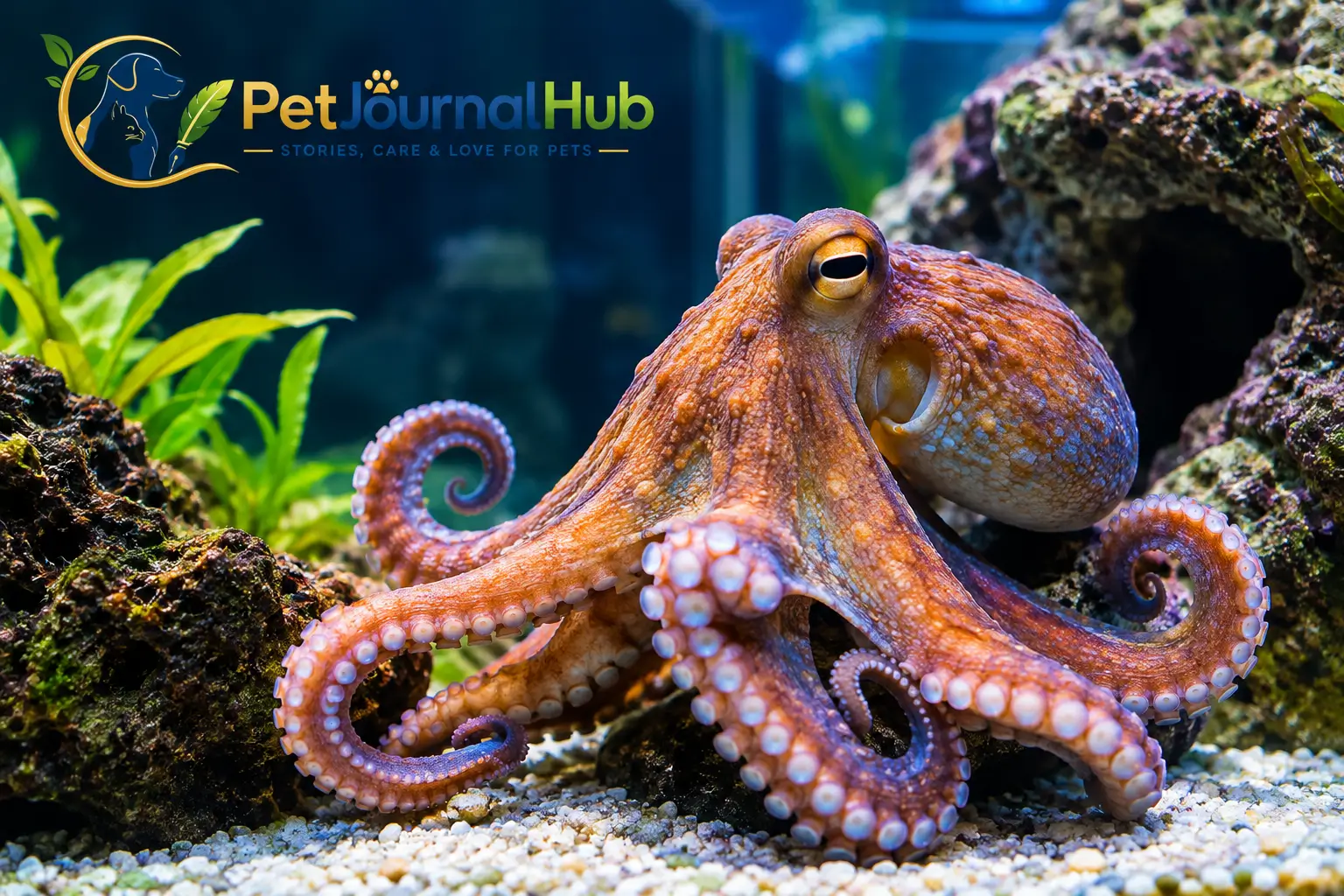
Octopus as pets means keeping a marine octopus in a carefully managed saltwater aquarium. These animals need species-specific water conditions, secure escape-proof housing, suitable food, enrichment, and careful daily monitoring. They also live relatively short lives compared with dogs or cats, making species selection and responsible sourcing especially important for prospective keepers.
Key Takeaways
- Octopuses need a dedicated marine aquarium, not a standard community fish tank.
- Species differ greatly in adult size, temperature needs, behavior, and lifespan.
- Escape prevention matters because octopuses can exploit surprisingly small openings.
- Many pet species live for roughly a year or a few years, depending on species.
- Feeding usually involves marine animal foods such as crustaceans and other suitable prey.
- A veterinarian or aquatic-animal professional can help with health problems and system issues.
Introduction
Octopuses attract people for an obvious reason: they are unlike almost any other aquarium animal. They change color, explore their surroundings, solve problems, and interact with objects around them. Some can learn to recognize individual caretakers and manipulate lids, containers, and enrichment items.
That intelligence also creates a major responsibility.
Keeping an octopus requires much more planning than buying an unusual fish. You need a mature marine aquarium, dependable filtration, stable water quality, secure plumbing, and a lid that the animal cannot move. You also need a reliable source of appropriate food and a plan for veterinary care.
Another issue surprises many first-time owners: lifespan. Some commonly discussed octopus species live only around a year. Others, such as the giant Pacific octopus, may live several years. The animal’s species, life stage, and reproductive cycle all matter.
This guide explains what prospective owners should know before buying one. It covers species, tank design, food, lifespan, costs, sourcing, common mistakes, and warning signs.
The goal is simple: help you decide whether this unusual marine animal fits your experience, budget, time, and aquarium setup.
What Is an Octopus as a Pet?
An octopus kept as a companion animal is a marine cephalopod housed in a purpose-built aquarium. Unlike community fish, an octopus often needs a dedicated system because it may eat tank mates or become stressed by unsuitable neighbors.
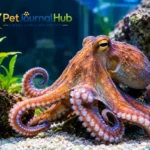
Octopuses belong to the phylum Mollusca and class Cephalopoda. They have eight arms, a powerful beak, sophisticated eyes, and specialized skin cells that allow rapid changes in color and appearance.
They also have a reputation for problem-solving. Aquarium institutions have documented octopuses opening containers, exploring objects, recognizing handlers, and solving simple puzzles.
Not every species suits home aquariums. A giant Pacific octopus, for example, can eventually reach an enormous size. Smaller species may fit more realistic home setups, but small size does not automatically mean easy care.
The correct approach starts with the species rather than the tank.
Quick Facts Box
| Fact | Details |
| Animal group | Cephalopod mollusk |
| Environment | Marine saltwater |
| Main diet | Carnivorous; species-appropriate marine prey |
| Social behavior | Many species live alone |
| Intelligence | High; capable of exploration and problem-solving |
| Escape risk | High |
| Tank type | Dedicated, secure marine aquarium |
| Lifespan | Highly species-dependent |
| Handling | Usually better observed than handled |
| Experience level | Generally better suited to experienced marine aquarists |
Water quality deserves special attention. Aquatic veterinary guidance emphasizes stable water chemistry, filtration, oxygenation, temperature control, and regular testing for healthy aquarium systems.
Where Does the Pet Octopus Come From?
Pet octopuses come from marine environments rather than domesticated pet lines. Depending on the species and local trade, an animal may enter the aquarium hobby through collection, captive propagation, or specialist marine suppliers.
That makes sourcing especially important.
Ask the seller for the scientific name of the animal. Common names can create confusion because the same casual name may refer to different species in different markets.
You should also ask where the animal came from and whether local rules allow possession, sale, collection, or transport.
Do not assume that an animal advertised online automatically qualifies as legal or responsibly sourced.
History and Evolution of Octopuses in Aquariums
People have displayed octopuses in public aquariums for decades because their behavior makes them unusually engaging animals.
Public aquariums have also helped researchers and visitors understand octopus intelligence, camouflage, hunting behavior, reproduction, and communication.
Home keeping developed separately through the marine-aquarium hobby. As filtration, protein skimming, water testing, and aquarium equipment improved, specialized hobbyists gained more options for keeping demanding marine animals.
Interest has also grown through documentaries, aquarium videos, social media, and viral stories about clever octopuses.
Popularity does not make the animals easy, though. Modern equipment helps owners maintain a stable system, but it does not remove the animal’s natural needs.
Key Characteristics and Care Needs
Octopuses combine several traits that make them fascinating and challenging aquarium residents.
First, they are highly active explorers. An octopus may investigate rocks, pipes, pumps, decorations, and the aquarium lid.
Second, many species are solitary. Adding another octopus simply for companionship can create aggression, stress, or injury.
Third, they are predators. A peaceful-looking octopus can still hunt shrimp, crabs, mollusks, and fish.
Fourth, they have soft bodies and strong arms. They can manipulate objects in ways that surprise inexperienced keepers.
Finally, they react strongly to environmental conditions. Water quality, temperature, oxygen, salinity, and filtration all deserve regular attention.
Marine aquarium systems require ongoing monitoring because poor water quality can quickly become an animal-health problem.
Quick Comparison Snapshot
| Option | Best For | Key Difference |
| Atlantic pygmy octopus | Experienced keepers wanting a small species | Very small compared with larger octopuses |
| California two-spot octopus | Experienced marine aquarists | Recognizable two-spot appearance |
| Day octopus | Experienced keepers with appropriate tropical systems | Active daytime hunting |
| Giant Pacific octopus | Public aquariums and highly specialized facilities | Very large adult size |
Species availability changes by region and supplier. Always confirm the scientific name and adult size before purchase.
Octopus as Pets Price
There is no single reliable purchase price for an octopus because species, size, availability, shipping, seller, and location all affect the cost.
A listed animal price can also create a misleading picture of the real expense. The aquarium may cost much more than the animal itself.
Your budget should include:
- Marine aquarium and sturdy stand
- Escape-proof lid
- Filtration and circulation equipment
- Protein skimmer where appropriate
- Marine salt and purified water
- Water-testing equipment
- Temperature-control equipment
- Hiding places and enrichment
- Food
- Replacement filter media and supplies
- Electricity
- Veterinary or aquatic-care expenses
- Emergency equipment
For that reason, compare the total setup and running cost, not just the animal’s sale price.
Pet Octopus for Sale
Finding a pet octopus for sale requires more research than buying a typical aquarium fish.
Start by identifying the species you want. Then look for a specialist marine supplier with clear information about the animal’s scientific name, adult size, origin, care requirements, and shipping conditions.
Avoid listings that provide only a nickname such as “small octopus” or “blue octopus.”
Ask these questions before purchasing:
- What is the scientific name?
- What is the animal’s approximate age or size?
- What conditions has it been kept in?
- What food does it currently accept?
- How will the animal ship?
- What happens if it arrives unhealthy?
- Does local law permit ownership?
- What adult size should you expect?
A responsible seller should welcome questions rather than pressure you into an immediate purchase.
Octopus as Pets Reddit
Reddit and specialist aquarium communities can provide useful owner experiences, but treat community advice as anecdotal rather than veterinary guidance.
Discussions often focus on practical problems that formal care sheets may not emphasize. Examples include lid design, feeding behavior, enrichment, equipment placement, and unexpected escape attempts.
Those experiences can help you identify questions for a marine-aquarium professional.
However, one keeper’s success does not prove that the same setup works for another species. Tank size, temperature, filtration, animal size, water chemistry, and experience can all differ.
Use forums to learn what questions to ask. Use species-specific husbandry guidance and qualified professionals to make final care decisions.
Pet Octopus for Sale Online
Buying a marine animal online creates extra risks because transportation adds stress and temperature changes.
Do not order simply because a listing shows an attractive photograph. Confirm the species, seller reputation, shipping method, legal requirements, and arrival policy first.
You should also have the aquarium running and stable before the animal arrives.
Never treat the animal like a package that you can return casually. A failed shipment can harm the animal and leave you without a suitable backup plan.
If a seller cannot explain basic species requirements, consider that a warning sign.
Octopus Pet Lifespan
Octopus lifespan varies dramatically between species, so a single number would give prospective owners the wrong expectation.
Day octopuses, for example, typically live about 12 to 15 months. The giant Pacific octopus lives much longer, with a typical lifespan of roughly three to five years.
Reproduction also plays a major role in the natural life cycle of many octopuses. Females of some species enter senescence after laying and caring for eggs.
This short lifespan can feel surprising after months of aquarium preparation.
Before buying, learn the normal lifespan of the exact species. Also ask whether the seller knows the animal’s approximate age. A newly purchased octopus may already have spent a significant part of its natural life.
Longest-Living Pet Octopus
The longest-lived octopus you could keep depends on which species qualifies as a realistic aquarium animal.
The giant Pacific octopus stands out for its relatively long lifespan compared with many smaller species. Monterey Bay Aquarium reports a typical lifespan of about three to five years.
That does not make it a practical household choice for most people. Adults can become extremely large, with arm spans measured in several meters.
A longer lifespan therefore does not automatically mean a better pet.
For home aquarists, species size, tank requirements, temperature needs, food supply, legal status, and veterinary support matter just as much as longevity.
Pet Octopus Tank
A pet octopus tank needs stable marine water, strong filtration, hiding places, and exceptional escape prevention.
The exact tank volume should match the species and its adult size. Avoid choosing a tank based only on the animal’s size when you purchase it.
The system should include:
- Secure top with no easy gaps
- Protected filter and pump openings
- Reliable biological filtration
- Mechanical filtration for solid waste
- Appropriate circulation
- Marine water testing
- Temperature control suited to the species
- Stable salinity
- Safe hiding structures
- Easy access for maintenance
Escape prevention deserves special attention. Octopuses can push lids, explore plumbing, and squeeze through small openings. Published husbandry literature has documented the importance of tight-fitting lids and secured plumbing.
Design the aquarium before the animal arrives. Do not wait for the first escape attempt.
Pygmy Octopus Pet
A pygmy octopus can look attractive to people with limited aquarium space, but “pygmy” does not mean beginner-friendly.
The Atlantic pygmy octopus, Octopus joubini, reaches only a small adult size compared with larger species. NOAA material describes mature animals at roughly five to six inches in total length and a lifespan of about a year.
Some commercial aquarium listings classify the Atlantic pygmy octopus as an expert-level animal. That classification reflects the broader challenge of keeping a marine cephalopod rather than just its body size.
Small animals still require stable marine water, appropriate food, hiding places, and escape-proof equipment.
Daily Care Routine / How to Get Started
The safest way to start is to build and test the aquarium before obtaining the animal.
Step 1: Identify the species
Learn the scientific name, adult size, natural habitat, temperature range, diet, and expected lifespan.
Step 2: Build the marine system
Install filtration, circulation, temperature control, lighting where appropriate, hiding places, and secure plumbing.
Step 3: Cycle and test the aquarium
Do not rush the process. A functioning biological filter helps process nitrogenous waste and supports stable water quality.
Step 4: Test the water
Track the parameters relevant to the species and system. Marine aquarium guidance commonly includes temperature, salinity, pH, ammonia, nitrite, nitrate, and oxygen-related considerations.
Step 5: Octo-proof everything
Check the lid, overflow, return lines, filter intake, cable openings, feeding doors, and other gaps.
Step 6: Prepare food
Have an appropriate food source ready before bringing the animal home.
Step 7: Monitor behavior
Look for normal activity, feeding response, color changes, resting behavior, and interaction with the environment.
Step 8: Keep maintenance consistent
Check equipment daily and follow a regular water-testing and cleaning routine.
A stable system matters more than fancy decorations.
Cost Breakdown
The real cost comes from the complete marine system rather than the octopus alone.
| Expense | What to Consider |
| Animal | Species, size, availability, shipping |
| Aquarium | Species-appropriate volume and construction |
| Filtration | Mechanical and biological needs |
| Protein skimmer | Useful in many marine systems |
| Water | Marine salt and purified source water |
| Testing | Salinity, pH, nitrogen compounds, temperature |
| Cooling/heating | Depends on species and room conditions |
| Lid | Secure, escape-resistant construction |
| Food | Ongoing marine prey costs |
| Enrichment | Hides and safe exploration items |
| Veterinary care | Availability and emergency budget |
Prices vary widely by country and system design, so a fixed “total cost” would not be reliable.
The smartest budget starts with equipment and operating costs. The animal purchase price should come last.
Common Mistakes Pet Owners Make
The most common mistakes usually happen before the octopus enters the aquarium.
Choosing by appearance
A beautiful species may have unsuitable adult size or temperature needs.
Buying the animal first
The tank should come first. The system needs time to stabilize.
Using a normal aquarium lid
A loose cover can create an escape route.
Leaving plumbing exposed
Filter intakes and overflow openings can become escape paths.
Adding ordinary tank mates
An octopus may hunt fish and invertebrates. Some tank mates may also injure the octopus.
Ignoring age
A short-lived animal may already be mature when you purchase it.
Underestimating food needs
Carnivorous marine animals create a continuing food cost.
Treating online advice as universal
Species-specific care matters. A setup that works for one octopus may fail with another.
Pros and Cons
| Pros | Cons |
| Highly intelligent and engaging | Short lifespan for many species |
| Fascinating camouflage | Difficult aquarium requirements |
| Unique behavior | Strong escape instinct |
| Can interact with enrichment | Usually unsuitable for community tanks |
| Excellent observation animal | Specialized food and equipment |
| Rare and memorable aquarium resident | Veterinary support can be limited |
Similar Breeds, Species, and Alternatives
If you want an unusual marine animal but do not feel ready for an octopus, several alternatives may fit different goals.
| Option | Best For |
| Cuttlefish | Aquarists interested in another intelligent cephalopod |
| Marine shrimp | People who want interesting invertebrate behavior |
| Hermit crab | Keepers interested in crustacean behavior |
| Seahorses | Experienced marine aquarists wanting a distinctive display animal |
| Reef fish | Owners who prefer more established marine-hobby options |
| Snails | Aquarists seeking simple invertebrate activity |
| Starfish | Experienced keepers wanting a slow-moving display animal |
Each alternative has its own care requirements. Do not assume that one marine species can share the same setup as another.
When to Consult a Vet or Professional
Find aquatic veterinary support before you need an emergency appointment.
Contact a qualified professional if the animal develops persistent appetite changes, unusual inactivity, injury, abnormal swimming, repeated escape attempts, or major changes in appearance.
Water-quality problems also deserve professional attention. Veterinary guidance for aquatic systems stresses that environmental conditions can strongly affect animal health.
Bring useful information to the appointment. Record the species, tank volume, temperature, salinity, recent water changes, feeding history, equipment, and recent behavior.
If possible, keep water-test results available.
Do not add medications based on a random forum recommendation. Marine invertebrates can react differently to treatments, and some aquarium medications can harm non-target animals.
Fun Facts
- Octopuses are mollusks, making them relatives of clams and snails.
- Their eight arms carry numerous suction cups.
- Giant Pacific octopuses can recognize and interact with their caretakers.
- Octopuses use chromatophores to create rapid color changes.
- The giant Pacific octopus can reach an arm span of more than 13 feet.
- Day octopuses hunt during daylight rather than following the more common nocturnal pattern.
- Many octopus species live alone.
- Some females stop eating while caring for eggs and die near the end of that reproductive cycle.
Frequently Asked Questions
Are octopuses a good pet?
An octopus can suit an experienced marine aquarist who enjoys observation, complex aquarium systems, and species-specific husbandry. It does not fit the lifestyle of someone looking for a simple, low-maintenance pet.
The biggest difference involves commitment. You need to monitor a marine environment, manage food, secure the aquarium, and prepare for a relatively short lifespan in many species. The animal also does not provide the same type of companionship as a dog or cat.
Before buying one, consider your aquarium experience, local regulations, food supply, veterinary access, and ability to maintain the system consistently.
Can octopuses bond with humans?
Octopuses can learn about individual people and may interact differently with familiar caretakers. Aquarium staff have reported recognition and interaction between individual octopuses and their handlers.
That behavior does not necessarily mean an octopus forms a human bond in the same way a dog does.
The safer interpretation involves learning and recognition. An octopus may associate a particular person with food, enrichment, or familiar routines.
Owners should therefore focus on positive observation rather than trying to create physical affection. Respecting the animal’s boundaries produces safer interactions for both sides.
How much does an octopus cost as a pet?
The purchase price varies widely because species, size, availability, location, shipping, and seller all affect the final amount. Online listings can change quickly, so there is no dependable universal retail price.
The larger financial issue involves the aquarium.
You may need a marine tank, secure lid, filtration, circulation, water-testing equipment, temperature control, marine salt, purified water, food, and replacement supplies.
Some systems also require a protein skimmer or other specialized equipment. Budget for ongoing maintenance rather than focusing only on the animal’s initial price.
Can I hold my pet octopus?
Handling an octopus is generally not the goal of responsible aquarium keeping. These animals have delicate bodies and sensitive skin, and they rely on water for normal respiration.
A better approach involves observing the animal inside its aquarium. Use feeding tools or enrichment methods when appropriate instead of repeatedly removing the octopus from the water.
If you need to move an animal because of an emergency, injury, or veterinary procedure, follow professional guidance. Avoid turning routine handling into entertainment.
The safest relationship usually involves observation, feeding, enrichment, and careful habitat management.
Do octopuses need a tank mate?
Most commonly kept octopuses should not receive a tank mate simply for companionship. Many species live solitary lives, and an additional octopus can create aggression or competition.
Fish and invertebrates also create problems. An octopus may view smaller animals as prey, while some tank inhabitants can injure an octopus.
A species-only aquarium often gives the keeper better control over feeding and safety. Species-specific exceptions exist, but owners should confirm compatibility with an experienced cephalopod keeper before adding another animal.
Do octopuses need enrichment?
Yes. Enrichment can give an intelligent animal opportunities to explore, investigate, and solve simple problems.
Safe enrichment can include varied hiding places, suitable objects, changes in feeding presentation, and opportunities to explore different parts of the aquarium.
Never add an object simply because an online video shows an octopus playing with it. The material must suit marine conditions and avoid sharp edges, toxic coatings, loose parts, or entrapment risks.
Enrichment should complement good water quality and habitat design, not compensate for poor husbandry.
Final Thoughts
Keeping an octopus offers something few aquarium animals can match. You get to observe a highly unusual animal that explores, learns, hunts, changes appearance, and interacts with its environment.
But that experience comes with serious responsibility.
The right keeper starts with the species. From there, every decision follows: tank size, temperature, filtration, food, enrichment, lid design, and expected lifespan.
Do not let a low purchase price or a small body size convince you that an octopus makes an easy pet. Even small species need a carefully managed marine environment.
Take your time before purchasing. Build the aquarium first, test the system, confirm local rules, find an experienced supplier, and identify aquatic veterinary support.
If you can provide that level of care, an octopus can become a remarkable animal to observe. If you cannot, choosing a more established marine species may give you a safer and more manageable aquarium experience.

Daniel Brooks is a pet research writer at PetJournalHub. He specializes in pet behavior, product research, and responsible pet ownership. He focuses on delivering accurate, reader-friendly guides that help pet owners provide the best care for their animals.