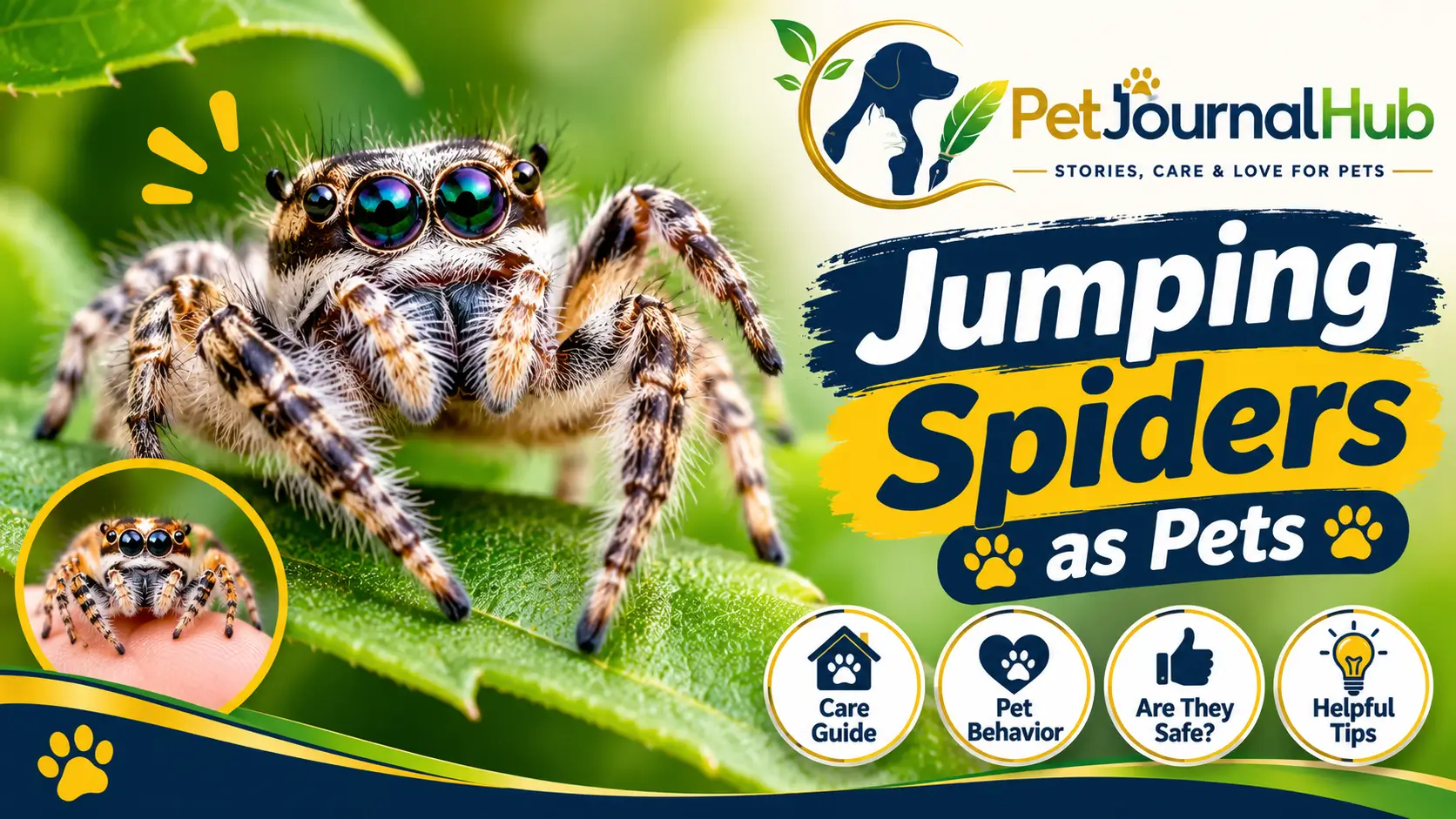
Jumping spiders make fascinating pets for people who enjoy observing small, active creatures. These tiny arachnids have excellent eyesight, curious hunting habits, and interesting personalities. They need a secure vertical enclosure, suitable live insects, fresh water droplets, and careful handling. They suit patient beginners who understand their short lifespan and delicate bodies.
Key Takeaways
- Jumping spiders belong to the Salticidae family, which includes thousands of species.
- Regal and bold jumping spiders are two familiar species in the pet hobby.
- They need a secure, well-ventilated enclosure with climbing space.
- Their diet mainly consists of appropriately sized live insects.
- They usually need individual housing because they may attack or eat other spiders.
- Captive-bred spiders from responsible sellers offer a better starting point than wild collection.
Introduction
Spiders might not appear on everyone’s list of favorite pets. However, jumping spiders have a special appeal among people who enjoy unusual animals. Their large front-facing eyes, quick movements, and impressive hunting skills make them fascinating to watch.
Many people discover these spiders through close-up photographs and pet videos. Their curious movements can make them seem surprisingly interactive. Unlike many traditional pets, they don’t need daily walks, large play areas, or complicated grooming routines.
Still, a tiny body doesn’t mean zero responsibility. These spiders need suitable housing, proper ventilation, live feeder insects, and a stable environment. Their small size also makes them vulnerable to injuries from falls and rough handling.
This guide explains everything a potential owner should understand before bringing one home. You’ll learn about popular species, enclosure design, feeding, costs, purchasing options, and common mistakes.
We’ll also explore whether keeping one is ethical and how to choose a healthy specimen. Whether you’re considering your first spider or improving an existing setup, the goal is simple: help you make an informed decision and provide responsible care.
What Are Jumping Spiders as Pets?
Jumping spiders are small hunting spiders that belong to the Salticidae family. They use excellent eyesight and powerful legs to locate, approach, and capture their prey.
Unlike web-building spiders that wait for insects, jumping spiders actively hunt. They often turn toward movement and carefully inspect objects around them. Their hunting style makes them especially interesting to observe.
Most pet keepers choose species that adapt well to a controlled enclosure. Two familiar examples include:
- Regal jumping spider (Phidippus regius): A popular North American species with noticeable size and attractive patterns.
- Bold jumping spider (Phidippus audax): A North American species that often displays dark coloring and white markings.
These species belong to the same genus, but their appearance and care needs can differ.
Jumping spiders don’t behave like dogs or cats. They don’t need affection, companionship, or physical attention from humans. Their appeal comes from observing their natural behavior.
Quick Facts Box
| Fact | Details |
| Animal group | Arachnids |
| Family | Salticidae |
| Common examples | Regal and bold jumping spiders |
| Diet | Live insects |
| Activity | Mainly daytime |
| Hunting style | Active visual hunting |
| Housing | Secure vertical enclosure |
| Social behavior | Generally solitary |
| Handling | Minimal and gentle |
| Lifespan | Often around 1–2 years, depending on species and individual |
| Grooming | No routine grooming |
| Main care needs | Food, hydration, ventilation, and suitable habitat |
Lifespan figures vary with species, sex, temperature, and individual health. Ask the breeder about the spider’s age before purchasing.
Where Do Jumping Spiders Come From?
Jumping spiders live in many parts of the world. They occupy different habitats, including gardens, forests, grasslands, and buildings.
Some species prefer warm environments, while others live in cooler regions. Their natural surroundings influence their temperature, humidity, and shelter needs.
These spiders don’t depend on large webs to catch food. Instead, they search for prey and use silk for safety, resting shelters, and egg protection.
A jumping spider often builds a small silk retreat called a hammock. It may use this shelter for resting, molting, or protecting its eggs.
Pet owners should learn the natural habitat of their chosen species. This helps them create a suitable enclosure rather than relying on one care routine for every jumping spider.
History and Evolution of Jumping Spiders as Pets
People have studied jumping spiders for their unusual vision and hunting behavior for many years. Their large front-facing eyes make them interesting subjects for animal behavior research.
Pet keeping has also introduced these spiders to a wider audience. Close-up photography and online animal communities have helped more people discover them.
However, popularity doesn’t remove their natural needs. A spider that looks comfortable in a short video still requires proper food, hydration, and shelter.
Captive breeding has also created more opportunities for responsible pet ownership. Buyers should still check a seller’s experience, species identification, and sourcing practices.
Key Characteristics and Care Needs
Jumping spiders have several features that make them different from common household pets. Understanding these traits helps owners provide suitable care.
Appearance and Size
Their most recognizable feature is a pair of large front-facing eyes. These eyes help them judge distance and detect movement.
Some species display bright colors, metallic markings, or contrasting patterns. Others have darker bodies with white or tan markings.
Size varies considerably between species. Female regal jumping spiders generally grow larger than males.
Temperament and Behavior
Jumping spiders often appear curious when they explore their surroundings. Some turn toward people and watch movements outside their enclosure.
However, every spider has its own temperament. One may explore regularly, while another prefers to remain inside its silk retreat.
They may also jump suddenly when startled. Owners should never assume that a calm spider will always remain on their hand.
Vision and Hunting
Jumping spiders rely heavily on their eyesight. They track prey, judge distances, and use careful movements before jumping.
They don’t need a large flying insect population inside their enclosure. Instead, owners provide suitable feeder insects according to the spider’s size.
Molting
Molting allows a young spider to grow by shedding its old outer covering. During this period, the spider may stop eating and remain inside its silk hammock.
Never pull apart its hammock or disturb the spider during this process. A fresh molt leaves the spider vulnerable until its new outer covering hardens.
Adult jumping spiders generally stop molting after reaching maturity.
Social Needs
Jumping spiders don’t need another spider for company. Housing two together can lead to fighting, injury, or cannibalism.
Keep each spider in its own enclosure. This also makes feeding and health monitoring easier.
Quick Comparison Snapshot
The following comparison highlights four familiar jumping spider options or types. Availability depends on the breeder and location.
| Option | Best For | Key Difference |
| Regal jumping spider | Beginners interested in a popular pet species | Often larger and visually striking |
| Bold jumping spider | Keepers interested in a North American species | Dark body with contrasting markings |
| Other Phidippus species | Experienced hobbyists | Appearance and care needs vary |
| Other captive-bred Salticidae | Species-specific enthusiasts | Different sizes, habitats, and behaviors |
Don’t choose a spider based on appearance alone. Confirm its scientific name and care requirements first.
Jumping Spiders as Pets Pros and Cons
Jumping spiders offer an interesting pet experience, especially for people who enjoy observing wildlife. However, they aren’t suitable for everyone.
| Pros | Cons |
| Need relatively little space | Require live feeder insects |
| Fascinating hunting behavior | Have delicate bodies |
| Don’t need daily walks | Offer limited physical interaction |
| Interesting colors and patterns | Can jump or hide unexpectedly |
| Individual housing is simple | Some species need specific conditions |
| No regular grooming | Veterinary care can be difficult to find |
Their small size makes them easier to house than many larger exotic pets. However, owners must still maintain their enclosure and monitor feeding.
Jumping Spiders as Pets Price
The purchase price depends on the species, age, sex, color pattern, and breeder. Spiderlings may cost less than mature or selectively bred specimens.
In the United States, hobby sellers may offer common captive-bred specimens for roughly $15–$60 or more. Rare species and specialty breeding lines can cost more. These figures are general shopping estimates, not guaranteed market prices.
Remember that the spider itself represents only part of your budget.
You may also need to purchase:
- A secure vertical enclosure.
- A fine-mist spray bottle.
- A small thermometer and hygrometer.
- Suitable climbing decorations.
- Live feeder insects.
- Safe cleaning supplies.
- Replacement habitat materials.
Shipping can increase the total purchase price. Some sellers also charge extra for insulated packaging or weather protection.
If you live outside the United States, local availability and import rules may change the cost significantly. Compare the full delivered price rather than looking only at the advertised animal price.
Jumping Spider Pet for Sale
People searching for a jumping spider pet for sale should start with experienced captive breeders. A responsible seller should explain the spider’s species, age, feeding history, and previous care.
Don’t purchase from a seller who cannot identify the animal. Accurate identification matters because different species may need different environments.
Before placing an order, ask these questions:
- What is the spider’s scientific name?
- Is it captive-bred or wild-caught?
- Approximately how old is it?
- When did it last eat?
- What feeder insects does it accept?
- Has it completed its most recent molt?
- Does the seller offer safe shipping or local pickup?
A reliable breeder should answer these questions clearly. They should also explain how they protect spiders during transport.
Avoid sellers who promise a specific personality or guaranteed handling behavior. Individual spiders can react differently to people.
For a responsible purchase, prioritize animal health and accurate information over unusual colors or a low price.
Is It Cruel to Keep Jumping Spiders as Pets?
Keeping a jumping spider doesn’t automatically mean causing harm. However, ethical ownership depends on the spider’s source and the quality of its care.
Captive-bred spiders from responsible breeders offer a more controlled starting point. These animals generally have a known source and may already accept commonly available feeder insects.
Wild collection raises additional concerns. Removing animals from natural habitats can affect local wildlife, especially when collection becomes widespread or targets vulnerable species.
A suitable enclosure also matters. The spider needs enough vertical space, secure climbing surfaces, shelter, and suitable environmental conditions.
Owners should consider these ethical questions:
- Can I provide appropriate food throughout its life?
- Do I understand its molting behavior?
- Can I maintain the correct habitat?
- Do I have access to suitable care advice?
- Can I avoid unnecessary handling?
- Am I prepared to care for it without expecting affection?
The World Wildlife Fund recommends checking an exotic pet’s source and choosing responsible suppliers who can explain its legal origin.
WWF
The best approach is to treat the spider as a living animal rather than a decorative display.
Jumping Spider Enclosure
A jumping spider enclosure should provide climbing space, ventilation, shelter, and safe access to moisture. A vertical design generally works better than a wide, shallow container.
Jumping Spider Enclosure Habitat Acrylic Glass Tank with Decor Accessories | eBay
Jumping Spider Care and Information Guide | The Critter’s Cave
10
Choose the Right Enclosure
Look for a secure enclosure with more height than width. The exact dimensions depend on the species and its size.
A container that opens safely from the front or bottom can help reduce disturbance to the upper silk hammock. Some top-opening designs may damage the spider’s retreat during routine maintenance.
Check the ventilation before purchasing. Small ventilation holes should allow airflow without creating escape gaps.
Add Climbing Structures
Jumping spiders naturally explore vertical surfaces. Give them several safe places to climb and rest.
Useful decorations include:
- Cork bark.
- Smooth branches.
- Artificial plants without sharp edges.
- Silk-safe climbing decorations.
- Small resting platforms.
Secure every decoration so it cannot fall onto the spider.
Provide a Resting Area
Many jumping spiders build silk hammocks near the top of their enclosure. Leave enough space for this natural behavior.
Avoid placing decorations directly against the lid. A spider may create its retreat in an inconvenient place if the enclosure lacks suitable upper surfaces.
Maintain Ventilation and Humidity
Humidity requirements differ among species. Some commonly kept species do well with moderate humidity, but owners should confirm the correct range for their particular spider.
Lightly mist an enclosure surface when appropriate. Allow the spider to drink from small water droplets.
Avoid soaking the substrate or leaving standing water everywhere. Excess moisture and poor ventilation can encourage mold.
Keep the Enclosure Safe
Never place the enclosure in direct sunlight. A small container can heat up quickly and create dangerous conditions.
Keep it away from household pesticides, cleaning sprays, smoke, and strong chemical fumes.
A secure lid also protects the spider from accidental escapes.
Where Can I Get a Jumping Spider as a Pet?
You can look for jumping spiders through specialist invertebrate breeders, reputable exotic pet stores, and established hobby communities.
A specialist breeder may provide better information about the spider’s age, species, and feeding history than a general seller.
Before buying, check whether the seller operates legally in your location. Ask for clear photographs and information about the animal’s origin.
For US buyers, specialist breeders and established pet retailers are possible starting points. Petco also publishes a jumping spider care guide and lists jumping spiders among its available pet offerings. Availability varies by location.
Petco
For international buyers, don’t assume a seller can legally ship across borders. Import permits, wildlife rules, and transport restrictions may apply.
A seller should never pressure you into purchasing before you understand the animal’s care needs.
Can You Keep a Wild Jumping Spider as a Pet?
A wild jumping spider may survive in captivity, but collecting one isn’t always the best choice. Its species, health, age, and environmental needs may be unknown.
A spider found in your garden might also belong to a species with different care requirements from common captive-bred pets.
Before collecting any wild spider, check local wildlife regulations. Some locations restrict collecting or possessing native animals.
The ASPCA generally opposes keeping wild animals as pets and supports appropriate wildlife rehabilitation.
ASPCA
If you find an injured spider, avoid unnecessary handling. Contact a local wildlife or invertebrate specialist for advice.
For most first-time owners, a legally sourced captive-bred spider offers a more responsible starting point.
Where Can I Buy a Jumping Spider?
You can look for a spider through a specialist breeder, an established invertebrate shop, or a reputable exotic pet retailer.
The best seller isn’t necessarily the one offering the lowest price. Look for clear species identification, transparent sourcing, and useful after-sale care information.
Before paying, review these points:
- Check recent customer feedback.
- Confirm the scientific name.
- Ask for current photographs.
- Check the spider’s age and feeding record.
- Review shipping and weather policies.
- Confirm the seller’s return or live-arrival policy.
- Check local ownership and import regulations.
Never release an unwanted pet into the environment. Contact the original breeder, an experienced keeper, or an appropriate rescue organization about responsible rehoming.
Daily Care Routine: How to Get Started
Daily care doesn’t require hours of work. However, a quick inspection helps you notice changes before they become serious problems.
Morning Checks
Look at your spider without opening the enclosure. Check whether it appears alert and whether its habitat remains secure.
Look for:
- Normal movement when active.
- A secure enclosure lid.
- Signs of condensation or mold.
- Access to suitable drinking droplets.
- Any unusual changes in posture.
Don’t wake or disturb a spider that rests inside its hammock.
Feeding Routine
Jumping spiders eat live insects. Suitable prey may include fruit flies, small flies, and appropriately sized crickets.
Choose prey that matches the spider’s size. Large insects may injure a small spider or create unnecessary stress.
Feeding frequency varies with age, body condition, species, and prey size. Follow an experienced breeder’s species-specific guidance rather than using one fixed schedule.
Remove leftover prey when necessary, especially insects that could disturb a resting or molting spider.
Hydration
Provide clean water droplets through light misting when the species requires it.
Mist an enclosure surface rather than spraying the spider directly. Avoid flooding the habitat or allowing moisture to collect without proper airflow.
Weekly Maintenance
Check the enclosure for leftover insects, waste, and mold. Remove debris carefully without damaging the silk hammock.
Replace contaminated materials when needed. Don’t completely rebuild the enclosure simply for appearance.
Monitor Molting
A spider preparing to molt may stop eating and remain inside its retreat. This behavior doesn’t automatically indicate illness.
Give it privacy and avoid handling it during this period. Don’t attempt to pull away its old outer covering.
Record Changes
Keep a simple care record with:
- Feeding dates.
- Prey types.
- Molting observations.
- Changes in activity.
- Habitat maintenance.
- Any unusual symptoms.
These notes can help you recognize changes in your spider’s normal behavior.
Cost Breakdown
The total cost depends on your spider, enclosure quality, feeder insects, and location. Here is a practical overview of the main expenses.
| Expense | What to Budget For |
| Spider | Varies by species and breeder |
| Enclosure | Depends on size and material |
| Thermometer | Basic monitoring equipment |
| Hygrometer | Humidity monitoring |
| Decorations | Branches, cork, and climbing items |
| Feeder insects | Ongoing expense |
| Spray bottle | Small one-time purchase |
| Replacement supplies | Occasional maintenance |
| Veterinary consultation | Depends on specialist availability |
A beginner should purchase the enclosure and necessary supplies before bringing home a spider.
Don’t spend your entire budget on a rare specimen. A suitable habitat and reliable food supply matter much more than unusual markings.
Owners should also consider shipping fees and possible import costs. These can make international purchases considerably more expensive.
Common Mistakes Pet Owners Make
Even a small spider needs careful attention. Many problems start when owners treat its enclosure like a simple decorative container.
1. Choosing an Enclosure That’s Too Small
A cramped enclosure limits climbing and shelter options. Choose a suitable vertical habitat with enough room for natural movement.
2. Providing Poor Ventilation
Excess moisture and stagnant air can encourage mold. Use a well-ventilated enclosure and monitor humidity.
3. Offering Oversized Insects
Large feeder insects can injure a small spider. Match prey size to the spider’s body and hunting ability.
4. Disturbing the Spider During Molting
A spider becomes vulnerable while shedding its outer covering. Avoid touching, feeding, or moving it during this process.
5. Handling Too Often
Frequent handling creates unnecessary risks. A sudden jump or fall can cause serious injury to such a small animal.
6. Keeping Multiple Spiders Together
Jumping spiders generally live alone. Another spider may become a rival, attacker, or potential meal.
7. Ignoring Species Differences
Different jumping spiders don’t always share identical care requirements. Research the scientific name before setting temperature and humidity targets.
8. Releasing a Captive Spider Outdoors
Never release a purchased spider into the wild. It may not belong in the local ecosystem, and local rules may prohibit its release.
Similar Breeds and Alternatives
If you’re interested in small, unusual invertebrates, several alternatives may deserve consideration. Each has different feeding, housing, and handling needs.
| Option | Best For |
| Tarantulas | Keepers interested in larger spiders and more stationary behavior |
| Praying mantises | People who enjoy watching active insect hunters |
| Stick insects | Owners interested in quiet, plant-eating invertebrates |
| Isopods | People who enjoy observing small colony-based terrarium animals |
| Millipedes | Keepers interested in slow-moving, ground-dwelling invertebrates |
| Giant land snails | People who enjoy observing slow-moving animals |
These alternatives aren’t interchangeable. For example, mantises need appropriate prey and climbing structures, while stick insects eat suitable plant material.
Check local ownership laws before purchasing any unusual invertebrate. Some species face restrictions because of agricultural or environmental risks.
When to Consult a Vet or Professional
Jumping spiders rarely need routine grooming or the same preventive care as dogs and cats. However, unusual changes in movement, feeding, or body condition deserve attention.
Find an exotic animal veterinarian or experienced arachnid specialist before an emergency occurs. Not every veterinary clinic treats spiders, so confirm their experience beforehand.
Contact a qualified professional if you notice:
- A sudden loss of coordination.
- Repeated falls or difficulty climbing.
- Visible injuries or bleeding.
- Unusual swelling or body damage.
- A severely shrunken abdomen.
- Persistent weakness or abnormal movement.
- Signs of a parasite infestation.
Molting needs special attention. A spider may remain inactive for some time before shedding its outer covering. Don’t assume every period of inactivity indicates illness.
Never pull a spider out of its hammock to inspect it. This may cause additional stress or physical injury.
If you suspect a failed molt, dehydration, or an injury, seek specialist advice rather than trying unverified treatments.
The Merck Veterinary Manual provides useful background on spider bites and veterinary toxicology, although individual jumping spider care requires species-specific expertise.
Merck Veterinary Manual
Fun Facts About Jumping Spiders
Jumping spiders have several unusual traits that make them interesting to observe.
- They have eight eyes: Their eye arrangement helps them detect movement and judge distances.
- They actively hunt: Unlike many web-building spiders, they search for prey.
- They use silk for safety: They often leave a silk dragline when moving or jumping.
- They build silk hammocks: These small retreats provide shelter and resting places.
- They can jump impressive distances: Their powerful legs help them cross gaps and catch prey.
- They rely on vision: Their eyesight plays an important role in hunting and navigation.
- They don’t need a companion: Most jumping spiders live independently rather than in social groups.
These traits explain why people find them so fascinating. Their behavior offers plenty to observe without requiring frequent physical interaction.
Frequently Asked Questions
Is a jumping spider a good pet?
Yes, a jumping spider can make a good pet for someone who enjoys observing small animals. It needs less space than many traditional pets and doesn’t require constant attention. However, it still needs live food, suitable humidity, a secure enclosure, and regular monitoring. It’s not the right choice for someone who wants an affectionate companion. Beginners should research the exact species before buying one. A captive-bred specimen from a responsible breeder can make the learning process easier.
Do jumping spiders bond with their owners?
Jumping spiders don’t form emotional bonds with humans in the same way dogs and cats do. However, some individuals appear comfortable around familiar people and may watch them through the enclosure. Their visual awareness can make interactions feel personal. This doesn’t prove affection or attachment. Owners should respect their natural behavior and avoid forcing contact. The best relationship involves providing reliable care and allowing the spider to explore at its own pace.
What is the friendliest spider to have as a pet?
Many keepers consider certain captive-bred jumping spiders, especially regal jumping spiders, appealing pets because of their curious behavior. However, friendliness depends on the individual rather than the species alone. One spider may remain calm during observation, while another may hide or jump away. No spider should come with a guarantee of safe handling. Choose a species with manageable care requirements and focus on observation rather than physical interaction.
Will a jumping spider bite you?
A jumping spider may bite if it feels threatened, trapped, or handled roughly. However, bites from commonly kept jumping spiders are uncommon when people respect their space. Their venom helps them subdue small prey, but that doesn’t mean every bite causes a serious reaction in humans. Avoid provoking or squeezing the spider. If a bite occurs, clean the area and seek medical advice if you develop significant pain, swelling, or other concerning symptoms. Never assume an unknown spider has the same risk profile.
Can jumping spiders recognize their owners?
Jumping spiders have strong visual abilities, and they may notice familiar movements around their enclosure. Some keepers report that their spiders turn toward them during routine activities. However, this behavior doesn’t establish human recognition in the same way researchers study recognition in social mammals. A spider may simply respond to movement, light, or familiar environmental cues. Enjoy these observations without assuming your pet understands your identity or intentions.
How often should you feed a jumping spider?
Feeding frequency depends on age, species, prey size, and body condition. Young spiders generally need smaller prey more frequently than adults. An adult may eat less often, especially after a substantial meal or before molting. Watch its abdomen and activity instead of following a rigid schedule. Ask the breeder for a feeding routine that matches your spider’s development. Remove troublesome leftover insects and avoid offering prey that could injure it.
Can jumping spiders live together?
Keeping multiple jumping spiders in one enclosure isn’t a safe general practice. They are solitary hunters, and another spider may become a threat or food source. Even animals that appear calm together may behave differently as they grow or compete for food. Separate enclosures make feeding, observation, and maintenance easier. If you keep more than one, give each animal its own secure habitat. Never assume that two spiders will remain peaceful because they are the same species.
How long do pet jumping spiders live?
Many commonly kept jumping spiders live around one to two years, although lifespan varies. Species, sex, developmental stage, and individual health all influence longevity. Some females may live longer than males. A spider purchased as an adult may have much less time remaining than a young spiderling. Ask the breeder about its age and recent molts before purchasing. Good habitat management supports health, but no care routine can guarantee a particular lifespan.
Final Thoughts
Jumping spiders offer a different kind of pet experience. Their excellent eyesight, hunting skills, and curious movements make them fascinating little animals.
They can suit beginners who enjoy observing wildlife and learning about unusual pets. However, their small size doesn’t eliminate their care requirements. They need appropriate food, safe housing, good ventilation, and protection from unnecessary handling.
Before purchasing one, research its scientific name and specific habitat needs. Choose a responsible captive breeder who can explain its age, feeding history, and origin.
Think carefully about the long-term commitment, too. These spiders have relatively short lifespans, and specialist veterinary support may take extra effort to find.
If you appreciate small animals and don’t expect a traditional companion, a jumping spider could be an interesting addition to your home. Responsible ownership starts with understanding the animal before bringing it home.

Daniel Brooks is a pet research writer at PetJournalHub. He specializes in pet behavior, product research, and responsible pet ownership. He focuses on delivering accurate, reader-friendly guides that help pet owners provide the best care for their animals.