A floor cleaner safe for pets is a product that you can use around animals when you follow its label directions and prevent direct contact with wet cleaning solutions. The best choice depends on your pet, floor type, ingredients, and cleaning needs. Keep pets away during cleaning, provide good ventilation, and let floors dry before they return.
Key Takeaways
- Choose a floor cleaner that matches your flooring and clearly lists its ingredients and directions.
- Never assume that a product is safe just because it says “natural,” “green,” or “plant-based.”
- Keep cats, dogs, birds, and other pets away from wet floors and cleaning supplies.
- Avoid experimenting with essential oils, concentrated vinegar, or homemade chemical mixtures.
- Use a suitable disinfectant when you need to kill germs; an ordinary cleaner may not disinfect.
- Contact your veterinarian promptly if your pet licks a cleaning solution or develops concerning symptoms.
Introduction
Pets bring joy into a home, but they also bring muddy paws, loose fur, food spills, and occasional accidents. Regular floor cleaning helps control dirt and odors. However, pet owners must think about more than a shiny surface or a pleasant fragrance.
Cats walk across floors and groom their paws afterward. Dogs may lick spills, sniff freshly cleaned areas, or drink from an unattended mop bucket. Birds also need special care because their respiratory systems can react strongly to airborne irritants.
Choosing a floor cleaner safe for pets means balancing cleaning power, flooring compatibility, and exposure risks. You do not need to buy the most expensive product or assume every household cleaner is dangerous. The important steps are to read the label, follow the directions, and prevent your pet from contacting wet cleaning solutions.
Some products suit routine mopping, while others target grease, sticky residue, or germs. A scented cleaner might make a room smell fresh without removing the source of a pet odor. Similarly, a product that cleans well may not have the disinfecting power needed for certain messes.
This guide explains how to compare cleaners, evaluate popular options, prepare simple cleaning solutions, and build a pet-conscious cleaning routine. It also explains which ingredients deserve extra caution and what to do if an animal comes into contact with a cleaning product.
What Is a Floor Cleaner Safe for Pets?
A pet-conscious floor cleaner is a product you can use in a home with animals while following its safety instructions and preventing harmful exposure. No single formula suits every pet, surface, or cleaning situation.
These products may include ready-to-use floor cleaners, diluted concentrates, and certain fragrance-free cleaning solutions. Some focus on everyday dirt, while others offer additional odor control or disinfecting claims.
The label matters more than marketing language. Check the intended surfaces, required dilution, ventilation instructions, warnings, and whether the product requires rinsing. If the manufacturer does not provide enough information, contact the company before using it around animals.
Also consider your pet’s behavior. A dog that rarely licks the floor may face different exposure opportunities from a cat that grooms its paws after walking across a freshly mopped surface.
The American Society for the Prevention of Cruelty to Animals (ASPCA) explains that many household cleaning products can be used safely around dogs and cats when owners follow the product directions. Birds require additional caution because fumes can pose particular risks.
ASPCA
+1
Quick Facts Box
| Fact | Details |
| Main purpose | Remove dirt, spills, and everyday grime |
| Common formats | Ready-to-use liquids, concentrates, and floor-specific cleaners |
| Suitable surfaces | Depends on the product label |
| Main safety step | Keep pets away during cleaning and while floors dry |
| Fragrance | Optional; fragrance-free products may suit scent-sensitive households |
| Disinfection | Requires a product labeled for the intended disinfecting use |
| Homemade options | Must be chosen carefully; homemade does not automatically mean safe |
| Professional advice | Ask a veterinarian about sensitive pets or suspected exposure |
Key Characteristics and Care Needs
A good floor cleaner should remove everyday dirt without damaging your flooring or leaving a residue that encourages pets to lick the surface.
Look for clear ingredient information, understandable instructions, and warnings that address contact with skin, eyes, or the mouth. Choose a product made for your specific floor, whether you have sealed hardwood, tile, vinyl, laminate, or another material.
Fragrance also deserves attention. A strong perfume may cover an odor without removing its source. Fragrance-free options can be worth considering if your pet reacts to strong smells, although the absence of fragrance does not prove that a product is harmless.
Cleaning and disinfecting are different jobs. A routine floor cleaner may remove visible grime without killing all relevant germs. When you need disinfection, choose an appropriate product and follow its contact-time and rinsing instructions.
Finally, plan for your pet’s return. Keep animals in another room while you mop, prevent access to buckets and used cloths, and wait until the floor meets the product’s return-to-use instructions.
Quick Comparison Snapshot
These options represent different cleaning approaches rather than a universal safety ranking.
| Option | Best For | Key Difference |
| Fragrance-free commercial floor cleaner | Routine cleaning in scent-sensitive homes | Avoids added fragrance, but still requires label checks |
| Floor-specific commercial cleaner | Hardwood, tile, vinyl, or laminate | Formulated for particular surfaces |
| Mild soap and water, where flooring permits | Small, everyday messes | Simple approach with no special disinfecting claim |
| Labeled pet-household disinfectant | Specific situations requiring germ control | Must meet label instructions for dilution, contact time, and safe re-entry |
No option is automatically safe in every situation. Check the ingredient list, use directions, and floor manufacturer’s care guidance before choosing.
Natural floor cleaner safe for pets
A natural floor cleaner may appeal to owners who want a simple cleaning routine. However, the word “natural” does not guarantee that a formula is safe for pets.
Some natural ingredients can irritate skin, eyes, or the digestive tract. Essential oils deserve particular caution because certain oils can harm cats and other animals through ingestion or other exposure routes. The risk depends on the substance, concentration, and animal involved.
ASPCA
+1
For ordinary dirt, start with a small amount of a suitable cleaner or plain water when your flooring allows it. A microfiber mop can lift loose dirt without requiring a strong fragrance.
Check whether the product needs rinsing. Never leave a pet to walk through a wet cleaning solution simply because its ingredients sound natural. Store the bottle securely and use the product only on approved surfaces.
Homemade floor cleaner safe for pets
A homemade floor cleaner can reduce the number of products you keep at home, but it is not automatically safer than a commercial formula. The safest recipe depends on your flooring, your pet, and the mess you need to remove.
For a small area of ordinary dirt, try this simple approach:
- Check your flooring manufacturer’s cleaning instructions.
- Fill a clean bucket with plain water if the surface permits water cleaning.
- Dampen a microfiber cloth or mop rather than soaking the floor.
- Wipe the dirty area and remove excess moisture.
- Keep pets away until the floor is dry.
For greasy or sticky messes, plain water may not work well. In that case, use a floor-compatible product with clear directions rather than adding several household ingredients together.
Do not mix vinegar with bleach, ammonia, or other cleaning chemicals. Never add essential oils to a homemade solution to make it smell better. A mixture that cleans one surface can damage another, and an untested recipe may leave a residue that your pet can ingest.
Remember that homemade cleaners do not automatically disinfect. If a spill involves a health concern or requires germ control, ask your veterinarian or a qualified cleaning professional which product and procedure fit the situation.
Pet safe floor cleaner that smells good
A pleasant-smelling floor is appealing, but strong fragrance is not a measure of cleaning power or safety. The best choice is a product that cleans effectively without creating an irritating environment for your animals.
Consider a fragrance-free formula first if your pet sneezes around strong scents or you keep birds. If you prefer a scented product, check its ingredient list and warnings rather than relying on claims such as “fresh,” “botanical,” or “aromatherapy.”
Avoid adding essential oils to mop water. The ASPCA warns that essential oils can cause harmful effects in pets, particularly cats, depending on the oil and the amount of exposure.
ASPCA
To control unpleasant pet odors, clean the actual source. Blot urine promptly, remove solid waste safely, and use a suitable cleaner for the affected surface. An enzyme-based product designed for pet accidents may help with some organic stains and odors, but you must check its directions and surface compatibility.
Ventilate the room during cleaning. Keep pets away until the product has dried and any label-required waiting period has passed. A neutral-smelling, clean floor is a better goal than covering odors with heavy perfume.
Best floor cleaner safe for pets
The best cleaner depends on what you need to remove, the surface you want to clean, and the animals living in your home. There is no single product that can be declared the safest choice for every household without considering those factors.
Use these criteria when comparing products:
- Clear labeling: The manufacturer identifies approved surfaces, use instructions, and precautions.
- Ingredient transparency: You can review the ingredients or obtain further information from the manufacturer.
- Floor compatibility: The formula will not damage the finish or leave unwanted residue when used correctly.
- Appropriate cleaning power: The product handles routine dirt, grease, or pet accidents as needed.
- Practical instructions: You can follow the dilution, rinsing, ventilation, and drying requirements.
A fragrance-free, floor-specific cleaner is a sensible starting point for many homes. However, a product designed for sealed hardwood may not suit unfinished wood or every type of laminate. A cleaner intended for tile may also be unsuitable for natural stone.
Read the label before every new use, especially if the manufacturer changes the formula. Keep the original bottle so you can identify the ingredients if an exposure occurs.
Pet safe floor cleaner Disinfectant
A pet-safe floor disinfectant must do more than remove dirt. It needs to be labeled for the intended disinfection task, and you must follow all directions for dilution, contact time, rinsing, ventilation, and re-entry.
Disinfectants can contain ingredients that irritate or injure animals if they ingest the solution or contact it while it is wet. Some disinfecting agents, including certain quaternary ammonium compounds, can cause serious injury. Cats may be particularly sensitive to some of these substances.
Pet Poison Helpline®
+1
For routine paw prints, dust, and everyday dirt, disinfection may not be necessary. Use a regular floor cleaner suited to the surface instead.
If you need to disinfect after a particular spill, follow the product’s label precisely. Keep pets in another room throughout the process and do not shorten the stated contact time. If the label requires rinsing, complete that step before allowing access.
Never mix disinfectants with vinegar, bleach, ammonia, or another cleaner. Combining chemicals can release dangerous gases or create other hazards.
For homes with birds, medically fragile animals, or pets that frequently lick floors, ask a veterinarian about the safest cleaning procedure for your circumstances.
Is Method floor cleaner safe for pets
Method sells several floor-cleaning formulas, and their ingredients and directions vary by product. Therefore, do not assume that every Method cleaner has the same safety profile.
For example, Method’s official product page for its Lemon Ginger Squirt + Mop Hard Floor Cleaner lists water, cleaning agents, citric acid, fragrance, preservatives, and other ingredients. The manufacturer describes it for linoleum, vinyl, laminate, and tile. Its directions say to apply a thin layer and wipe it with a cloth or mop.
Method – method products
That information does not establish that the product is harmless if a pet licks it, walks through it while wet, or ingests it. The manufacturer’s product information also advises keeping the cleaner away from children and pets.
delivery.publix.com
If you are considering Method, identify the exact formula and read the current bottle label. Check the surface compatibility, ingredients, and warnings. Keep animals away during use and until the floor meets the label’s safe re-entry instructions.
If you cannot confirm whether a specific formula suits your pet, ask the manufacturer or your veterinarian before using it.
Best floor cleaner safe for cats
Cats need special consideration because they groom their paws and coats. A residue on a floor may transfer to their feet and later reach their mouths during grooming.
For everyday cleaning, choose a floor-compatible product with clear instructions. A fragrance-free option may help reduce unnecessary scent exposure, but it still requires proper handling. Avoid essential oils and do not assume that plant-derived ingredients are harmless.
Keep your cat in a separate room while you mop. Close the door so it cannot walk across the wet floor or investigate the bucket. Store the bottle, mop, and used cloths where your cat cannot reach them.
Be especially careful with disinfectants. Some products contain substances that can injure cats if they contact the mouth, skin, or eyes. The risk depends on the specific formula and the type of exposure.
Pet Poison Helpline®
+1
If your cat walks through a wet solution, check the label and contact a veterinarian for guidance about that specific product. Do not wait for symptoms if you suspect a corrosive or otherwise dangerous exposure.
Homemade pet safe floor cleaner without vinegar
If you want to avoid vinegar, you can begin with plain water for light dirt on a surface that permits water cleaning. This method works best for loose dust and small, non-greasy marks.
Use a clean microfiber mop or cloth. Wring it out well, especially when cleaning wood or laminate, because excess moisture can damage some flooring. Wipe the area and allow it to dry before your pet returns.
For more stubborn dirt, select a commercial cleaner compatible with your floor rather than trying several ingredients from your kitchen. Follow the label’s dilution and rinsing instructions.
Do not substitute lemon juice, essential oils, alcohol, or another household substance without checking its suitability. A vinegar-free recipe is not necessarily safer, and plain water does not disinfect.
If you need to clean pet urine, vomit, or feces, choose a product designed for the mess and surface. For recurring accidents, investigate the cause with your veterinarian if the pattern is new or unusual.
Daily Care Routine: How to Clean Floors Around Pets
A consistent routine can keep floors cleaner without unnecessary chemical exposure. The key is to remove messes promptly and use the least complicated method that suits the task.
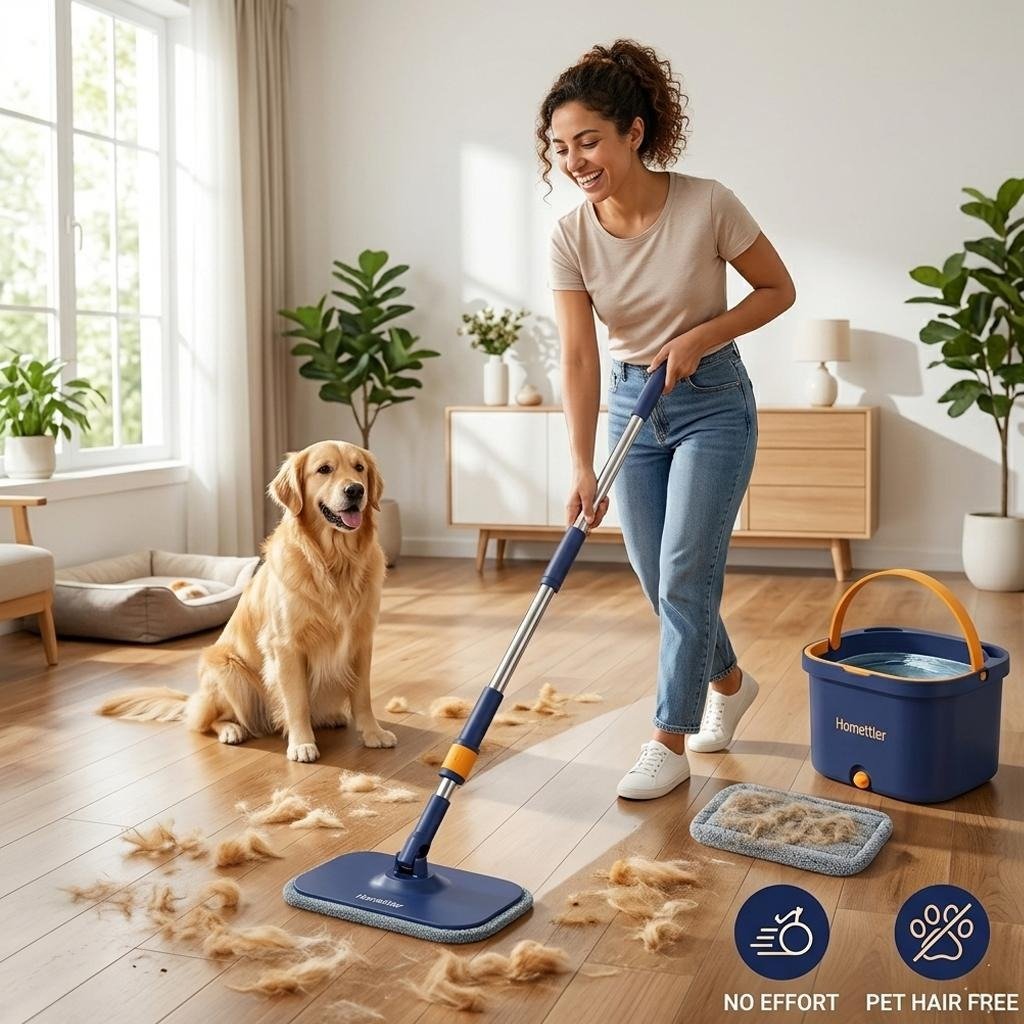
Step 1: Remove loose dirt
Sweep or vacuum pet hair, litter, crumbs, and loose soil before mopping. This prevents you from spreading debris across the floor.
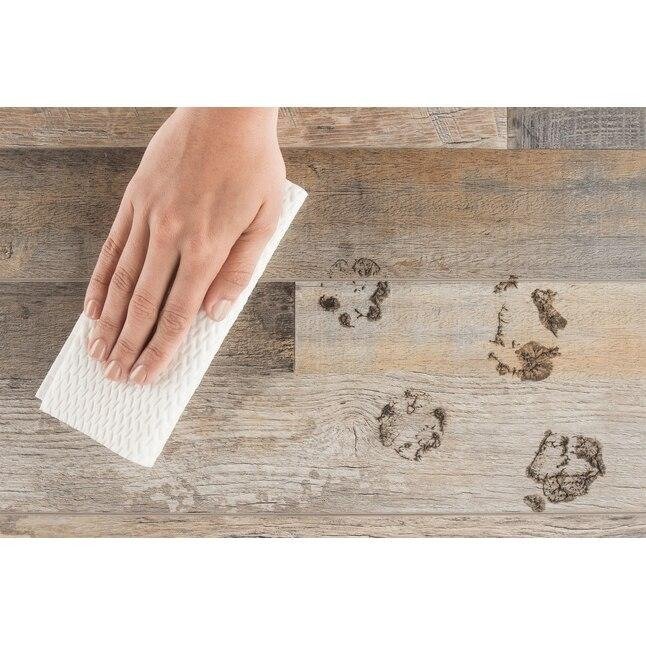
Step 2: Clean spills promptly
Blot liquids and remove solid waste carefully. Choose a cleaner suited to the spill and the flooring.
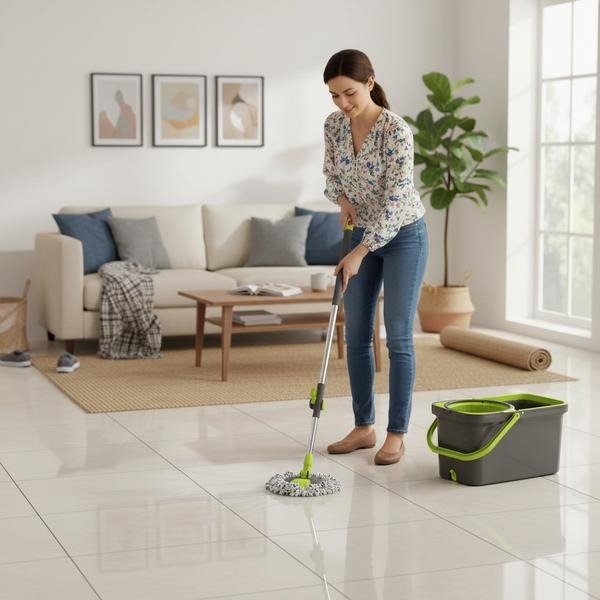
Step 3: Follow the product label
Measure any concentrate accurately. Never add extra cleaner to make it stronger, and never combine separate cleaning products.
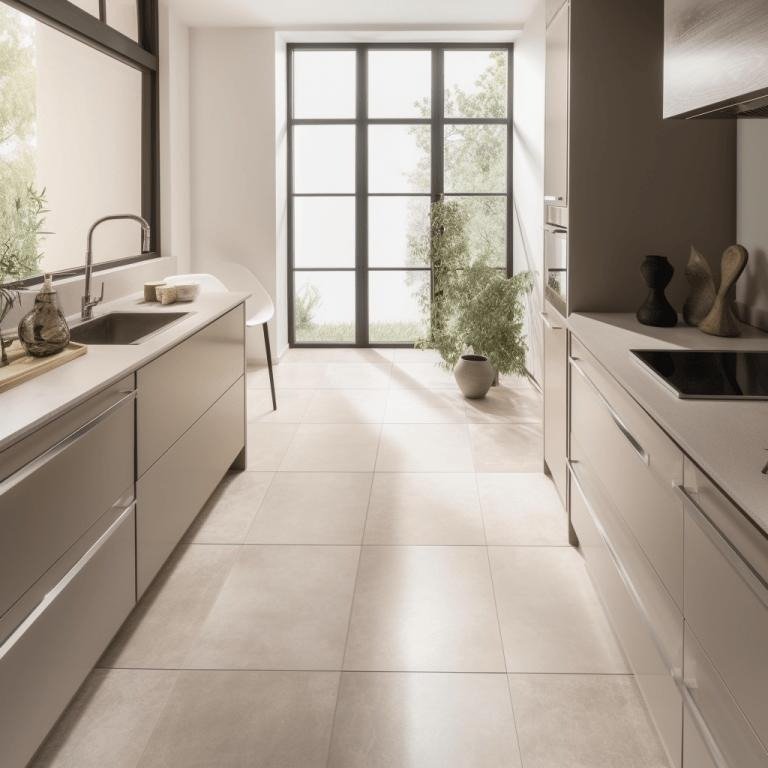
Step 4: Allow the floor to dry
Keep pets away while the floor dries and during any additional waiting period on the label. Ventilate the room when appropriate.
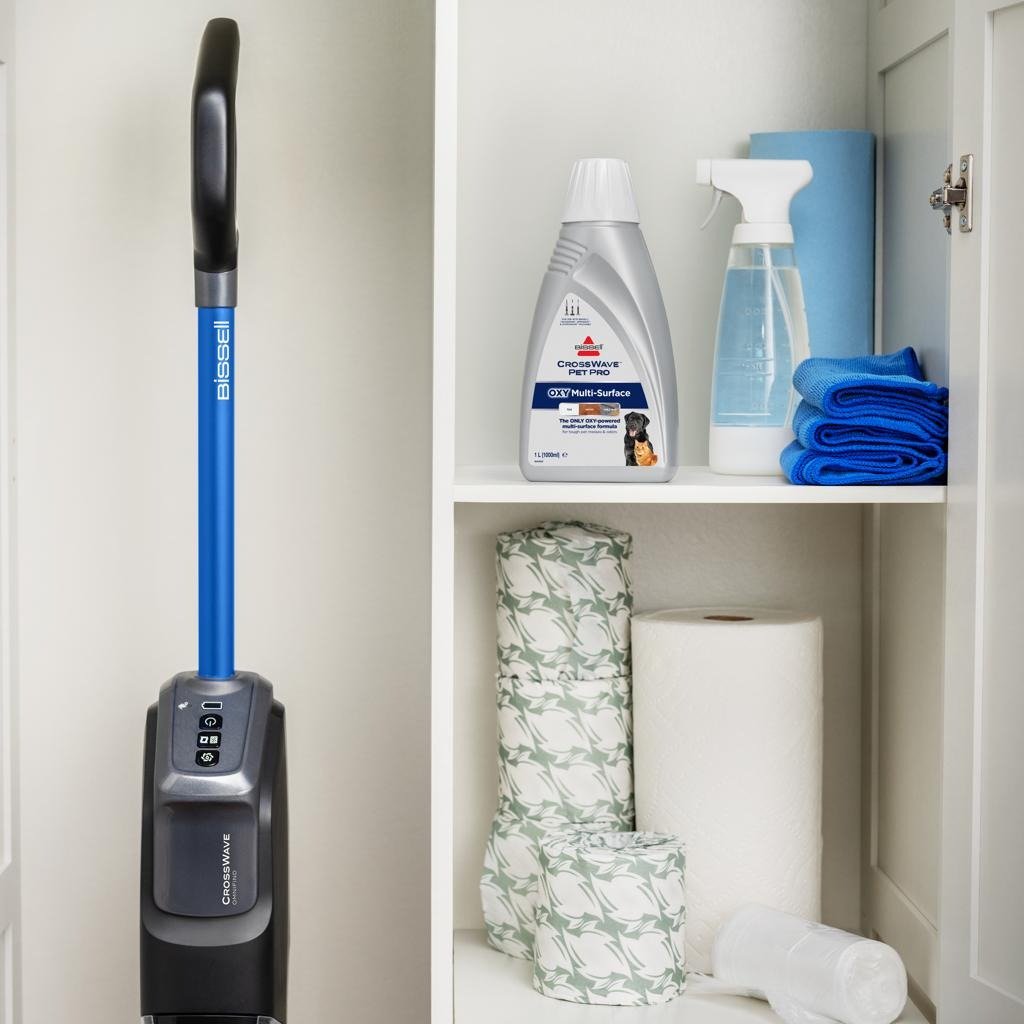
Step 5: Store supplies securely
Empty and rinse the mop bucket as appropriate, dispose of used wipes safely, and lock away bottles and concentrates.
These steps follow the ASPCA’s general guidance to use cleaning products as directed, keep pets away during cleaning, and allow treated surfaces to dry before pets return.
ASPCA
+1
Cost Breakdown
The price of a pet-conscious floor cleaner varies by brand, bottle size, formula, and retailer. Local availability also affects prices, especially when buying imported products.
Instead of choosing solely by the lowest shelf price, compare the cost per usable cleaning session.
| Cost factor | What to consider |
| Ready-to-use cleaner | Convenient for small areas, but you may replace bottles more often |
| Concentrated cleaner | May offer more uses per bottle when diluted correctly |
| Microfiber mop and cloths | Reusable supplies can reduce recurring disposable costs |
| Specialty pet stain cleaner | Useful for specific accidents, but not always necessary for routine mopping |
| Disinfectant | Adds cost when a genuine disinfection task requires it |
| Flooring damage | Using an unsuitable product can create expensive repair or replacement costs |
For a budget-friendly routine, remove loose dirt regularly and spot-clean small messes instead of repeatedly applying large amounts of cleaner. Use only the quantity the label recommends.
Do not dilute a ready-to-use product unless its instructions allow it. Likewise, never over-concentrate a cleaning solution to stretch its performance.
Since prices change across retailers and regions, check local stores for current prices before buying. A more expensive cleaner is not automatically safer, and a low-cost option is not automatically more dangerous.
Common Mistakes Pet Owners Make
Even a suitable product can create avoidable risks when someone uses it incorrectly. Watch out for these common mistakes.
Letting pets walk on wet floors. Wet paws can pick up cleaning solution. Cats may later ingest residue while grooming. Wait until the surface is dry and any label-required waiting period has passed.
Trusting marketing claims without reading the label. Words such as “natural,” “green,” and “eco-friendly” do not establish pet safety. Review the actual formula and directions.
Using too much product. Extra cleaner may leave more residue without improving the result. Measure concentrates and follow the recommended amount.
Mixing household chemicals. Never mix cleaning products to increase their strength. Some combinations can release dangerous gases or cause chemical reactions.
Adding essential oils for fragrance. Certain oils can harm pets, and cats require particular caution. Skip homemade scented mixtures unless a veterinarian has confirmed their suitability.
Assuming every cleaner disinfects. A product that removes dirt may not kill the germs you need to target. Read the label for its intended use.
Ignoring floor compatibility. Strong or unsuitable cleaners can damage finishes, sealants, grout, or other surfaces.
Leaving supplies within reach. Pets may chew bottles, lick used cloths, or drink from mop buckets. Secure everything immediately after cleaning.
Pros and Cons
Choosing a suitable cleaner offers practical benefits, but every cleaning approach has limitations.
| Pros | Cons |
| Helps remove dirt, hair, and everyday messes | Incorrect use can expose pets to irritating or harmful chemicals |
| Floor-specific formulas can protect compatible surfaces | Some products are unsuitable for particular flooring materials |
| Fragrance-free options may reduce unnecessary scent exposure | Fragrance-free does not mean non-toxic |
| Concentrates may reduce packaging and cost per use | Incorrect dilution can increase risk or reduce performance |
| Specialty cleaners can target pet stains | Some products may need additional rinsing or drying time |
| Routine cleaning can improve household hygiene | Ordinary cleaners do not necessarily disinfect |
The most practical option is one you can use correctly, store securely, and keep away from your pets during application.
Similar Options and Alternatives
Different cleaning approaches suit different jobs. Consider the task before buying a specialized product.
| Option | Best For |
| Plain water and microfiber | Light dust and small marks on water-compatible surfaces |
| Fragrance-free floor cleaner | Routine cleaning when you prefer to avoid added scent |
| Floor-specific wood cleaner | Approved sealed wood surfaces |
| Tile-compatible cleaner | Everyday dirt on compatible tile |
| Pet stain and odor remover | Urine, vomit, and other pet accidents when the formula suits the surface |
| Enzyme-based pet cleaner | Certain organic stains and odors, following label instructions |
| Labeled household disinfectant | Situations that genuinely require disinfection |
| Professional floor-cleaning service | Specialized flooring or difficult stains that ordinary methods cannot address |
This table covers cleaning methods and specialized uses rather than ranking specific brands. No alternative is automatically suitable for every animal or every floor.
For pet urine, blot the liquid first and use a product designed for the stain. Avoid harsh scrubbing that could spread the mess or damage the finish. For hardwood, stone, or delicate flooring, follow the surface manufacturer’s cleaning advice.
When to Consult a Vet or Professional
Contact a veterinarian or animal poison-control service if your pet licks a cleaning solution, chews a bottle, walks through a potentially hazardous product, or develops symptoms after cleaning.
Seek urgent veterinary advice if you notice:
- Repeated vomiting or excessive drooling.
- Redness, pain, or irritation around the eyes or mouth.
- Unusual weakness, shaking, or changes in behavior.
- Coughing, breathing difficulty, or other signs of respiratory distress.
- Suspected ingestion of a concentrated cleaner or disinfectant.
Do not induce vomiting or try to neutralize the chemical with another substance unless a veterinary professional specifically instructs you to do so. If the product contacts the eyes or skin, follow its emergency label directions while seeking veterinary advice.
Keep the original container or take a clear picture of the product label. The veterinarian will need the product name, ingredients if available, approximate exposure, and time of contact.
The ASPCA advises prompt professional guidance when a pet may have encountered a poisonous household substance. Its Animal Poison Control Center is available at (888) 426-4435 in the United States; fees may apply.
ASPCA
+1
If you keep birds, reptiles, or other less common pets, ask a veterinarian familiar with that species about cleaning products and ventilation. Advice intended for dogs and cats may not cover their needs.
Fun Facts About Pet-Friendly Floor Cleaning
Here are several useful facts that can help you make better cleaning decisions.
- Cleaning and disinfecting are different. Removing dirt does not necessarily kill disease-causing germs.
- Drying time matters. Pets can contact cleaning residue through their paws and may ingest it while grooming.
- Fragrance does not equal cleanliness. A pleasant smell does not prove that a floor is free from dirt or germs.
- Natural ingredients can still cause harm. Risk depends on the substance, concentration, route of exposure, and animal.
- Floor type affects product choice. A solution suitable for tile may damage an incompatible wood finish.
- Birds need extra care around fumes. The ASPCA specifically cautions that birds are sensitive to airborne exposures from cleaning products.
ASPCA
+1 - Storage is part of pet safety. Keeping bottles and used cleaning materials out of reach helps prevent accidental exposure.
These principles apply whether you use a commercial product, a simple cleaning method, or a specialty stain remover.
Frequently Asked Questions
1. What floor cleaner is toxic to cats?
Certain floor cleaners can harm cats, especially concentrated products containing corrosive substances or phenolic disinfectants. Some disinfectants containing quaternary ammonium compounds also pose serious risks. However, the risk depends on the specific ingredients, concentration, and exposure route. Cats may ingest residue when they groom their paws after walking across a treated floor. Check the product label and avoid using a cleaner around your cat if you cannot confirm its suitability. If your cat contacts a potentially harmful product, contact your veterinarian promptly.
Merck Veterinary Manual
+1
2. What can I use to clean the floor that is pet friendly?
Start with plain water and a microfiber mop for light dirt, provided your flooring permits water cleaning. For tougher messes, choose a cleaner labeled for your floor type and follow its instructions. Keep pets away while you clean, and allow the surface to dry before letting them return. For urine and other organic stains, consider a pet stain remover designed for the affected surface. Avoid mixing cleaning chemicals or adding essential oils. If you need to disinfect, choose a suitable labeled product rather than assuming an ordinary floor cleaner kills germs.
3. What is the safest cleaner to use around cats?
There is no single cleaner that is safest for every cat and every household. A product with clear ingredients, suitable surface instructions, and straightforward safety directions is a sensible starting point. Some owners prefer fragrance-free products to reduce unnecessary scent exposure, but fragrance-free does not mean non-toxic. Avoid phenol-based disinfectants in feline environments, and take particular care with products containing quaternary ammonium compounds. Keep your cat away during cleaning and until the floor meets the product’s safe re-entry instructions. Ask your veterinarian for product-specific advice if your cat has special health needs.
Merck Veterinary Manual
+1
4. Is vinegar and water safe for pets on floors?
Vinegar and water is a common homemade cleaning mixture, but it is not automatically the best choice for every pet or surface. Vinegar is acidic and can irritate tissues, particularly when concentrated or swallowed. It may also damage certain flooring finishes. Never mix vinegar with bleach or other cleaning chemicals because dangerous reactions can occur. For light dirt, plain water may be enough on a compatible surface. For stubborn stains, use a floor-specific product with clear instructions. If your pet ingests a cleaning mixture, contact a veterinarian for advice rather than attempting to treat the exposure yourself.
ASPCA
+1
5. How long should pets stay off a freshly cleaned floor?
Follow the product label’s instructions for drying and re-entry. Many routine cleaning situations require you to keep pets away until the floor has dried, but some products require additional steps or a longer waiting period. Do not assume that a floor is ready simply because it looks dry. Ventilate the room when appropriate, and check whether the label requires rinsing. Cats need particular care because they groom their paws, while birds may need protection from airborne fumes. If the label does not explain when animals can safely return, contact the manufacturer or your veterinarian before using the product around your pet.
Final Thoughts
Keeping floors clean in a home with pets does not require complicated recipes or an expensive collection of cleaning products. It requires a sensible choice, careful handling, and a routine that prevents unnecessary exposure.
Start by identifying your flooring type and the messes you clean most often. Choose a suitable product with clear instructions, and resist the temptation to judge safety by fragrance, price, or natural-sounding marketing claims.
For everyday dirt, simple cleaning methods may be enough. Pet stains may call for a specialized product, while genuine disinfection needs a cleaner with appropriate disinfecting directions. These jobs are different, so choose accordingly.
Most importantly, keep your animals away while you clean, prevent access to buckets and bottles, and allow floors to dry according to the label. Take extra care with cats, birds, and pets that frequently lick surfaces.
If you are uncertain about a particular ingredient or your pet’s sensitivity, ask your veterinarian before using the product. A clean home should support your pet’s comfort and well-being, not introduce avoidable risks.

Sophia Bennett is an animal care contributor at PetJournalHub. She writes educational articles about companion animals, pet wellness, training, and daily care. She believes that trustworthy information helps every pet owner build a healthier and happier life for their pets.