Capuchins and squirrel monkeys are the two primates most often kept as pets in the US, but most vets and welfare groups advise against it. Monkeys are wild animals with complex social needs, long lifespans, and real bite and disease risks, and many states ban private ownership outright.
Key Takeaways
- Capuchin and squirrel monkeys are the most commonly discussed pet monkeys, but neither is a beginner-friendly animal.
- Ownership is illegal or heavily restricted in most US states and many countries.
- Monkeys can live 20–40+ years and need specialized diets, housing, and enrichment.
- Bites, scratches, and disease transmission are real safety concerns for owners and visitors.
- Exotic vet care is limited and expensive compared to dog or cat care.
- Sanctuaries and rescues report high numbers of surrendered pet monkeys, which says a lot about how hard this really is.
Introduction
People search for the best monkeys for pets after seeing a cute video online or reading about a celebrity’s pet capuchin. The idea feels exciting. A tiny, expressive primate that can learn tricks sounds like a dream pet.
The reality is more complicated. Monkeys aren’t domesticated animals. They’re wild species that happen to tolerate captivity, and that’s a very different thing from being suited to home life.
This guide walks through what pet ownership actually looks like: the legal landscape, the daily care demands, realistic costs, and the safety issues nobody mentions in cute videos. It also covers the specific species people ask about most, so you can make an informed decision.
What Is a Pet Monkey?
A pet monkey is a primate kept in a private home rather than a zoo, sanctuary, or research facility. In the US, this usually means a capuchin or squirrel monkey, since larger species like chimpanzees are banned almost everywhere for private ownership.
Unlike dogs or cats, monkeys were never bred for life alongside humans. Every trait people find charming, like their hands, curiosity, and problem-solving, comes from a wild animal’s toolkit. That toolkit doesn’t switch off in a living room.
Most primatologists and vets classify pet monkeys as exotic animals, not domestic pets. That label affects everything from insurance to vet access to local laws.
It also helps to know the two broad primate groups involved. Capuchins and squirrel monkeys are both “New World” monkeys, native to Central and South America. Old World monkeys, like macaques, come from Africa and Asia and tend to carry stricter ownership bans due to disease risk and size at adulthood.
Quick Facts Box
| Fact | Details |
| Common pet species | Capuchin, squirrel monkey |
| Typical lifespan | 20–45 years, depending on species |
| Legal status in US | Banned or restricted in most states |
| Adult weight | 2–9 lbs for most small pet species |
| Diet | Fruit, vegetables, insects, specialized primate biscuits |
| Social needs | High; monkeys live in troops in the wild |
| Vet care | Requires an exotic animal vet, not a standard clinic |
History and Evolution
Primate ownership in the US grew during the mid-1900s, when exotic animals became status symbols and roadside attractions. Capuchins gained extra attention after appearing in films and TV shows as clever sidekick characters.
That media exposure created demand that didn’t match the reality of raising a monkey. Many early pet owners underestimated how strong and unpredictable adult monkeys become, which led to injuries and surrenders.
Public awareness has grown a lot since then. Sanctuaries now regularly take in monkeys whose owners couldn’t manage them past infancy. This history is part of why so many states tightened exotic pet laws over the last few decades.
Key Characteristics and Care Needs
Monkeys are intelligent, social, and physically strong for their size. A grown capuchin can out-muscle an adult human’s grip, and both capuchins and squirrel monkeys are far more agile than most owners expect.
Their care needs go well beyond food and water:
- Housing: Large, secure enclosures with climbing structures, not a cage in a spare room.
- Diet: A varied mix of fruit, vegetables, protein, and primate-specific biscuits to avoid nutritional deficiencies.
- Enrichment: Puzzle feeders, foraging tasks, and daily interaction to prevent stress behaviors.
- Social contact: Monkeys live in troops in the wild, so isolation can cause real psychological harm.
- Veterinary care: Regular checkups with a vet who specifically treats exotic primates.
This can vary depending on the species and the individual animal, so any care plan should be built with an exotic animal vet, not general advice online.
Monkeys also communicate constantly through sound, posture, and facial expressions. Owners who don’t learn to read these signals often miss early warning signs of stress or aggression, which can lead to bites that seem to “come out of nowhere” but usually don’t.
Quick Comparison Snapshot
| Option | Best For | Key Difference |
| Capuchin monkey | Experienced exotic animal keepers | Highly intelligent, dexterous hands, long lifespan |
| Squirrel monkey | Keepers who can house multiple monkeys | Smaller size, but needs group housing to thrive |
| Marmoset | Keepers researching smaller New World primates | Smaller and lighter, but still complex care needs |
| None (visiting a sanctuary) | Most pet lovers | Lets people enjoy monkeys without ownership risks |
Best Pet Monkey for Beginners
Honestly, there isn’t a genuinely beginner-friendly pet monkey. Every commonly kept species needs specialized housing, diet, and social structure that new owners rarely have in place from day one.
Some people point to squirrel monkeys as “easier” because of their small size. But size doesn’t reduce their need for group living, mental stimulation, or vet care from an exotic specialist.
If someone is truly new to exotic animals, most rescue groups and vets recommend starting with a lower-stakes exotic pet, then working with sanctuaries or professionals before ever considering a primate.
What Countries Allow Pet Monkeys
Laws vary widely, and this changes often, so always check current local and national rules before assuming ownership is legal. Some countries allow private primate ownership with permits, while others ban it outright.
In the US, individual states set their own rules. Some states ban all primate ownership, some require permits, and a few have no specific restriction at all. Local city or county laws can add another layer on top of state law.
Because these rules shift, this is one area where checking with your state’s wildlife or agriculture department is essential before making any plans.
Friendliest Monkey to Humans
Capuchins are often described as the friendliest toward humans, largely because of their history as trained assistance and entertainment animals. That reputation comes with a caveat worth understanding.
“Friendly” in this context usually means bonded to a specific, familiar person, not friendly toward strangers or even other family members. Hormonal changes during adolescence can also shift a once-affectionate monkey into an aggressive one.
This is one reason capuchins used as service animals for people with disabilities require extensive professional training, not casual home socialization.
Cute Pet Monkey Breeds
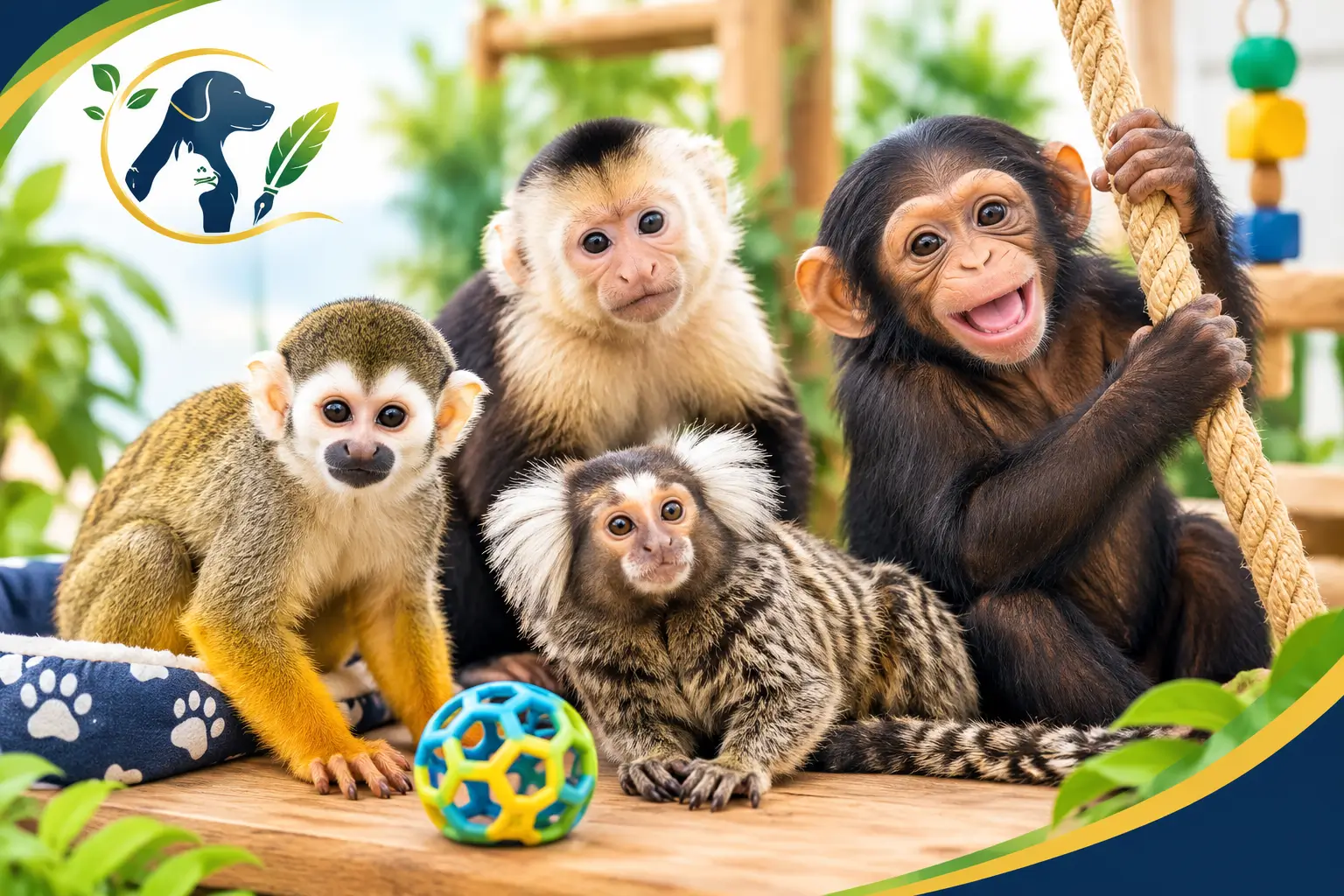
Capuchins, squirrel monkeys, and marmosets are the species most often called “cute pet monkeys” online. All three share expressive faces, small size, and dexterous hands that photograph and film well.
Cuteness, though, isn’t a care category. Each of these species needs specific diets, housing, and social structures that have nothing to do with appearance. A marmoset’s tiny size, for example, actually makes temperature regulation and nutrition more delicate, not easier.
Owners researching “cute” monkey breeds should treat that search as a starting point for learning about a species, not a shortcut past the harder questions about care and legality.
Capuchin Monkey Pet
Capuchins are the most recognized pet monkey species in the US, known for their intelligence and dexterous hands. They’re also one of the longer-lived primates people keep privately, often reaching 40 years or more.
That long lifespan is a serious commitment most people underestimate. A capuchin adopted today could still need daily care decades from now, potentially outliving the original owner’s living situation, health, or ability to provide care.
Anyone seriously considering a capuchin should look into USDA-licensed exotic animal breeders or established primate sanctuaries rather than informal online listings, and confirm state and local legality first.
Squirrel Monkeys
Squirrel monkeys are small, energetic primates that need to live in groups to stay mentally healthy. A single squirrel monkey kept alone often shows signs of stress, since isolation goes against their natural social structure.
Because of this, responsible keeping generally means housing more than one animal, which multiplies the space, cost, and care commitment right away. This is a major reason exotic vets and rescues caution against squirrel monkeys as a “starter” primate.
Their small size can also make them harder to keep securely contained, since they’re fast and skilled climbers even by monkey standards.
Daily Care Routine and How to Get Started
A realistic daily routine includes feeding, enrichment, socialization, and enclosure maintenance, each taking real time every single day. This isn’t a pet you can leave with automatic feeders for a weekend.
- Morning: Fresh food and water, health check for any changes in behavior or appetite.
- Midday: Enrichment activities like foraging puzzles or climbing time.
- Afternoon: Direct social interaction, since isolation causes real stress.
- Evening: Enclosure cleaning and food prep for the next day.
- Ongoing: Scheduled checkups with an exotic animal vet.
Before bringing home any primate, confirm legality in your state and city, locate an exotic vet nearby, and ideally spend time with an experienced keeper or sanctuary first.
Cost Breakdown
Costs vary a lot by species, location, and whether you’re working with a licensed breeder or a rescue. This can vary depending on your area, so treat these as general ranges rather than fixed numbers.
- Initial acquisition: Often several thousand dollars through legitimate, licensed sources.
- Enclosure and housing setup: Can run into the thousands, since standard cages aren’t adequate.
- Ongoing food and supplies: Higher than typical pet food costs due to specialized diets.
- Veterinary care: Exotic vet visits typically cost more than standard cat or dog visits.
- Permits and licensing: Additional fees in states that require them.
- Liability coverage: Some owners look into specialized insurance, since standard homeowner’s policies often exclude exotic animal bites.
Long-term costs, spread across a 20–40 year lifespan, often surprise new owners more than the upfront price tag does. Many rescues report that cost, not lost interest, is the top reason owners eventually give up their monkeys.
Common Mistakes Pet Owners Make
Many new owners underestimate how much a monkey changes after infancy. A playful, cuddly baby monkey can become a stronger, more territorial adult within a few years.
Other common mistakes include:
- Skipping research on state and local laws before acquiring a monkey.
- Housing a naturally social species, like squirrel monkeys, alone.
- Relying on general vets instead of exotic animal specialists.
- Underestimating long-term costs and lifespan commitment.
- Assuming early affection will continue unchanged into adulthood.
- Not having a backup care plan in place if the owner becomes unable to provide care.
Pros and Cons
| Pros | Cons |
| Highly intelligent and engaging | Illegal or restricted in most areas |
| Strong bond possible with a dedicated owner | Long lifespan is a major commitment |
| Expressive, social personalities | High risk of bites and injuries as adults |
| Can be trained for specific behaviors | Expensive, specialized ongoing care |
Similar Options and Alternatives
| Option | Best For |
| Marmoset | Keepers researching smaller New World primates with different housing needs |
| Sugar glider | Owners wanting a small, social exotic mammal with lower legal barriers in many areas |
| African grey parrot | Owners wanting a highly intelligent animal companion without primate-specific legal issues |
| Sanctuary visits or sponsorship | Anyone who loves monkeys but wants to avoid ownership risks entirely |
When to Consult a Vet or Professional
Always consult a licensed exotic animal vet before acquiring any primate, and continue regular checkups throughout its life. General vets often lack the training to properly assess primate health.
Contact a vet immediately if you notice changes in appetite, unusual aggression, lethargy, or any signs of illness. Because primates can carry zoonotic diseases, any bite or scratch also deserves prompt medical attention for the person involved, not just the animal.
If you’re unsure whether ownership is even legal in your area, a wildlife agency or exotic animal attorney can clarify requirements before you commit to anything.
Fun Facts
- Capuchins are named for their resemblance to the hoods worn by Capuchin friars.
- Squirrel monkeys are among the smallest New World monkey species.
- Some capuchins have been trained as service animals to assist people with mobility challenges.
- Monkeys use tools in the wild, including rocks to crack open nuts.
- A capuchin’s grip strength is notably higher than a human’s for its size.
- Squirrel monkeys typically live in troops that can include dozens of individuals.
Frequently Asked Questions
Which monkey is the calmest?
No pet monkey species is reliably “calm” in the way a mellow dog breed might be. Temperament depends heavily on the individual animal, its upbringing, and its life stage. Capuchins are sometimes described as more even-tempered when well socialized from infancy, but adolescence can still bring behavior changes. Squirrel monkeys tend to be more high-energy overall. Rather than picking a species for calmness, prospective owners should talk to experienced keepers or sanctuary staff about realistic temperament expectations for that specific animal.
What monkeys are friendliest to humans?
Capuchins have the strongest reputation for bonding closely with a specific caregiver, partly due to their history in trained roles. That friendliness is usually directed at one familiar person rather than people in general. Squirrel monkeys can also form bonds, but their strong drive to stay in a group means they often relate more naturally to other monkeys than to solo human interaction. Friendliness in either species isn’t guaranteed and can shift with age, health, or environment.
What is the smartest pet monkey?
Capuchins are widely considered among the smartest primates kept privately, known for problem-solving and tool use even outside captivity. This intelligence is part of what makes them appealing, but it also means they need constant mental stimulation. A bored, understimulated capuchin can develop destructive or stress-related behaviors. Enrichment isn’t optional for a smart species like this. It’s a daily requirement, and owners who can’t provide it often see behavioral problems develop over time.
Can monkeys be happy as pets?
Some monkeys in dedicated, experienced care can live reasonably well, but “happy” depends on meeting needs most households can’t fully provide. Social species need companionship from other monkeys, not just humans. Enclosures need real space to climb and explore. Sanctuary staff and primatologists generally agree that most private homes fall short of these standards, which is a major reason so many pet monkeys end up surrendered to sanctuaries later in life.
Is it expensive to own a pet monkey?
Yes, ownership costs go well beyond the initial price of the animal. Specialized diets, secure enclosures, exotic vet visits, and potential permit fees all add up over a lifespan that can stretch past 40 years for some species. This can vary depending on the species and your location, so anyone considering it should research total lifetime costs, not just the upfront purchase price, before making a decision.
What happens if a pet monkey bites someone?
A monkey bite is a serious event, not a minor scuffle. Primates can carry zoonotic diseases, so any bite or scratch needs prompt medical evaluation for the person involved, in addition to care for the animal. Depending on your state, a bite can also trigger legal consequences, including quarantine requirements, fines, or in some cases confiscation of the animal by wildlife authorities. This is part of why liability insurance and strict enclosure security matter so much, and why owners need a clear plan for handling an incident before one ever happens.
Final Thoughts
Monkeys are fascinating animals, and it’s easy to see why so many people search for the best monkeys for pets after watching a viral video. But the research consistently points the same direction: these are wild animals with needs that most homes, budgets, and local laws simply can’t support.
If you love primates, consider supporting an accredited sanctuary, volunteering, or sponsoring an animal instead of pursuing ownership. It’s a way to enjoy these animals without exposing yourself or the monkey to unnecessary risk.
If you’re still set on ownership after research, work only with licensed professionals, confirm your local laws in writing, and build a relationship with an exotic animal vet before bringing any primate home.

Daniel Brooks is a pet research writer at PetJournalHub. He specializes in pet behavior, product research, and responsible pet ownership. He focuses on delivering accurate, reader-friendly guides that help pet owners provide the best care for their animals.