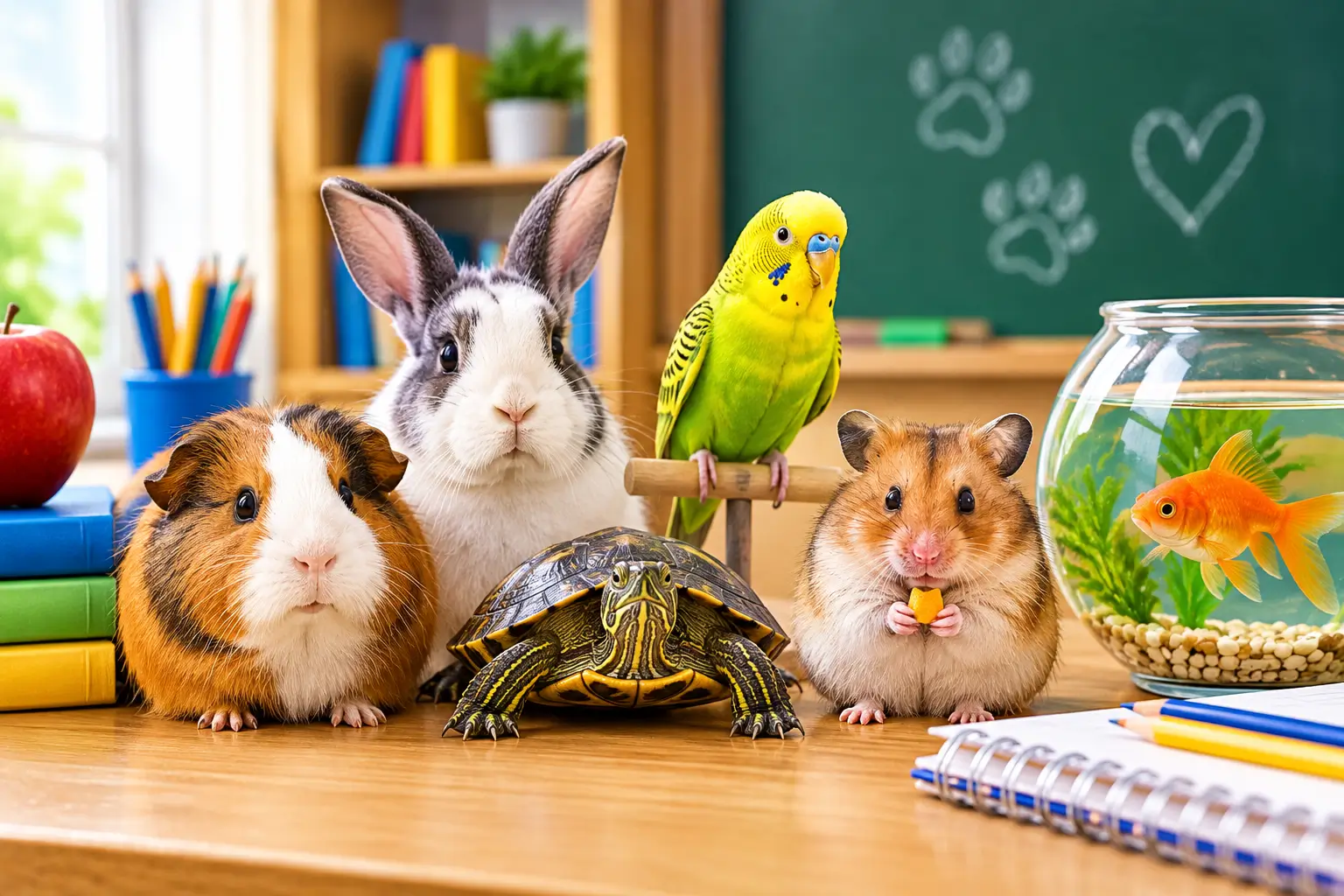
A class pet is a small, low-maintenance animal kept in a classroom to teach kids responsibility, science, and empathy. The best class pets are hardy, quiet, low-allergy, and safe to handle under supervision. Popular picks include guinea pigs, bearded dragons, betta fish, and hermit crabs, depending on the grade level and school rules.
Key Takeaways
- Good picks are calm, low-maintenance, and safe for kids to observe or gently handle.
- Fish, hermit crabs, and stick insects work well for younger grades with less hands-on care.
- Guinea pigs and bearded dragons suit older students who can help with feeding and cleaning.
- Weekend and holiday care always needs a plan, since animals need food and water every day.
- Check school allergy policies and district rules before choosing any live animal.
- Budget for a habitat, food, and basic vet care, not just the pet itself.
Introduction
Teachers ask the same question every fall: what’s actually safe, manageable, and educational to keep in a classroom full of kids? A good class pet does more than sit in a tank. It teaches routine, gentle handling, and basic biology in a way no textbook can.
Picking one of the best class pets means balancing a few things at once. You need an animal that tolerates noise and movement, doesn’t need constant attention, and won’t trigger allergies or safety concerns. You also need a realistic plan for weekends, holidays, and summer break.
This guide walks through the top classroom pet options by grade level, what they cost, how to care for them day to day, and when a live animal isn’t the right call at all. Whether you teach kindergarten or high school biology, you’ll find a fit that matches your classroom’s energy and your own bandwidth as a caretaker.
What Is a Class Pet?
A class pet is a small animal kept in a classroom for students to observe, help care for, and learn from over the school year. It’s usually housed in a tank, cage, or terrarium that stays in one spot.
Common examples include betta fish, guinea pigs, hamsters, hermit crabs, and bearded dragons. Some teachers choose insects like stick bugs or ants in an ant farm, since they need very little daily care.
The goal isn’t just a cute mascot. A class pet teaches kids to follow a feeding schedule, read an animal’s body language, and treat a living creature with care. Many teachers also tie the pet into science lessons about life cycles, habitats, or animal behavior.
Some schools keep one pet per classroom, while others share a single pet across a grade level or the whole building. Either setup works, as long as someone takes ownership of the daily routine. A shared pet often needs a clearer written schedule, since more adults are involved in its care.
Quick Facts Box
| Fact | Details |
| Typical lifespan range | Varies widely by species, from 1–2 years (some fish) to 10+ years (tortoises) |
| Daily care needed | Feeding, water changes or refills, and habitat checks |
| Best for | Teachers with a weekend/holiday care plan and school approval |
| Common housing | Aquarium, terrarium, or wire cage, depending on species |
| Key safety concern | Hand-washing after handling, allergy risk, and bite/scratch prevention |
| Approved by school? | Always confirm with your school’s pet and allergy policy first |
Key Characteristics and Care Needs
The strongest options share a few traits. They’re calm around noise, don’t need hours of daily interaction, and are easy for a teacher to manage alone if students are absent or on break.
Size matters too. A smaller footprint fits more classrooms, and a secure enclosure keeps curious hands from opening a cage during a lesson.
Temperament is just as important as size. An animal that startles easily or bites when startled isn’t a good fit for a room full of unpredictable movement and noise. Species like guinea pigs and bettas tend to tolerate a busy room better than more skittish animals.
Care requirements should match what a teacher can realistically manage. Daily feeding is normal, but any animal needing specialized lighting, strict temperature control, or frequent vet visits adds pressure that most classrooms can’t sustain long-term.
Quick Comparison Snapshot
| Option | Best For | Key Difference |
| Betta fish | Any grade, minimal handling | No hands-on care needed; lowest allergy risk |
| Guinea pig | Elementary and middle school | Social, tolerates gentle handling, needs daily interaction |
| Bearded dragon | Middle and high school | Needs heat lamp and UVB light; more setup involved |
| Hermit crab | Younger grades, low-maintenance classrooms | Very low care needs; doesn’t require handling |
Top 10 Classroom Pets
The most reliable classroom pets tend to repeat across teacher recommendations, because they hold up well to noise, changing schedules, and shared care.
- Betta fish
- Guinea pig
- Hermit crab
- Bearded dragon
- Leopard gecko
- Stick insect
- Hamster (with supervised handling)
- Ant farm colony
- Hissing cockroach (for older grades studying insects)
- Snail
This list isn’t ranked by “best” overall, since the right pick depends heavily on grade level, room setup, and how much daily care a teacher can commit to.
Best Class Pets for High School
High schoolers can usually handle more responsibility, which opens the door to pets with slightly more involved care. Bearded dragons and leopard geckos work well here, since older students can help monitor tank temperature and feeding logs as part of a biology unit.
Ant farms and hissing cockroaches also fit high school science classes nicely. They’re low-risk, don’t need daily handling, and connect directly to lessons on ecosystems and insect behavior.
Betta fish remain a safe, no-fuss option at any grade, including high school, especially in rooms without a dedicated caretaker every single day.
Best Class Pets for Teachers
From a teacher’s point of view, the “best” pet is really the one that survives a long weekend without you. That usually means fish, hermit crabs, or insects over anything needing daily hands-on care.
Teachers juggling their own kids, grading, and lesson planning often do best with a betta fish or a small terrarium setup. These need a quick daily glance, not a full care routine.
If a teacher wants a more interactive pet, a guinea pig is a solid middle ground. It’s social and educational, but its care can be split across a rotating student schedule with a clear, written routine.
Best Class Pets for 5th Grade
Fifth graders are usually ready for supervised, hands-on responsibility, which makes guinea pigs a strong fit. They’re gentle, food-motivated, and respond well to a consistent feeding schedule that students can help track.
Bearded dragons also work well at this age, since 10- and 11-year-olds can follow a written care chart for feeding, misting, and tank checks. This age group also tends to enjoy documenting growth and behavior for science journals.
Hermit crabs are a good lower-maintenance option if the classroom wants a pet without a rotating hands-on care schedule.
Class Pet Ideas
Beyond the usual picks, some classrooms get creative with pet choices that still teach responsibility without much daily upkeep.
- A small aquarium with multiple fish species instead of just one betta
- A terrarium with springtails or isopods, useful for decomposition and ecosystem lessons
- A butterfly-raising kit that runs for a few weeks, then releases the butterflies outdoors
- A snail habitat, which needs almost no daily interaction
Rotating short-term pets, like a butterfly kit, can work well for teachers who want the educational value without a year-long care commitment.
Best Classroom Pets for Elementary School
Younger students need pets that are safe to observe without much direct handling, since fine motor control and impulse control are still developing. Fish, hermit crabs, and snails are strong choices for this reason.
Guinea pigs still work well in elementary classrooms, but handling should stay supervised and brief. Kids at this age love watching feeding time and helping refill water bottles under a teacher’s guidance.
Avoid anything that bites defensively when startled, since younger kids may not read warning signs like a raised posture or a hiss before it happens.
Best Classroom Pets for Middle School
Middle schoolers can usually manage a bit more independence, which makes bearded dragons and leopard geckos realistic options. These reptiles need a heat lamp and UVB lighting, so this age group can help monitor and log tank conditions as part of a science rotation.
Guinea pigs remain a popular choice here too, especially in classrooms that want a social, interactive pet without reptile-specific equipment.
Ant farms and stick insects also do well with this age group, since middle schoolers tend to enjoy tracking behavior and growth over several weeks.
Fake Class Pet Ideas
Some schools don’t allow live animals at all, due to allergy policies, budget limits, or liability concerns. In that case, a “fake” or simulated class pet can still teach some of the same lessons.
This is a different category from live-pet ownership, so it’s worth keeping separate: think robotic pets, realistic stuffed animals with a feeding chart, or a classroom “virtual pet” tracked on a shared screen. These options remove any live-animal safety or allergy risk entirely.
They won’t replicate real animal care, but they can still teach a feeding routine, turn-taking, and basic responsibility in schools where live pets aren’t an option.
Daily Care Routine and How to Get Started
Before bringing any animal into a classroom, check your school or district’s pet policy first. Some schools require written parent notification for allergy reasons.
Once approved, here’s a general starting routine:
- Set up the habitat a few days before the pet arrives, so temperature and water conditions stabilize.
- Assign a daily student helper or rotation for feeding and water checks.
- Keep a simple care log on the wall so any substitute teacher can follow it.
- Plan weekend and holiday care in advance, whether that’s a staff member, a student’s family, or a boarding option.
- Wash hands before and after any handling, every time.
This routine can vary depending on the species you choose, so it’s best to confirm specific feeding amounts and schedules with your vet or the breeder or pet store where you got the animal.
It also helps to introduce the pet gradually. Let students observe quietly for the first few days before any handling starts. This gives the animal time to settle into a new, noisier environment, and it gives kids a chance to learn its normal behavior before they interact with it directly.
Cost Breakdown
Costs vary a lot by species, but most classroom pets follow a similar pattern: a bigger upfront cost for the habitat, then smaller ongoing costs for food and supplies.
- Betta fish: Low upfront cost for a small tank and filter; food and water conditioner are cheap ongoing expenses.
- Guinea pig: Higher upfront cost for a cage, bedding, and hay; ongoing costs include fresh vegetables, pellets, and occasional vet visits.
- Bearded dragon: Higher upfront cost due to heat lamps and UVB lighting; ongoing costs include live insects and produce.
- Hermit crab: Low to moderate upfront cost for a terrarium; ongoing costs are minimal, mostly food and occasional shell replacements.
Exact prices vary by region and retailer, so it’s worth checking current prices at a local pet store before budgeting a final number.
Common Mistakes Pet Owners Make
Even well-meaning teachers run into the same handful of problems when choosing and caring for a class pet.
- Skipping the allergy check. Always confirm with the school nurse or admin before bringing in fur-bearing animals.
- No weekend plan. Animals still need food and water on Saturdays, Sundays, and holiday breaks.
- Overcrowding a tank. Too many fish or insects in one habitat stresses the animals and speeds up health problems.
- Letting handling go unsupervised. Young kids can accidentally squeeze or drop a small animal without meaning to.
- Ignoring habitat temperature. Reptiles especially need consistent heat, and a classroom that cools down over break can put them at risk.
- Forgetting cage or tank cleaning. A dirty habitat builds up odor and bacteria fast, which can stress the animal and lead to health problems over time.
Pros and Cons
| Pros | Cons |
| Teaches responsibility and empathy | Requires daily care, including weekends |
| Supports hands-on science lessons | Allergy risk for some students |
| Builds classroom routine and calm | Ongoing cost for food and supplies |
| Can boost engagement and attendance interest | Needs a backup caretaker for breaks |
Similar Options and Alternatives
If a live class pet isn’t realistic for your classroom, a few alternatives still offer some of the same educational value without daily animal care.
| Option | Best For |
| School-wide shared pet (kept in a common area, not one classroom) | Schools wanting one pet with shared staff responsibility |
| Short-term butterfly or ladybug kit | Classrooms wanting a temporary, low-commitment project |
| Virtual or robotic pet | Schools with strict no-live-animal or allergy policies |
| Class fish tank co-managed with the science department | Teachers wanting support with feeding and tank upkeep |
When to Consult a Vet or Professional
Any signs of illness, injury, or unusual behavior in a class pet should go to a licensed veterinarian, ideally one with experience in that specific species, such as an exotic or reptile vet for a bearded dragon.
Watch for warning signs like not eating for more than a day or two, lethargy, labored breathing, or visible injury. This can vary depending on the species, so it’s best to confirm normal behavior patterns with your vet when you first bring the animal home.
Never attempt to diagnose or medicate a sick classroom pet yourself. A quick call to a vet, or a local exotics clinic for reptiles, is always the safer move.
It also helps to have a plan in place before you need it. Ask your vet clinic in advance whether they treat your specific species, and keep their number posted near the habitat. A little prep now saves valuable time during an actual emergency.
Fun Facts
- Guinea pigs make a distinct “wheeking” sound, often linked to excitement around feeding time.
- Betta fish can breathe air at the water’s surface using a special organ called a labyrinth organ.
- Hermit crabs need to periodically switch to larger shells as they grow.
- Bearded dragons can change the shade of their skin slightly based on temperature and mood.
- Leopard geckos are one of the few gecko species with movable eyelids.
- Stick insects use camouflage as their main defense, blending into branches and leaves.
- Some ant species kept in classroom ant farms can dig tunnels visible within just a few days.
Frequently Asked Questions
What is the best class pet to get? There’s no single “best” pet for every classroom, since it depends on your students’ age, your school’s allergy policy, and how much daily care you can manage. For most teachers, a betta fish or guinea pig hits the sweet spot of low risk and high educational value. Younger grades usually do better with low-handling pets like fish or hermit crabs, while older students can manage more involved care, like a bearded dragon.
What are the top 5 best pets? Among classroom-friendly options, betta fish, guinea pigs, hermit crabs, bearded dragons, and leopard geckos consistently come up as strong picks. Each one fits a different care level and grade range, so the “best” choice really comes down to your classroom’s setup. Fish and hermit crabs suit low-maintenance rooms, while guinea pigs and reptiles work for teachers ready for more hands-on care.
What are the top 10 pets for kids? Beyond classroom settings, kids at home often do well with dogs, cats, guinea pigs, rabbits, hamsters, fish, hermit crabs, leopard geckos, bearded dragons, and birds like budgies. The right pick depends heavily on the child’s age, allergies, and how much support a parent can offer with daily care. Smaller, lower-maintenance pets tend to work best for younger kids just starting to learn pet responsibility.
What are the 10 most popular pets? Nationally, dogs and cats remain by far the most commonly owned pets in American households, followed by freshwater fish, birds, and small mammals like rabbits, guinea pigs, and hamsters. Reptiles such as bearded dragons and leopard geckos have grown in popularity too, especially among families wanting a lower-maintenance option. Exact rankings can shift year to year, so check a source like the American Veterinary Medical Association for the latest ownership data.
Can a class pet live at school over the summer? This depends entirely on your school’s policy and whether staff are on-site during break. Many teachers arrange for the pet to go home with a staff member, a student’s family, or a local pet-sitting service for the summer. Always confirm this plan well before the last day of school, not the week of.
Final Thoughts
Choosing the best class pets comes down to matching the animal to your classroom, not chasing the cutest option. A quiet, low-maintenance pet like a betta fish or hermit crab works almost anywhere, while a guinea pig or bearded dragon rewards classrooms ready for more hands-on care.
Whatever you choose, build the care plan before the pet arrives. Confirm your school’s allergy policy, line up weekend coverage, and keep a simple daily routine posted where any substitute can follow it.
Done right, a class pet becomes one of the most memorable parts of the school year. Kids remember the pet long after they forget the lesson it was teaching.

Emily Carter is a pet care writer at PetJournalHub. She enjoys creating clear, practical, and well-researched articles about pet health, nutrition, grooming, and everyday care. Her goal is to help pet owners make informed decisions through reliable, easy-to-understand content.