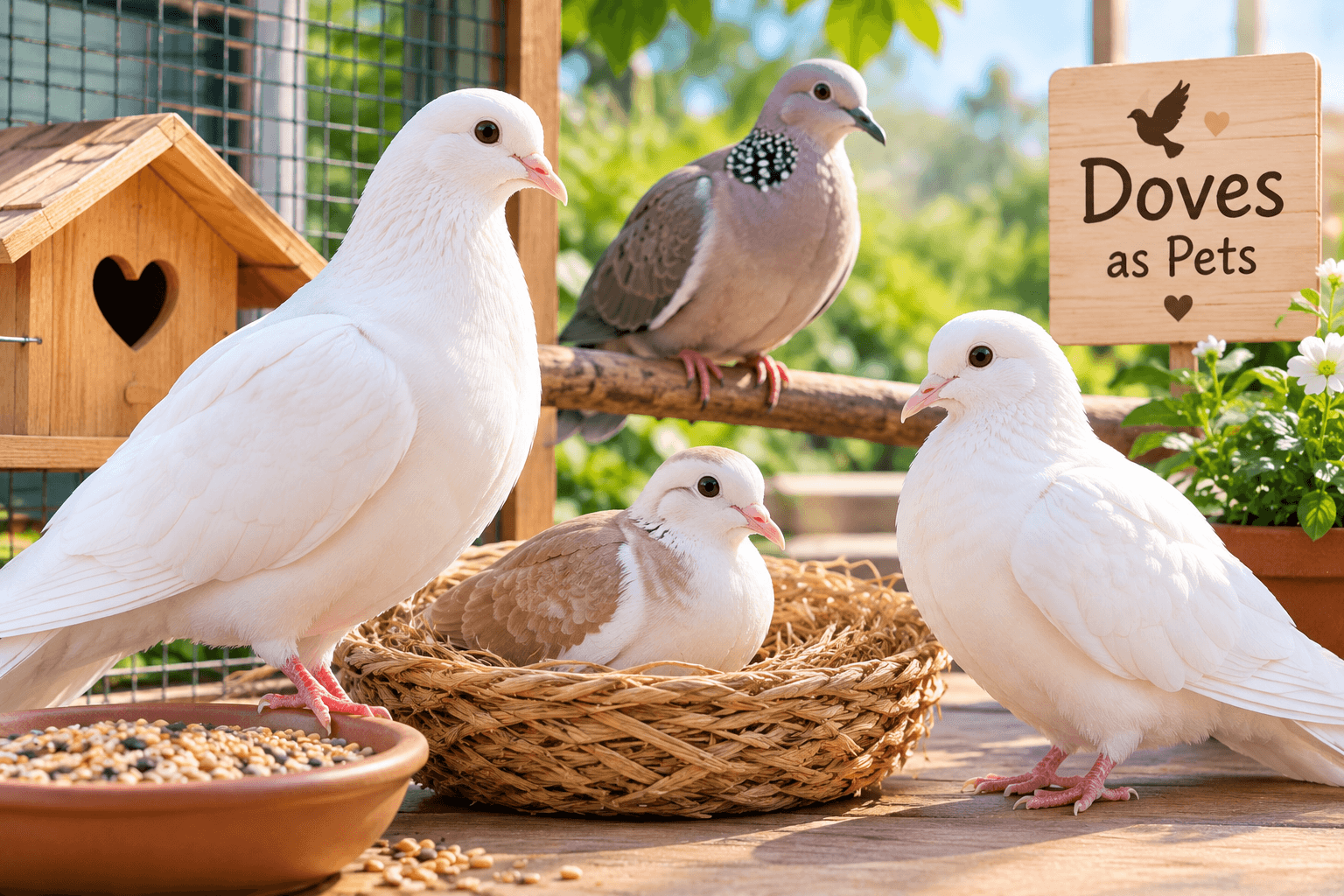
Doves as pets are gentle, quiet-cooing birds that make good companions for calm households. They need a spacious cage, daily social time, a seed-and-pellet diet, and yearly avian vet checkups. Ringneck and diamond doves are the most common pet varieties, and both are easier to care for than parrots.
Key Takeaways
- Doves are calm, low-noise birds best suited for quiet homes, not loud households with young kids.
- Ringneck doves and diamond doves are the two most popular pet varieties.
- A single dove needs at least a 24x24x24 inch cage, though bigger is always better.
- Expect $150–$400 in first-year costs, covering the bird, cage, and supplies.
- Doves live 10–15 years or longer, so this is a long-term commitment.
- They rarely bite and don’t talk, but they do need daily interaction to stay happy.
Introduction
If you want a pet bird that won’t screech at 6 a.m., doves as pets might be exactly what you’re looking for. They coo softly, move gently, and rarely bite. That makes them a popular pick for people who love birds but can’t handle a loud parrot.
Interest in pet doves has grown steadily on bird-keeping forums and among first-time bird owners. Many people search for them after seeing a dove at a friend’s house or a pet store and falling for their calm, easygoing nature.
But doves aren’t the right fit for everyone. They’re social birds that need daily attention, and they don’t enjoy being handled the way a parakeet might. This guide walks through everything you need to know before bringing one home — from cage setup to daily costs to which breed suits your lifestyle.
What Does It Mean to Keep a Dove as a Pet?
Keeping a dove as a pet means housing a small, gentle bird from the Columbidae family that thrives on routine, quiet company, and space to move. Doves are close relatives of pigeons, but smaller and generally calmer.
Most pet doves in the U.S. are either ringneck doves or diamond doves. Ringnecks are slightly larger, with a soft gray or white coat and a dark ring around the neck. Diamond doves are tiny, speckled, and often kept in pairs.
Unlike parrots, doves don’t mimic speech. They communicate through soft cooing, wing movements, and body posture. Many owners describe them as “background pets” — present, peaceful, and pleasant to watch rather than constantly interactive.
Quick Facts Box
| Fact | Details |
| Family | Columbidae (dove and pigeon family) |
| Common pet species | Ringneck dove, diamond dove |
| Average lifespan | 10–15 years, sometimes longer with good care |
| Adult size | 6–13 inches, depending on species |
| Noise level | Low — soft cooing only |
| Social needs | High — daily interaction or a bonded pair |
| Beginner friendly | Yes, with realistic expectations |
Where Do Pet Doves Come From?
Pet doves trace back to wild rock doves and collared doves that were domesticated over many centuries. Ringneck doves specifically descend from the African collared dove, a bird that has been kept by humans for a very long time.
The exact timeline of domestication isn’t fully documented, so it’s best to treat early history as a general pattern rather than a precise record. What’s clear is that doves have long been associated with peace, ceremony, and companionship across many cultures.
Key Characteristics and Care Needs
Doves are gentle, low-key birds with modest care needs compared to larger parrots. They’re a good match for people who want a calm bird rather than an interactive, hands-on companion.
Temperament: Doves are shy at first but settle into a routine quickly. They rarely bite and don’t screech, though they can startle easily.
Size and appearance: Ringneck doves reach about 11–13 inches. Diamond doves stay much smaller, around 6–8 inches, with a delicate, speckled look.
Diet: A commercial dove or pigeon seed mix, supplemented with pellets and occasional greens, covers most nutritional needs. Fresh water should always be available.
Housing: Doves need room to fly short distances, not just hop between perches. A cramped cage leads to stress and poor muscle tone over time.
Quick Comparison Snapshot
| Option | Best For | Key Difference |
| Ringneck Dove | Beginners wanting a slightly larger, hardy bird | Calmer temperament, tolerates handling better |
| Diamond Dove | Small-space owners wanting a pair | Much smaller, best kept in bonded pairs |
| Fancy Pigeon | Owners wanting a larger, showier bird | Bigger, louder, and needs more space |
| Canary | Owners wanting song over companionship | Vocal singer, not a handling bird |
Doves as Pets Pros and Cons
Doves as pets suit people who want a low-maintenance, quiet bird rather than a chatty, high-energy one. The tradeoff is less hands-on interaction than you’d get from a parrot.
| Pros | Cons |
| Very quiet compared to most parrots | Not cuddly; most don’t enjoy heavy handling |
| Low aggression, rarely bites | Can be skittish around sudden movement |
| Simple, affordable diet | Needs daily social time or a bonded mate |
| Long lifespan for the size of bird | Limited vet options in some areas |
Doves as Pets for Sale
Doves for sale usually come from avian specialty stores, reputable breeders, or bird rescue organizations. Prices and health guarantees vary a lot between these sources, so it pays to ask questions first.
When buying, look for clear eyes, smooth feathers, and steady breathing. Ask the seller about the bird’s age, diet, and whether it’s been checked by a vet. A breeder who welcomes questions is usually a good sign.
Rescue groups are also worth checking. Doves sometimes end up needing new homes when owners underestimate their social needs, and adoption fees are typically lower than buying from a breeder.
Diamond Doves as Pets
Diamond doves are the smallest common pet dove, known for their speckled wings and gentle cooing. They’re a great fit for owners with limited space who still want the calm presence of a dove.
These birds do best in pairs. A single diamond dove can become lonely and stressed without a companion bird nearby. If you can only keep one, plan on spending real time near its cage every day.
Because of their small size, diamond doves are more sensitive to cold drafts than larger doves. Keep their cage away from windows and air vents.
Ringneck Doves as Pets
Ringneck doves are the most commonly kept pet dove in the U.S., valued for their calm nature and manageable size. They tolerate gentle handling better than diamond doves once they trust their owner.
They come in several color variations, including white, which some owners choose for a striking look. Color doesn’t change temperament much — personality varies more by individual bird than by shade.
Ringnecks are a solid starting point for someone new to doves, since they’re a bit hardier and more forgiving of small care mistakes than smaller species.
Are Doves Good Pets for Beginners?
Doves make solid beginner pets for people who want a calm bird and understand their social needs. They’re forgiving of minor care mistakes but still need daily attention.
Beginners sometimes assume doves need less interaction because they’re quiet. That’s a mistake. A dove left alone in a cage all day, with no company, can become withdrawn. Plan for daily time near the cage, plus a clean, spacious setup from day one.
If your household is loud or chaotic, a dove may stay anxious no matter how well you care for it. A calmer environment suits them best.
Can You Keep Doves as Pets Legally?
Yes, doves as pets are legal to keep in most of the U.S. without a special permit, since common pet species like ringnecks and diamond doves aren’t wild-caught native birds. Rules can still vary by city or state.
Some areas restrict keeping native wild doves, like mourning doves, without a wildlife permit. This can vary depending on your local wildlife regulations, so it’s best to confirm with your state wildlife agency before acquiring any dove that isn’t a standard domesticated breed.
Dove Cage Setup
A good dove cage gives the bird room to move, not just perch. Bar spacing should be narrow enough that a dove’s head can’t slip through, generally under half an inch.
Minimum size: At least 24x24x24 inches for one dove; bigger for pairs.
Perches: Two or more, at different heights, made of natural wood.
Bedding: Paper-based liner is easier to clean than loose substrate.
Placement: Away from direct sun, drafts, and kitchen fumes.
Cover the cage at night in a quiet room. Doves settle into a sleep routine quickly once their space feels predictable.
Pigeons vs Doves as Pets
Pigeons and doves belong to the same bird family, but pigeons are generally larger, louder, and more food-motivated. Doves tend to be daintier and quieter, which is why they’re more common as indoor house pets.
Pigeons can also be trained for tasks like homing, something doves aren’t typically used for. If you want a bird that’s easy to keep in an apartment, a dove is usually the more practical choice.
Daily Care Routine and How to Get Started
A simple daily routine keeps a pet dove healthy and calm. Consistency matters more to doves than variety.
- Refresh water and check food levels each morning.
- Spend 15–30 minutes near the cage talking softly or sitting close by.
- Spot-clean droppings and swap cage liner every one to two days.
- Offer a small amount of fresh greens a few times a week.
- Do a full cage clean weekly, including perches and dishes.
Starting out, resist the urge to handle a new dove right away. Let it adjust to its cage and your voice for the first week before attempting gentle contact.
Cost Breakdown
Pet dove costs are modest compared to larger parrot species, but supplies add up in the first year. This can vary depending on where you shop and whether you buy new or secondhand equipment.
- Bird: $20–$60 per dove from a breeder or store
- Cage: $60–$150 for a properly sized enclosure
- Initial supplies: $30–$60 for dishes, perches, and liner
- Food: $10–$20 per month for seed and pellets
- Vet checkup: $40–$100 for an initial avian exam
Total first-year costs typically land between $150 and $400, not counting any unexpected vet visits.
Common Mistakes Pet Owners Make
New dove owners often assume quiet means low-need, which leads to a few avoidable mistakes.
- Keeping a single dove with no companion and minimal daily interaction
- Choosing a cage that’s too small for real movement
- Skipping the first avian vet visit because the bird “seems fine”
- Placing the cage in a drafty spot or near a loud TV
- Handling a new bird too soon, before it feels settled
Most of these mistakes come from treating a dove like a low-maintenance decoration rather than a living pet with real needs.
Similar Breeds and Alternatives
If a dove doesn’t end up feeling like the right fit, a few related birds offer similar or adjacent qualities worth considering.
| Option | Best For |
| Cockatiel | Owners wanting more interaction and some whistling |
| Zebra Finch | Owners wanting a tiny, low-cost bird kept in pairs |
| Fancy Pigeon | Owners wanting a bigger, hardier bird with similar calm energy |
| Society Finch | Beginners wanting an easy, social small bird |
When to Consult a Vet or Professional
Any change in a dove’s eating, breathing, or droppings deserves a vet visit rather than a wait-and-see approach. Birds hide illness well, so subtle changes matter.
See an avian vet if you notice fluffed feathers for more than a day, discharge from the eyes or nose, a change in droppings, or reduced appetite. Don’t attempt to diagnose or medicate a sick dove yourself — always consult a licensed veterinarian experienced with birds for any health concern.
Annual wellness checkups are worth scheduling even when your dove seems healthy, since early detection makes treatment easier.
Fun Facts About Doves
- Doves and pigeons belong to the same bird family, Columbidae.
- A group of doves is sometimes called a “dule.”
- Doves can drink water by sucking rather than tilting their head back, unlike most birds.
- Both parent doves, not just the mother, produce “crop milk” to feed chicks.
- White doves released at events are usually trained homing pigeons, not true doves.
- Doves mate for life in many cases, though this can vary by individual bird.
Frequently Asked Questions
Can a dove be a good pet? Yes, a dove can be a genuinely good pet for the right household. They’re calm, quiet, and low-aggression, which suits people who want a peaceful bird rather than a talkative one. The catch is that doves still need daily attention and a properly sized cage — they’re easy on the ears but not entirely hands-off. Owners who commit to a steady routine usually find doves rewarding, low-drama companions for a decade or more.
Are doves friendly to humans? Most doves warm up to their owners over time, though “friendly” looks different than with a parrot. They rarely bite and can learn to take food from your hand, but many never fully enjoy being picked up or cuddled. Friendliness also depends heavily on how the individual bird was raised and handled early on. Patience during the first few weeks makes a bigger difference than any single training trick.
What is the friendliest bird ever? There’s no single scientifically ranked “friendliest” bird species, since temperament varies a lot by individual and by how a bird is raised. Cockatiels and budgies are commonly cited by owners as especially affectionate and interactive compared to doves, which tend to be calmer but less cuddly. If deep hands-on bonding is your top priority, a hand-raised parrot species may suit you better than a dove.
How long do pet doves live? Pet doves commonly live 10 to 15 years with good care, and some individuals live longer. Diet, housing conditions, and access to veterinary care all influence lifespan. This is a meaningful commitment to weigh before bringing one home, since it’s closer to the lifespan of a small dog than a typical starter pet.
Do doves need a companion dove? Doves are social birds, and many do best with a bonded mate, especially smaller species like diamond doves. A single dove can still thrive with enough daily attention from its owner, but it needs consistent interaction to avoid becoming withdrawn. If your schedule is unpredictable, a pair is often the safer choice for the bird’s wellbeing.
Final Thoughts
Doves as pets offer something a lot of bird lovers are quietly looking for: a calm, quiet companion that doesn’t demand constant entertainment. They’re gentle, manageable, and a genuinely good fit for people who want bird company without the noise.
That said, they’re not decorations. Doves need real daily interaction, a properly sized cage, and a vet who knows birds. Go in with realistic expectations, and a dove can be a peaceful, long-term companion for well over a decade.
If you’re weighing a dove against another small bird, take your household’s noise level and your own time budget into account before deciding. The right fit makes all the difference.

Sophia Bennett is an animal care contributor at PetJournalHub. She writes educational articles about companion animals, pet wellness, training, and daily care. She believes that trustworthy information helps every pet owner build a healthier and happier life for their pets.